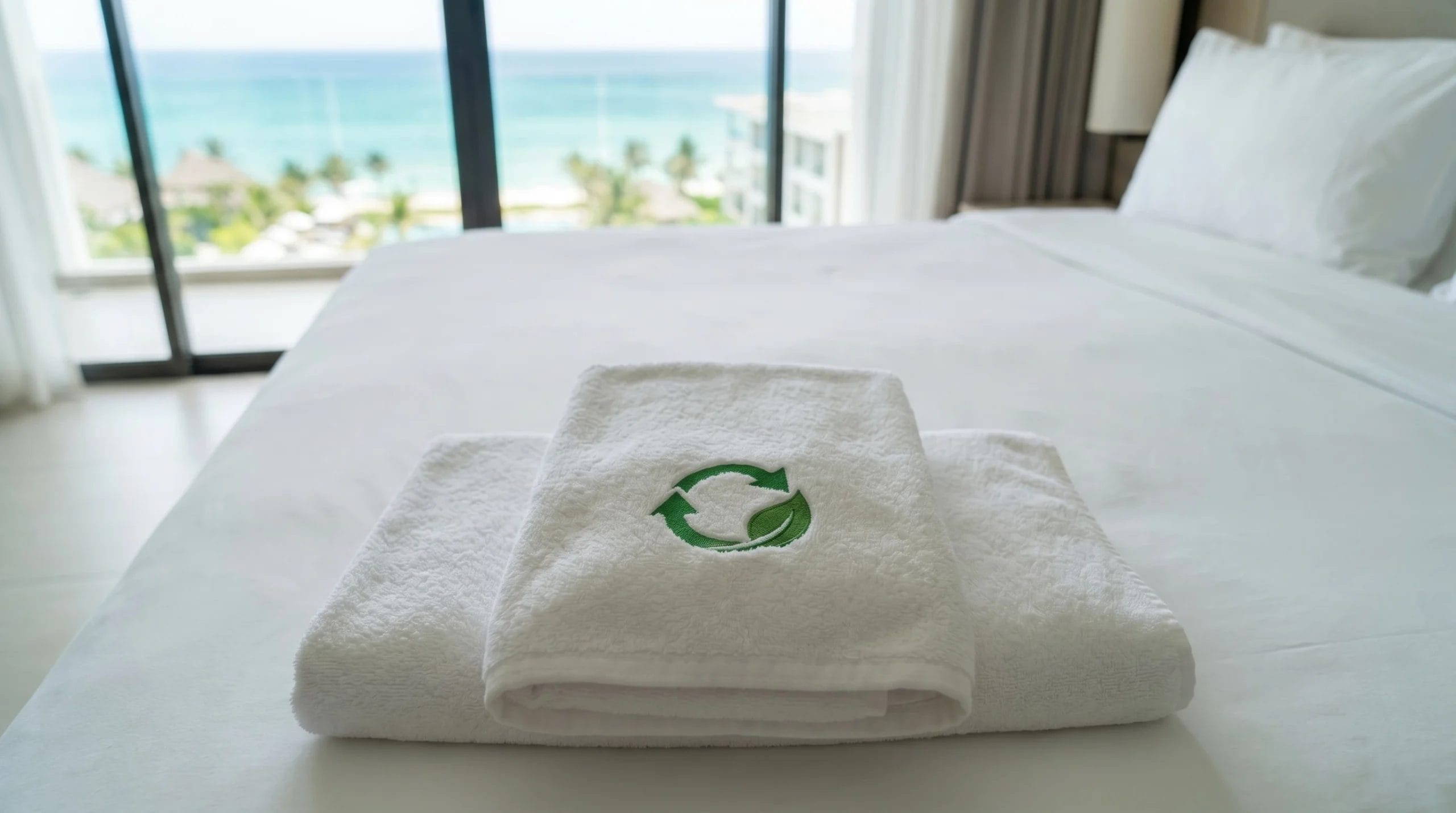
Hotel safety hygiene standards suppliers must navigate in 2026 represent the most demanding compliance environment the hospitality industry has seen. Across Southeast Asia, the Middle East, and the Indian Ocean, purchasing managers and housekeeping executives now face documented certification requirements from both regulatory bodies and international hotel brands — requirements that directly determine which suppliers are approved and which are disqualified before a first order is placed.
This compliance report covers the four pillars every hotel amenity supplier must address: linen and textile certification, bathroom amenity formulation safety, eco-product verification, and packaging integrity. Each section includes the specific standards purchasing managers should be requesting from their suppliers today.
Is your current amenity supplier fully compliant with 2026 global hotel hygiene standards?
DERBAL supplies certified hotel amenities to luxury resorts across Southeast Asia, the Middle East, and the Indian Ocean — with full compliance documentation, eco-certification support, and custom branding available.
→ Request a Compliance Consultation
What Are Hotel Safety Hygiene Standards for Suppliers in 2026?
Hotel safety hygiene standards for suppliers in 2026 are a combination of international regulatory requirements, brand-specific procurement criteria, and third-party certification frameworks that govern the safety, formulation, labelling, and material composition of every product supplied to a hotel guest. These standards apply across all OS&E categories — linens, bathroom amenities, eco-products, and packaging — and failure to comply with them can result in supplier disqualification, product recall, or brand standard violation.
Three forces are driving stricter enforcement simultaneously. According to Hospitality Net’s 2026 Asia Pacific Market Report, international hotel brands including Marriott, Hilton, IHG, and Anantara have updated their Global Brand Standards to require documented supplier certification as a mandatory condition of procurement approval — not a recommendation. Regulatory frameworks in key sourcing markets have tightened in parallel: the EU’s updated Cosmetics Regulation, the UAE CPSR registration framework, and Saudi SFDA product registration requirements all impose direct legal obligations on products used in hospitality settings. And guests, now more informed than at any previous point, are challenging eco-claims that cannot be independently verified.
For hotel safety hygiene standards suppliers operating across multiple markets, the result is a non-negotiable documentation standard that must be built into every product line — not assembled reactively when an audit arrives.
Pillar 1: Linen & Textile Hygiene — What Certification Is Required
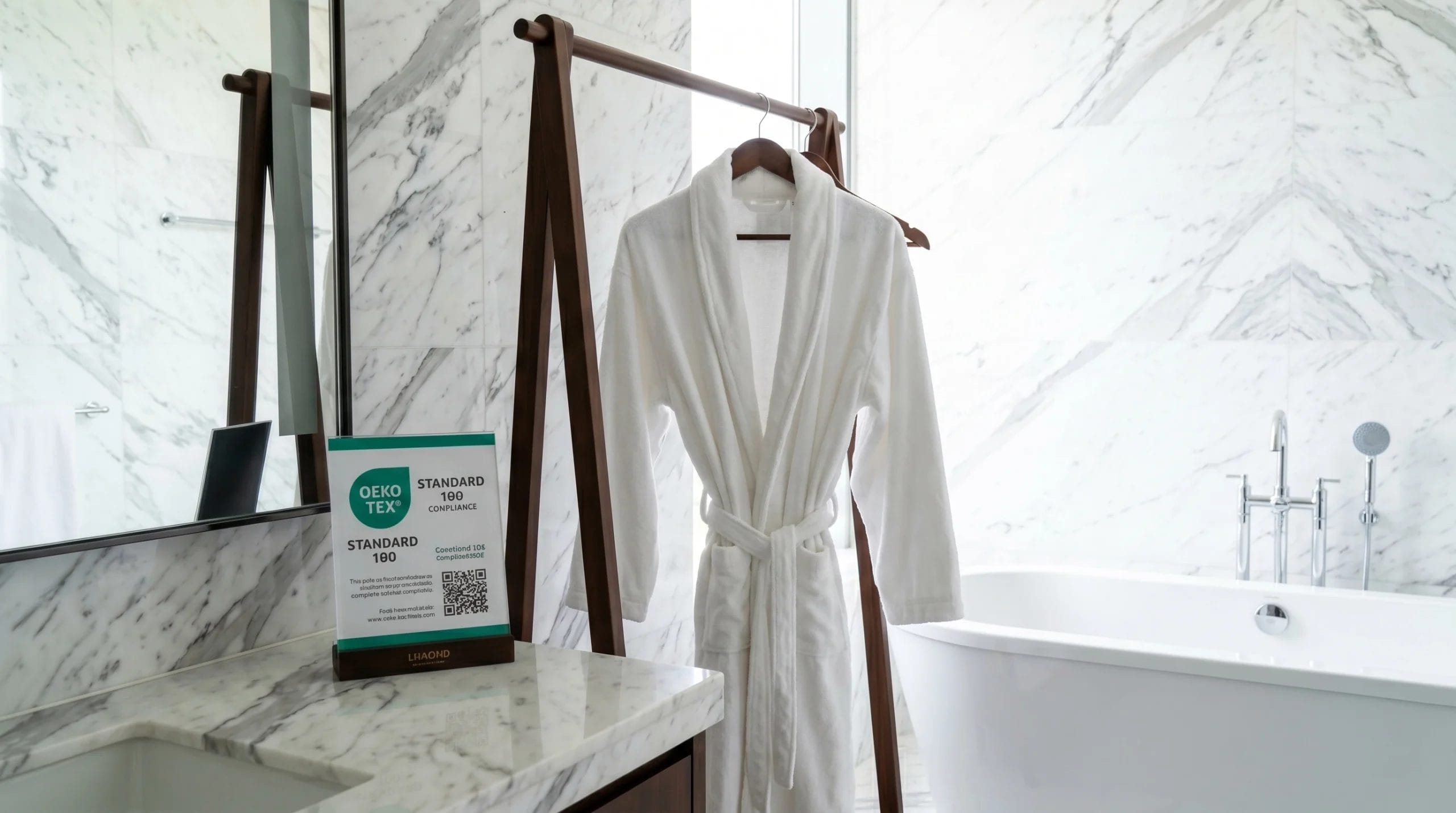
Hotel linens — bathrobes, towels, bed sheets, and pool towels — are the highest-contact product category in any property. Guests interact with them directly for extended periods, making textile hygiene one of the most scrutinised areas in any brand supplier audit.
The standard that most international brand-affiliated properties require as a baseline is OEKO-TEX Standard 100 certification. This tests every component of a textile — fibres, dyes, finishes, and accessories — against a list of over 100 harmful substances. Beyond certification, purchasing managers at four- and five-star properties are routinely requesting wash-fastness data confirming that treatments remain stable through industrial laundering at 60°C or above, and for eco-certified properties, documentation of organic or recycled fibre content.
“When a purchasing manager specifies hotel linens, they are assuming responsibility for hygiene outcomes across thousands of guest interactions. The supplier’s job is to make that responsibility easy to discharge — through transparent certification and consistent quality.”
— DERBAL Senior Compliance Specialist, Hospitality Textiles
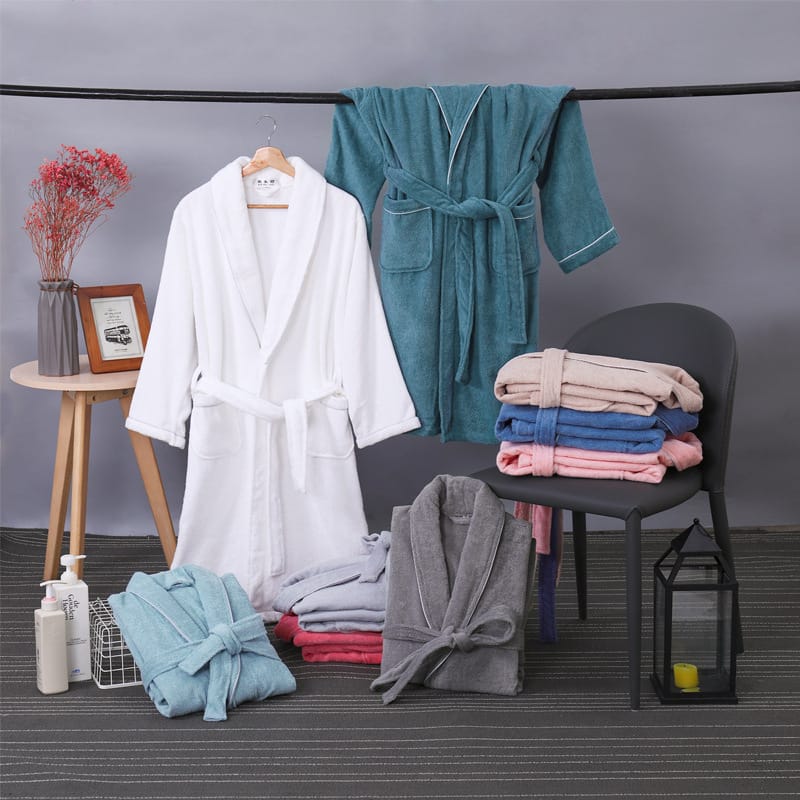
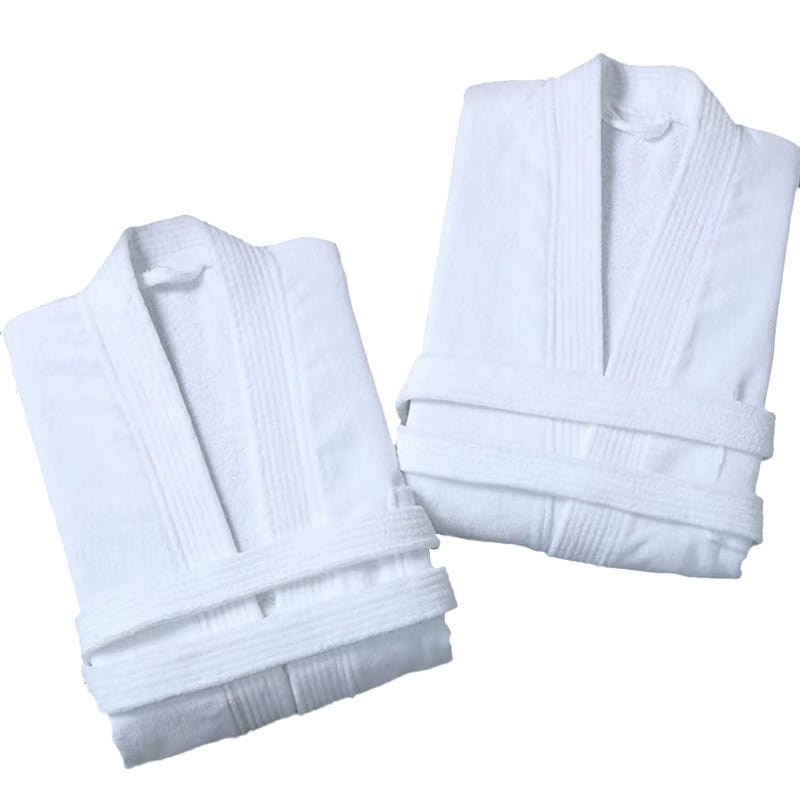
DERBAL’s hotel bathrobe and linen range is produced in compliance with OEKO-TEX Standard 100. Full material safety documentation — including fabric composition certificates and restricted substance test results — is available on request, streamlining the supplier qualification process for brand-affiliated properties.
Pillar 2: Bathroom Amenity Safety — EU, UAE, and GCC Compliance
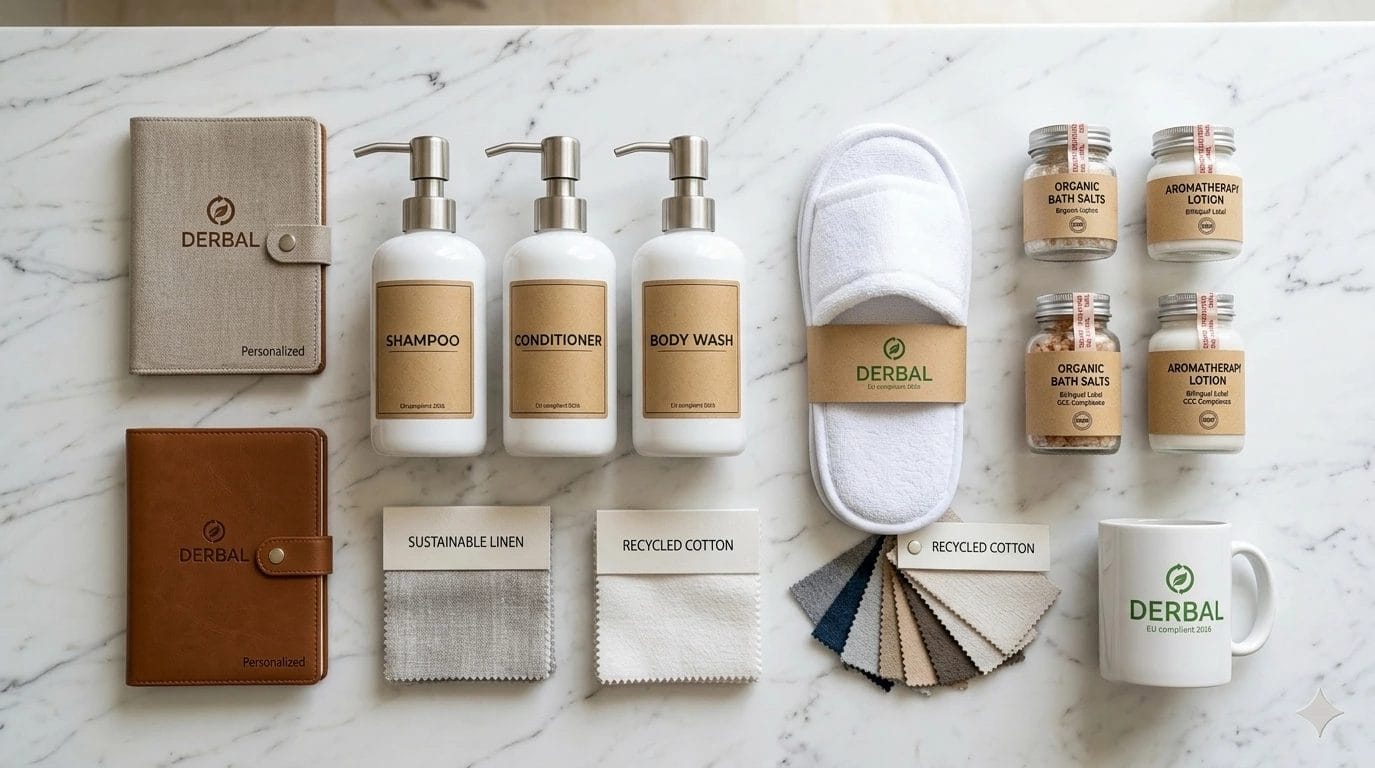
Shampoos, conditioners, body washes, and soaps supplied to hotel guests are classified as cosmetic products in most regulatory jurisdictions. This classification carries specific legal obligations that go significantly beyond general product supply requirements — and hotel safety hygiene standards suppliers who are not meeting them are creating direct liability for the properties they serve.
In the EU, every cosmetic product used in a hotel setting must have a completed Cosmetic Product Safety Report (CPSR) on file with a designated Responsible Person. In the UAE and Saudi Arabia, cosmetic products require registration with the national regulatory authority — the UAE CPSR framework and Saudi SFDA respectively — before they can be legally supplied to hospitality venues. Purchasing managers who are not requesting and retaining this documentation are exposing their properties to regulatory risk that a brand standard audit will surface.
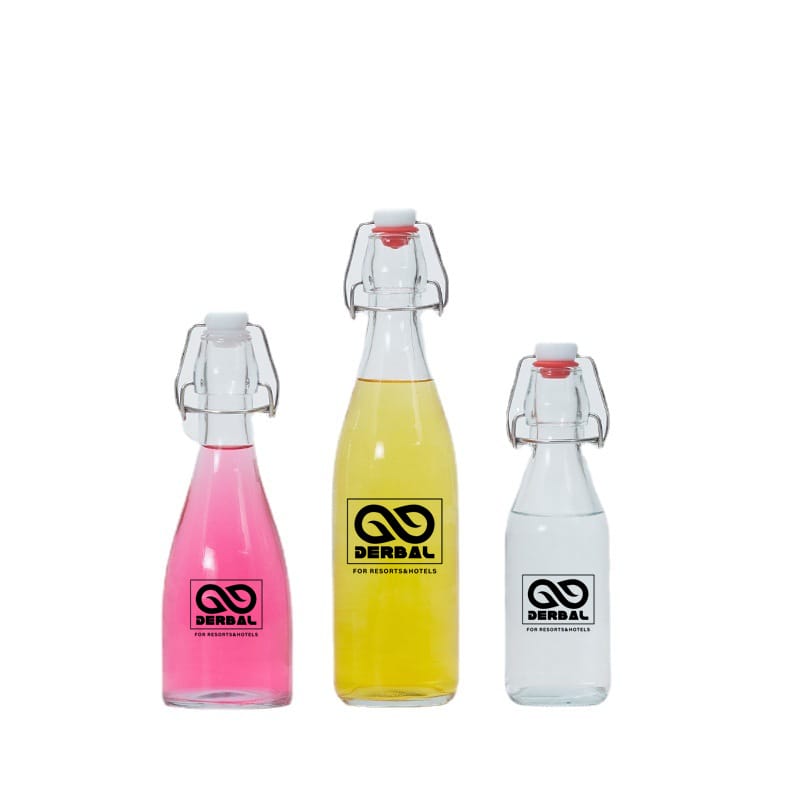
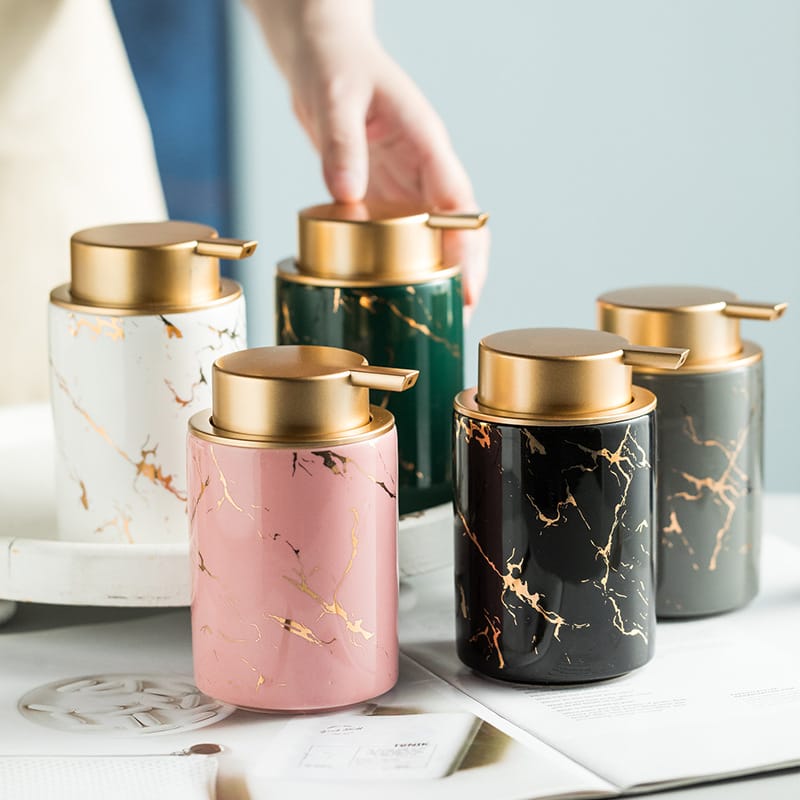
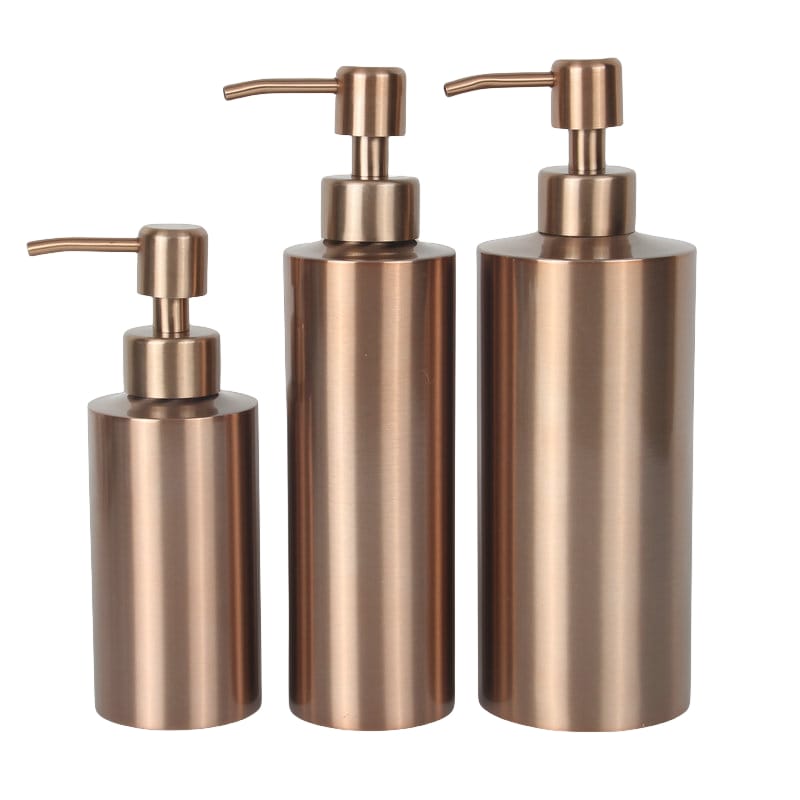
DERBAL’s refillable ceramic amenity dispensers support the transition away from single-use plastic sachets while maintaining full food-contact and skin-contact material safety compliance. Refillable systems simplify the documentation burden over time: one registered, compliant product replaces hundreds of individual sachet SKUs, reducing both regulatory exposure and procurement complexity.
Pillar 3: Eco-Products — Third-Party Certification vs Self-Declared Claims

Self-declared eco credentials — “natural,” “biodegradable,” “green” — are no longer accepted at face value by brand compliance auditors in 2026. Hotel safety hygiene standards suppliers who position products as eco-friendly must support those claims with recognised third-party certification, or risk disqualification from brand-affiliated procurement lists.
The certification frameworks purchasing managers should specify are: ISO 14001 for supplier-level environmental management systems; Green Globe or EarthCheck alignment for property-level procurement frameworks; and EU Ecolabel or Green Seal for product-specific claims. For GCC markets, GSO product registration is a prerequisite for any bathroom amenity carrying eco or organic positioning — and Halal certification, issued by a recognised body, is increasingly specified in brand procurement briefs for Middle East properties.
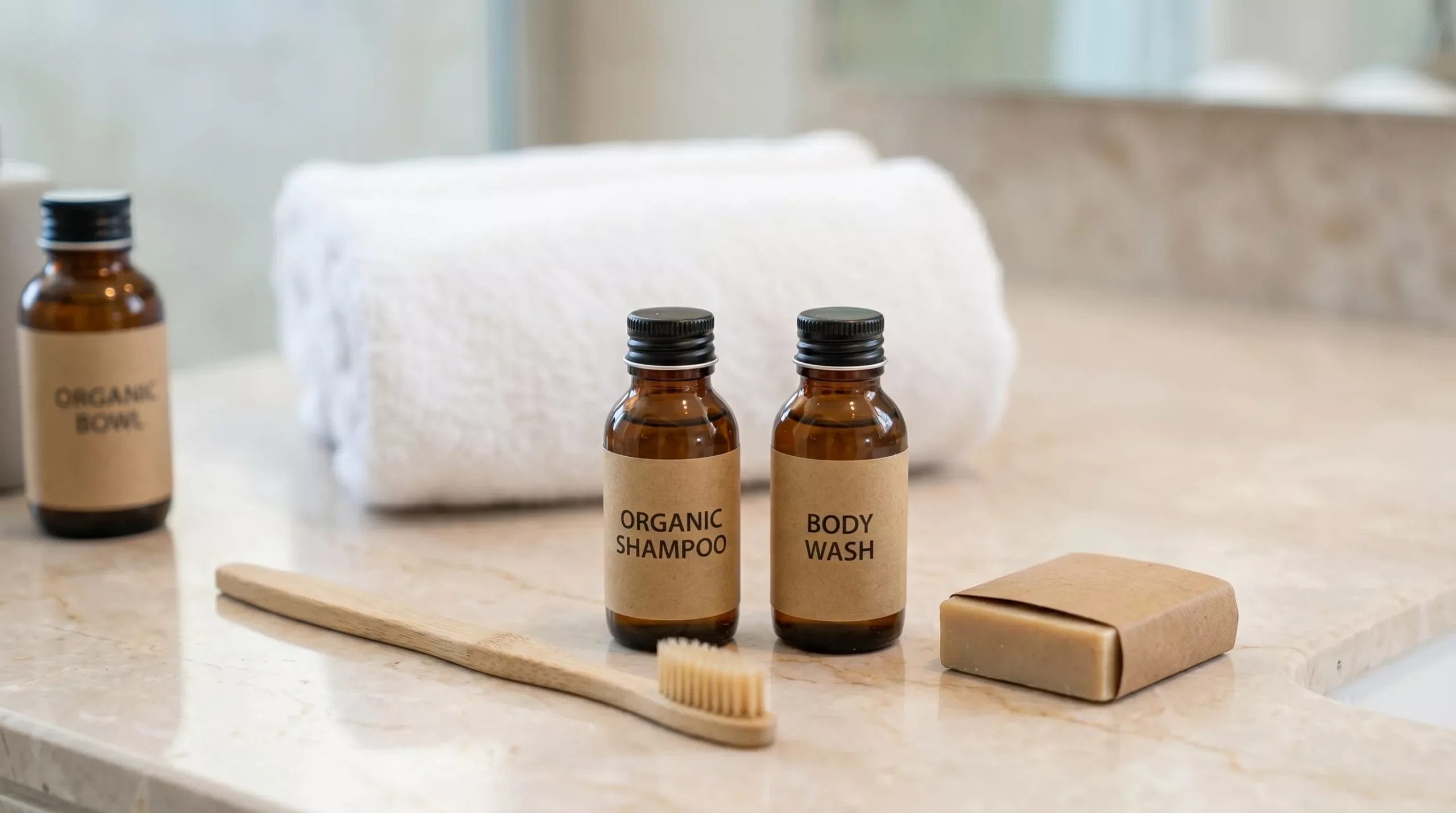
One compliance gap that hotel safety hygiene standards suppliers frequently underestimate: eco materials are not exempt from conventional safety testing. Bamboo-handled toothbrushes must meet skin-contact material safety standards. Kraft paper soap packaging must be verified against restricted substance lists for packaging materials in contact with cosmetic products. The source material being natural does not make the product safe by default — and suppliers who treat it that way are creating liability for the properties they supply.
DERBAL Compliance-Ready Hotel Amenity Products
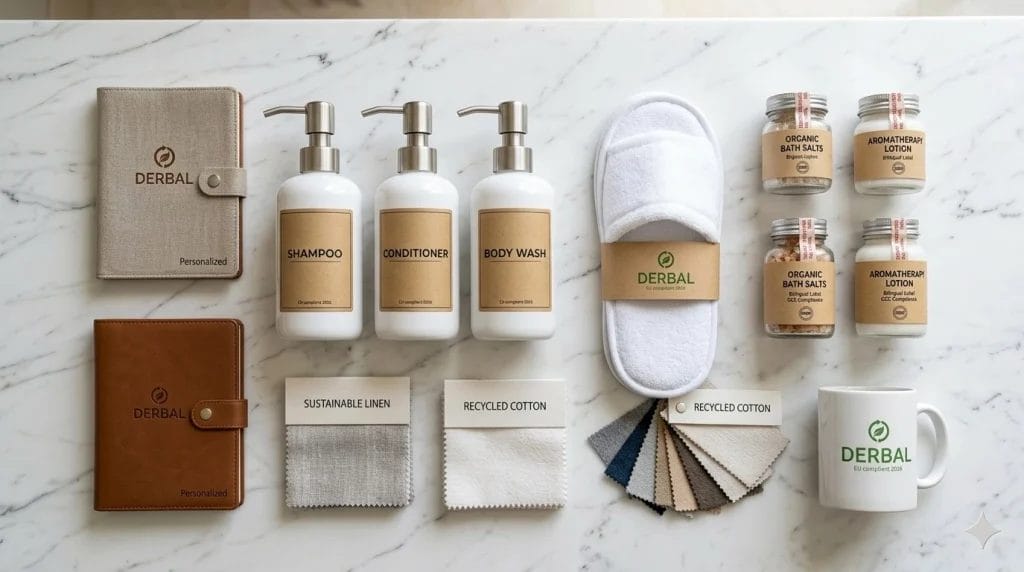
All DERBAL amenity products are available with full safety documentation. Our team supports purchasing managers through brand standard verification — from OEKO-TEX linen certification to EU cosmetics registration and GCC product compliance.
- Refillable Ceramic Amenity Dispensers →
- OEKO-TEX Certified Hotel Bathrobes →
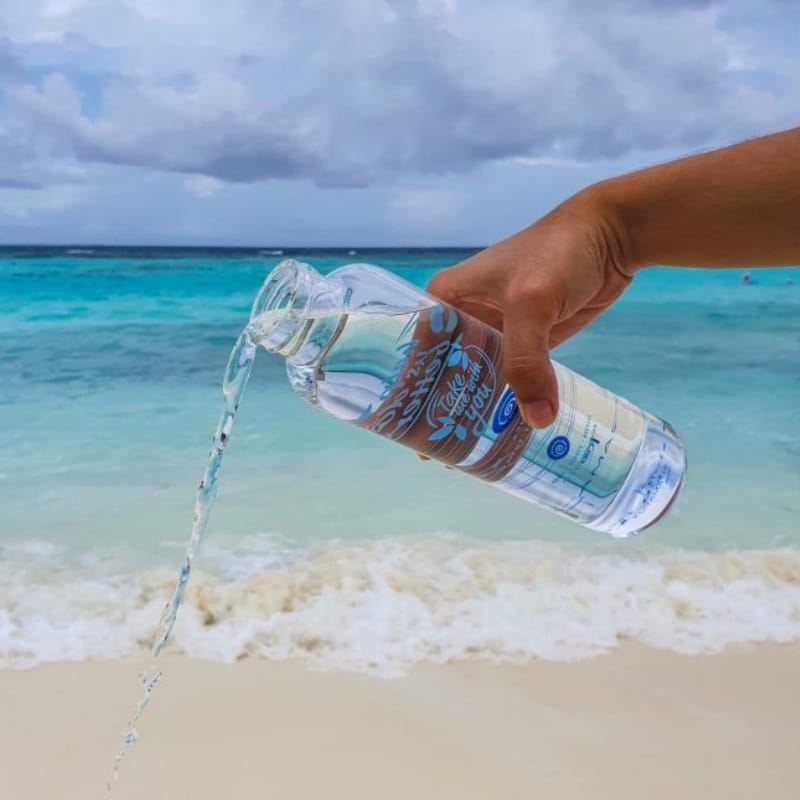
- Eco Glass Water Bottles →
- Eco Straw Hotel Slippers →
→ Request Compliance Documentation
Pillar 4: Packaging Integrity, Labelling, and Market-Specific Requirements
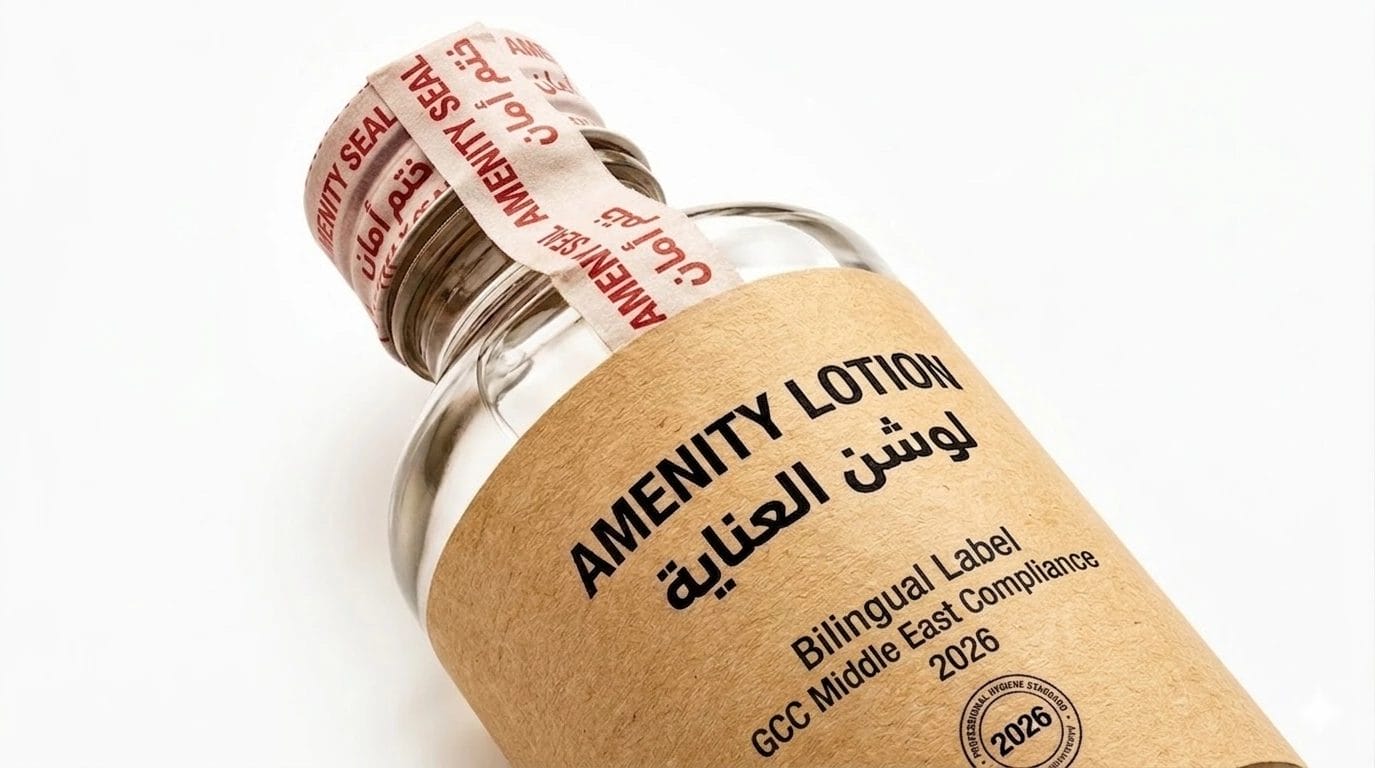
Packaging compliance is the most frequently overlooked pillar of hotel amenity safety — and the one most likely to cause a compliance failure at point of delivery rather than at point of manufacture. For hotel safety hygiene standards suppliers, three requirements apply without exception. First, tamper-evident seals must be intact on arrival. Second, fill volumes must match label declarations. Third, packaging materials must be verified as free from restricted substances that could migrate into the product — a requirement that applies equally to kraft paper and conventional plastic.
For properties supplying to the GCC, Arabic labelling is a legal requirement for personal care products — not a branding option. Products without compliant Arabic labelling cannot be legally placed in guest rooms in the UAE or Saudi Arabia regardless of their formulation quality. For properties pursuing Halal certification, both formulation and packaging must comply with the relevant Halal standard issued by a recognised certifying body — and the certification must be current and on file before supply begins.
The practical test for purchasing managers is straightforward: request a full compliance documentation pack from every amenity supplier before placing a first order. Compliant hotel safety hygiene standards suppliers have this documentation ready. Suppliers who do not are communicating something important about the standard to which they operate.
Frequently Asked Questions: Hotel Safety Hygiene Standards for Suppliers
Q: What is the minimum certification a hotel amenity supplier should hold in 2026?
A: For textile products, OEKO-TEX Standard 100 is the baseline requirement for most international brand-affiliated properties. For bathroom amenities, a completed Cosmetic Product Safety Report (CPSR) is required for EU-market supply, and national product registration is required for the UAE and Saudi Arabia. Eco-positioned products must carry recognised third-party certification — self-declared claims are not accepted by brand compliance auditors.
Q: Do eco-friendly materials like bamboo and kraft paper require the same safety testing as conventional materials?
A: Yes. Bamboo, kraft paper, and other natural materials used in hotel amenities must meet applicable skin-contact or food-contact material safety standards. Being natural in origin does not exempt a material from restricted substance requirements, and hotel safety hygiene standards suppliers who treat it as such create liability for the properties they supply.
Q: What specific documentation should purchasing managers request from amenity suppliers for GCC properties?
A: For UAE and Saudi Arabia properties, purchasing managers should request: national authority product registration certificates (UAE CPSR / Saudi SFDA), Arabic labelling compliance confirmation, and — where applicable — Halal certification from a recognised certifying body. All documentation should be current and renewed according to the certification body’s schedule.
Q: Are single-use plastic hotel amenities still permitted in Southeast Asia in 2026?
A: The regulatory position varies by country and is changing rapidly. Thailand, Vietnam, the Philippines, and Indonesia all have active plastic reduction legislation that affects hotel amenity packaging to varying degrees. Purchasing managers should request market-specific compliance guidance from their suppliers, as the products affected and implementation timelines differ by jurisdiction.
Q: How does DERBAL support purchasing managers through the compliance verification process?
A: DERBAL provides full compliance documentation for all product lines on request, including material safety data, fabric certification, and product registration references for relevant markets. For brand-affiliated properties working through a formal supplier qualification process, DERBAL’s compliance team can engage directly with the brand’s procurement or QA function to provide documentation in the required format and within the required timeline.
Q: How frequently should supplier compliance documentation be reviewed?
A: Best practice is annual review, plus a review at every significant product change. Certifications such as OEKO-TEX Standard 100 and ISO 9001 carry renewal cycles that should be tracked. Brand-affiliated properties typically require suppliers to maintain current documentation on file continuously as a condition of approved supplier status.
Work With a Compliance-Ready Hotel Amenity Supplier
DERBAL supports procurement managers and housekeeping executives across Southeast Asia,
the Indian Ocean, and the Middle East with fully certified, documented hotel amenity products.
Send us your compliance brief — we respond within 24 hours.
→ Get Compliance Documentation
Browse All Products