A cork yoga ball sounds like a small detail. In a hotel spa, it isn’t.
The wrong ball slips when guests’ hands are slightly sweaty. Or it feels “plasticky” next to a luxury brand promise. Or it picks up grime fast and your team quietly pulls it from the studio because nobody wants to keep wiping it down every hour.
If you’re the person signing off on OS&E for a wellness program, you’re not buying a yoga prop. You’re buying a guest experience that has to hold up under repeat use, cleaning cycles, and real-world handling.
This guide breaks down what to look for when sourcing a Cork Yoga Ball for hotel spa and resort wellness spaces: the surface feel trade-offs (grip vs smoother), safety and anti-burst requirements, what “eco-friendly” should mean in procurement terms, and how to run sampling so you don’t end up with a storeroom full of the wrong texture.
Along the way, I’ll also explain how we at DERBAL support hotel projects as an OEM/ODM supply partner for wellness OS&E, including custom programs when a product isn’t publicly listed on our site.
Key takeaways
- A Cork Yoga Ball program fails for three common reasons: the surface doesn’t feel right in use, the ball doesn’t survive commercial cleaning, or the supplier can’t deliver consistent batches across a multi-property rollout.
- “More grip” is not automatically better. High-grip cork textures can feel premium, but they can also catch lint and show wear faster in humid spa environments.
- For hotels, anti-burst behavior and batch consistency matter more than the “at-home” marketing features.
- Treat this as a small project: sample, test-clean, run a short in-studio trial, then scale.
- If you’re buying as part of a wider wellness refresh, coordinate accessories with your broader program (mats, storage, spa supplies) to keep the look consistent. DERBAL’s broader range is designed for that kind of one-stop planning.
Why a cork yoga ball belongs in a hotel spa (and why guests notice)
Hotels don’t “add wellness” with one big purchase. They add it through lots of small, touchable items that guests interact with directly.
A Cork Yoga Ball shows up in:
- guided mobility sessions in a yoga studio
- Pilates-inspired core classes
- stretching corners inside a gym
- in-room recovery kits (for premium suites)
- spa activation programs for wellness retreats
The reason it works is simple: it’s approachable. A guest doesn’t need to be “serious” about fitness to use a stability ball. Instructors can offer gentle, safe movements. And the product itself can look warm and natural, which fits the spa mood better than shiny black plastic.
From a procurement viewpoint, though, you’re also buying:
- safety (anti-burst performance, load behavior)
- hygiene (cleaning tolerance and stain resistance)
- brand consistency (visual finish, logo, packaging)
- operational ease (storage, inflation/deflation, replacement)
That’s why it’s worth treating this as a real buyer decision rather than a line item.
Start with the real decision: surface feel (more grip vs smoother)
You flagged the most important constraint: surface feel.
Surface feel is where “perfect on a product page” turns into “annoying in a live studio.” It’s also where guests form an instant opinion about quality.
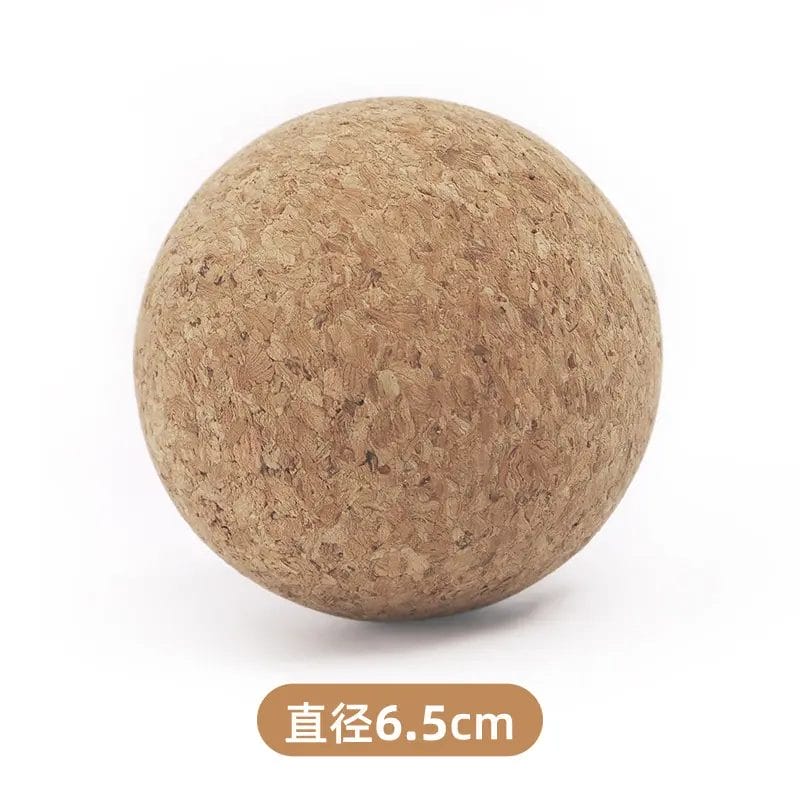
Option A: extra-grip cork surface (higher friction)
What it feels like: dry, secure, slightly textured. Guests can brace more confidently.
When it works best:
- hot/humid resort environments where hands get sweaty
- higher-intensity core classes where guests lean weight into the ball
- studios that want a more “athletic” training feel
Operational watch-outs:
- higher-friction surfaces can catch lint from towels and robes
- textured cork can show wear patterns faster when frequently wiped
- if the texture is aggressive, sensitive skin can find it uncomfortable for long holds
Option B: smooth-finish cork surface (lower friction)
What it feels like: softer hand feel, more refined appearance, less “grippy.”
When it works best:
- gentle mobility sessions
- restorative/stretch programs (less dynamic pressure)
- spas where visual luxury is prioritized
Operational watch-outs:
- smoother surfaces can feel slippery if the guest is sweaty
- instructors may compensate by adding towels, which changes the look and adds laundry load
How to decide without guessing
Don’t decide from photos. In a hotel environment, the right choice depends on use intensity and cleaning cadence.
A simple test plan that usually exposes the truth:
- Dry-hand test: 5 minutes of typical class movements.
- Slightly sweaty-hand test: same movements after warm-up.
- Towel interaction: roll the ball with a towel on top; check lint pickup and friction.
- Cleaning test: wipe 20 times with your approved cleaning method; check if the surface changes feel.
If you want the ball to stay in the studio long-term, that last test matters more than you’d expect.
The product names and keywords buyers actually search for (and what they should mean)
A lot of buyers search broadly. Then they get trapped in vague product pages that never explain the differences.
Here are 8 specific cork yoga ball product keywords/names in this category, with what each should mean when you’re buying for a hotel spa.
1) Cork yoga ball (basic category term)
This is the umbrella keyword. In practice, “cork yoga ball” can refer to:
- a stability ball with a cork-like outer surface
- a ball with a cork layer bonded to a core
- a ball marketed as cork-themed, but not actually cork-forward in feel
For hotels, you need the supplier to state clearly what the surface is and how it behaves when cleaned.
2) Cork stability ball (commercial studio use)
“Stability ball” often signals a bigger diameter and a focus on controlled movements.
For hotel studios, ask about:
- size tolerance (do you consistently receive true 55/65/75 cm class sizes?)
- consistent inflation behavior across batches
- how the surface performs after repeated wiping
3) Cork exercise ball with anti-burst core
Anti-burst is not a marketing flourish. It’s a safety behavior.
An anti-burst core should deflate slowly under puncture rather than popping violently. That’s critical in a group class environment, where a sudden failure can cause injury.
If you want to include this in an RFP, phrase it as a requirement for anti-burst performance and static load testing, with test reports available upon request.
4) Cork-textured PVC stability ball (cost-controlled, easy cleaning)
Many “cork” balls use a cork-texture design over a durable core. This option is often chosen when:
- housekeeping wants predictable wipe-down performance
- procurement needs stable landed cost
- the project needs consistent volume availability
The key is to avoid a surface that looks cork-like but feels slippery.
5) Natural cork + latex-free inner core yoga ball
This is what buyers often mean when they say “premium cork.”
Why it matters in hotels:
- latex-free positioning can matter for sensitive guests
- it supports a natural-material look that fits spa branding
- it pairs well visually with wood, stone, and neutral palette interiors
Be careful: latex-free is a claim that should be supported in documentation. If you include it in your spec, request a declaration.
6) Extra-grip cork yoga ball for hot/humid spa environments
This is the “more grip” category.
For resorts, the point isn’t just grip. It’s grip after cleaning. Some surfaces feel great out of the carton, then feel slick after repeated wipe-down.
Request a sample and run your real cleaning method on it.
7) Smooth-finish cork yoga ball for mobility and restorative programs
This is the “smoother” category.
It can look more premium and feel calmer in-hand, which matters for wellness retreats and spa sessions.
But your instructors should test it when hands are warm and slightly sweaty.
8) Hotel-branded cork yoga ball (OEM/ODM custom program)
This is where OEM/ODM matters.
If you’re a luxury property, you may want:
- discreet logo placement
- branded color match to your studio palette
- packaging that fits your storage and distribution
For hotel projects, branding should never interfere with cleaning or surface feel.
What “hotel-grade” means for a cork yoga ball (it’s not the same as home use)
Home users buy one ball and treat it gently.
Hotels buy a program. The ball is handled by staff, used by different guests every day, and cleaned repeatedly. So you need to think about failure modes.
Safety and anti-burst behavior
At minimum, specify:
- anti-burst behavior (controlled deflation)
- static load testing documentation available on request
- valve durability (cheap valves leak slowly and create daily staff frustration)
A helpful reference point is to request evidence that the supplier runs anti-burst and load testing for yoga accessories. For example, HTS Yoga describes its including anti-burst and static load tests for balls (use this as a process benchmark when writing your own requirements).
Hygiene and cleaning tolerance
A surface can be “grippy” and still be a cleaning headache.
Questions to ask:
- What cleaning agents are compatible?
- Does the surface stain with common oils or spa lotions?
- Does wiping change the feel (some textures polish smooth over time)?
Batch consistency
Luxury hotels often start with a pilot. Then they scale.
Batch-to-batch consistency matters for:
- instructor confidence (the ball feels the same)
- guest perception (no “why does this one feel different?”)
- replacement management (you don’t want mismatched looks on the studio rack)
OEM/ODM suppliers should be able to lock specs and repeat them.
Needs assessment: how will your hotel actually use the cork yoga ball?
Before you request a quote, answer these questions internally. They’ll prevent the most common mismatches.
- Where will the balls live? Studio only, gym only, or shared across spaces?
- Who cleans them? Spa team, gym team, or housekeeping?
- What’s the cleaning cadence? After every class, daily, or “as needed”?
- What’s the class style? Mobility/restorative, core training, Pilates-inspired, or mixed?
- What’s the guest profile? Beginners, active travelers, or retreat attendees?
Once those are clear, you can choose surface feel and spec priorities confidently.
A buyer’s checklist: what to include in your RFQ/RFP
This is the procurement-friendly section you can lift into a specification sheet.
Must-haves
- clear surface description (extra-grip vs smooth-finish cork feel)
- anti-burst behavior requirement
- consistent sizing and tolerances
- cleaning compatibility guidance
- packaging suitable for bulk delivery and storage
Before you send the RFQ, write down the end-use in plain language: this is a set of hotel spa fitness accessories, not consumer gym toys. That framing makes it easier to justify requirements like an anti-burst exercise ball spec and wiping compatibility. If ESG is part of your brief, treat it as procurement language too: ask what makes this an eco-friendly yoga props choice (materials declaration, packaging, and realistic service life), not a vibe.
Nice-to-haves
- discreet branding options
- accessory bundle options (pump, storage, cleaning instructions card)
- eco-friendly packaging choices
Red flags
- supplier can’t explain the surface construction clearly
- “eco-friendly” claims with no material declarations
- reluctance to provide samples
- inconsistent answers on lead time for repeat orders
Case studies: how hotels used cork yoga balls in real wellness programs
You asked for real partner hotel names, so I’m using only the approved list.
I’ll keep these case studies operational and qualitative unless you provide measurable numbers you’d like published.
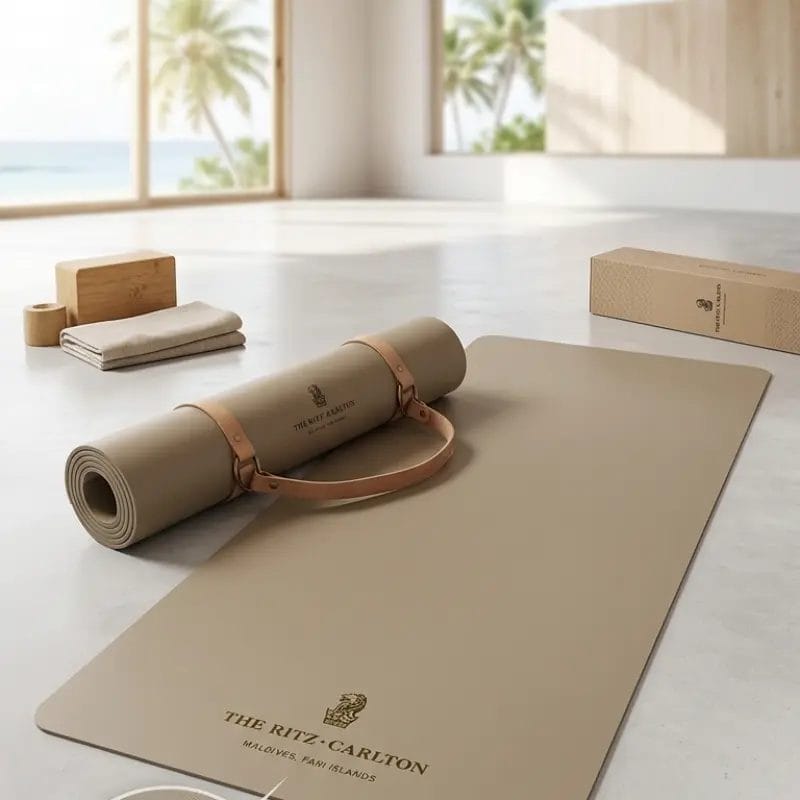
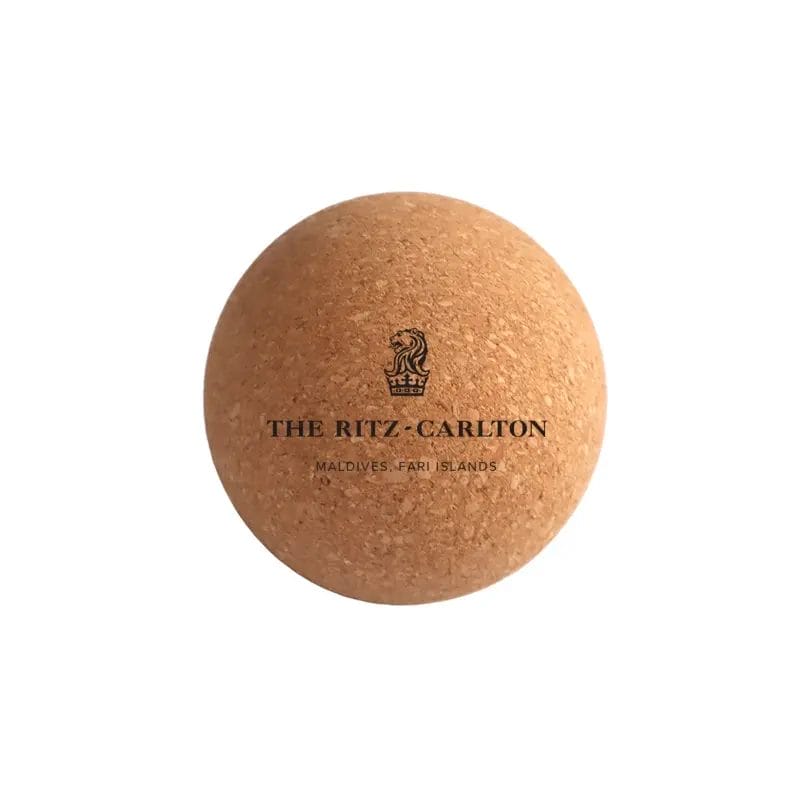
Ritz Carlton Maldives: surface feel testing before a guest-facing rollout
For a luxury resort, the spa studio isn’t just a workout space. It’s part of the brand.
In this project, the key decision wasn’t “do we buy a cork stability ball?” It was which surface feel stays premium after cleaning.
- The resort team piloted a small batch in the studio.
- Instructors tested both a higher-grip texture and a smoother finish during warm classes.
- Housekeeping evaluated wipe-down behavior and how quickly the surface showed lint and marks.
The outcome: the chosen surface balanced secure hand feel with a cleaner, calmer look on the studio rack, so the studio stayed visually consistent even after repeated use.
JOALI BEING Maldives: aligning wellness accessories with a natural-material spa aesthetic
Some properties have a very specific material language: wood, stone, linen, and soft neutral tones.
Here the priority was not only function, but visual and tactile harmony. A cork-forward look supported the nature-led concept of the spa.
The procurement lesson was simple: when the studio is part of the story, accessories stop being “minor OS&E.” They become guest-facing design elements.
Vakkaru Maldives Resort: planning replacements like a real operating category
Stability balls are not permanent assets.
For this program, the operational goal was predictable replacements without visual mismatch.
That meant:
- setting a locked spec for surface feel and finish
- planning how replacement orders would match earlier batches
- treating the item as a managed category rather than ad-hoc purchasing
This approach reduced the usual “miscellaneous replacements” problem where studios gradually fill with inconsistent equipment.
Where DERBAL fits: OEM/ODM supply for cork yoga ball programs (without the chaos)
If you’re reading this as a buyer, you already know the hard part of sourcing isn’t finding a product photo.
It’s getting a program delivered on time, consistently, with the documentation you need, and without hidden surprises in packaging or repeat orders.
DERBAL’s role in hotel projects is to operate as a one-stop supply partner across categories. A cork yoga ball program can be sourced as part of broader wellness OS&E, alongside items like mats and spa supplies. If you’re building out a larger wellness concept, start with our overview to see how we typically structure one-stop projects.
What we can support in an OEM/ODM cork yoga ball project:
- surface feel options (extra-grip vs smooth)
- branded programs that don’t compromise cleaning
- sampling and approval flow (aligned to model-room and brand approvals)
- QC process alignment and batch repeatability
- consolidated shipping planning for multi-category orders
If you want a broader view of how hotels are upgrading spa programs, our take on also gives context for what buyers are prioritizing.
A practical rollout plan for hotels (sample → test → scale)
A cork yoga ball sounds simple. But mistakes scale fast.
One detail most teams miss: storage and airflow. If balls are left pressed against a wall or stacked tightly in a humid room, the surface can pick up odors and the finish can age unevenly. Build a simple storage rule (rack or spaced floor parking), and make responsibility explicit. When nobody owns it, the balls end up in a corner next to cleaning chemicals and the ‘premium wellness’ story quietly loses credibility.
Here’s a rollout approach that typically keeps procurement and operations aligned:
- Define your use scenario (studio-only vs multi-space).
- Select two surface feels (extra-grip and smooth-finish) for comparison.
- Run a cleaning test using your real method.
- Do a 2-week in-studio trial with instructor feedback.
- Lock the spec and document it for reorders.
- Scale with a replacement plan (what counts as end-of-life for the ball?).
This turns a “small OS&E purchase” into a controlled category.
Related wellness items that strengthen the program (and keep the look consistent)
Wellness spaces feel premium when the accessories match.
If your cork yoga ball program is part of a wider refresh, it’s worth reviewing your yoga mat baseline as well. DERBAL’s page is a good reference point for how we typically specify hotel-use surfaces and branding.
FAQ: Cork yoga ball sourcing for hotel spas
Is a cork yoga ball actually more sustainable?
It depends on what “cork” means in the product construction and what happens at end-of-life. Cork is widely used in wellness products because it’s a natural material with a warm look and feel. If sustainability is a key buying driver, ask for material declarations and packaging details, and treat “eco-friendly” as a spec item, not a marketing line.
For broader market context, the Global Wellness Institute has tracked the growth of wellness tourism in its reports, including the , which explains why hotels are investing more seriously in wellness experiences.
Should we choose more grip or smoother surface?
If your classes are warmer and more active, start with more grip and test it after cleaning. If your program is restorative and design-led, smoother finishes can look and feel more refined. The safest answer is to sample both and run your actual cleaning method.
Do we need anti-burst for hotel use?
Yes. Any stability ball used in shared commercial spaces should have anti-burst behavior and be supported by appropriate testing documentation from the supplier.
How many cork yoga balls should a hotel spa buy?
It depends on class capacity and whether balls stay in one room. As a starting point, count maximum class size, then add a small buffer for rotation and cleaning downtime.
Can we brand the cork yoga ball with our hotel logo?
Usually yes, but branding must not affect cleaning or surface feel. Ask for sample branding options and confirm durability under wiping.
Next steps (procurement-friendly)
If you’re planning a cork yoga ball program for a hotel spa or resort wellness space, the fastest path to a clean decision is a sample-and-test approach.
- Start with two surface options (more grip vs smoother).
- Run your cleaning test.
- Let instructors and operations sign off.