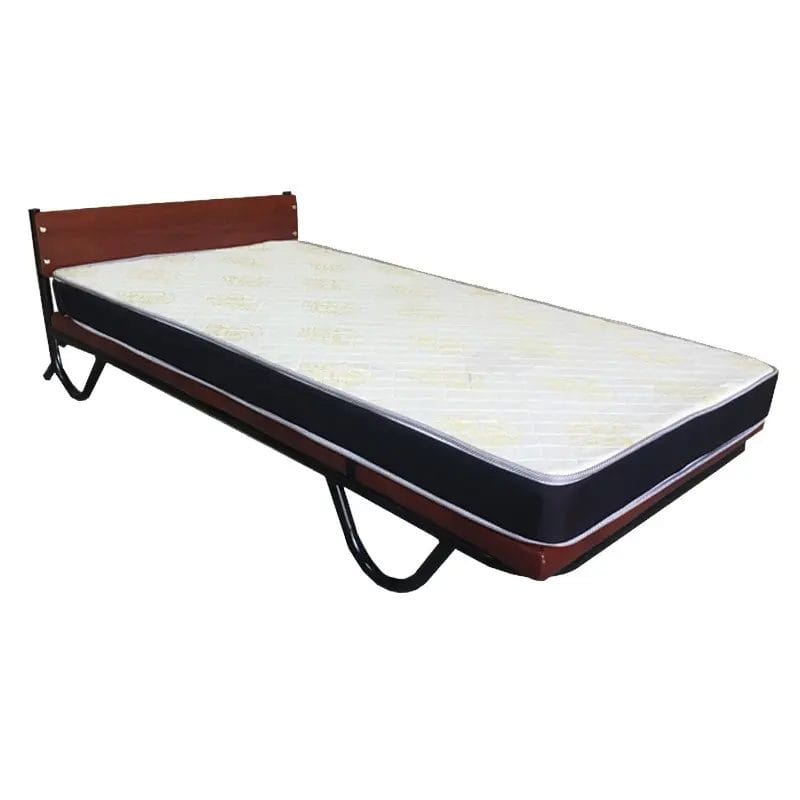
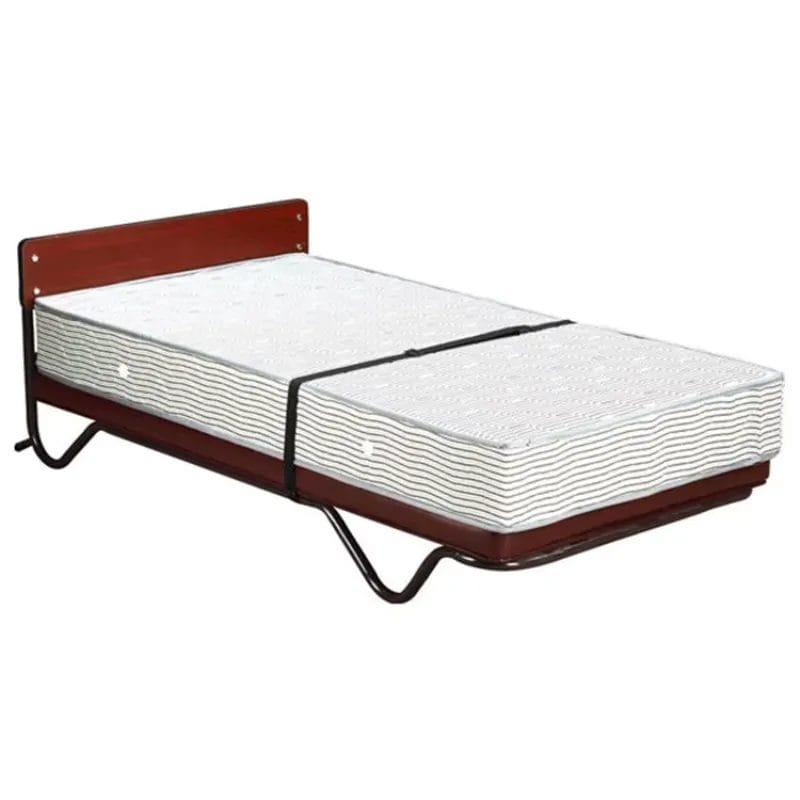
Hotels don’t buy rollaway beds because they enjoy buying “extra furniture.” They buy them because real life keeps happening: a family arrives with a child, a colleague decides to share a room to cut travel cost, a suite sells faster than expected, or a renovation forces inventory to be sold in a different configuration for a season.
And when a rollaway bed fails, it fails loudly.
It squeaks at 2 a.m. It slides on carpet when a guest turns over. It arrives with a bent frame because it was stacked wrong in storage. Or it turns into an audit headache because the paperwork doesn’t match the property’s fire-safety requirements.
If you’re a purchasing manager, you already know the frustrating part: the cheapest unit is rarely the cheapest after six months of guest complaints, housekeeping injuries, and replacements.
This guide is written for US-focused hotel procurement teams who need a practical way to evaluate a Rollaway Bed for Hotels: what to specify, what to verify, and how to keep extra beds from becoming an ongoing operational problem.
Key takeaways
- Treat a Rollaway Bed for Hotels like a safety and compliance asset, not a last-minute add-on.
- The fastest way to reduce risk is an RFQ that forces clarity: documentation, stability, casters, storage footprint, and mattress requirements.
- “Comfort” is not just the mattress. Noise, deck support, and caster stability decide whether guests sleep well.
- Plan the storage and handling workflow before you approve the model room.
- A one-stop supplier only helps if they can support documentation readiness, QC checkpoints, and project logistics.
What buyers mean when they say “Rollaway Bed for Hotels”
In RFQs, the term “rollaway bed” gets used loosely. You’ll see “hotel extra bed,” “folding bed,” and “mobile sleeper” used for different designs.
Before you compare quotations, lock down which category you’re actually buying.
Here are the most common types procurement teams evaluate:
-
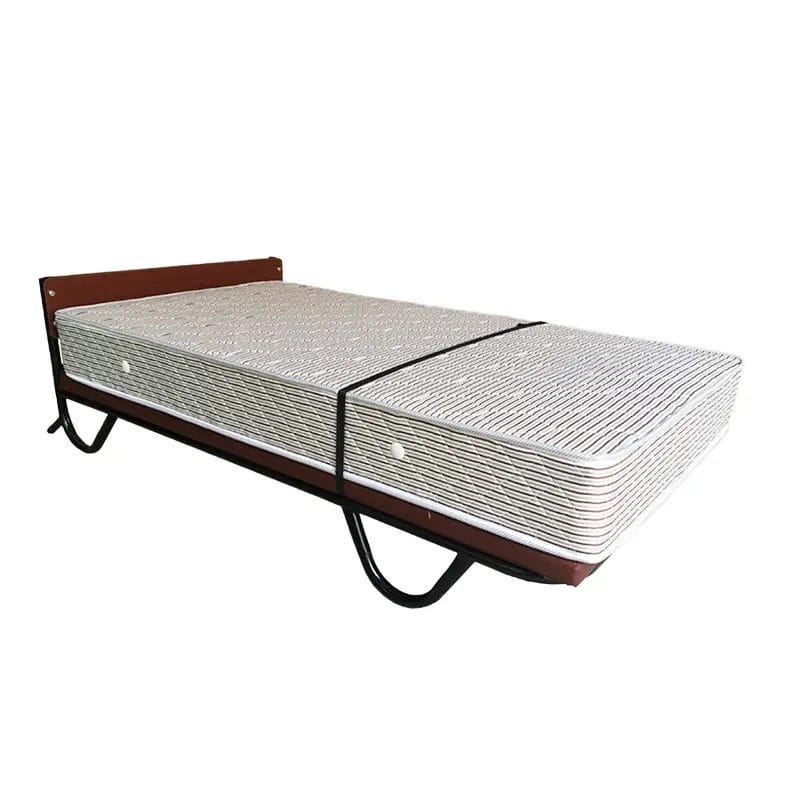
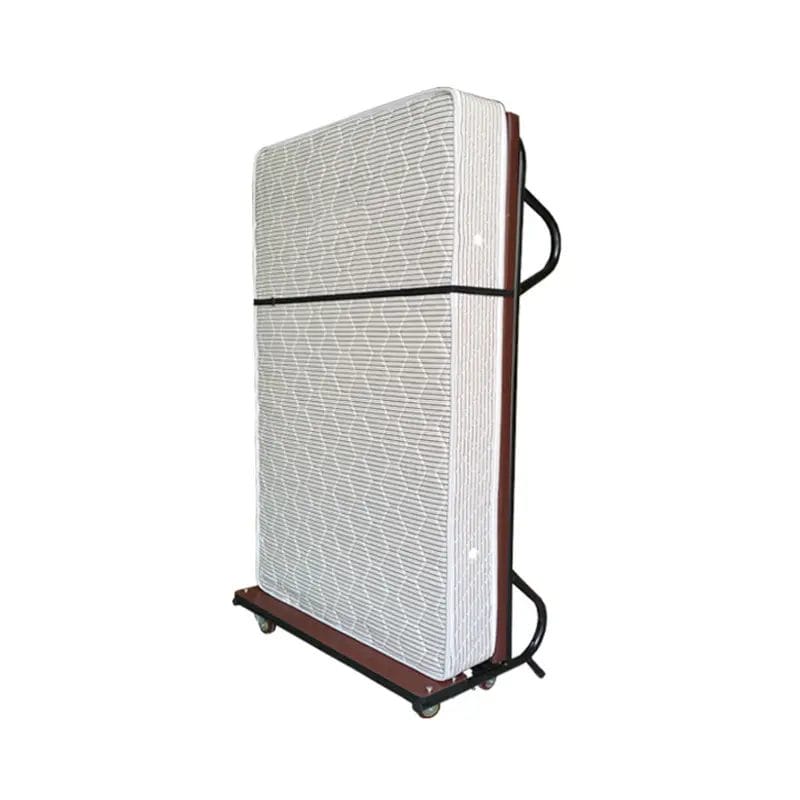
Folding rollaway bed (classic hotel extra bed): metal frame, folding legs, casters, mattress on a deck (slats, springs, or mesh). This is the default solution for most properties.
-
Heavy-duty rollaway bed: a folding rollaway designed for frequent adult use. It’s usually chosen by business hotels, luxury resorts with consistent overflow, or properties that expect the extra bed to be used nightly.
-
Cabinet rollaway bed: a rollaway that closes into a cabinet-like form factor. Buyers use this when storage must look neat and the bed might be staged in guest-facing areas.
-
Folding bed for hotel room (compact handling): optimized for tight back-of-house storage, easier turning radius in corridors, and quick deployment.
-
Portable hotel cot / compact rollaway cot: a lighter unit for occasional use. The risk is that “lightweight” becomes “wobbly” if it gets pushed into frequent adult use.
-
Ottoman bed / fold-out sofa bed alternative: not a rollaway, but often compared during procurement when guestroom layout or storage is the bigger constraint.
The key point: if your property uses “rollaway bed” as a catch-all term, suppliers can quote apples-to-oranges products and still appear competitive.
The real pain points: why rollaway beds create complaints (and write-offs)
Most procurement teams can spot a weak product in a showroom. The hard part is predicting the failure mode after repeated deployments by different staff members.
These are the issues that typically surface first.
Sliding and instability
A rollaway bed that glides on carpet or shifts on hard flooring creates guest fear fast. Even if it never tips, guests describe it as “unsafe.” That becomes a review problem and an avoidable claim exposure.
Stability is not one feature. It’s the combination of leg geometry, hinge tolerance, deck rigidity, and whether the caster locks actually hold.
Noise during sleep and during setup
Noise complaints come in two versions:
- Setup noise: the frame clanks or rattles, which matters in late check-ins.
- Sleep noise: squeaks and deck creaks when a guest turns over.
If you’ve ever had to replace a bed “because it’s embarrassing,” this is why.
Storage damage and “mystery bends”
Rollaway beds get stored vertically, stacked, or squeezed into odd corners. Over time, that routine bends frames and stresses hinges.
If your supplier can’t tell you the correct storage orientation and stacking approach, they’re leaving you to discover it the expensive way.
Hygiene and contamination write-offs
Rollaway beds move between rooms. That’s normal. It also means the mattress and textiles see higher contamination risk than a fixed bed.
A procurement decision that ignores this ends up paying for it later.
Assume up front that:
- you will use protectors
- you will have a cleaning routine
- you will occasionally need to quarantine a unit
A procurement framework that works (and fits an RFQ)
If you only take one thing from this article, take this: write your RFQ so it forces the supplier to show their work.
A quote that looks “complete” but has no documentation behind it is not complete.
DERBAL has a detailed checklist in its buying guide for hotel rollaway extra beds. Below is a condensed version, expanded with operator details that matter in real deployments.
Step 1: Define your use scenario (so you don’t buy the wrong duty level)
Start with the questions your GM will ask you later:
- Who uses the extra bed most: adults, teenagers, small children?
- How often is it deployed: weekly, nightly, seasonal spikes?
- Where will it be stored: guest-floor closet, housekeeping office, basement BOH?
- What are the room constraints: door width, corridor turns, elevator size?
Without these answers, you’re not choosing a Rollaway Bed for Hotels. You’re choosing a future problem.
Step 2: Put “non-negotiables” in writing
Instead of writing a long wish list, set a small number of deal-breakers. For US projects, procurement teams often treat documentation and fire-safety requirements as the first gate.
For example, DERBAL’s guide highlights that US mattress compliance is commonly discussed in terms of 16 CFR Part 1633 and 16 CFR Part 1632, and that buyers should request third-party lab reports and label specimens rather than accept vague statements. The point is not to memorize standards. The point is to design your RFQ so a supplier can’t hide behind ambiguous wording.
Key takeaway: Don’t argue about compliance in email threads. Put it in the RFQ as required documents at quotation stage.
Step 3: Score options on operational reality, not catalog language
This is how many purchasing teams keep the discussion objective across procurement, housekeeping, and engineering.
Six rollaway bed product keywords (with what they should mean in your spec)
Below are six product names or keyword phrases that show up in buyer searches and RFQs, with the practical meaning behind them.
1) Heavy-duty hotel rollaway bed
This is what you want when the bed will carry adult guests regularly.
What to look for in a quote:
- a frame built for commercial duty, not “home guest bed” use
- casters that roll smoothly on corridor carpet and lock positively
- a deck design that stays quiet after repeated folding cycles
2) Folding rollaway bed with locking casters
Locking casters sound obvious until you see how many beds ship with weak locks that don’t hold on carpet transitions.
In your spec, define:
- how many casters must lock
- whether the lock should prevent both rolling and swiveling
This is not a “nice feature.” It changes safety and guest confidence.
3) Hotel extra bed with mattress (commercial use)
Procurement teams sometimes treat the mattress as a separate purchase. That can work, but it increases mismatch risk.
If you buy the unit as a set, ask for:
- mattress construction description (not marketing terms)
- the intended usage level (occasional vs frequent)
- the documentation pathway for your jurisdiction
This keeps the supplier accountable for the system, not just the frame.
4) Foldable bed for hotels (small footprint, real stability)
This keyword gets used to sell “space saving.” But the important question is which space is being saved.
A foldable bed might save:
- storage space (folded footprint)
- guestroom space (deployed footprint)
Don’t assume which one the supplier means. Ask for both folded and deployed dimensions. Then ask your housekeeping lead where the bed will actually be parked.
5) Cabinet rollaway bed (storage-friendly)
A cabinet-style fold-up unit can help when the bed might be seen by guests in a suite or corridor staging area.
The trade-off is usually one of these:
- heavier handling
- higher cost
- more surface area to scratch if it’s moved carelessly
If your housekeeping team is already stretched, ask them whether a cabinet form factor is truly “easier,” or just “prettier.”
6) Hotel folding guest bed for housekeeping-friendly deployment
This phrase is less about the bed and more about the workflow.
Procurement should verify:
- can one staff member deploy it safely?
- are there pinch points during unfolding?
- does it have a secure strap or lock for storage so it doesn’t open during transport?
If you’ve had a staff injury from folding furniture, you already know why this belongs in the buying decision.
What to specify if you want fewer problems later
This section is intentionally practical. It’s the part you can lift into your internal spec sheet.
Casters: bigger is usually easier
If your rollaway beds travel on carpeted corridors, small wheels become a daily annoyance. If they travel over thresholds or uneven surfaces, it gets worse.
In evaluation, focus on:
- smooth rolling under load
- a lock that holds without staff “finding the sweet spot”
- non-marking material that doesn’t leave streaks
Deck design: comfort and noise live here
Guests blame the mattress. Often the deck is the real issue.
A deck that flexes unevenly can feel unstable. A deck that isn’t tight can squeak. A deck that transmits motion makes the bed feel cheap.
When comparing options, ask the supplier to explain the deck design in plain terms and to show how squeak control is handled.
Storage orientation: your BOH routine is part of the product
Most rollaway beds don’t fail in guestrooms. They fail in storage.
Before you sign a PO:
- identify the storage location
- identify the storage orientation
- decide whether units will be stacked or parked separately
- confirm staff has room to move without twisting frames
A supplier who can’t advise on storage is not thinking like an operator.
Documentation pack: request it early
If you only request documentation after placing an order, you’ve given away your leverage.
Request it at quotation stage. File it in a way that your engineering and QA teams can find later.
DERBAL’s documentation-first approach is explained in its buying guide for hotel rollaway extra beds, and the same mindset applies to every Rollaway Bed for Hotels you source, regardless of supplier.
A rollout workflow: from model room to full deployment
For procurement managers, the biggest risk isn’t choosing the wrong bed. It’s approving the right bed and still failing the rollout because the property wasn’t ready operationally.
Here is a rollout sequence that reduces surprises.
Model-room validation (use the staff who will actually deploy it)
- Roll the unit from storage to a guestroom on the actual corridor flooring.
- Deploy it with the staff member who will do this at 11 p.m.
- Check noise during deployment and with a person moving on the bed.
- Confirm your protector and linen workflow fits the bed (and won’t get “improvised” later).
Storage plan (the part everyone forgets)
Decide where the rollaway beds live before you approve the model room.
When storage is improvised later, beds get stacked wrong, hinges get stressed, and the “why is it bent?” conversation begins.
A simple rule for most hotels: the storage area should allow the unit to be parked without forcing it to lean or twist.
Training and accountability
You don’t need a formal training program. You need consistency.
A practical approach:
- one-page handling rules in the storage area
- one person responsible for reporting damage early
- a quick monthly check of caster locks and fasteners
This is how you keep a Rollaway Bed for Hotels from becoming a rotating collection of “mostly OK” units.
Where DERBAL fits: one-stop sourcing that actually reduces workload
Most procurement leaders are cautious about “one-stop” promises, and you should be. A supplier only reduces workload if they reduce coordination.
DERBAL’s value is strongest in these scenarios.
1) Renovations and openings with a fixed date
When you have a hard opening or reopening deadline, the risk is not just product quality. It’s missing the schedule because approvals, packaging, shipping, and on-site sequencing weren’t planned.
DERBAL supports hotel projects with broader category coverage, so you can align an extra-bed order with related guestroom needs like mattresses, protectors, and bedroom packages. A good starting point for bundling is the category.
2) You want fewer vendors, but not more risk
If your concern is “over-reliance on one supplier,” the answer is not automatically “use ten suppliers.” It’s to set clear checkpoints.
- model-room approval
- documentation review before goods leave the factory
- a clear inspection approach (your team, third party, or supplier-provided photo evidence)
- spares planning for components most likely to be damaged in handling
This is how one-stop procurement stays controlled.
3) You need customization, but want it to be repeatable
Custom is where projects drift. Small changes get made, then nobody remembers which version is which.
A safer procurement approach is:
- approve one spec
- lock it in writing
- enforce change control
DERBAL supports OEM/ODM work across hotel categories, which matters when a Rollaway Bed for Hotels must match brand look-and-feel and still behave like a commercial asset.
Case studies (approved partner hotel names)
You requested case studies that mention real partner hotel names. Below are two real examples of where rollaway and extra-bed decisions matter in practice. I’m keeping outcomes operational rather than inventing numbers.
Alila Hotel Maldives: guest expectation is high, and small failures become big stories
In a resort environment, an extra bed isn’t treated like an emergency solution. It becomes part of the guest experience.
For properties like Alila Hotel Maldives, procurement teams typically focus on:
- quiet deployment (late arrivals are common)
- storage discipline (humidity and limited BOH space punish poor storage)
- hygiene control (extra beds circulate between villas)
The lesson: the right product is the one that behaves predictably under real staff routines, not the one that reads best on a spec sheet.
Dusit Thani Maldives: balancing luxury comfort with BOH reality
Luxury brands are strict about consistency, but BOH teams need equipment that works.
In deployments like Dusit Thani Maldives, procurement often has to align:
- guest comfort expectations (the bed must feel stable, not temporary)
- housekeeping ergonomics (safe folding, smooth rolling)
- documentation and project coordination (especially when extra beds are part of a larger guestroom procurement package)
The practical lesson: if you want to protect brand standards, you can’t treat extra beds as “miscellaneous.” They need the same discipline as other sleep products.
Frequently asked questions
How many rollaway beds should a hotel keep?
It depends on your room mix, average length of stay, and the percentage of bookings that request an extra bed.
A practical starting point is to track requests for 4–8 weeks, then set a baseline inventory plus a buffer for peak periods.
If you’re renovating or reopening, estimate demand based on the room types you’re selling during the transition, not your final intended room mix.
Are rollaway beds or sofa beds better for hotels?
A rollaway bed is usually more flexible and easier to redeploy across the property, but it requires BOH space and handling discipline.
A sofa bed can make sense when storage is the constraint and the guestroom layout supports it. Procurement should align that decision with room design and maintenance realities.
What should be included in an RFQ for a rollaway bed?
At minimum: deployment style, folded and deployed dimensions, caster requirements, noise and stability expectations, and required documentation (including what labels and test reports you need for your market).
A simple RFQ addendum that prevents “surprise costs”
A lot of extra-bed purchases go sideways for reasons that have nothing to do with the bed itself.
The quote looked fine. Then the hotel discovered that the packaging wasn’t suited for repeated handling, replacement parts weren’t clearly defined, and the landed cost was impossible to reconcile across finance and operations. None of that shows up on a product photo, and all of it shows up in your inbox later.
If you want a calmer procurement cycle, add one short section to your RFQ that asks for:
- the packed dimensions and basic packing method (so you can plan storage and receiving)
- a list of wear parts you can buy as spares (casters, straps, fasteners, deck components where applicable)
- an outline of what the supplier needs from you to confirm compliance documentation (market, hazard class, labeling requirements)
- a quotation format that separates product, packaging, and shipping assumptions instead of burying them in one line
It’s not paperwork for paperwork’s sake. It’s how you keep a Rollaway Bed for Hotels from becoming a small, recurring project.
Next steps (procurement-friendly)
If you’re building an RFQ or validating a model-room sample, DERBAL can support you with a documentation checklist, packaging guidance, and cross-category guestroom sourcing so you’re not chasing multiple vendors for related items.
A practical next step is to request:
- a spec sheet with folded and deployed dimensions
- a documentation checklist for your property’s market
- packaging and storage guidance
- a quotation formatted so you can compare options cleanly
For product reference, start here: .
If you want to go deeper on what to request and what to avoid, DERBAL’s is a useful companion document.