Hotel safety hygiene standards suppliers are navigating one of the most complex compliance landscapes in the industry’s history heading into 2026. In the aftermath of a global pandemic that fundamentally rewired guest expectations, and against a backdrop of tightening international regulatory frameworks, the question of compliance has migrated from the back office to the boardroom. For purchasing managers, procurement directors, and housekeeping executives sourcing hotel amenities across Southeast Asia, the Middle East, and beyond, the ability to verify that every product entering the property meets defined safety and hygiene benchmarks is no longer a checkbox exercise — it is a commercial and reputational imperative.
This global compliance report examines the key requirements hotel safety hygiene standards suppliers must meet in 2026, across linen and textile protocols, bathroom amenity formulation, eco-friendly product certification, and packaging integrity. It also outlines what procurement professionals should be asking their suppliers — and what responsible suppliers like DERBAL are doing to stay ahead of these requirements.
Is your current supplier meeting 2026 global hygiene compliance standards?
DERBAL supplies certified hotel amenities to luxury resorts across Southeast Asia, the Middle East, and the Indian Ocean — with full documentation, eco-certification support, and custom branding.
→ Request a Compliance Consultation
Why Hotel Safety and Hygiene Standards Are Under Greater Scrutiny in 2026
The global hospitality industry is operating within a significantly more regulated environment than it did five years ago. For hotel safety hygiene standards suppliers, this shift is not theoretical — it translates into direct documentation requirements, product registration obligations, and procurement qualification criteria that affect every order placed with a brand-affiliated property. In the European Union, the updated EU Cosmetics Regulation framework has introduced stricter requirements for ingredients used in hotel bathroom amenities — with direct implications for suppliers manufacturing shampoos, conditioners, and body washes at scale. In the GCC, the Saudi Food and Drug Authority and the UAE’s Ministry of Health have both tightened product registration requirements for cosmetics and toiletries supplied to hospitality venues.
Meanwhile, international hotel brands including Marriott, Hilton, and IHG have updated their Global Brand Standards to incorporate enhanced hygiene verification requirements for OS&E (Operating Supplies and Equipment) procurement. Purchasing managers working with these brands are now required to document supplier certifications as part of the procurement approval process — a shift that has placed additional pressure on suppliers to maintain and communicate their compliance credentials clearly.
For hotel safety hygiene standards suppliers operating in Southeast Asia, the compliance picture is further complicated by the diversity of regulatory environments across the region. Thailand, Vietnam, Indonesia, and the Philippines each maintain distinct product safety frameworks, while island-state markets such as the Maldives and Seychelles typically default to a combination of EU, UK, and GCC standards depending on the property’s brand affiliation.
Linen, Towel, and Textile Hygiene: What Suppliers Must Guarantee
Hotel linen and towelling represents one of the highest-contact product categories in any property. Guests interact directly with bedding, bath towels, bathrobes, and pool towels — often for extended periods and in conditions of elevated vulnerability (post-shower, post-treatment, during sleep). The hygiene standards applied to these products are therefore among the most stringent in the hospitality supply chain.
Responsible suppliers in 2026 are expected to provide documentation across several key areas. Fabric composition certification — confirming GSM weight, fibre content, and the absence of restricted substances under OEKO-TEX Standard 100 or equivalent — is now a baseline requirement for properties affiliated with international management companies. Wash-fastness testing data, demonstrating that colour treatments and finishes remain intact through industrial laundering at temperatures of 60°C or above, is similarly expected. And for properties pursuing Green Globe, EarthCheck, or equivalent sustainability certification, proof of organic or recycled fibre content is increasingly required at the point of procurement.
“When a purchasing manager specifies hotel linens, they are not simply buying a product — they are assuming responsibility for the hygiene outcomes that product delivers across thousands of guest interactions. The supplier’s job is to make that responsibility as easy to discharge as possible, through transparent certification and consistent quality.”
— DERBAL Senior Compliance Specialist, Hospitality Textiles
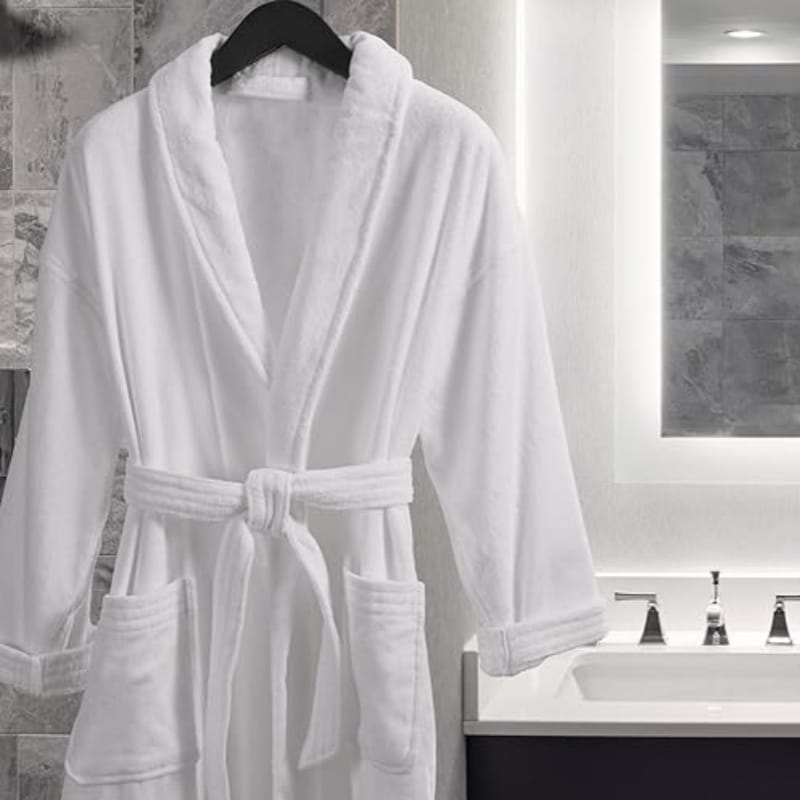
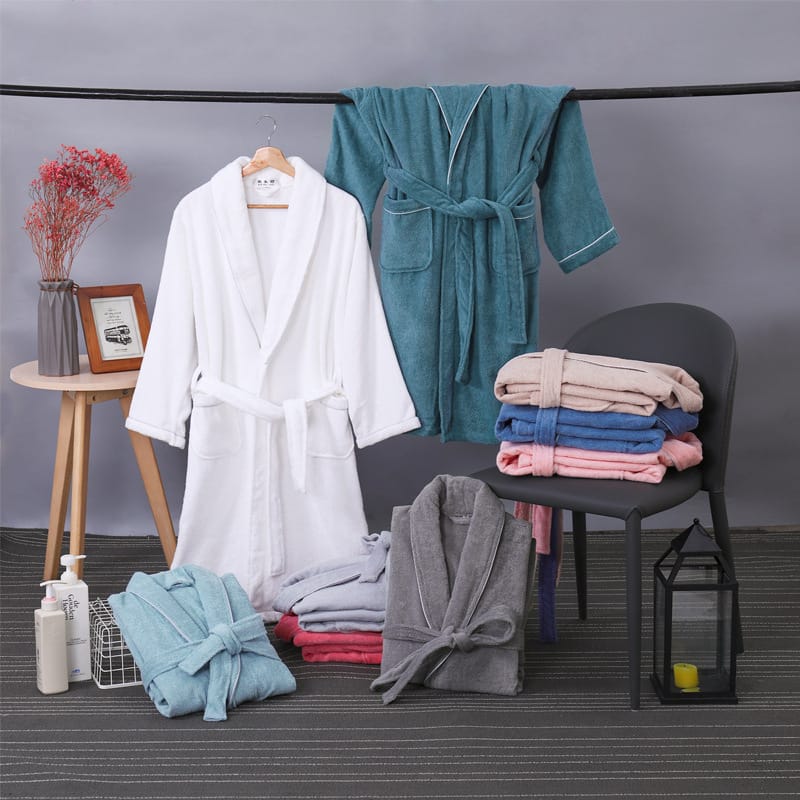
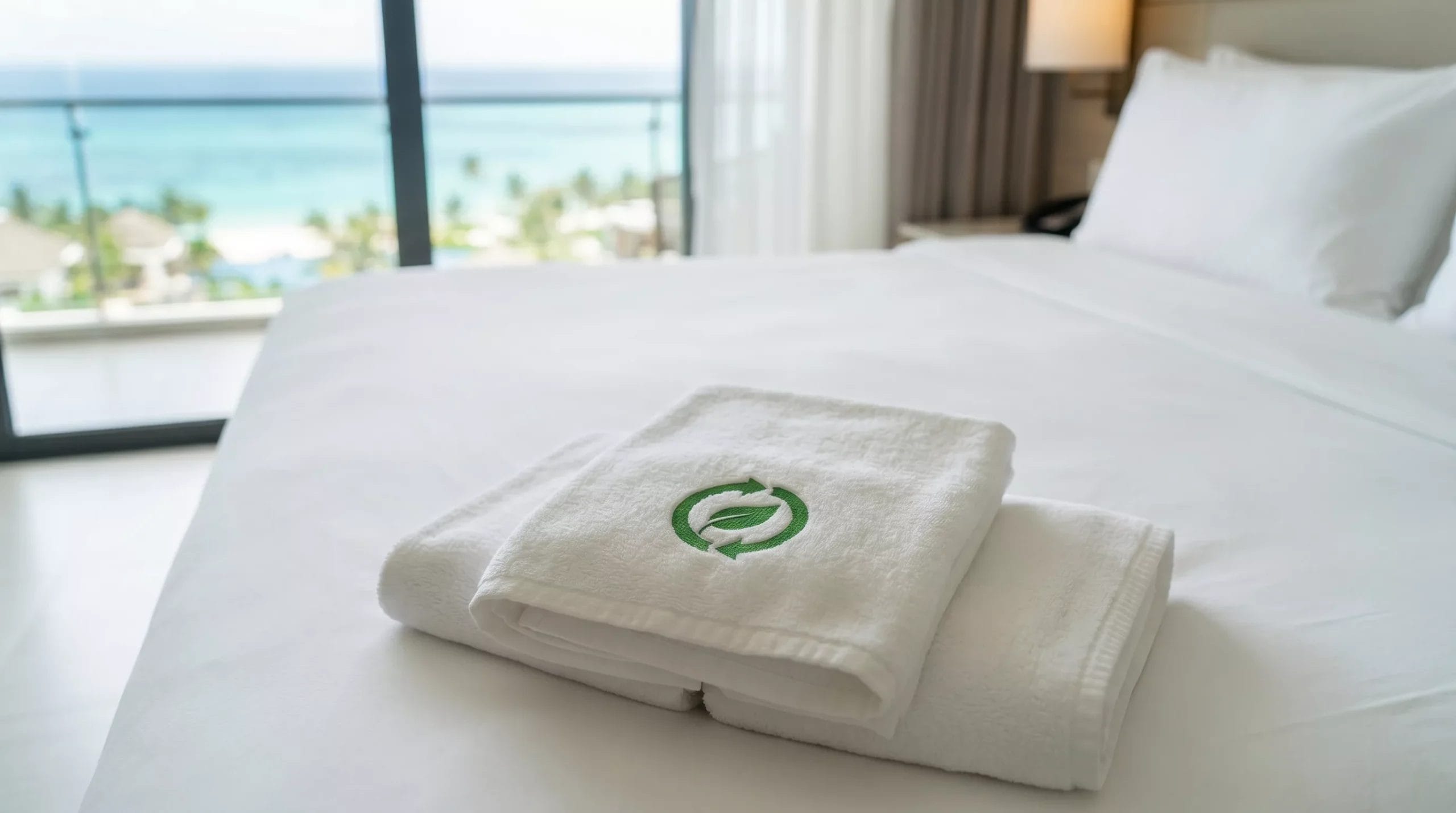
DERBAL’s hotel bathrobe and linen range meets the standards hotel safety hygiene standards suppliers are expected to uphold — produced in compliance with OEKO-TEX Standard 100, ensuring that every fabric component — from the towelling pile to the waistband tape — has been tested for harmful substances. Full material safety documentation is available to purchasing managers on request, streamlining the compliance verification process for brand-affiliated properties.
Eco-Friendly Amenities: Compliance With Sustainability Certification Frameworks
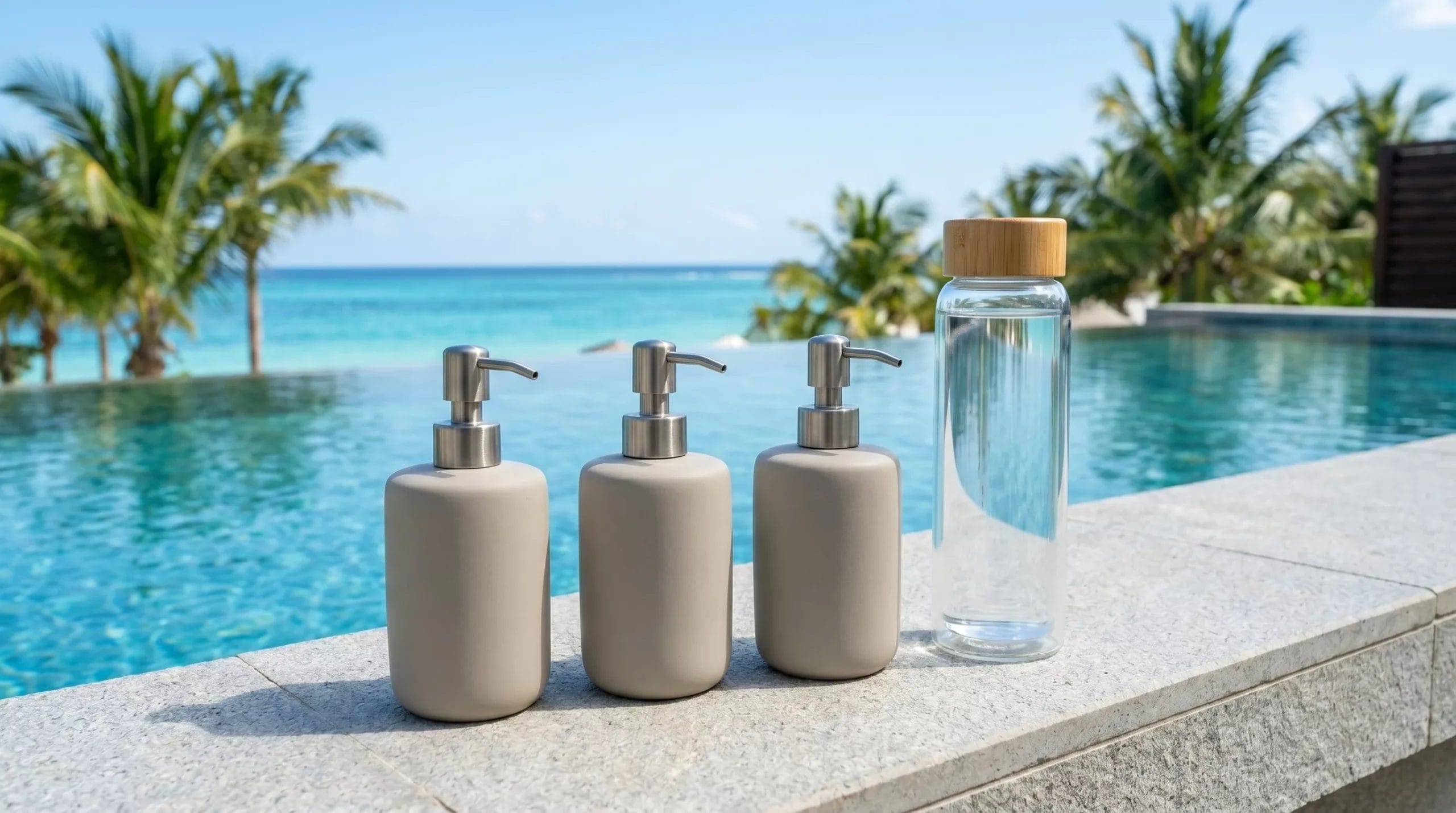
The transition away from single-use plastic in hotel amenities has accelerated substantially since 2022, driven by both regulatory pressure and guest preference data. In the United Kingdom, the ban on supplied single-use plastic items in accommodation settings came into full effect in 2023. France’s AGEC law introduced comparable restrictions, and several Southeast Asian governments — including Thailand and the Philippines — have enacted or are enacting equivalent legislation with specific implications for hotel procurement.
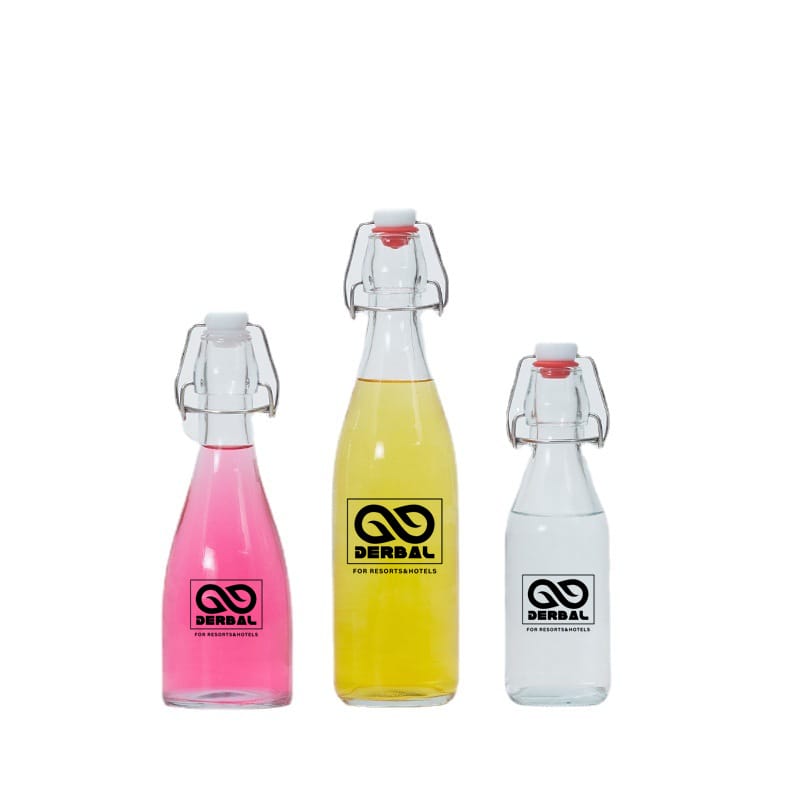
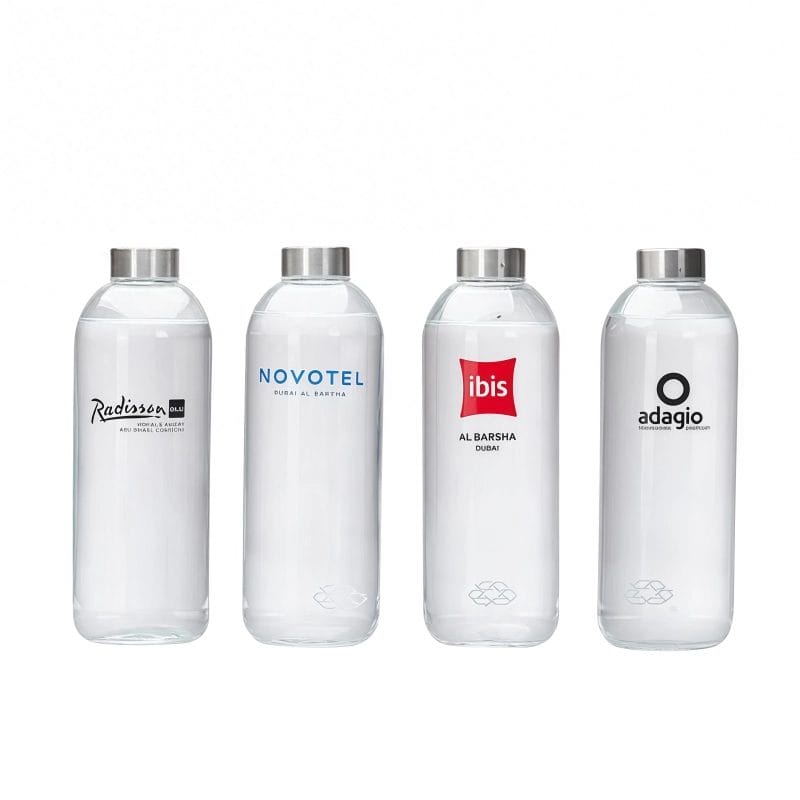
For hotel safety hygiene standards suppliers, this regulatory shift creates a dual compliance challenge: replacing single-use plastic with materials that meet equivalent hygiene and safety standards, while simultaneously satisfying the sustainability documentation requirements of certification bodies. A reusable glass water bottle must meet food-contact safety requirements (typically tested against EU Regulation 10/2011 or equivalent) in addition to any recycled-content claims it makes. A stainless steel amenity bottle must be verified as free from BPA and other restricted substances. Hotel safety hygiene standards suppliers who cannot evidence both dimensions of compliance are increasingly disqualified from brand-affiliated procurement processes.
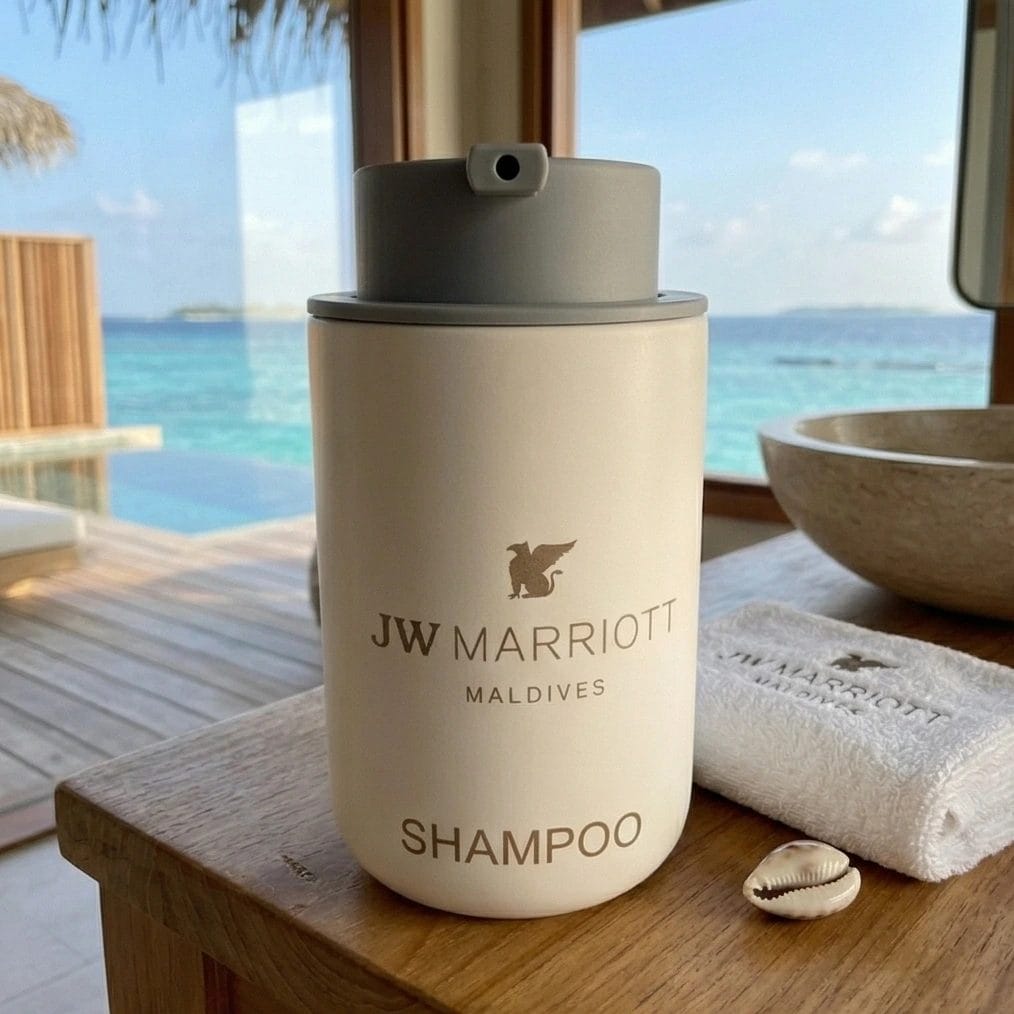
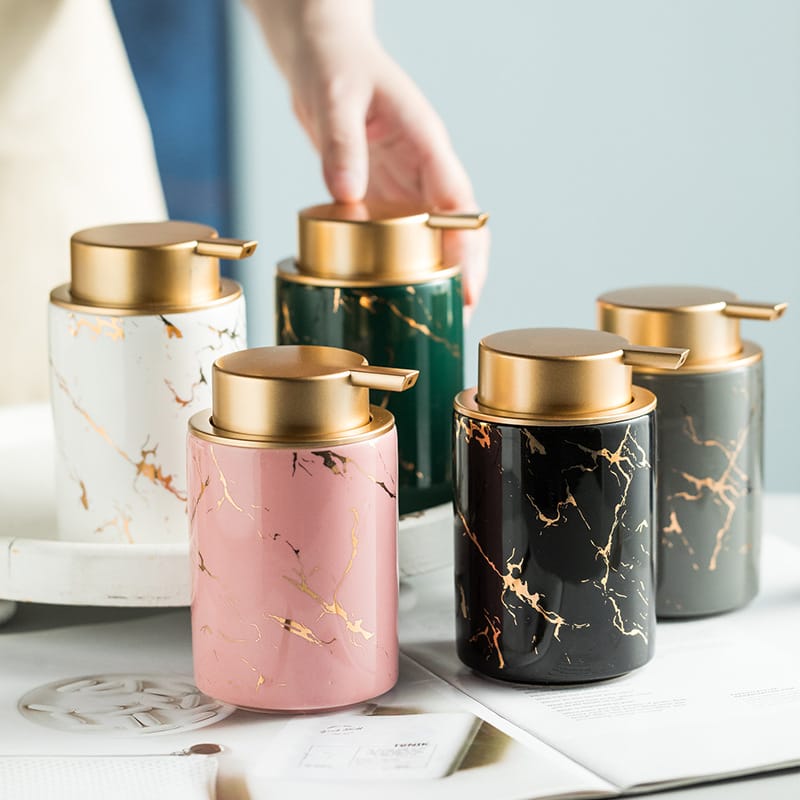
DERBAL’s eco-amenity range — including refillable ceramic amenity dispensers and glass water bottles — is produced with full food-contact safety documentation. Properties pursuing Green Globe or EarthCheck certification will find that DERBAL’s eco-product specifications are pre-aligned with the material requirements of both frameworks, reducing the documentation burden on the procurement team.
Key Sustainability Certifications Suppliers Should Hold or Support in 2026
Purchasing managers sourcing from responsible suppliers in 2026 should expect their vendor base to hold or actively support the following certification frameworks. OEKO-TEX Standard 100 covers harmful substance testing for textile products and is the baseline requirement for most international hotel brands. ISO 14001 Environmental Management System certification indicates that a supplier has embedded environmental responsibility into its operational processes — not merely its marketing. Green Seal certification (relevant for cleaning products and amenities) and the EU Ecolabel (applicable to a range of hospitality products) are increasingly referenced in brand procurement specifications for European-market properties. For suppliers manufacturing in China and exporting to the GCC, China Compulsory Certification (CCC) and relevant Gulf Standardisation Organisation (GSO) product registrations are non-negotiable baseline requirements.
Bathroom Amenity Safety: Formulation Standards and Packaging Integrity
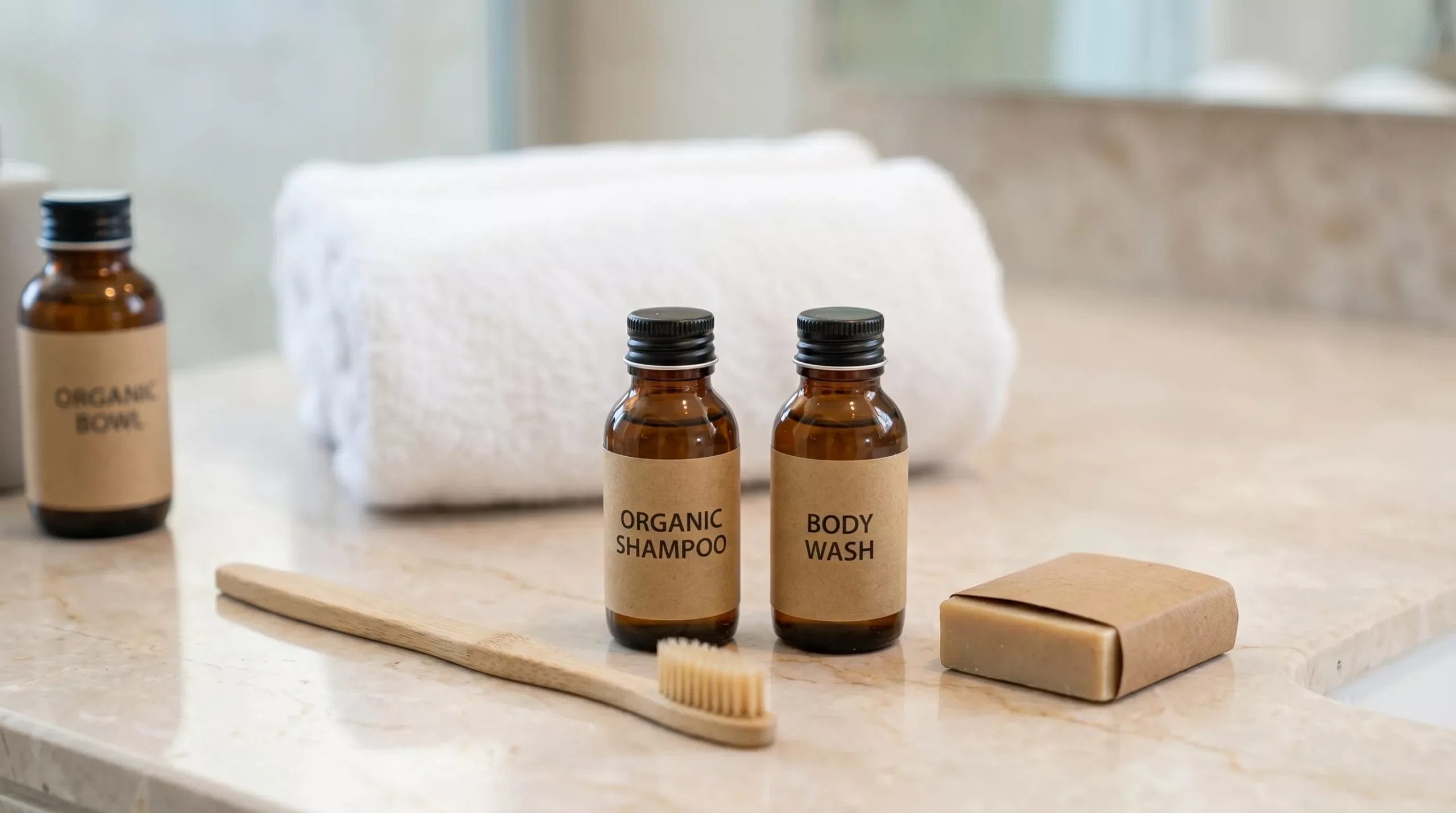
Bathroom amenities represent the most heavily regulated product category in hotel OS&E procurement. Shampoos, conditioners, body washes, soaps, and toothbrushes are all classified as cosmetic or personal care products in most regulatory jurisdictions — meaning they are subject to product registration requirements, safety assessments, and labelling standards that go significantly beyond those applied to general hotel supplies.
In the EU, every cosmetic product supplied to hotel guests must have a Cosmetic Product Safety Report (CPSR) on file with the Responsible Person designated under EU Cosmetic Regulation 1223/2009. In the UAE and Saudi Arabia, cosmetic products require registration with the relevant national authority before they can be legally supplied or used in a hospitality setting. Purchasing managers who are not actively requesting and verifying this documentation from their amenity suppliers are exposing their properties to significant regulatory and reputational risk.
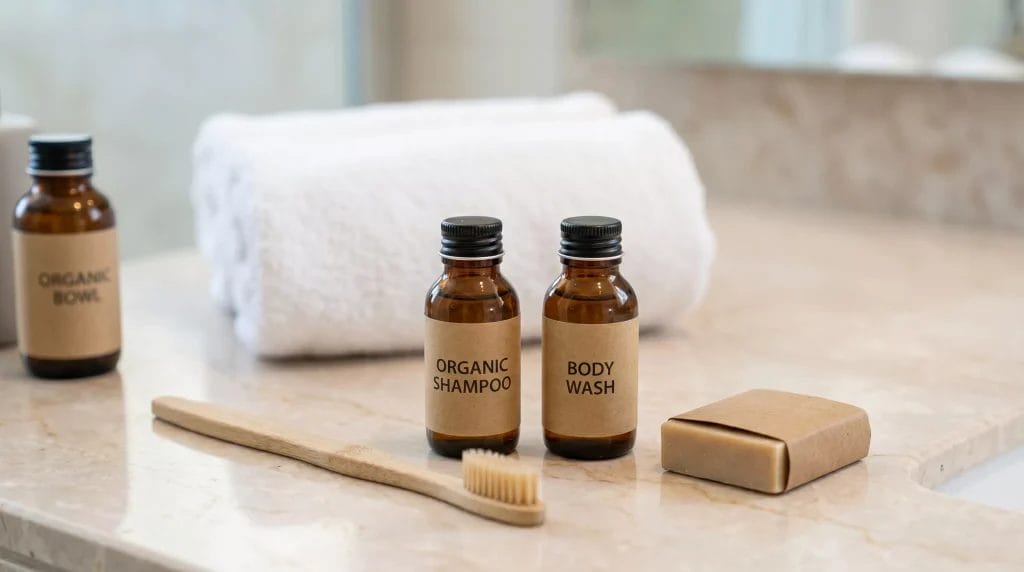
Packaging integrity is an equally critical but frequently overlooked dimension of bathroom amenity compliance. For hotel safety hygiene standards suppliers, packaging integrity requirements are non-negotiable: tamper-evident seals are intact at the point of delivery, that fill volumes match label declarations, and that packaging materials — particularly for eco-positioned products — do not leach restricted substances into the product itself. Kraft paper packaging for soap, bamboo-handled toothbrushes, and refillable dispensers all require specific material safety verification that goes beyond their surface-level sustainability credentials.
DERBAL Compliance-Ready Amenity Products
All DERBAL amenity products ship with full safety documentation. Our team supports purchasing managers through brand standard compliance verification — from OEKO-TEX linen certification to EU cosmetics registration for bathroom amenities.
- Refillable Ceramic Amenity Dispensers →
- Eco Pool Floating Trays →
- OEKO-TEX Certified Hotel Bathrobes →
- Island-Ready Housekeeping Tricycles →
→ Request Product Compliance Documentation
What Purchasing Managers Should Be Asking Suppliers in 2026
Understanding what separates compliant from non-compliant vendors is the single most valuable skill a purchasing manager can develop when working with hotel safety hygiene standards suppliers. The most effective action a hotel purchasing manager or procurement director can take in 2026 is to systematically update their supplier qualification process to include hygiene and safety compliance verification as a standing requirement. This does not require specialist regulatory expertise — it requires a structured set of questions and the discipline to request and file the answers before placing an order.
For hotel safety hygiene standards suppliers, the questions that most clearly distinguish compliant from non-compliant vendors are straightforward. Can you provide OEKO-TEX or equivalent certification for all textile products? Do your bathroom amenity products have completed Cosmetic Product Safety Reports for the EU, and relevant product registrations for the GCC? Can you confirm that your packaging materials have been tested for food or skin contact as appropriate? Are your eco-friendly product claims supported by third-party certification, or are they self-declared? And critically: what is your process for managing a product recall or safety notification?
Suppliers who answer these questions with ready documentation — rather than promises to follow up — are demonstrating a compliance maturity that translates directly into reduced procurement risk for the property. This is particularly important for properties affiliated with international management brands, where a supplier compliance failure can trigger brand standard violations with significant commercial consequences.
The Middle East and Southeast Asia Compliance Landscape in 2026
Hotel safety hygiene standards vary materially across the markets that DERBAL primarily serves — and hotel safety hygiene standards suppliers must be prepared to navigate this diversity with both regulatory literacy and operational flexibility. Purchasing managers sourcing for properties in the UAE, Saudi Arabia, and Qatar operate within a GCC regulatory environment that requires product registration, Arabic labelling compliance, and in some categories, Halal certification. For bathroom amenities in particular, Halal-certified formulations are increasingly specified by luxury hotel brands operating in these markets — with procurement briefs now routinely including Halal status alongside the more traditional quality and sustainability criteria.
In Southeast Asia, the regulatory picture is more fragmented but moving rapidly towards harmonisation. ASEAN’s mutual recognition frameworks for cosmetic products are progressively reducing the documentation burden for suppliers operating across multiple markets — but the transitional period still requires purchasing managers to verify country-specific compliance on a product-by-product basis. Vietnam and Indonesia, in particular, have introduced updated cosmetic product notification requirements in recent years that affect how bathroom amenities are classified and registered for hotel use.
For island-market properties in the Maldives and Seychelles, the practical compliance challenge is compounded by logistics: products that pass regulatory scrutiny in the country of manufacture still need to arrive with intact tamper evidence, within shelf-life dates that account for transit time, and with labelling that meets the standards of the brand operating the property. Experienced suppliers understand these downstream compliance requirements and build them into their export documentation and packaging specifications from the outset.
Frequently Asked Questions: Hotel Safety and Hygiene Standards for Suppliers
Q: What certifications should hotel amenity suppliers hold as a minimum standard in 2026?
A: As a baseline for most international hotel brands, suppliers should hold or be able to evidence OEKO-TEX Standard 100 certification for textile products, ISO 9001 Quality Management System certification, and product-specific safety documentation such as Cosmetic Product Safety Reports for bathroom amenities. For markets in the GCC, relevant national product registrations (UAE CPSR, Saudi SFDA) are additionally required. Eco-positioned products should carry third-party sustainability certification rather than self-declared claims.
Q: How does DERBAL support purchasing managers through the compliance verification process?
A: DERBAL provides full safety and compliance documentation for its product range on request, including material safety data, fabric certification, and product registration references where applicable. For brand-affiliated properties working through a formal supplier qualification process, DERBAL’s compliance team can engage directly with the brand’s procurement or quality assurance team to provide the required documentation in the correct format.
Q: Are bamboo and other eco-friendly amenity materials subject to the same safety testing as conventional materials?
A: Yes, and in some respects to more rigorous testing. Bamboo-handled toothbrushes, kraft paper soap packaging, and similar eco-positioned products must still meet applicable food or skin contact material safety standards. Natural or recycled materials are not exempt from restricted substance testing — and self-declared sustainability claims without third-party verification are increasingly scrutinised by brand compliance auditors and national regulatory authorities.
Q: What is the regulatory status of single-use plastic hotel amenities in Southeast Asia in 2026?
A: The regulatory landscape is evolving rapidly. Thailand has enacted bans on specific single-use plastic items, with hotel amenity packaging included in scope for certain product categories. The Philippines and Indonesia have active plastic reduction legislation at various stages of implementation. Vietnam is progressively tightening its single-use plastic framework. Purchasing managers sourcing for properties in these markets should request up-to-date compliance guidance from their suppliers, as the specific products and timelines affected vary by country and product category.
Q: How should purchasing managers handle supplier compliance in markets where regulations are less clearly defined?
A: The most practical approach is to apply the most stringent applicable standard across the supplier base, regardless of the specific market. Properties affiliated with international brands typically default to EU or equivalent standards as their baseline, which provides a defensible compliance position in virtually all markets. Purchasing managers should document their compliance verification process and retain supplier certification records for a minimum of three years to support any future audit or brand standard review.
Q: Can DERBAL provide Halal-certified bathroom amenities for properties in the Middle East?
A: DERBAL can advise on Halal-certified formulation options within its amenity range and connect purchasing managers with the relevant certification documentation for specific products. Halal certification requirements vary by brand specification and national regulatory framework — the DERBAL procurement team can guide purchasing managers through the options applicable to their specific property and market context.
Ready to Work with a Compliance-Ready Hotel Supplier?
DERBAL supports procurement managers and housekeeping executives across Southeast Asia,
the Indian Ocean, and the Middle East with fully documented, certified hotel amenity products.
Send us your compliance brief — we will respond within 24 hours.
→ Get Compliance Documentation
Browse All Products