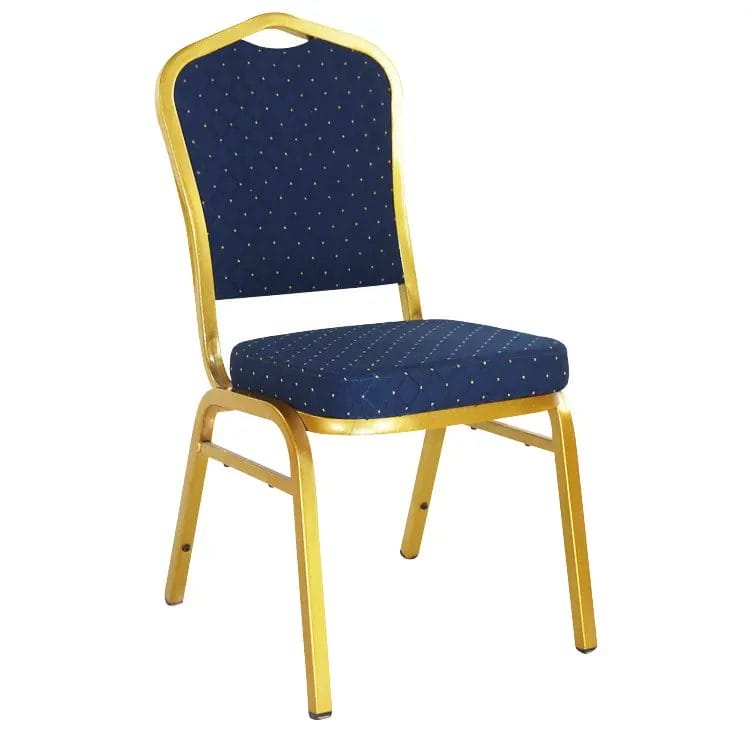
When a hotel purchasing manager signs off on an order for 300 banquet chairs, the excitement usually centers on upholstery swatches, frame finishes, and unit price negotiations. Yet six months after opening—or immediately following the first back-to-back wedding-to-corporate-conference turnaround—the real bottleneck shows up in the back-of-house corridor.
A 300-Banquet Chair order sounds moderate on a spreadsheet. On a back-of-house floor plan, it is a logistical heavyweight. If those chairs stack 8 high instead of 12 high, your housekeeping and banquet operations teams suddenly need 50% more storage square footage, 33% more trolley trips during room flips, and far more hallway staging space. Worse, if the chair frame lacks proper stacking bumpers or seat-pan clearance, the bottom chairs in every stack will show crushed foam and scratched powder-coating before the first quarter ends.
At DERBAL, where we work directly with hotel owners, pre-opening teams, and FF&E engineering contractors across Asia, the Middle East, and island resorts, we treat banquet seating as an operational system rather than a standalone furniture SKU. Before you finalize a purchase order for 300 banquet chairs, here is the exact technical checklist your procurement, banquet operations, and engineering teams should verify together.
1. The Math Behind 300 Chairs: Stack Height vs. Back-of-House Footprint
Every banquet chair specification sheet lists a “stacking capacity”—typically 8, 10, or 12 chairs high. Purchasing managers often glance at that number without translating it into physical floor area, doorway clearances, and labor minutes.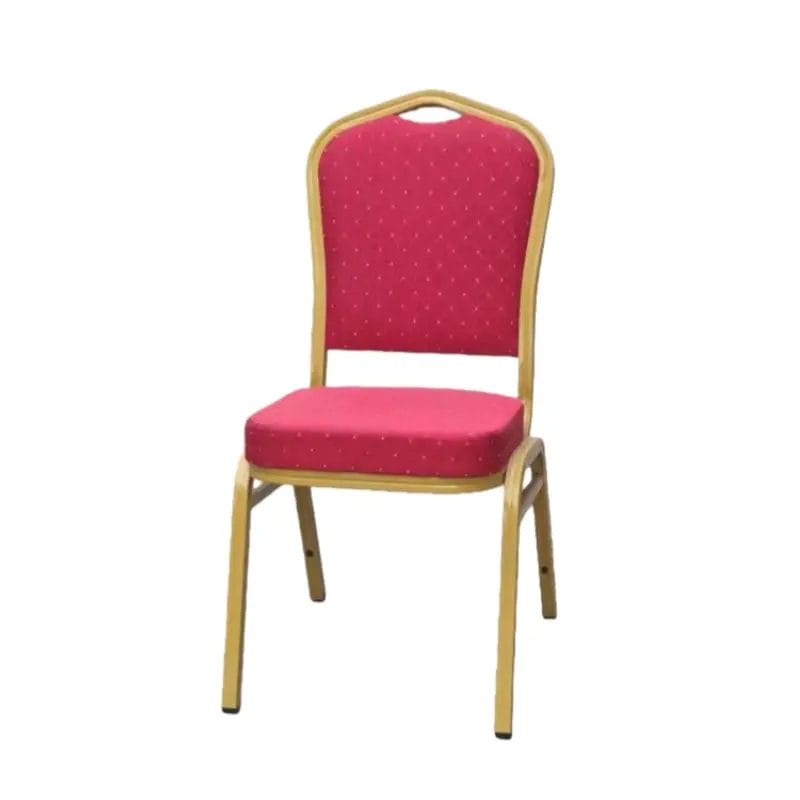
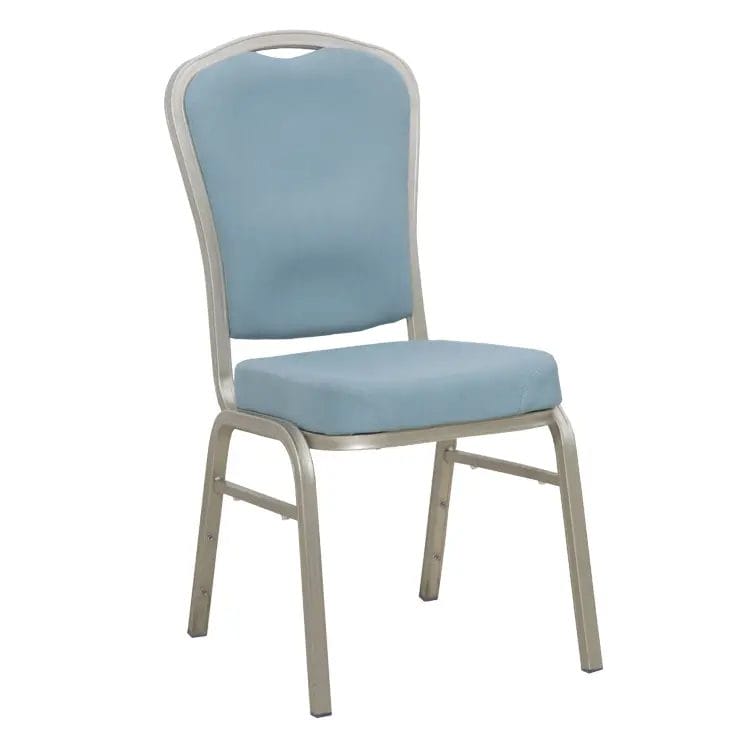
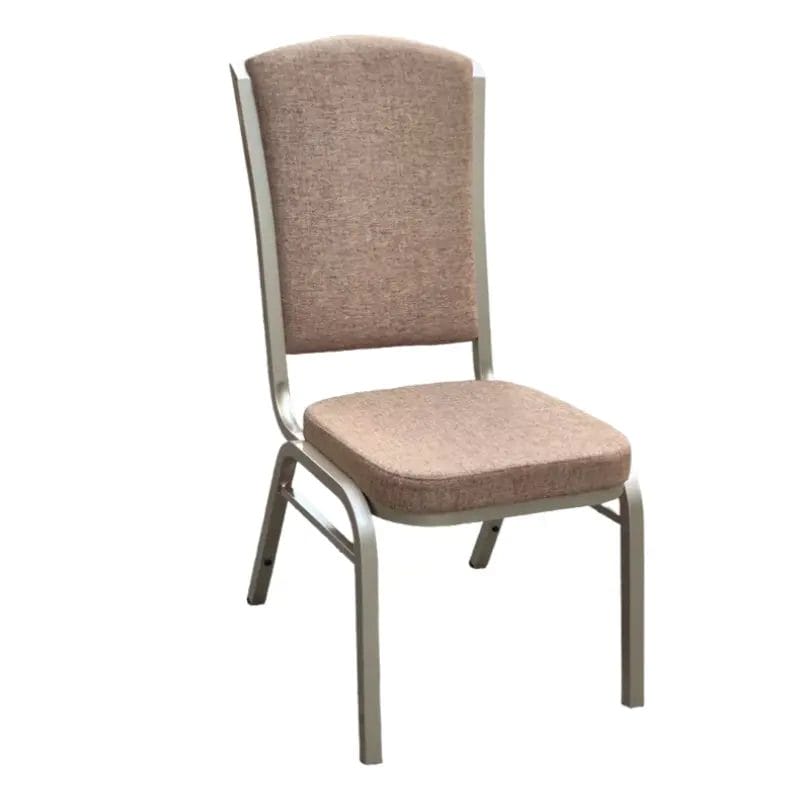
When you order 300 chairs, your total stack count changes dramatically depending on frame geometry and seat cushion thickness:
-
At 8 chairs per stack: You have 38 stacks (37 full stacks of 8 + 1 partial stack of 4).
-
At 10 chairs per stack: You have 30 stacks.
-
At 12 chairs per stack: You have 25 stacks.
How to Calculate Your Exact Storage Floor Area
A standard commercial banquet chair footprint measures roughly 450 mm wide × 580 mm deep (0.26 m²), though nesting pitch (the forward or upward offset as each chair stacks onto the one below) increases the effective depth of a tall stack.
| Stacking Capacity | Total Stacks for 300 Chairs | Approx. Stack Height (Standard 460mm Seat Height) | Net Floor Footprint (Tight Grid) | Recommended Operational Storage Area (With Aisles & Trolley Access) |
| 8 Chairs High | 38 stacks | ~1,650 – 1,750 mm | ~10.0 m² (108 sq ft) | 16.5 – 19.0 m² (178 – 205 sq ft) |
| 10 Chairs High | 30 stacks | ~1,900 – 2,050 mm | ~7.9 m² (85 sq ft) | 13.0 – 15.0 m² (140 – 161 sq ft) |
| 12 Chairs High | 25 stacks | ~2,150 – 2,300 mm | ~6.6 m² (71 sq ft) | 11.0 – 12.5 m² (118 – 135 sq ft) |
The Critical Doorway & Elevator Check:
Never approve a 12-high stacking chair without measuring the lowest service door header, freight elevator opening, and sprinkler head clearance along your banquet route. Most standard commercial service doors measure 2,030 mm to 2,100 mm (80–82 inches) high. A 12-chair stack sitting on a banquet chair trolley (which adds another 120 mm to 160 mm of wheel and platform height) can easily reach 2,350 mm—forcing staff to unstack two chairs at every doorway just to move inventory from storage to the ballroom.
2. Five Hardware Details That Prevent Stack Damage
When 10 or 12 chairs rest on top of one another, the bottom chair carries roughly 55 kg to 85 kg (120–185 lbs) of static downward load—and significantly higher dynamic shock when wheeled over elevator thresholds or tile expansion joints. Cheaply engineered banquet chairs fail in storage long before they fail under a guest.
A. Frame-to-Frame Contact vs. Cushion Compression
In a well-engineered banquet chair, the metal frame of the upper chair rests directly on the structural frame or dedicated stacking bars of the chair beneath it—never directly on the upholstered seat cushion. If upper chair legs press into the molded foam below, the bottom two chairs in every stack will develop permanent indentations within weeks.

B. Full-Perimeter Stacking Bumpers (Not Just Four Dots)
Look closely at the inner legs and side stretchers of the sample chair. High-traffic hotels should specify high-density PVC or TPU stacking bumpers positioned at every metal-to-metal contact point—typically 6 to 8 bumpers per chair—secured with recessed rivets or mechanical clips rather than surface glue that peels off in humid climates.
C. Under-Seat Stacking Bars / Cross-Braces
A welded steel under-seat stacking bar distributes weight evenly across the frame and prevents the upper chair’s seat pan from scraping the backrest upholstery of the chair underneath. Check that the underside of the seat board is finished cleanly (ideally with a sealed non-woven fabric or molded polypropylene under-pan) so exposed staples or rough plywood edges never snag the fabric below.
D. Powder-Coating Hardness and Weld Smoothness
Aluminum frames (2.0 mm wall thickness, 6061-T6 grade) and steel frames (1.2 mm–1.5 mm square or teardrop tubing) are both viable for 300-chair inventories, provided the surface finish can handle friction. Ask your supplier for cross-hatch adhesion test results and verify that under-frame welds are ground smooth so they do not act like files against adjacent chairs during stacking.
E. High-Density Molded Foam vs. Cut Sponge
Standard cut polyurethane foam loses loft rapidly under stacked weight. For hotel banquet seating, specify high-resilience (HR) cold-cured molded foam (55–65 kg/m³ density) for the seat cushion. It rebounds cleanly after multi-day storage and resists the “bottoming out” that guests notice halfway through a two-hour gala dinner.
3. Aluminum vs. Steel Banquet Chairs: Which Makes Sense for a 300-Unit Fleet?
For a 300-chair order, frame material directly impacts staff fatigue, corrosion resistance, and long-term maintenance budgets.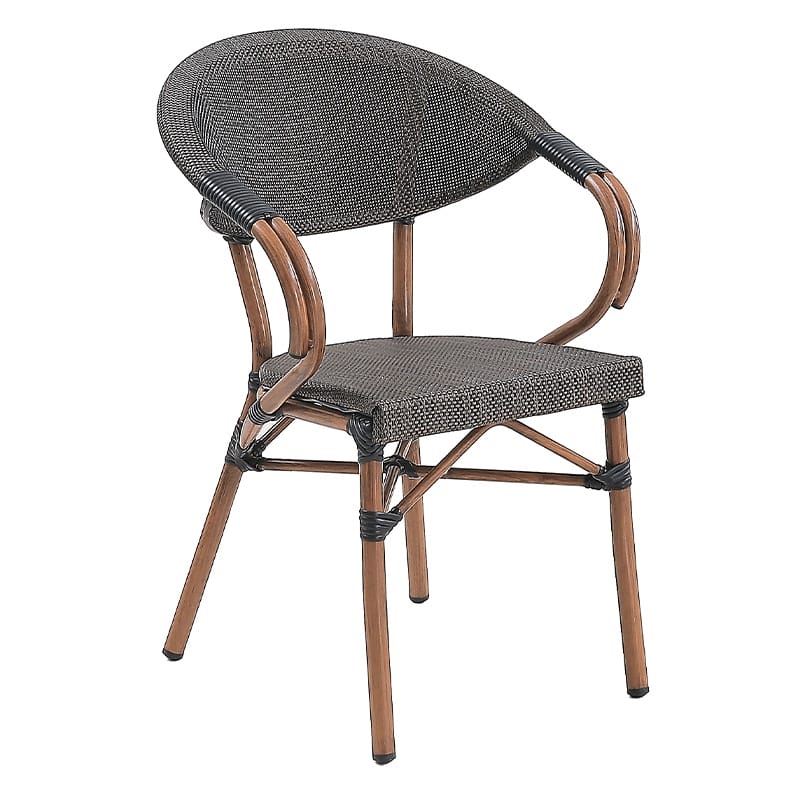
| Evaluation Factor | Heavy-Duty Steel Frame (20×20×1.2mm / 25×25×1.2mm) | Commercial Aluminum Frame (25×25×2.0mm) |
| Unit Chair Weight | ~5.8 – 6.8 kg per chair | ~4.2 – 5.0 kg per chair |
| Total Weight of 300 Chairs | ~1,740 – 2,040 kg | ~1,260 – 1,500 kg |
| Lifting Ergonomics (10th Chair) | Heavier overhead lift for housekeeping staff | ~25% lighter; faster, safer high stacking |
| Coastal / High-Humidity Performance | Requires strict anti-rust pretreatment; vulnerable if chipped | Naturally rust-resistant; ideal for coastal & island resorts |
| Upfront Unit Cost | Lower initial purchase price | ~15%–25% higher upfront, lower lifecycle replacement cost |
| Best Fit | City business hotels with indoor climate-controlled storage | Luxury resorts, coastal properties, high-turnover ballrooms |
4. Trolley & Material Handling Compatibility: Don’t Order Chairs Without Carts
Purchasing 300 banquet chairs without matching transport trolleys is one of the most common pre-opening oversights. Dragging stacks across marble lobbies or carpeting destroys floor finishes and bends chair glides.
Before finalizing your order, check three trolley specifications:
-
Trolley-to-Chair Ratio: For a 300-chair inventory, plan for 1 trolley per 40 to 50 chairs (typically 6 to 8 banquet chair trolleys). This allows one team to load stacks while another rolls them into the ballroom during tight 45-minute event turnovers.
-
Wheel Compound & Diameter: Specify non-marking polyurethane (PU) or TPR casters (minimum 100 mm / 4-inch diameter) with two swivel-locking wheels per trolley. Hard nylon wheels chatter loudly in guest corridors and mark polished stone floors.
-
Tilt-Back vs. Upright Platform Trolleys: Two-wheel tilt-back hand trucks work well for 6–8 chair stacks navigating tight corners, whereas 4-wheel flat platform carts with retaining straps move 10–12 chair stacks faster across long straight service corridors.
5. Container Loading & Delivery Packaging for 300 Chairs
If you are importing 300 banquet chairs directly from a manufacturing hub like China, packaging determines whether your chairs arrive showroom-ready or require touch-up painting on site.
-
Container Volume Planning: Depending on frame profile and stack pitch, 300 stacked banquet chairs typically fill roughly one 40’HQ container (which usually accommodates 280 to 360 stacked chairs, leaving room for 6–8 trolleys and spare glides).
-
Transit Protection: Insist on individually sleeved legs (EPE foam wrap), inter-chair foam sheets between every seat and backrest, and heavy-duty woven polybags or export cartons over each stack so sea-freight vibration does not cause micro-abrasions during transit.
-
Spare Parts Kit: Always include 3%–5% extra floor glides, stacking bumpers, and seat bolts inside the same container. Having exact-match glides on hand saves your engineering team from makeshift repairs two years down the line.
Real-World Hospitality Lessons: How Hotels Solved Banquet Storage & Turnover Bottlenecks
Across DERBAL’s hospitality FF&E and banquet supply projects, we have seen how thoughtful stacking engineering solves vastly different operational constraints:
-
JW Marriott Marquis Hotel Dubai (UAE): Managing mega-events across multiple ballrooms requires rapid overnight flips. By standardizing frame pitch and pairing high-density molded foam chairs with non-marking PU platform trolleys, banquet teams streamlined multi-hundred-chair transfers without corridor bottlenecks.
-
Hilton Seychelles Northolme Resort & Spa (Seychelles): High coastal humidity and compact back-of-house storage rooms demanded rust-proof 2.0 mm aluminum frames with a tight 10-high stacking profile, maximizing vertical clearance while protecting frames from salt-air oxidation.
-
Conrad Maldives Rangali Island (Maldives): With inter-island logistics and outdoor-to-indoor event transitions, lightweight stackable seating with replaceable nylon glides and sealed under-seat pans prevented sand abrasion and moisture trapping during storage.
-
Rixos Premium Saadiyat Island (Abu Dhabi, UAE): High-frequency wedding and gala schedules placed heavy stress on lower chairs in each stack. Upgrading to reinforced under-seat steel stacking bars and 8-point riveted TPU bumpers eliminated frame scuffing across continuous weekly turnovers.
-
The Chedi Katara Hotel & Resort (Doha, Qatar): Needing banquet seating that balanced luxury aesthetics with strict service-corridor height limits, the procurement team selected a custom 9-high stack geometry that cleared 2,050 mm service doors while loaded on transport dollies.
Banquet Chair Stacking & Storage FAQs
How much storage space do 300 banquet chairs take up?
300 stacked banquet chairs require approximately 11 m² to 19 m² (118 to 205 sq ft) of usable back-of-house storage space, including trolley maneuvering aisles. At 12 chairs per stack (25 stacks), the net footprint is about 6.6 m², whereas at 8 chairs per stack (38 stacks), the net footprint increases to roughly 10 m². Always add 40%–50% clearance for safe access.
How many banquet chairs can safely stack on top of each other?
Most commercial hotel banquet chairs safely stack 8 to 12 chairs high, depending on frame tubing thickness and cushion profile. While 12-high stacking maximizes floor density, always verify that the total height of the stack plus trolley wheels clears your lowest service doorway (typically 2,030 mm–2,100 mm) and stays within safe ergonomic lifting limits for staff.
Why do bottom chairs in a stack get damaged, and how can buyers prevent it?
Bottom-chair damage occurs when upper chair legs rest directly on the seat foam or when metal frames rub together without bumpers during transport. Specify chairs with welded under-seat stacking bars that transfer load strictly frame-to-frame, paired with at least 6 to 8 riveted PVC/TPU stacking bumpers per chair and high-density molded foam (55–65 kg/m³).
Should we order aluminum or steel banquet chairs for a 300-chair hotel inventory?
Choose commercial aluminum frames (2.0 mm wall thickness) for coastal resorts, humid climates, and frequent high stacking, and steel frames (1.2–1.5 mm) for budget-focused city hotels with climate-controlled storage. Aluminum chairs weigh roughly 1.5 kg less per unit—saving over 450 kg of cumulative lifting effort across a 300-chair turnover—and will never rust if powder-coating is scratched.
How many banquet chair trolleys should we buy with 300 chairs?
Plan on purchasing 6 to 8 commercial banquet chair trolleys for a 300-chair fleet (roughly 1 trolley per 40–50 chairs). Equip the trolleys with 100 mm non-marking polyurethane (PU) casters and locking brakes so staff can stage and roll multiple stacks simultaneously without scuffing ballroom stone or carpet.
Can 300 stacked banquet chairs fit into a single shipping container?
Yes, 300 stacked commercial banquet chairs typically fit inside one 40’HQ shipping container, with space left over for matching trolleys and spare parts. Exact loading quantity (usually 280–360 units) depends on backrest height and nesting pitch; request a container loading plan from your supplier before confirming final order quantities.
Plan Your 300-Chair Banquet Order with DERBAL
Ordering 300 banquet chairs is a major capital and operational decision—one that affects your storage layout, housekeeping efficiency, and ballroom presentation for the next decade. Before locking in your specification, make sure your supplier provides exact stacked height drawings, bumper placement details, trolley dimensions, and container loading calculations.
As a dedicated one-stop hospitality supply and engineering partner in China, DERBAL helps hotels, resorts, and procurement teams match custom banquet seating, trolleys, folding tables, and FF&E packages to real back-of-house constraints—backed by strict pre-shipment stack testing and export-grade packaging.
Planning a banquet renovation or pre-opening furniture order?
Contact the DERBAL hospitality team today to request CAD stacking dimensions, material swatches, and a tailored FOB/CIF quote for your 300-chair banquet package.