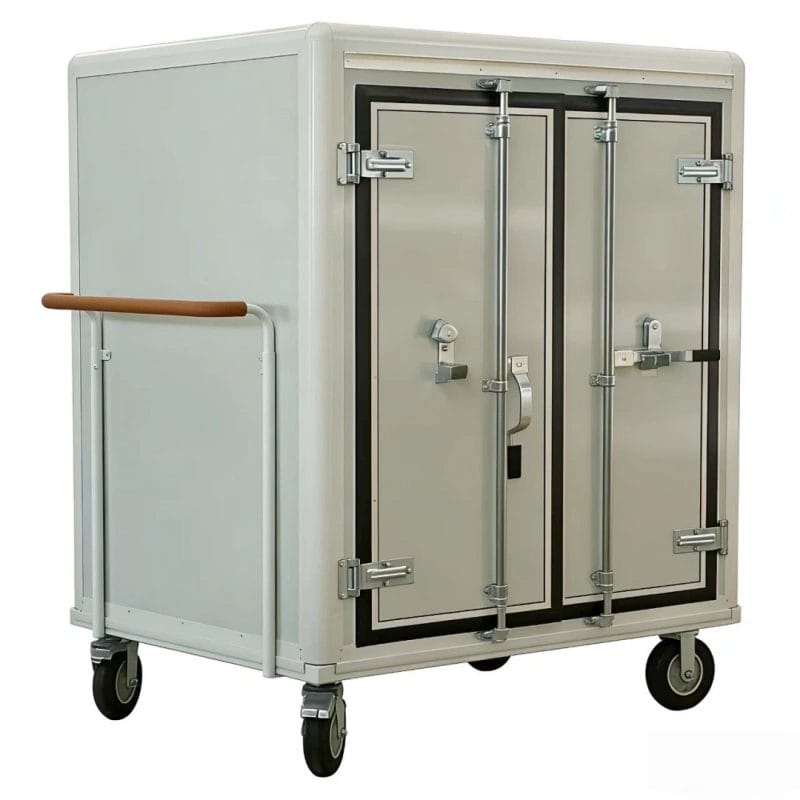
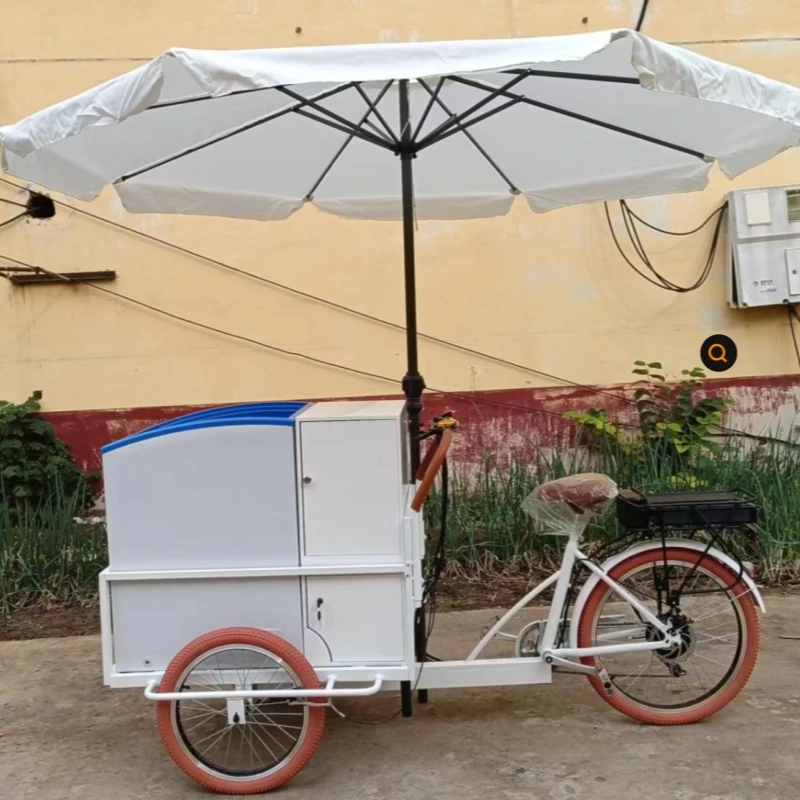
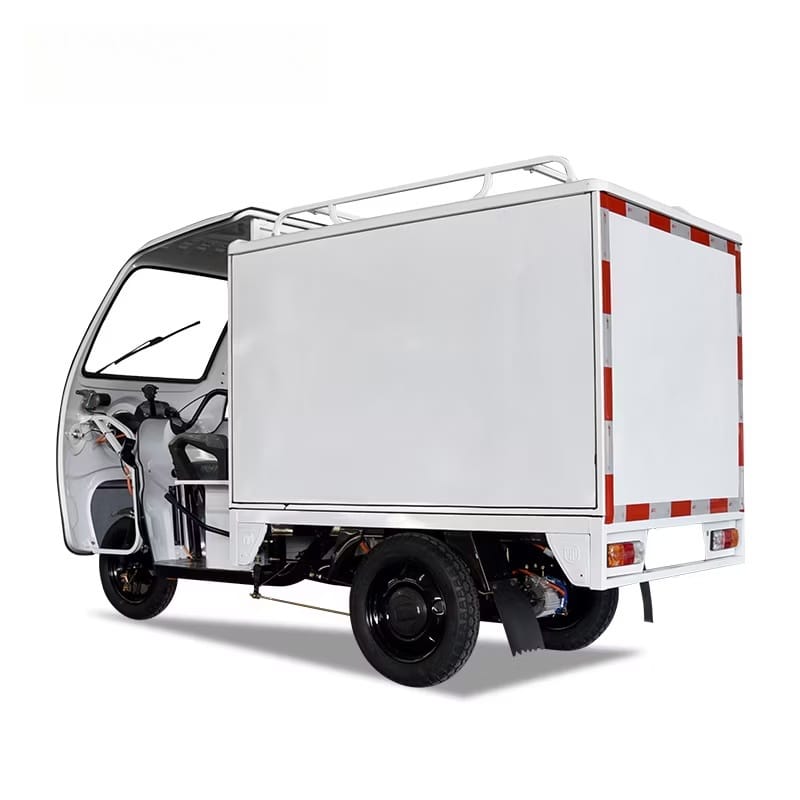
At 8:30 a.m., a housekeeping supervisor at an island resort faces a familiar operational challenge.
Several villas need servicing before the next arrivals. Fresh linen is stored at a central facility. Used towels must be collected, amenities replenished, and occasional maintenance requests delivered across the property.
The team has enough housekeeping staff. Yet attendants spend valuable time moving between villas and storage points.
Adding more people may not solve the problem. Purchasing more vehicles without understanding the routes may not solve it either.
The real question is: How many housekeeping tricycles does the resort need, what should each vehicle carry, and how should the fleet be deployed?
For resorts with distributed villas, housekeeping tricycles can provide a practical alternative to repeated walking trips or using larger service vehicles for relatively small loads.
However, the correct fleet size depends on the resort layout, housekeeping workload, vehicle capacity, operating hours and service routes.
This guide explains how to evaluate those factors before issuing a purchase order.
For buyers comparing available configurations, explore DERBAL’s hotel housekeeping tricycle collection and request a project-specific proposal.
Key Takeaways
-
Fleet size should be calculated from operational demand, not simply the number of villas.
-
Route distance and delivery frequency often matter more than vehicle speed.
-
Cargo volume, weight distribution and braking performance must be evaluated together.
-
Manual and electric-assisted tricycles serve different operational needs, and neither is automatically superior.
-
A small pilot fleet can reveal practical issues before a hotel commits to a large order.
-
Maintenance, spare parts and reserve capacity should be included in the initial procurement plan.
Table of Contents
-
Why resort housekeeping mobility needs its own plan
-
How to calculate fleet requirements
-
Route design and service-zone planning
-
Manual versus electric-assisted tricycles
-
Cargo capacity and storage configuration
-
Coastal durability and safety
-
Total cost of ownership
-
Sample fleet-planning scenario
-
Procurement and inspection checklist
-
How DERBAL supports resort mobility projects
-
Frequently asked questions
1. Why Housekeeping Mobility Is Different at an Island Resort
In a conventional multistory hotel, housekeeping operations often depend on service elevators, floor pantries and relatively short corridors.
At a villa resort, the operational geography can be completely different.
Guest accommodation may be distributed across separate buildings, beachfront villas, garden paths and overwater structures. Central linen storage and staff facilities may be located some distance from the accommodation clusters.
Even where the distances appear modest on a site plan, repeated trips can add up during a shift.
Three movements that create hidden workload
Housekeeping mobility generally involves three categories of movement.
Planned replenishment: Delivering fresh linen, towels, amenities and other consumables to service points.
Collection: Returning used textiles, waste or approved housekeeping materials to designated facilities.
Unplanned response: Delivering missing amenities, replacing defective items or supporting urgent guest requests.
These movements have different priorities.
Planned replenishment can often be scheduled and consolidated. Urgent requests require flexibility, while collection may need separate handling procedures to avoid mixing clean and soiled items.
A suitable fleet plan considers all three.
Why buying one tricycle per attendant can be inefficient
A vehicle assigned permanently to every attendant may sit unused while the employee cleans a villa.
Conversely, too few shared vehicles can create waiting time, repeated handovers and missed delivery windows.
The correct model depends on how work is organized.
A resort using centralized supply runners may need fewer, larger-capacity vehicles than a property where attendants transport their own supplies between distant villas.
The first purchasing decision should therefore be operational: dedicated vehicles, shared vehicles or a mixed fleet?
2. How to Calculate the Number of Housekeeping Tricycles
There is no reliable universal formula such as one tricycle for every ten villas.
A better approach is to calculate how much vehicle time the operation requires during its busiest service period.
Step 1: Measure the actual routes
Start with a resort map.
Identify the housekeeping office, central linen store, satellite pantries, guestroom clusters, laundry collection points and maintenance facilities.
Measure practical travel distances along permitted service routes, not straight-line distances across the island.
Include narrow passages, bridges, pedestrian areas, loading points and locations where riding may be restricted.
Step 2: Estimate trip frequency
For each service zone, estimate the number of trips required during a typical day and during peak turnover.
Include fresh-linen deliveries, used-linen collection, amenity replenishment and other approved movements.
Do not assume that every trip carries a full load.
Actual loading practices can significantly affect the number of trips required.
Step 3: Measure complete cycle time
A vehicle trip includes more than travel.
The full cycle may include loading, travel to the destination, unloading, returning, parking and any necessary handover.
A practical formula is:
Where several stops are combined into one route, use the complete route time instead.
Step 4: Calculate vehicle demand
The following simplified model is useful for initial planning:
The utilization allowance recognizes that vehicles cannot realistically operate continuously without delays, inspection, parking and scheduling gaps.
It is a planning assumption, not a fixed industry standard.
Worked example: A hypothetical 120-villa resort
Suppose a resort’s housekeeping team estimates the following daily transport requirements:
| Movement | Trips | Minutes per Cycle | Total Minutes |
|---|---|---|---|
| Fresh linen delivery | 12 | 18 | 216 |
| Used linen collection | 10 | 16 | 160 |
| Amenities and supplies | 8 | 12 | 96 |
| Miscellaneous service | 6 | 10 | 60 |
| Total | 36 | 532 |
Assume each vehicle is available for six hours of operational work per day and a planning utilization of 75%.
Effective capacity per vehicle:
360 × 0.75 = 270 minutes.
Calculated vehicle requirement:
532 ÷ 270 = 1.97, rounded up to 2 operating vehicles.
This is only a workload calculation. It does not prove that two vehicles can meet every delivery deadline.
If both are needed simultaneously during the morning turnover window, or if clean and soiled goods must be transported separately, the fleet may require additional units.
A reserve vehicle may also be appropriate where a breakdown would significantly disrupt operations.
All figures above are illustrative assumptions, not data from an actual DERBAL customer or a guaranteed productivity result.
3. Route Planning: The Difference Between a Vehicle and a Logistics System
A tricycle can improve mobility only when the route and operating process make sense.
Poor routing can leave staff traveling repeatedly between the same locations, even with a larger fleet.
Divide the property into service zones
For larger resorts, divide accommodation into logical clusters based on pathway connections, travel distances and supply points.
For example, a hypothetical resort might create a North Beach zone, Garden Villa zone, South Beach zone and Overwater Villa access zone.
Each zone should have a designated replenishment process and clear responsibility for transporting materials.
The purpose is not to create unnecessary complexity. It is to reduce repeated cross-property travel.
Consolidate deliveries where appropriate
Rather than sending a vehicle whenever a single villa needs a routine item, the housekeeping team can organize scheduled replenishment runs.
A consolidated trip may carry supplies for several villas, provided the vehicle’s rated payload, cargo dimensions and safe loading requirements are respected.
Urgent requests can remain separate.
This approach helps distinguish predictable work from genuinely time-sensitive service.
Avoid conflicts with guest movement
Service vehicles must operate within the property’s traffic and safety rules.
A resort may have pedestrian-only areas, restricted hours near restaurants, narrow boardwalks or paths shared with guest bicycles.
The route plan should identify where tricycles can travel safely and where supplies must be transferred by hand.
Operational efficiency should never come at the expense of guest or employee safety.
4. Manual vs Electric-Assisted Housekeeping Tricycles
One of the most common procurement decisions is whether to choose human-powered or electric-assisted vehicles.
The answer depends on the property.
Manual housekeeping tricycles
Manual tricycles can be practical for relatively flat resorts with manageable travel distances and loads.
They avoid traction-battery charging requirements and may have simpler mechanical maintenance needs.
However, their suitability depends on the rider, load, surface, distance and frequency of use.
A heavily loaded manual tricycle is not automatically easy to pedal.
Electric-assisted housekeeping tricycles
Electric assistance may be worth evaluating for longer routes, repeated loaded journeys or terrain where manual pedaling creates excessive physical demands.
But electric models introduce additional requirements.
Buyers should consider battery specifications, charging arrangements, electrical safety, service support, spare batteries where appropriate and the suitability of electrical components for humid coastal environments.
Battery range should be evaluated under realistic loading and route conditions rather than accepted solely from an unloaded marketing test.
Comparison table
| Consideration | Manual Tricycle | Electric-Assisted Tricycle |
|---|---|---|
| Purchase complexity | Generally simpler | Additional electrical specifications |
| Charging | Not required | Charging infrastructure needed |
| Maintenance | Mechanical components | Mechanical and electrical components |
| Longer routes | Depends on rider and terrain | Assistance may reduce pedaling effort |
| Capital cost | Often lower | Often higher |
| Operational planning | Rider workload and loading | Battery management and rider workload |
| Best application | Selected flat, shorter routes | Selected longer or demanding routes |
A mixed fleet can sometimes be more appropriate than standardizing every department on the same configuration.
DERBAL’s hotel staff bicycles and tricycles category provides an overview of relevant resort mobility product types.
5. Cargo Capacity: Weight Is Only Half the Question
A housekeeping tricycle must carry the correct materials safely.
Buyers often focus on the stated maximum load, but the actual usability of a cargo compartment also depends on volume, shape, accessibility and weight distribution.
Understand rated payload
A specification should distinguish between total permissible load and cargo-only payload.
Where the manufacturer states a combined rider-and-cargo limit, the rider’s weight must be included.
The hotel should also clarify whether the rating applies under specific operating conditions and how it was validated.
Evaluate cargo volume
Fresh linen and towels can occupy considerable space without necessarily reaching a vehicle’s weight limit.
Other materials may be denser or require protective storage.
A useful sample-loading test should reproduce the actual items the housekeeping team intends to transport.
For example, prepare a representative load of folded linen, towels, amenities and housekeeping consumables, then assess whether the cargo compartment closes properly and whether the load can be secured.
Clean and soiled materials
Housekeeping teams should maintain appropriate separation between clean supplies and soiled materials.
Depending on the hotel’s procedures, this may require dedicated trips, separate containers or distinct vehicle assignments.
A lockable cargo box can protect contents from unauthorized access and some environmental exposure, but it does not automatically make the compartment hygienic or waterproof.
The actual design and cleaning procedure must be reviewed.
Weight distribution and stability
Cargo should be positioned according to the manufacturer’s loading instructions.
An improperly distributed load can affect steering, braking and stability, particularly during turns or on uneven pathways.
The presence of three wheels does not eliminate rollover risk.
Before deployment, test the proposed vehicle and load combination under controlled conditions representative of the property.
6. Coastal Durability: Evaluate the Complete Tricycle
For island resorts, corrosion resistance is an important purchasing consideration.
Aluminum alloy frames can offer advantages over unprotected carbon steel, but the complete tricycle includes many other components.
Fasteners, spokes, brake assemblies, chains, bearings, hinges and cargo-box hardware may use different materials.
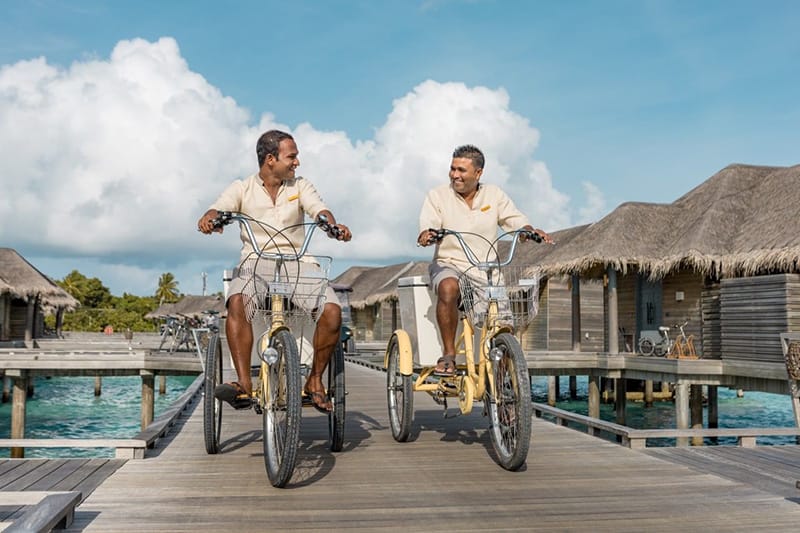
Even aluminum can experience localized corrosion in chloride-containing environments.
Therefore, claims such as “completely corrosion-proof” should not replace a component-level technical review.
Components to check
| Component | Procurement Question |
|---|---|
| Frame | What alloy and protective finish are used? |
| Cargo box | Is it aluminum, fiberglass or another material? |
| Fasteners | What grades and protective treatments are specified? |
| Wheel assembly | What are the rim, spoke and hub materials? |
| Brakes | How will performance be maintained in wet conditions? |
| Bearings | What sealing and maintenance arrangements apply? |
| Chain and drivetrain | What cleaning and lubrication are required? |
| Electrical system | What protection and charging requirements apply, if fitted? |
The resort should also consider how easily individual components can be replaced.
A durable frame provides limited operational value if a small unavailable spare part keeps the vehicle out of service for weeks.
Build a maintenance schedule
A practical maintenance plan should cover pre-use safety checks, tire condition, brakes, steering, fasteners, cargo-box fittings and cleaning.
More detailed inspections should follow the manufacturer’s recommendations and the property’s actual usage.
For coastal applications, staff should remove accumulated salt and contaminants using suitable methods, avoid damaging protective finishes and investigate corrosion or mechanical deterioration promptly.
The inspection frequency should reflect usage and operating conditions rather than an arbitrary universal interval.
7. Fleet Total Cost of Ownership
A procurement comparison should extend beyond the vehicle’s purchase price.
Relevant costs include freight, import charges, assembly, maintenance, replacement parts, charging where applicable and vehicle downtime.
A simple model is:
Illustrative three-year comparison
| Cost Component | Manual Fleet | Electric-Assisted Fleet |
|---|---|---|
| Number of vehicles | 3 | 3 |
| Illustrative unit price | $650 | $1,450 |
| Purchase cost | $1,950 | $4,350 |
| Freight and setup | $900 | $1,000 |
| Three-year maintenance/parts allowance | $900 | $1,350 |
| Charging/electrical allowance | $0 | $450 |
| Illustrative three-year total | $3,750 | $7,150 |
Hypothetical budgeting example only. Figures are not DERBAL quotations, tested maintenance costs or actual customer results. Downtime, financing and residual values are excluded.
The manual fleet appears less expensive under these assumptions.
However, the analysis is incomplete without evaluating the work each fleet can perform, employee workload and the resort’s service requirements.
If electric assistance is necessary to complete certain routes safely and consistently, comparing identical vehicle quantities may not be appropriate.
The objective is not to select the lowest-cost vehicle in isolation. It is to choose a transport system that meets operational demand at a justifiable lifecycle cost.
8. A Pilot Program Before Bulk Procurement
For a resort purchasing a substantial fleet, a pilot can be more informative than approving a vehicle from photographs.
The pilot should be structured and documented.
Phase 1: Select representative routes
Choose a route that reflects the property’s normal working conditions.
Include the relevant surfaces, loading points, distances and operating restrictions.
Phase 2: Test realistic loads
Use the materials the vehicle will actually carry.
Confirm that the cargo box is practical, the load is secure and the rider can operate the vehicle safely.
Phase 3: Measure operating time
Record complete trip cycles, including loading, travel and unloading.
Compare the result with the resort’s current process.
Phase 4: Collect staff feedback
Housekeeping attendants and supervisors should comment on comfort, steering, braking, parking, cargo access and cleaning.
Engineering should review maintainability and spare-part requirements.
Phase 5: Refine the specification
Adjust the proposed fleet quantity, cargo configuration or vehicle type before finalizing the bulk purchase.
A short, well-designed pilot can identify practical limitations that are difficult to see in a quotation.
9. The Housekeeping Tricycles RFQ Checklist
A complete RFQ helps suppliers provide comparable proposals.
| RFQ Category | Information to Provide |
|---|---|
| Resort profile | Country, property type, number of villas |
| Route conditions | Distances, gradients, surface types |
| Operating model | Shared fleet, dedicated staff or supply runners |
| Vehicle type | Manual, electric-assisted or mixed |
| Cargo | Typical items, volume and weight |
| Frame | Preferred material and finish |
| Storage | Box dimensions, doors, locks and cleaning needs |
| Safety | Brakes, lighting, reflectors and relevant local requirements |
| Branding | Frame color, hotel logo, cargo-box graphics |
| Maintenance | Spare parts, manuals, service requirements |
| Logistics | Delivery destination, packaging and shipping terms |
| Approval | Sample evaluation and inspection criteria |
For pre-shipment inspection, buyers should agree on dimensional checks, finish quality, assembly, brake operation, wheel alignment, cargo fittings, packaging and documentation.
Electrical models require additional checks appropriate to the supplied system and applicable destination requirements.
The final acceptance criteria should be documented before production.
10. How DERBAL Supports Resort Housekeeping Mobility Projects
DERBAL TECHNOLOGY CO., LTD is a China-based one-stop OS&E and FF&E supply partner serving international hotels and resorts.
Our hospitality sourcing scope includes housekeeping equipment, guestroom supplies, staff mobility products, outdoor furniture and other operational categories.
For housekeeping tricycle projects, the purchasing process should begin with the resort’s operational requirements.
Specification development
DERBAL can help buyers compare proposed vehicle configurations, frame materials, storage options and branding requirements.
OEM/ODM customization
Depending on manufacturing feasibility, projects may involve custom frame colors, cargo-box designs, logos and selected equipment configurations.
All critical specifications should be confirmed through technical drawings and sample approval.
Quality coordination
A project-specific inspection plan can cover materials, workmanship, functional checks, packaging and agreed documentation.
Consolidated procurement
Housekeeping tricycles may be purchased alongside linen carts, cleaning tools, guestroom amenities and other operating supplies.
DERBAL’s hotel OS&E sourcing solutions can help procurement teams coordinate multiple categories.
For island properties, the Maldives resort supply solutions page provides additional context for sourcing and logistics planning.
The objective is to help hotels purchase equipment that matches the actual work rather than simply ordering the largest or most heavily advertised model.
11. Frequently Asked Questions
How many housekeeping tricycles does a 100-villa resort need?
There is no universal quantity. Fleet size depends on route distances, trip frequency, cargo capacity, staffing arrangements and peak-hour demand. A route-based workload calculation followed by a pilot is more reliable than a villa-count ratio.
Are housekeeping tricycles suitable for sandy pathways?
Suitability depends on sand depth, compaction, tire design, loading and vehicle configuration. Loose sand can make riding difficult and affect stability. Test the actual route before procurement.
Is an aluminum housekeeping tricycle better for Maldives resorts?
An appropriately designed aluminum frame can offer useful corrosion-resistance advantages, but buyers must also evaluate wheels, fasteners, brakes, bearings and cargo fittings.
Should resorts choose manual or electric housekeeping tricycles?
Manual vehicles may suit shorter, flatter routes. Electric assistance may be worth evaluating for longer or more demanding routes. The final decision should reflect safety, workload and lifecycle cost.
Can housekeeping tricycles transport used linen?
They can be considered for approved linen-collection operations when the cargo system, loading limits and hotel hygiene procedures are suitable. Clean and soiled materials should be appropriately separated.
What is the ideal cargo-box size?
The appropriate size depends on the volume and dimensions of the actual supplies. Hotels should perform a sample-loading exercise rather than selecting a box by appearance alone.
Do three-wheeled vehicles eliminate rollover risk?
No. Three-wheel layouts can still become unstable during sharp turns, uneven loading or unsuitable operation. Staff training and manufacturer loading instructions remain important.
Can hotels customize housekeeping tricycles with logos?
Customization may include colors, cargo-box graphics and logos, subject to the selected model and manufacturing process.
What spare parts should a resort purchase?
The list should be based on the selected vehicle’s maintenance requirements and local availability. Common considerations include tires, tubes, brake components, drivetrain parts and cargo-box hardware.
How should a hotel compare housekeeping tricycle quotations?
Compare the complete specification, verified load rating, frame and component materials, sample performance, warranty terms, spare-parts support, packaging, freight and lifecycle cost.
12. Conclusion: Plan the Fleet Before Buying the Vehicles
The most effective housekeeping tricycle fleet is not necessarily the largest.
It is the fleet that can deliver the required supplies, support staff movement and respond to operational demand without creating unnecessary expense or safety risks.
For island resorts, the planning process should begin with a route audit, continue through realistic workload calculations and conclude with representative vehicle testing.
A purchasing decision based on these steps is more defensible than one based only on the number of villas or a supplier’s headline specifications.
When combined with clear quality requirements and maintenance planning, housekeeping tricycles can become a practical part of a resort’s daily operating system.
Plan Your Resort Housekeeping Fleet With DERBAL
Developing a new island resort, replacing an existing fleet or improving housekeeping logistics?
Share your property layout, number of villas, typical routes, preferred vehicle type and expected cargo requirements with DERBAL.
Our team can help evaluate sourcing options, customization requirements and coordinated delivery arrangements.
DERBAL TECHNOLOGY CO., LTD
Based in China, Serving the Globe.
Help Hotels Purchase Better.