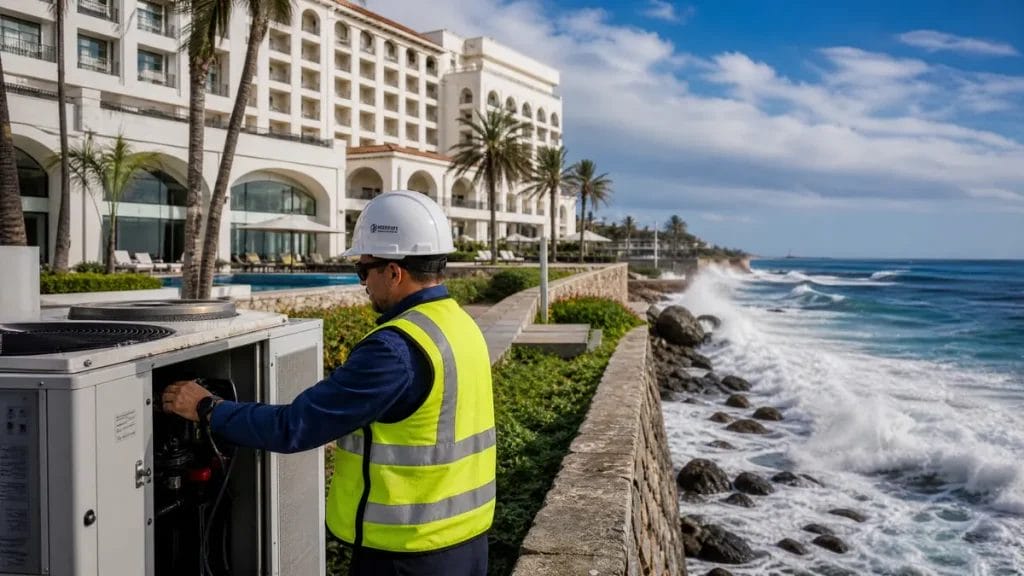
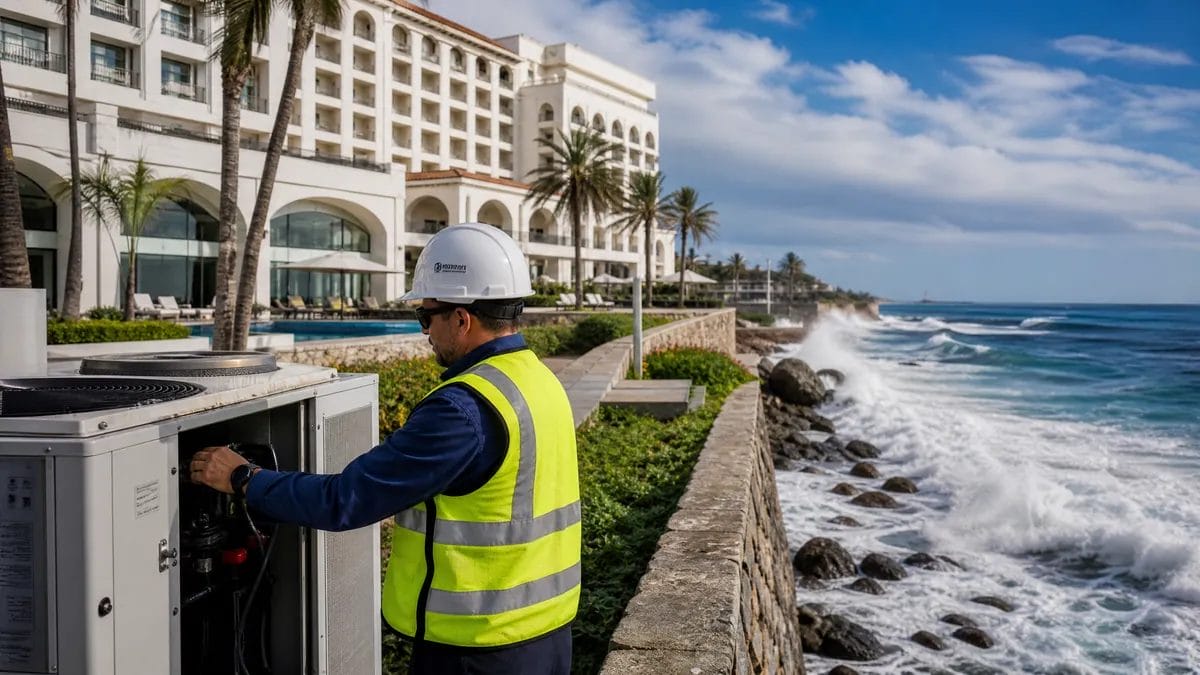
Coastal hotel supplies and anti-corrosion amenities represent one of the most consequential — and most frequently underestimated — procurement decisions in the hospitality industry. For purchasing managers and engineering departments at properties within reach of the ocean, the choice of materials is not a design preference. It is a financial and operational decision that plays out across months and years: the difference between equipment that lasts its intended lifecycle and equipment that begins to fail within twelve months of deployment, creating unplanned replacement costs, maintenance burden, and visible guest experience degradation.
This guide addresses the anti-corrosion challenge directly — what causes coastal hotel supply failures, which product categories are most vulnerable, what material specifications engineers and purchasing managers should be demanding from suppliers in 2026, and how to calculate the true return on investment when specifying long-lasting coastal hotel supplies.
Is your coastal property still specifying standard steel hotel equipment?
DERBAL supplies anti-corrosion coastal hotel amenities to 200+ luxury resorts across the Maldives, Seychelles, UAE, Thailand, and Vietnam — engineered specifically for saltwater and high-humidity environments.
→ Request an Anti-Corrosion Product Consultation
The Real Cost of Corrosion for Coastal Hotel Supplies
Corrosion is the single most common cause of premature product failure in coastal hotel environments, yet it remains systematically underweighted in procurement decisions. A purchasing manager comparing a standard steel housekeeping tricycle at a lower unit price against an aluminium alloy model at a higher price is making a straightforward calculation that frequently reaches the wrong conclusion — because it counts only the purchase cost and ignores the replacement cost, the maintenance cost, and the guest experience cost of a product that fails ahead of schedule.
According to Hospitality Net’s 2026 Coastal Property Operations Report, oceanfront hotels operating within one kilometre of the shoreline report an average 40–60% reduction in the operational lifespan of standard-specification metal equipment compared to inland properties. For properties in the Maldives, Seychelles, or open-ocean island locations, that figure rises further — salt spray, tidal humidity, and year-round UV exposure create a corrosion environment that degrades unprotected steel at an accelerated rate invisible until the damage is already visible to guests.
The engineering department that identifies a rusting housekeeping tricycle, a pitting pool equipment frame, or a corroded umbrella pole on a guest’s photograph has already passed the point where maintenance can address the problem. Coastal hotel supplies and anti-corrosion amenities must be specified correctly before the order is placed — not remediated after deployment.
The Anti-Corrosion Material Hierarchy: What Coastal Hotel Engineers Need to Know
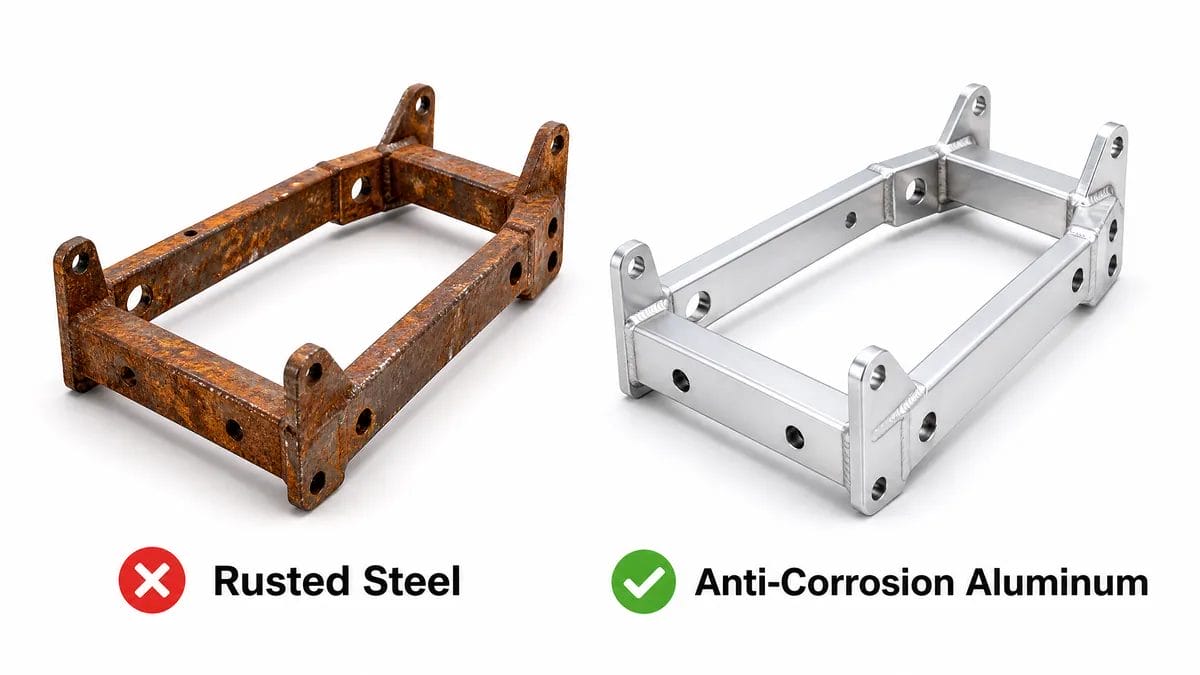
Not all metal is equal in a saltwater environment, and the difference between specifications is not marginal — it is the difference between a five-year asset and an eighteen-month replacement cycle. Understanding the anti-corrosion material hierarchy is the starting point for any coastal hotel engineering or procurement team reviewing their supply specification.
Aluminium alloy is the primary specification for all coastal hotel supplies where a metal frame is required. Its corrosion resistance in saltwater environments is approximately 90% greater than standard carbon steel, derived from the stable oxide layer that forms naturally on the aluminium surface and prevents further oxidation. Unlike steel rust, which is expansive and structurally destructive, aluminium oxide is self-limiting and does not compromise the structural integrity of the component. For a coastal hotel operating a housekeeping tricycle, an island cruiser bike, a floating tray rim, or an umbrella pole in a salt-air environment, aluminium alloy is the minimum viable specification — not a premium option.
Stainless steel (304 or 316 grade) provides excellent corrosion resistance for pool-contact and high-moisture applications. Grade 316 stainless steel, which contains molybdenum, offers superior chloride resistance compared to 304 and is the preferred specification for fixtures in direct contact with saltwater or pool chemicals. For coastal hotels, 316-grade stainless should be specified for pool handrails, outdoor fixture hardware, and any marine-adjacent installation.
Standard carbon steel with surface coatings — powder coating, galvanising, or epoxy paint — provides short-term corrosion protection but is inappropriate as a primary coastal hotel supply specification. Coatings are damaged by UV exposure, mechanical abrasion, and handling over time; once the coating is breached, the underlying steel corrodes rapidly in a high-humidity salt environment. Engineering departments that inherit properties with coated-steel equipment typically find themselves in an accelerating maintenance cycle within two to three years.
“Every engineering manager at a coastal property has seen the same pattern: the cheaper equipment looks fine at the twelve-month mark, then falls apart between eighteen and twenty-four months. Aluminium alloy costs more on day one and a fraction of the replacement cost over five years. The maths are not complicated.”
— DERBAL Senior Product Engineer, Coastal & Island Solutions
High-Priority Coastal Hotel Supply Categories for Anti-Corrosion Specification
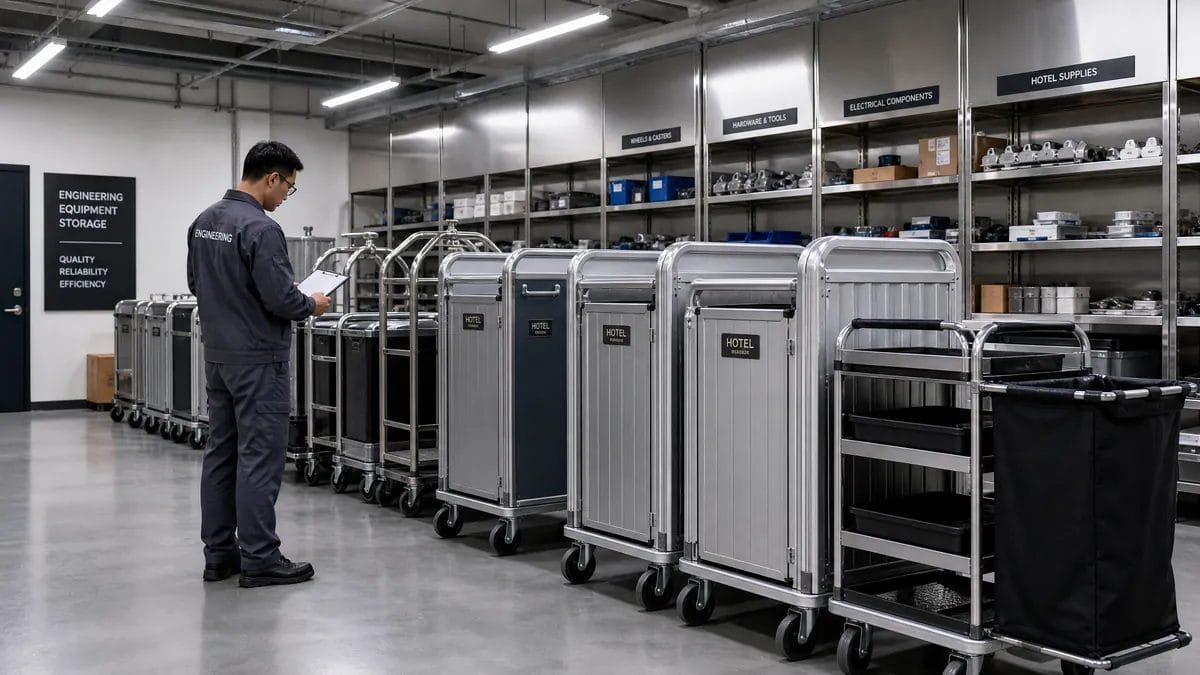
1. Housekeeping Tricycles and Mobility Equipment
Housekeeping tricycles are the most corrosion-vulnerable large-format product in a coastal hotel’s operational supply inventory — deployed daily across outdoor paths, exposed to sea air continuously, and washed with water that may contain chlorine or salt residue. A standard steel-frame tricycle in a Maldivian or beachside Thai resort environment will show surface rust within six months and structural corrosion within eighteen months. DERBAL’s aluminium alloy housekeeping tricycles are engineered specifically for coastal hotel supply environments, with full aluminium alloy frames and non-metal rubber drive chains that eliminate the most common drivetrain corrosion failure point. The result is an asset with an operational lifespan of four to six years in coastal conditions — compared to eighteen to twenty-four months for standard steel equivalents — producing a total cost of ownership significantly lower than the unit price differential suggests.
2. Pool Floating Trays
Pool floating trays represent a high-visibility corrosion risk for coastal hotel supplies teams. The rim frame — which is in direct contact with pool water, chlorine, and salt air simultaneously — is the first component to show corrosion failure on inadequately specified trays. The correct specification is a PE rattan body (UV-resistant, waterproof, salt-immune) with an aluminium alloy rim frame rather than a steel or chrome-plated steel alternative. DERBAL’s hotel pool floating tray range uses this specification as standard, ensuring tray rims remain rust-free across the product’s full operational lifecycle in coastal environments.
3. UV-Protective Golf Umbrellas and Parasols
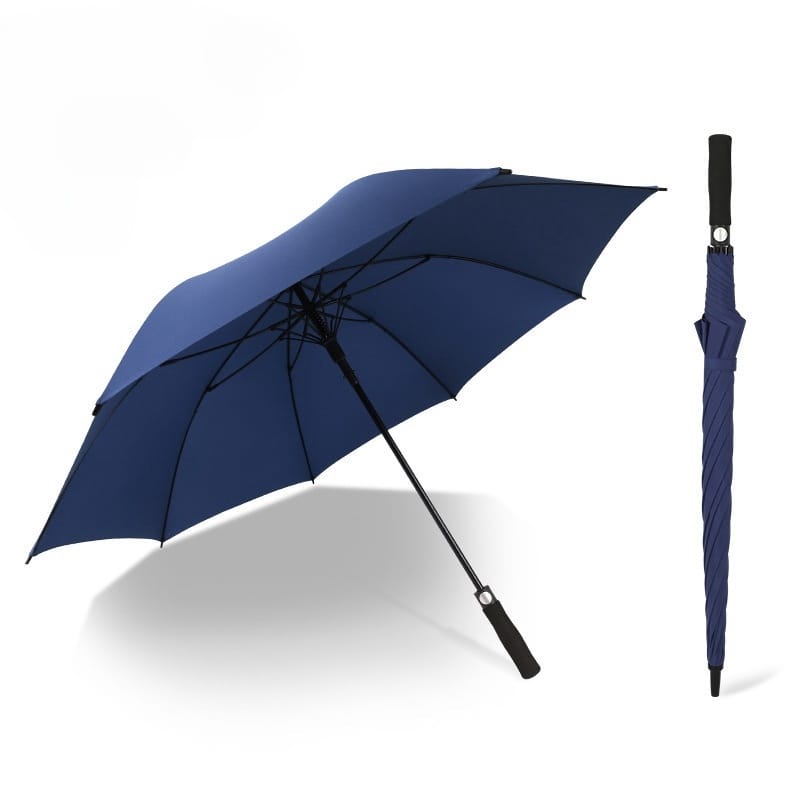
Umbrella and parasol poles in coastal hotel beach and pool deployments are subject to constant salt air exposure, mechanical stress from wind, and UV radiation that degrades paint and coating protection over time. Fibreglass frame models — rather than steel-shaft alternatives — are the correct anti-corrosion specification for coastal hotel supply environments: fibreglass does not corrode, does not rust through protective coatings, and maintains structural integrity across the full product lifecycle. DERBAL’s UV golf umbrella range uses fibreglass frames as the baseline coastal hotel supply specification.
4. Island Cruiser Bikes
For coastal resort properties that offer guest cycling or operate staff bike fleets across open island terrain, the frame specification is critical. Aluminium alloy frames with sealed bearing hubs, stainless steel spoke nipples, and non-metal or stainless drivetrain components extend bike fleet operational life significantly compared to standard-specification bicycles in coastal environments. The non-metal rubber chain on DERBAL’s island cruiser bike model — eliminating the steel chain as the primary corrosion failure point — is a specification detail that maintenance engineers at coastal properties consistently identify as the most operationally significant difference from standard cycling equipment.
DERBAL Anti-Corrosion Coastal Hotel Supply Range
Every DERBAL product supplied to coastal and island properties is specified for saltwater and high-humidity environments — with aluminium alloy frames, non-metal drivetrains, and UV-resistant materials as standard.
- Aluminium Alloy Housekeeping Tricycles →
- PE Rattan + Aluminium Pool Floating Trays →
- Fibreglass-Frame UV Golf Umbrellas →
- Aluminium Island Cruiser Bikes →
→ Request Anti-Corrosion Specifications & Pricing
Anti-Corrosion Specification in Practice: The Poolside Environment
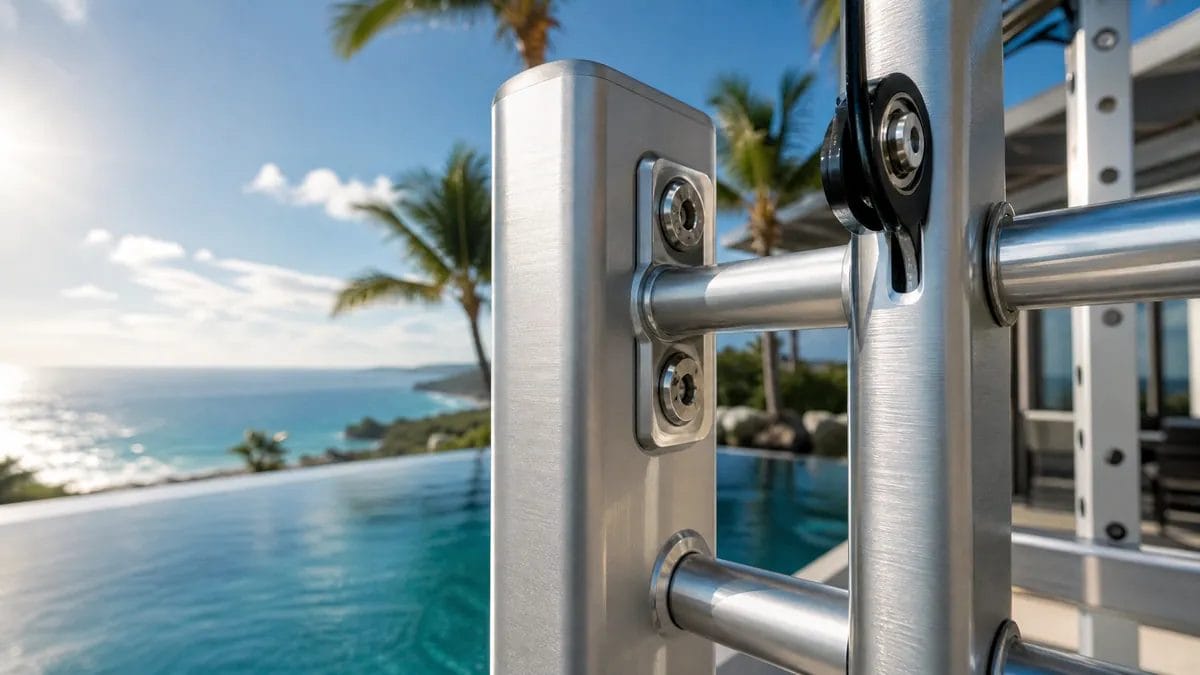
The pool environment is the most chemically aggressive zone for coastal hotel supplies in any property. Pool water contains chlorine or salt-chlorine compounds; pool decks are wet and salt-air exposed simultaneously; and products at poolside receive the combined degrading effect of UV radiation, chemical exposure, and mechanical wear from daily guest use. Anti-corrosion specification for poolside coastal hotel supplies must address all three vectors.
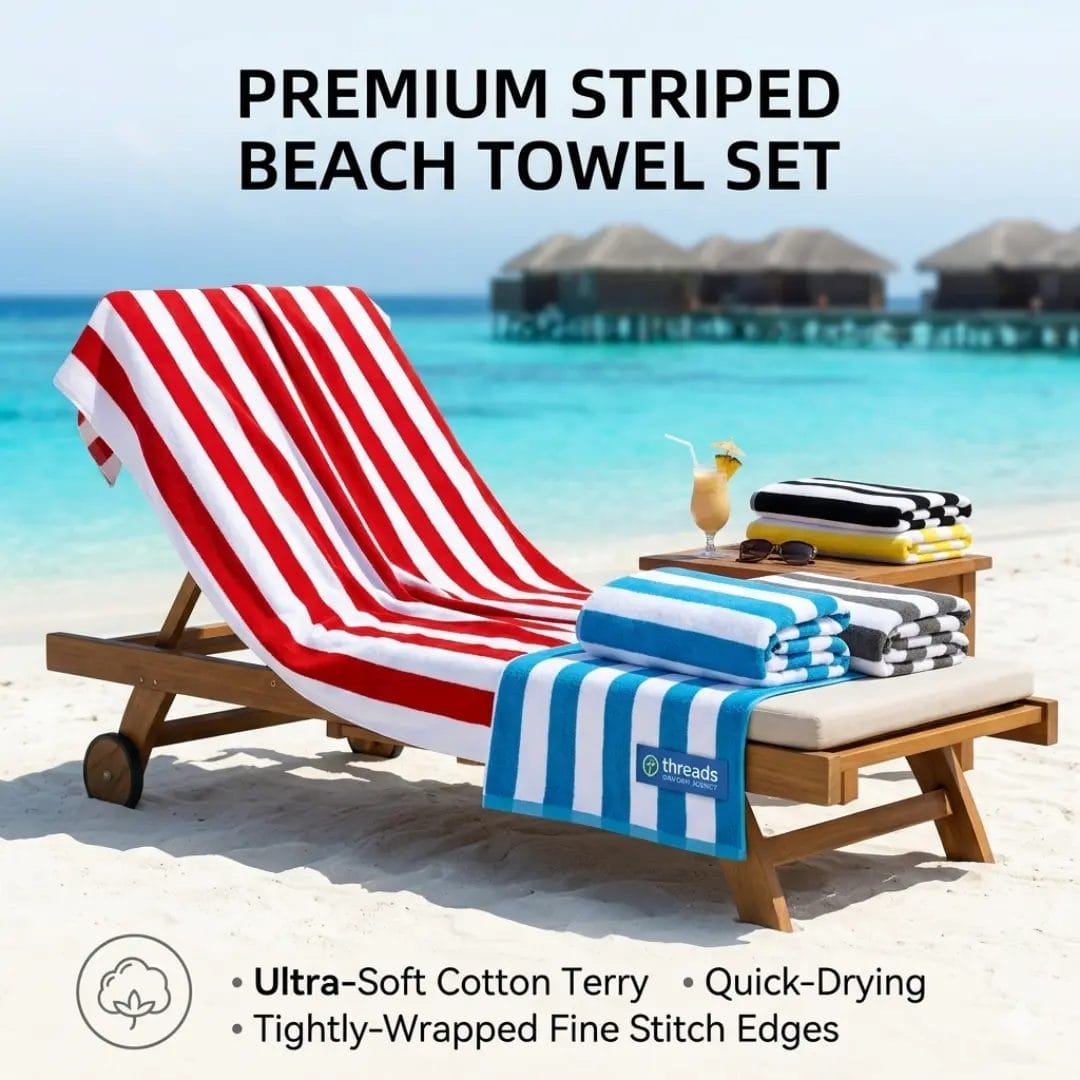
For pool deck furniture frames and equipment, aluminium alloy is the correct choice. For fixtures in direct pool water contact — handrails, pool ladders, underwater lighting frames — marine-grade 316 stainless steel is the appropriate specification. For textile products on the pool deck — pool towels, chair cushion covers, umbrella canopies — UV-resistant, quick-dry, and wash-fast material specifications protect the product from the bleaching and structural degradation that unprotected fabrics experience in intense coastal sunlight.
The ROI calculation for anti-corrosion poolside specification is straightforward. A standard steel pool equipment frame replaced at eighteen months costs significantly more over five years than an aluminium alloy equivalent requiring no replacement — even accounting for the higher unit price of the aluminium product. Engineering departments that track replacement costs by product category consistently find that anti-corrosion specification pays back the price premium within the first replacement cycle avoided.
Calculating the ROI of Anti-Corrosion Coastal Hotel Supplies
The business case for anti-corrosion coastal hotel supplies becomes most visible when purchasing managers and engineering departments calculate the total cost of ownership across a three-to-five-year period rather than comparing unit prices at the point of purchase. The framework is simple: multiply the unit purchase price by the number of replacement cycles expected within the analysis period, then add the maintenance labour cost associated with each failing product before replacement.
For a concrete example: a standard steel housekeeping tricycle purchased at a lower unit price and replaced at eighteen months in a coastal environment costs approximately 3.3 unit prices over five years, plus the labour cost of two replacement logistics cycles. An aluminium alloy tricycle purchased at a higher unit price and still operational at five years costs one unit price over the same period, with zero replacement logistics cost. The crossover point — where the aluminium alloy option becomes cheaper on a total cost basis — occurs before the first replacement cycle of the steel alternative.
Engineering departments that present this calculation to finance teams during budget planning consistently find that anti-corrosion specification for coastal hotel supplies is approved without resistance. The challenge is almost always one of visibility — purchasing managers who buy on unit price alone, without a lifecycle cost model, are making a decision that looks correct in the short term and proves expensive in the medium term. DERBAL’s product team can provide coastal hotel supply lifecycle cost modelling for specific product categories on request.
Frequently Asked Questions: Coastal Hotel Supplies and Anti-Corrosion Amenities
Q: How close to the ocean does a hotel need to be for anti-corrosion specification to be required?
A: As a practical guideline, properties within two kilometres of the coastline — and all island properties regardless of their size — should specify anti-corrosion materials for outdoor and pool-adjacent hotel supplies. The corrosive effect of salt air is detectable at distances significantly greater than two kilometres in open-ocean environments; the threshold for specification should be conservative, not optimistic. Engineering departments at properties that have experienced premature equipment failure typically wish they had applied anti-corrosion specifications to a wider product range than they initially did.
Q: What is the difference between aluminium alloy and standard aluminium for coastal hotel supplies?
A: Aluminium alloys — which combine aluminium with elements such as magnesium, silicon, or zinc — offer significantly greater structural strength than pure aluminium while maintaining the corrosion resistance properties that make aluminium appropriate for coastal environments. For hotel equipment applications such as housekeeping tricycles and floating tray frames, aluminium alloy is the correct specification: pure aluminium would be insufficiently rigid for these load-bearing applications.
Q: Do anti-corrosion specifications apply to bathroom amenity products as well as outdoor equipment?
A: Yes. In coastal hotel bathrooms, the combination of high ambient humidity, proximity to salt air, and daily water exposure means that amenity dispensers, shower fixtures, and towel rail-adjacent products should also be specified for corrosion resistance. Ceramic amenity dispensers outperform chrome-plated plastic alternatives in coastal humidity environments, as the ceramic glaze is impervious to the micro-corrosion that eventually degrades plated plastics in high-moisture settings.
Q: Can DERBAL provide anti-corrosion specifications and documentation for brand-standard hotel properties?
A: Yes. DERBAL maintains material specification documentation for all product lines, including corrosion resistance data, alloy composition certificates, and test results relevant to coastal and marine environments. For brand-affiliated properties whose procurement approval processes require material safety and performance documentation, the DERBAL team can provide this in the format required by the specific brand’s quality or engineering standards.
Q: What is the expected operational lifespan of DERBAL aluminium alloy hotel supplies in a coastal environment?
A: Based on operational experience across coastal and island resort deployments in the Maldives, Seychelles, and Southeast Asia, DERBAL’s aluminium alloy housekeeping tricycles and island cruiser bikes have an expected operational lifespan of four to six years in direct coastal environments with normal maintenance. This compares to eighteen to twenty-four months for standard steel equivalents in the same environment. Individual lifespan will vary with maintenance practices, cleaning protocols, and the specific severity of the salt exposure at the property’s location.
Q: How does DERBAL handle replacement parts for coastal hotel supply products?
A: DERBAL can advise on the key replacement components — tyres, pump heads, drive chain elements — for its coastal hotel supply product range and provide guidance on recommended maintenance intervals for coastal deployments. Purchasing managers who wish to maintain on-site spare parts inventories for critical operational equipment can discuss component sourcing with the DERBAL procurement team at the time of the initial product order.
Specify Long-Lasting Coastal Hotel Supplies With DERBAL
DERBAL’s anti-corrosion coastal hotel supply range is engineered for saltwater environments —
aluminium alloy frames, fibreglass poles, non-metal drivetrains, and UV-resistant materials.
Send your specification brief and we will respond within 24 hours.
→ Get Anti-Corrosion Pricing
Browse All Products