By DERBAL Hospitality Sourcing Team
Introduction
Refillable bathroom amenity dispensers can look like a straightforward purchasing decision: replace individual shampoo, conditioner and body-wash bottles with larger containers, add a hotel logo and order enough for every guestroom. But a successful rollout involves far more than selecting a bottle.
Procurement managers need a system that fits the bathroom design, works with selected toiletries, withstands handling and remains practical for housekeeping teams to clean, refill and maintain. For island resorts in the Maldives and Fiji, it also affects replenishment logistics, replacement-part availability, packaging waste and inventory storage.
A beautiful Amenity dispensers that leaks, clogs, breaks or takes too long to service may become an operational problem. This guide explains how to evaluate the complete operating system rather than a standalone accessory.
DERBAL TECHNOLOGY CO., LTD supports hotels and resorts with OS&E sourcing, OEM/ODM customization, supplier coordination, sample evaluation and logistics planning from China. Explore hotel soap dispenser solutions or request a procurement quotation.
Key Takeaways
- Select the format according to bathroom layout, housekeeping access and guest experience.
- Evaluate bottle, pump, bracket, lock and refill product as a compatible system.
- Define documented hygiene procedures and cleaning responsibilities.
- Consider humidity, salt exposure, cleaning chemicals and breakage.
- Require functional samples and a housekeeping trial.
- Compare lifecycle cost, including labor and replacement parts.
- Plan refill inventory and spares for remote island resorts.
Table of Contents
1. Why Refillable Dispensers Are a Procurement-System Decision
2. Compare the Main Hotel Dispenser Formats
3. Select Materials for Humid and Coastal Bathrooms
4. Test Pump Compatibility Before Bulk Production
5. Build a Housekeeping Hygiene and Refill Procedure
6. Coordinate OEM Branding With Bathroom Design
7. Structured Sample Approval and QC
8. Calculate Lifecycle Cost, Not Just Unit Price
9. Maldives, Fiji and GCC Considerations
11. How DERBAL Supports Refillable Amenity Procurement
12. Frequently Asked Questions
1. Why Refillable Dispensers Are a Procurement-System Decision
Bathroom amenities influence guest experience and daily housekeeping workload. Refillable systems may reduce the number of small bottles purchased and discarded, but introduce service responsibilities: checking fill levels, identifying correct products, cleaning surfaces and reporting damaged pumps or brackets. Purchasing must maintain consistency between installed units and future replacements; engineering may need to approve wall mounting.
Three objectives
Guest experience: attractive, intuitive and reliable. Operational efficiency: easy inspection and servicing. Long-term cost: replaceable components, consistent reorders and manageable inventory.
A complex lock can discourage unauthorized access but slow housekeeping. A premium ceramic bottle may suit a vanity yet be vulnerable in a narrow shower niche. The correct decision depends on the actual operating environment.
2. Compare the Main Hotel Dispenser Formats
| Format | Advantages | Procurement considerations |
|---|---|---|
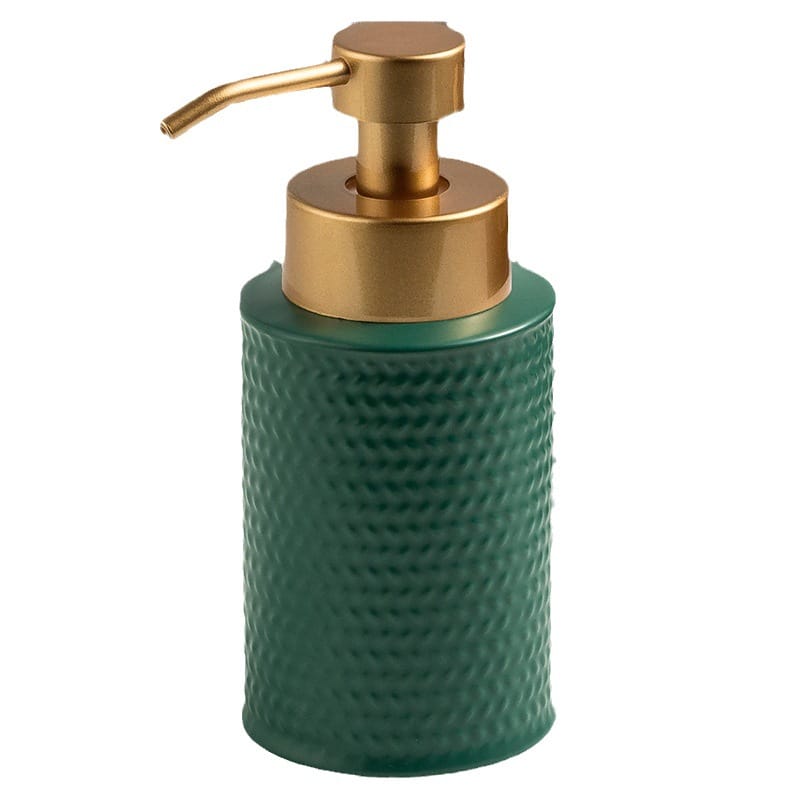
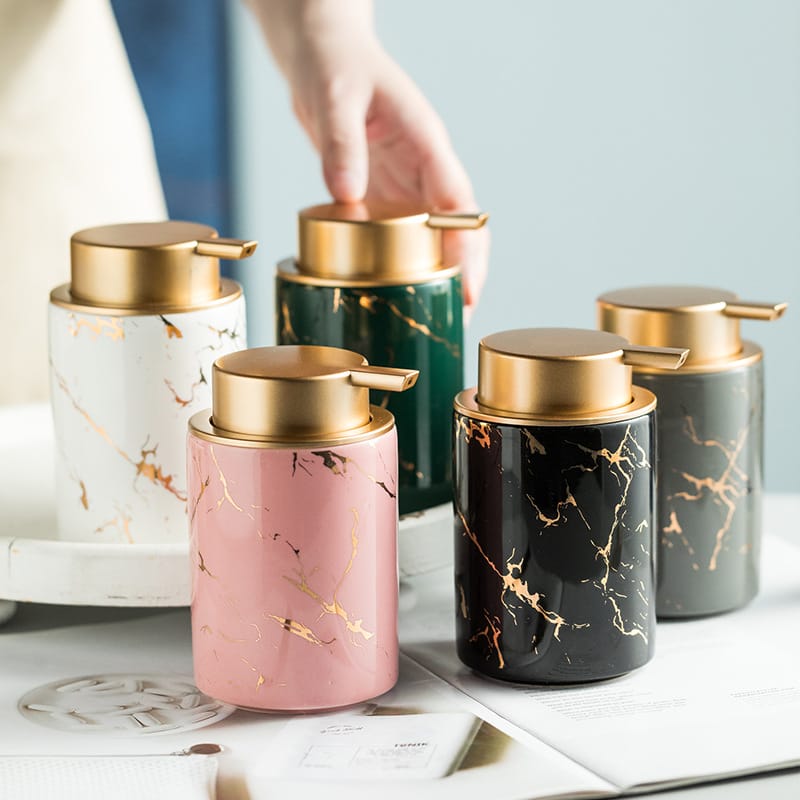
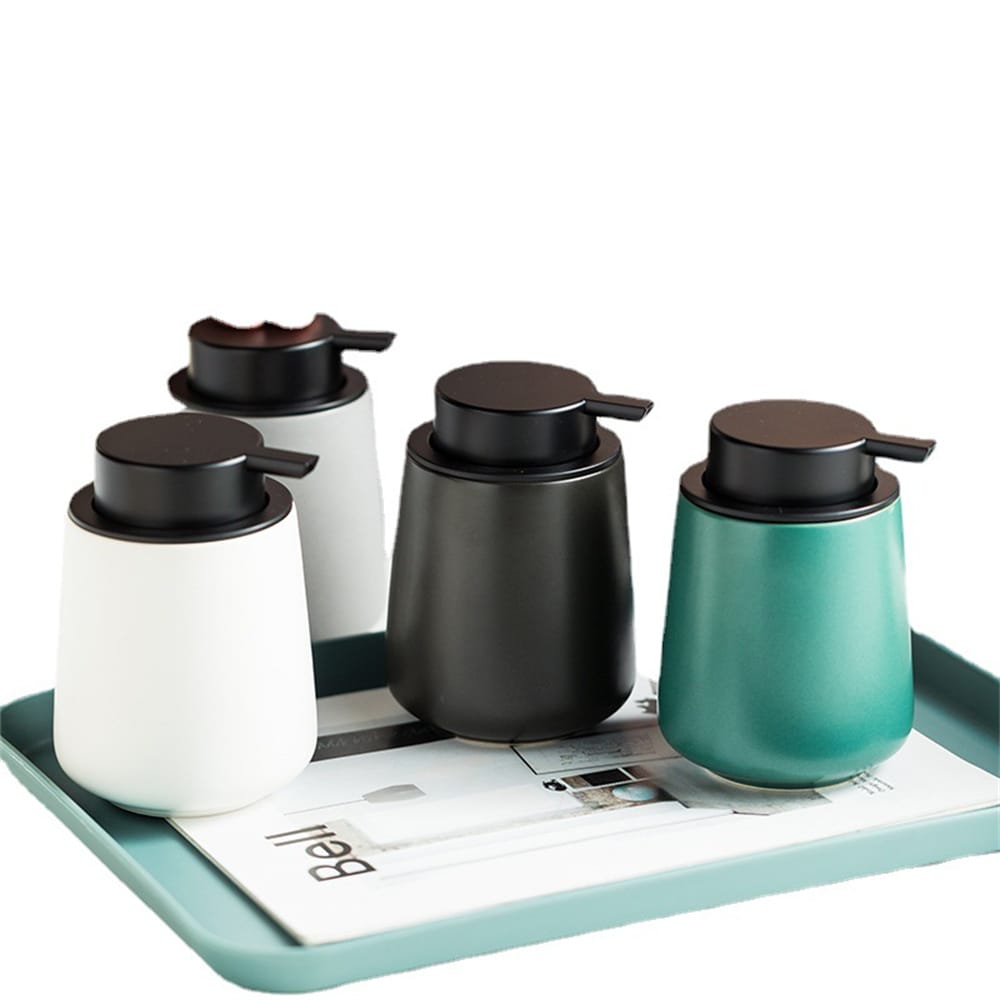
| Ceramic countertop | Premium appearance | Weight, breakage, stability |
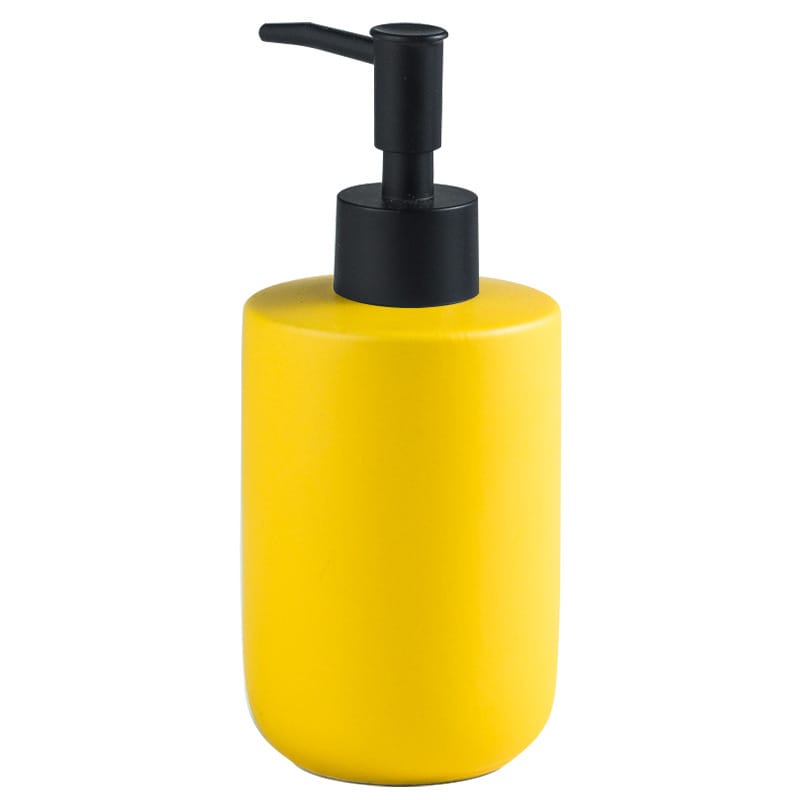
| Plastic countertop | Lightweight | Compatibility, appearance |
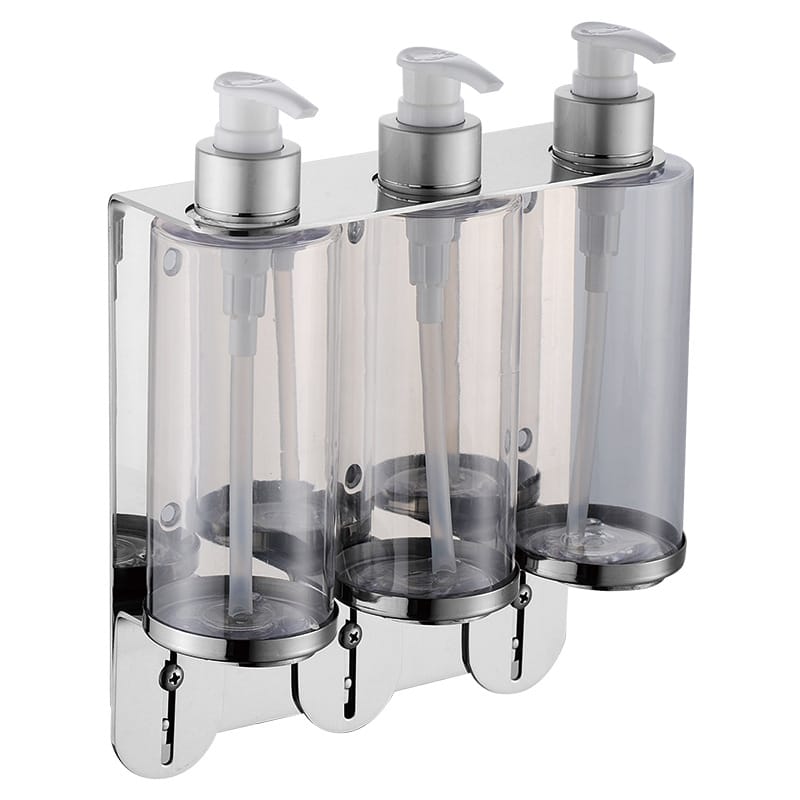
| Wall-mounted refillable | Fixed location | Bracket, installation, access |
| Lockable wall-mounted | Controlled access | Keys and servicing |
| Replaceable cartridge | Controlled exchange | Cartridge availability and dependence |
Countertop systems
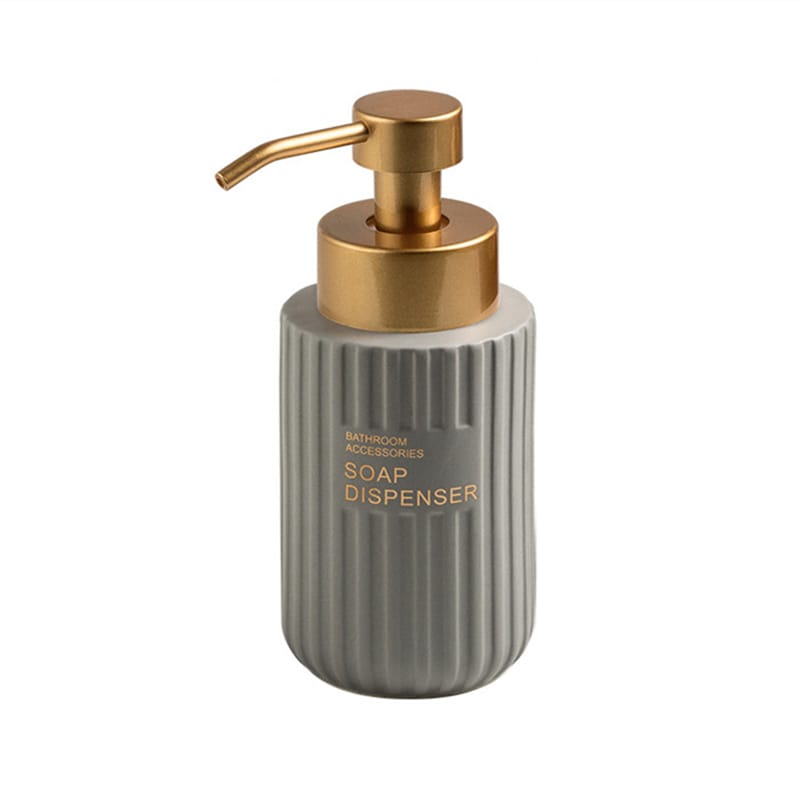
These may avoid drilling and suit spacious vanities. Check bottle stability when operating the pump: base size, center of gravity, friction and pump force matter.
Wall-mounted systems
They reduce clutter but brackets are critical. Engineering should approve compatibility with tile, stone, glass or other substrates. Adhesive installation requires substrate-specific instructions.
Cartridge systems
Prepared cartridges may simplify servicing, but proprietary formats can create supplier dependence. Check replacement cost, future supply and alternatives.
3. Select Materials for Humid and Coastal Bathrooms
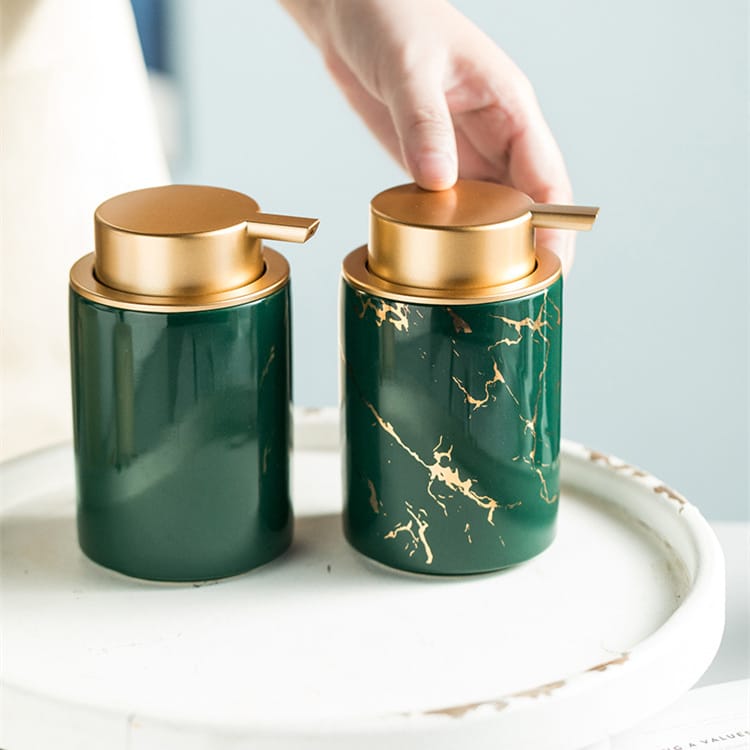
Salt-laden air, humidity, cleaning and repeated handling affect appearance and service life. Ceramic offers a premium tactile finish but can break. Assess glaze, dimensional consistency and pump-neck fit. Plastics such as PET, HDPE and PP may be lightweight, but suitability depends on formulation and design. Request material information and compatibility evidence. Metal brackets, springs and collars need corrosion-resistance review; stainless steel grade alone does not guarantee corrosion-free assemblies.
| Material | Strength | Risk | Review |
|---|---|---|---|
| Ceramic | Premium appearance | Breakage | Glaze, stability |
| PET | Lightweight, clarity | Chemical/heat compatibility | Deformation |
| HDPE | Practical resistance options | Finish limitations | Formulation compatibility |
| PP | Component versatility | Design-dependent performance | Pump cycling |
| Stainless steel | Structural and decorative use | Corrosion in unsuitable exposure | Grade, finish |
| Aluminum | Lightweight | Coating and chemical exposure | Corrosion tests |
These are general considerations, not specifications for a particular DERBAL product. Test the complete assembly.
4. Test Pump Compatibility Before Bulk Production
A pump that works with thin soap may not perform with thick conditioner. Viscosity, formulation, nozzle, spring and seals affect dispensing. Evaluate samples with actual or representative refill formulations.
- Does the pump prime reliably?
- Is dispensing volume consistent?
- Does the nozzle drip or clog?
- Are seals and threads reliable?
- Can staff open and close the container repeatedly?
- Are matching replacement pumps available?
Different suppliers can provide bottles and refill liquids, but compatibility then needs explicit review. Test shampoo, conditioner, body wash and lotion separately; generic pump specifications are not enough.
5. Build a Housekeeping Hygiene and Refill Procedure
The hotel’s hygiene policy should define storage, dispensing, cleaning, refilling and inspection. Two approaches are direct refilling under a controlled procedure and container exchange with prepared or sealed replacements. The appropriate approach depends on formulation, container design, local requirements and hotel controls.
Avoid uncontrolled topping up
Repeatedly adding new product to old residue complicates hygiene and batch traceability. Define when containers are emptied, cleaned, dried, replaced or refilled, following manufacturer instructions and applicable requirements. Cleaning methods must be compatible with containers and contents.
Identify contents and train staff
Clearly identify every product; staff should not rely on fragrance or color. Where relevant, record batch and refill dates. Training should cover correct product selection, damage checks, hygiene, refilling, pump verification and incident reporting. Evaluate the system during real room servicing.
6. Coordinate OEM Branding With Bathroom Design
Depending on material and supplier capabilities, customization can include printed logos, decals, engraving, labels, molded details or colors. Request physical color approvals because Pantone references can appear different on ceramic glaze, painted metal, labels and molded plastic.
Before production, confirm overall height, base dimensions, pump projection, mounting clearance and refill access. Designers should consider the appearance of partly empty bottles and label orientation. See DERBAL’s hotel guestroom supply solutions for broader procurement context.
7. Structured Sample Approval and QC
Samples should represent the intended production configuration, including bottle, pump, finish, logo, bracket, cap and packaging.
| Test | Acceptance basis |
|---|---|
| Dimensions | Approved drawing |
| Appearance | Approved physical sample |
| Pump operation and leakage | Agreed method |
| Stability and mounting | Project requirements |
| Chemical and cleaning compatibility | Manufacturer guidance and testing |
| Packaging | Agreed export specification |
Pilot installation
Install representative units in a mock-up room and invite housekeeping and engineering to evaluate refilling, cleaning, mounting and replacement. Record and resolve observations before bulk production.
Final inspection
Verify bulk products against the approved sample, including logo version, finish, component count, spare parts and packaging. Vague claims of “hotel quality” are no substitute for documented acceptance criteria.
8. Calculate Lifecycle Cost, Not Just Unit Price
Compare installation, refilling labor, replacement parts, breakage, inventory and maintenance—not just dispenser price. The following example is hypothetical, not a DERBAL quotation.
| Assumption | Illustrative amount |
|---|---|
| Rooms | 100 |
| Dispensers per room | 3 |
| Units | 300 |
| Example unit price | USD 6 |
| Initial purchase | USD 1,800 |
| Installation/setup | USD 450 |
| First-year replacement allowance | USD 180 |
| Illustrative first-year system cost | USD 2,430 |
This excludes refill liquids, routine labor, freight and taxes. A useful ongoing metric is total period amenity-system cost / occupied room-nights. Include consumption, service and replacements in the numerator.
For remote resorts, replacement lead time may matter more than the price of a single pump. Set spare-parts stock using observed failures and replenishment lead times, not arbitrary percentages.
9. Maldives, Fiji and GCC Considerations
Maldives and Fiji
Island resorts may have additional inventory and domestic freight constraints. Plan refill storage, delivery frequency, spare pumps, breakage and cargo handling. Check packaging for climate and boat transfer.
UAE and GCC
Hotels may prioritize consistent brand presentation across large inventories, predictable housekeeping and coordinated delivery. Evaluate local requirements and actual cleaning conditions; no single material fits every property.
Pre-opening versus operating properties
Pre-opening hotels can coordinate dispenser installation with interior design and training. Operating properties may need phased conversions to minimize room downtime. Plan removal of old units, installation and refill inventory transition.
10. Procurement Checklist
| Area | Approval question |
|---|---|
| Application | Countertop, shower or wall-mounted? |
| Material | Suitable for location and formulation? |
| Capacity | Appropriate refill frequency? |
| Pump | Tested with actual product? |
| Branding | Logo, color and finish approved? |
| Mounting | Engineering approval obtained? |
| Hygiene | Cleaning/refill SOP defined? |
| Packaging | Export protection suitable? |
| QC | Sample and criteria documented? |
| Spares | Replacement parts available? |
| Logistics | Refill and replacement supply planned? |
| Commercial | Lifecycle costs reviewed? |
Complete the checklist jointly with procurement, housekeeping, engineering and project stakeholders.
11. How DERBAL Supports Refillable Amenity Procurement
DERBAL TECHNOLOGY CO., LTD is a China-based one-stop B2B hotel and resort sourcing partner. Its role is coordinating products and suppliers across guestroom amenities, bathroom accessories, housekeeping equipment and broader OS&E needs.
For dispenser programs, support may include sourcing, material and finish comparisons, OEM/ODM branding, samples, supplier communication, quality inspection and shipment consolidation. Related products are available through hotel amenities kit solutions.
Start with a clear RFQ
Specify hotel destination, room count, dispensers per bathroom, contents, materials, branding and schedule. Include bathroom drawings, installation constraints, logo artwork and color references. A detailed RFQ enables meaningful comparison of suppliers.
12. Frequently Asked Questions
Are refillable dispensers better than single-use bottles?
They may reduce individual packaging, but results depend on refill method, hygiene, consumption and lifecycle.
Which material is best for luxury resorts?
There is no universal choice. Ceramic offers a premium look; suitable plastics may offer practical handling. Consider design, breakage, formulation and maintenance.
Can hotels add their logo?
Many formats support customization, subject to material, process, tooling and order quantities.
How should housekeeping refill?
Follow a documented procedure based on manufacturer guidance and applicable hygiene requirements; avoid uncontrolled topping up.
Can one pump work with all toiletries?
Not necessarily. Test each formulation and viscosity.
Wall-mounted or countertop?
Choose according to layout, guest experience, service access and engineering constraints.
Which spares are useful?
Pumps, caps, brackets, keys, seals or bottles, depending on design and lead times.
How can buyers reduce risk?
Use approved samples, formulation tests, housekeeping pilots, documented QC and replacement-part plans.
Conclusion: Buy the Operating System, Not Just the Bottle
A refillable dispenser program affects procurement, housekeeping, engineering, guest experience and inventory. The best system meets design requirements, works with selected products, supports controlled housekeeping and remains practical over time.
For island resorts and international projects, material selection, pump testing, branding, sample approval, hygiene procedures and spares should be part of the same procurement decision. DERBAL helps hotels purchase better through coordinated China sourcing, customization and supply-chain services.
Request a Refillable Hotel Amenity Procurement Proposal
Planning a new opening, bathroom renovation or refillable amenity conversion? Share room count, bathroom layout, product requirements, customization preferences and destination with DERBAL.
DERBAL TECHNOLOGY CO., LTD
One-Stop Hotel & Resort Supply Partner
Based in China, Serving the Globe
Help Hotels Purchase Better