Hotel kitchens run on speed, safety, and consistency. A commercial induction cooktop hotel buyers specify today is no longer a novelty — it is becoming the default for serviced apartments, villa resorts, demo kitchens, and staff canteens where open flames are a liability. This guide walks procurement and F&B teams through what induction actually delivers, how the 2-burner and 4-burner models compare, the safety case, and where each unit earns its place on a property.

Why Hotels Are Switching From Gas and Coil
Three forces push hotels toward induction. First, safety: there is no open flame and the surrounding glass stays cool to the touch, which matters in compact kitchens and guest-facing demo stations. Second, efficiency: induction transfers up to 90% of energy into the pan versus roughly 40–55% for gas, so less heat escapes into the room and the air conditioning works less. Third, cleanliness: a flat microcrystalline glass surface wipes down in seconds with no burner grates to scrub. Properties from Frasers Hospitality in Singapore to The Ritz-Carlton Residences in Bangkok have adopted the 2-burner model specifically for these reasons.

2-Burner vs 4-Burner: Reading the Specs
The DERBAL range spans two models. The 2B runs 2000W per burner (4000W total) at 220V, measures 300×520×100mm, and uses dual-touch controls — ideal for suites, villas, and satellite prep. The 4B doubles to 2000W×4 (8000W total), measures 600×590×100mm, and uses four-touch controls for high-volume galley service; Silversea Cruises specified it for ship galleys. Both share a microcrystalline glass panel, pure-copper coils, and a black base shell.

Safety and the Cool-Touch Case
Induction heats the pan, not the surface. The cooking zone energizes only when compatible cookware sits on it, and the unit cuts power the moment the pot is removed — an automatic shut-off that prevents forgotten burners and wasted energy. The glass around the zone stays far cooler than a radiant ring, reducing burn risk for staff. For any property benchmarking electrical equipment, certification references such as those from UL help procurement verify heater and controller safety during supplier audits.

Built-In or Countertop: Matching the Install
Both models support embedded mounting or countertop use, which is a real advantage for mixed portfolios. A new-build banquet kitchen can flush-mount the 4B into a stainless island; a retrofitted villa pantry can drop the 2B on the bench with no cutout. Choose built-in where the line must look permanent and easy to sanitize, and countertop where flexibility or temporary F&B pop-ups matter. The U.S. Department of Energy’s guidance on induction cooking efficiency is a useful buyer reference when justifying the switch to management.

Where Induction Fits Across the Property
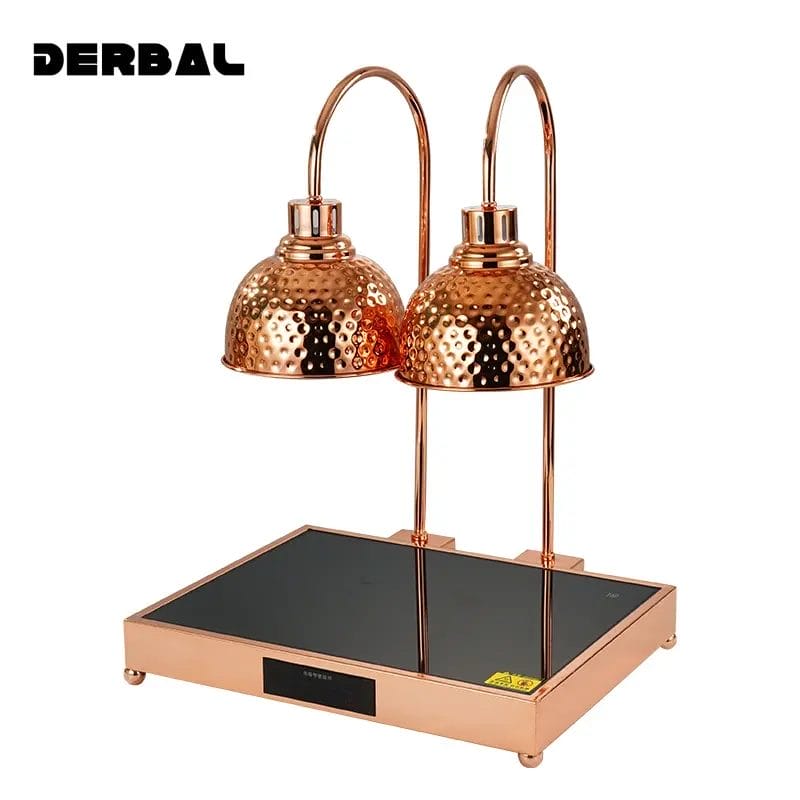
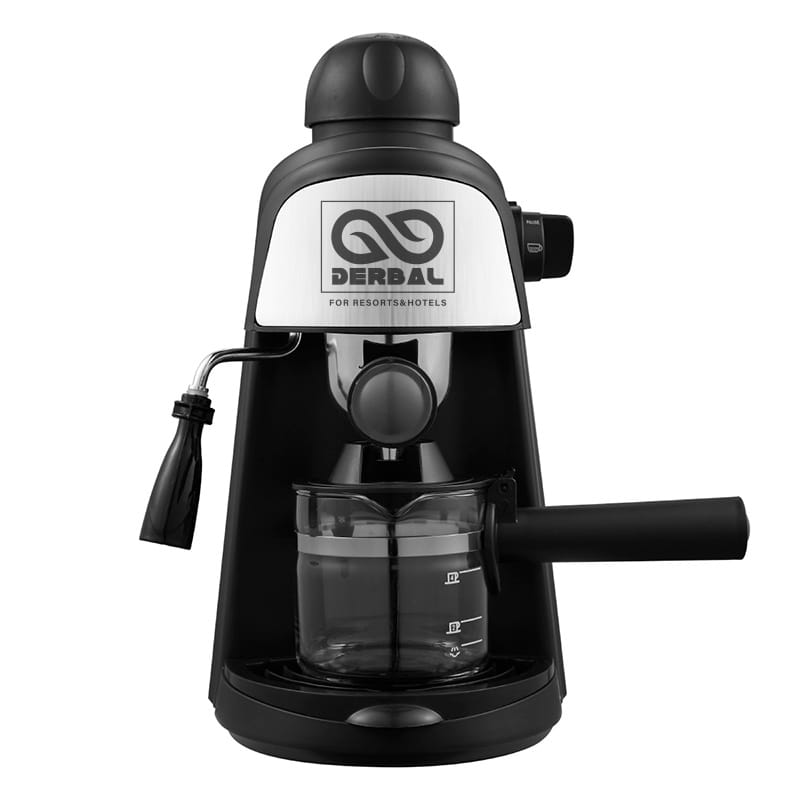
Placement drives the business case. In-room: villas and serviced apartments get a 2B for guest light-cooking without fire risk. Back-of-house: staff canteens and employee dorms use 2B or 4B for high-throughput, low-heat cooking. Front-of-house: demo kitchens and tasting bars turn the cool-touch surface into a guest experience. Because there is no combustion, indoor air stays cleaner — the EPA notes that eliminating combustion sources improves indoor air quality, a point worth citing in sustainability reporting. Pair the cooktop with a commercial food heat lamp and a hotel espresso coffee machine to build a coherent F&B equipment list.

OEM and Bulk Procurement
DERBAL supports bulk orders with customization: control layout, power tuning, and special mounting can be adjusted for project volumes. For a multi-property rollout, standardize on one model to simplify spare parts and training. Request a sample unit before committing a full floor, and confirm voltage compatibility (220V) with your regional electrical spec. Buyers comparing companion appliances often also shortlist a commercial juice dispenser and a hotel towel warmer cabinet for the same fit-out package.
Care and Maintenance
Daily care is simple. After cooling, wipe the microcrystalline glass with a soft cloth and a non-abrasive cleaner; avoid steel wool that could scratch. Keep the air intake and fan clear so the cooling system can do its job, and never block ventilation. Because there are no grates or open flames, deep cleaning between audits is far faster than with gas — a real labor saving across a portfolio.
Frequently Asked Questions
What is a commercial induction cooktop hotel buyers should consider first?
Start with burner count and total wattage against your menu. A 2B (4000W) suits suites and prep; a 4B (8000W) suits high-volume galleys. Confirm 220V supply and whether you need built-in or countertop mounting.
Is induction safer than gas for hotels?
Yes. There is no open flame, the surrounding glass stays cool, and power cuts when cookware is removed. That removes the two biggest kitchen hazards — fire and forgotten burners.
Do induction cooktops need special pans?
They need ferromagnetic cookware — cast iron or magnetic stainless steel. Aluminum and copper-bottom pans that are not magnetic will not activate the zone. Test with a fridge magnet before specifying.
How efficient is a commercial induction cooktop hotel model?
Induction delivers up to about 90% of energy into the pan, versus 40–55% for gas. Less wasted heat means lower room temperature load and lower cooling cost.
Can the 2B and 4B be built into a counter?
Both support embedded mounting or countertop use, so you can flush-mount in a new island or set them on a bench during retrofit without modification.
Is OEM customization available for bulk orders?
Yes. DERBAL adjusts control layout, power, and mounting for project volumes. Standardize one model across properties to simplify spares and training.
Specify the Right Model for Your Property
Get a 2B or 4B quote matched to your voltage and mounting. Talk to DERBAL about commercial induction cooktops →
Build a Coherent F&B Fit-Out
Pair the cooktop with heat lamps, coffee machines, and dispensers for one bundled quote. See the hotel F&B equipment range →
Request a Sample Before Rollout
Standardize one model across properties to cut training and spares. Email [email protected] →