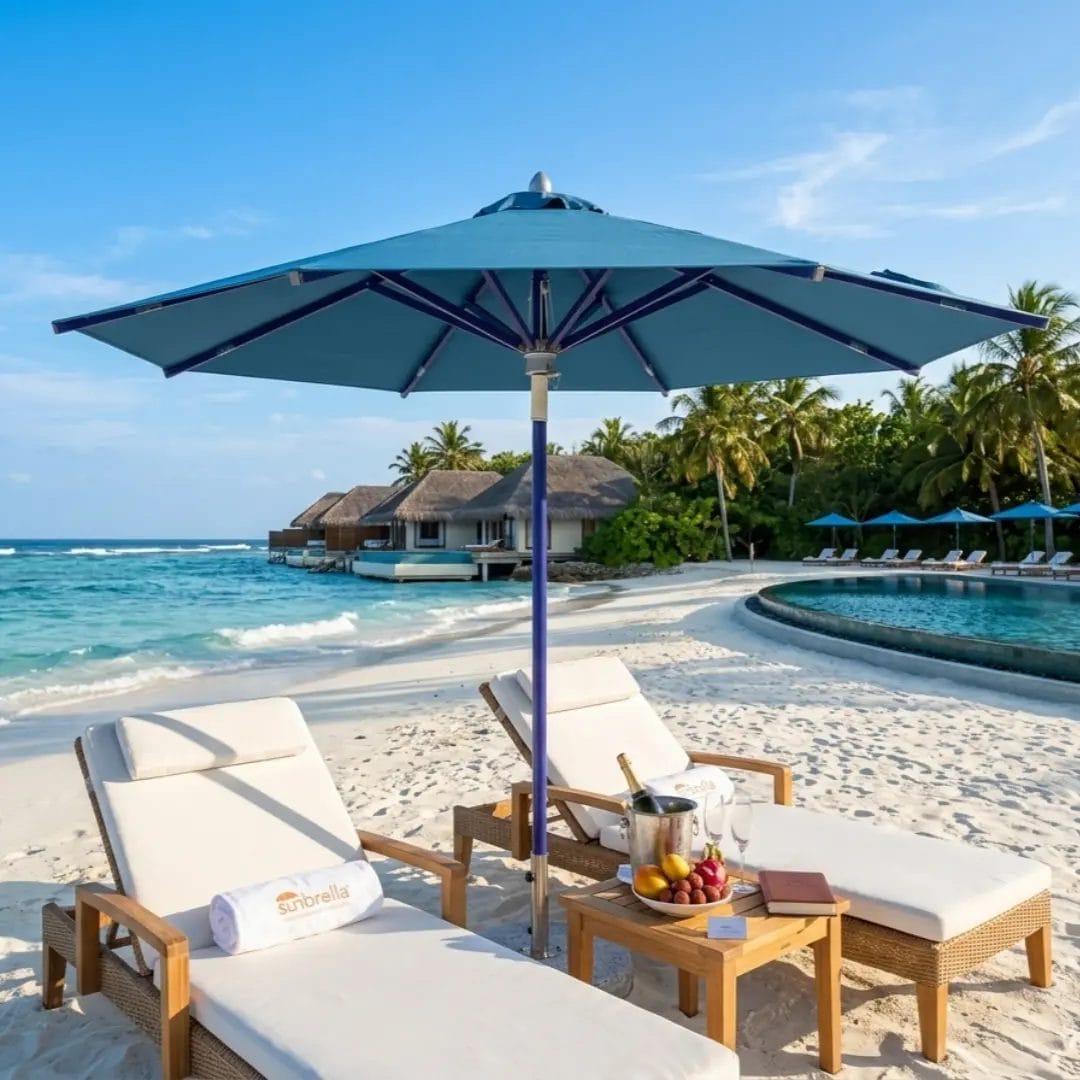
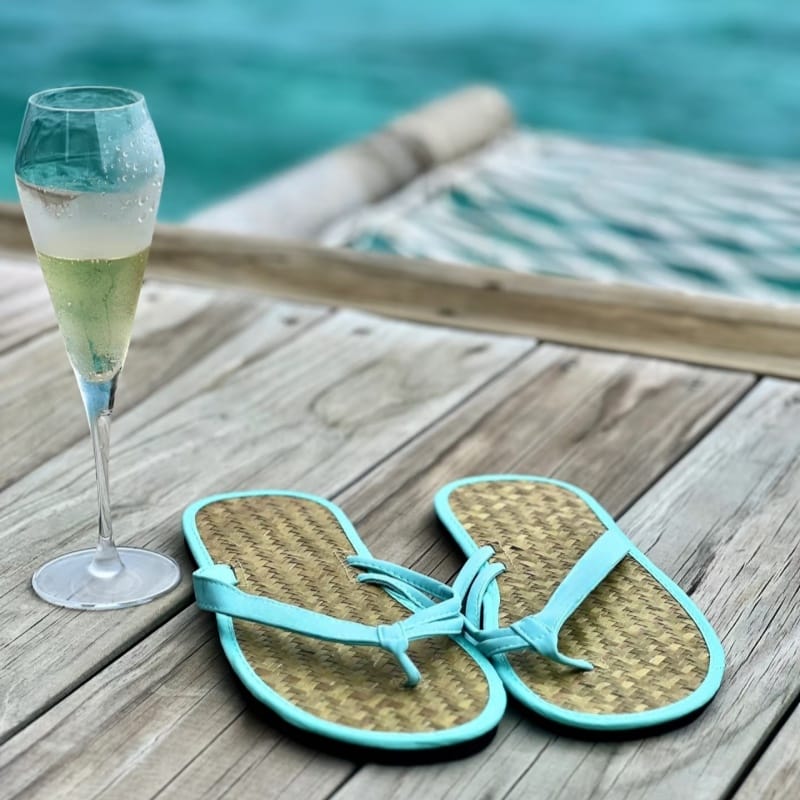
A guest arrives at a tropical island resort after a long journey. The ocean is only a few steps away, the villa opens onto a private terrace, and a carefully prepared pair of beach flip flops is waiting beside the door.
It seems like a small detail. Yet in luxury hospitality, small details often shape how guests experience a property.
Hotel flip flops are more than inexpensive footwear. For beachfront resorts, they are part of the guest amenity program, an extension of the hotel’s visual identity, and a practical consideration for everyday operations.
Choosing the right pair requires more than comparing prices. Hotel purchasing teams must consider comfort, materials, exposure to sand and moisture, branding options, replacement frequency, supplier consistency, and the environment in which the footwear will actually be worn.
This guide explores how to select hotel flip flops for tropical resorts, compare common materials, develop meaningful customization, and build a sourcing strategy that balances guest satisfaction with long-term procurement value.
1. Why Hotel Flip Flops Matter More Than You Think
A pair of flip flops may be one of the simplest products in a hotel guestroom, but its usefulness extends across several departments.
For guests, convenient footwear makes the transition from the villa to the beach more comfortable. For housekeeping, a consistent footwear program helps maintain room presentation and replenishment procedures. For purchasing managers, it represents a recurring expense that must be controlled without undermining the hotel’s standards.
For marketing teams, customized flip flops can also become a subtle expression of the resort brand.
Guest comfort begins with practical details
Consider the everyday movements of a guest staying in an island villa: walking from the bedroom to the terrace, stepping onto a sandy path, visiting the beach, or relaxing beside the pool.
Suitable footwear should be easy to put on, comfortable for short walks, and appropriate for the resort’s surroundings.
However, the intended use matters. Lightweight beach flip flops are not necessarily suitable for slippery tiled floors, long walks, rocky paths, or demanding water activities.
A thoughtful hotel amenity program recognizes these differences rather than expecting one product to perform every function.
A small amenity can reinforce the brand
A hotel’s identity is communicated through more than architecture and interior design.
The materials guests touch, the amenities they use, and the visual consistency of everyday products all contribute to the experience.
A pair of custom hotel flip flops can feature the resort’s colors, printed strap logo, distinctive packaging, and even a specially molded outsole.
The result is a functional product that also carries the property’s identity beyond the guestroom.
2. What Materials Are Best for Hotel Flip Flops?
Material selection is one of the most important purchasing decisions.
The right combination depends on where the flip flops will be used, how frequently they will be worn, the resort’s positioning, and the expected service life.
EVA flip flops: Lightweight and versatile
EVA, or ethylene-vinyl acetate, is commonly used in footwear because it can be formulated into lightweight, flexible cushioning components.
For hotel beach flip flops, an EVA outsole offers several potential advantages:
-
Low weight for comfortable casual wear.
-
Flexibility for short-distance walking.
-
Opportunities for custom colors and molded designs.
-
Relatively straightforward cleaning, depending on construction.
-
Suitability for a range of resort footwear styles.
However, not all EVA is identical. Density, formulation, outsole geometry, and manufacturing quality can significantly influence the finished product.
A soft EVA sole may feel pleasant initially but wear more quickly in certain applications. A harder formulation may offer different durability characteristics while changing the walking feel.
For bulk hotel orders, evaluating an actual production sample is more useful than relying on the material name alone.
Natural straw footbeds: A tropical aesthetic

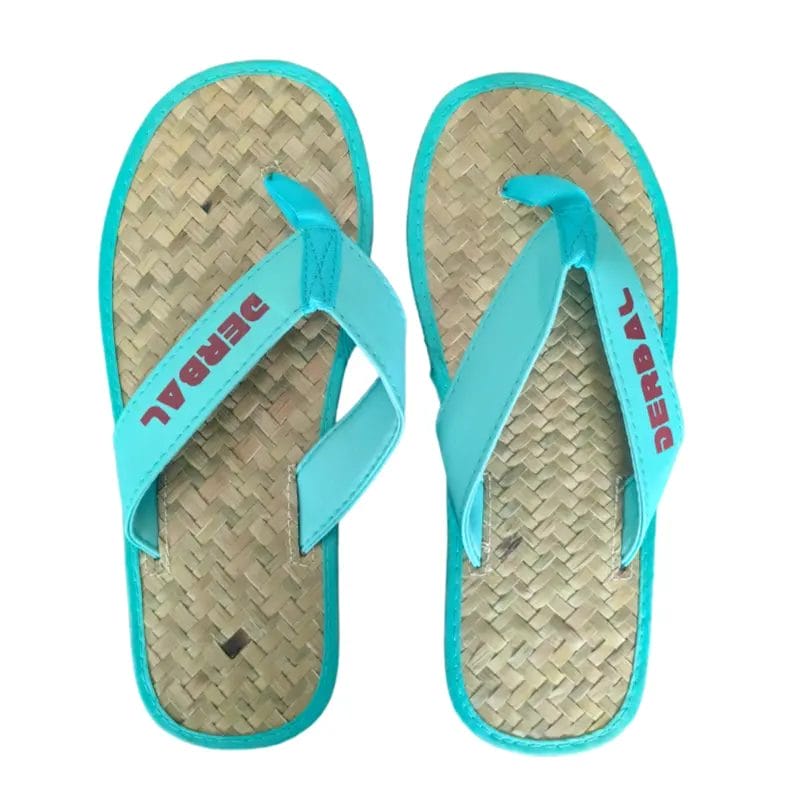
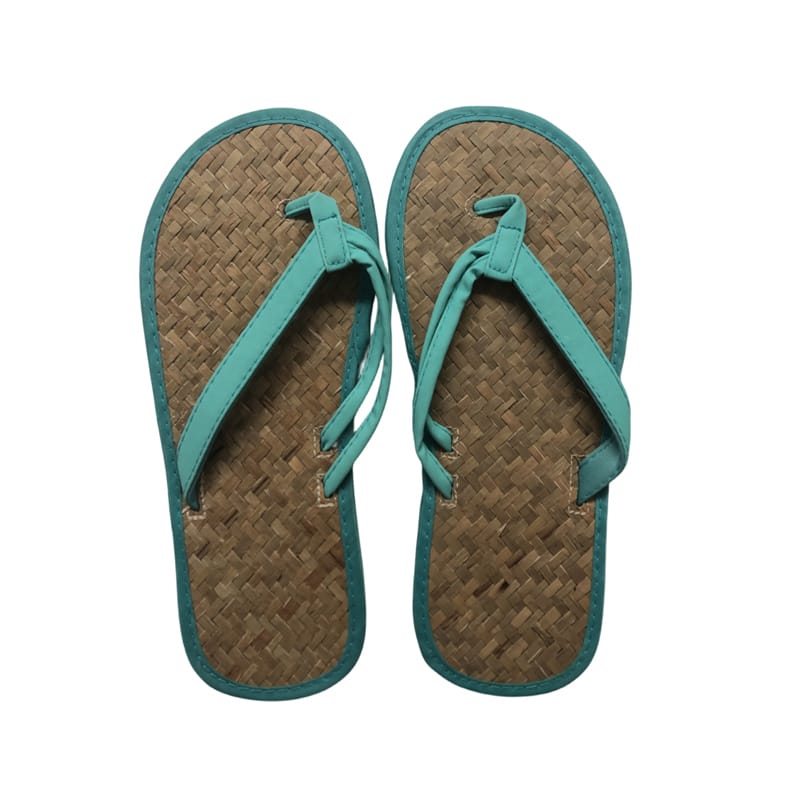
Natural woven straw footbeds can create a distinctive appearance that suits tropical island resorts, beachfront villas, and relaxed hospitality concepts.
Their texture introduces a visual connection to natural materials, complementing interiors that feature wood, rattan, woven textiles, and other organic finishes.
When combined with an EVA outsole, a straw footbed can offer a balance between tropical styling and practical footwear construction.
Nevertheless, procurement teams should examine the weave carefully.
Questions worth asking include whether the straw surface feels comfortable against bare feet, whether the edges are neatly finished, whether the footbed remains securely bonded to the sole, and how the material behaves after repeated exposure to moisture.
Natural straw should not automatically be described as waterproof, biodegradable, or environmentally superior without supporting evidence about the complete product.
Fabric straps: Comfort meets customization
Fabric straps are especially relevant for hotels seeking branded flip flops.
Depending on the chosen material and printing process, straps can incorporate a hotel name, logo, pattern, or coordinated color scheme.
Buyers should examine strap width, surface texture, attachment strength, and the areas that contact the foot.
A visually attractive strap that causes rubbing or detaches prematurely will not deliver a satisfactory guest experience.
3. EVA, Straw and Rubber Flip Flops: A Practical Comparison
| Feature | EVA Flip Flops | Straw + EVA Flip Flops | Rubber-Based Flip Flops |
|---|---|---|---|
| Main appeal | Lightweight, flexible construction | Tropical appearance with lightweight sole | Wide range of durable footwear constructions |
| Visual style | Modern and versatile | Natural, relaxed, resort-inspired | Casual to premium |
| Custom branding | Printed or molded options | Strap printing and molded outsole options | Depends on construction |
| Moisture considerations | Varies by formulation and design | Straw layer requires additional evaluation | Varies by rubber compound |
| Typical application | General leisure footwear | Beach villas and tropical resort amenities | Resort leisure or selected outdoor applications |
| Main purchasing concern | Density, wear and traction | Weave quality, bonding and drying | Weight, compound and comfort |
There is no universally superior material.
For a contemporary city hotel, a simple EVA slipper may be sufficient. For a barefoot luxury island resort, a woven straw and EVA design may better support the intended guest experience.
The purchasing decision should begin with the property’s actual operating conditions, not the supplier’s product category.
4. How Custom Logo Flip Flops Can Strengthen Resort Branding

Customization is most effective when it feels integrated into the guest experience.
A large, intrusive logo may make a product look promotional. A carefully positioned logo, coordinated with the hotel’s color palette, can feel more refined.
For hotel flip flops, common customization opportunities include strap printing, outsole molding, colors, size markings, and packaging.
Printed logos on fabric straps
Strap printing is a practical option for many hospitality projects.
A logo can be placed where it remains visible when the flip flops are displayed in a guestroom or worn around the resort.
Before confirming production, hotels should request artwork proofs and physical samples to check the logo’s scale, placement, contrast, and resistance to normal handling.
Fine lettering and complex graphics may require adjustment to remain legible on a narrow strap.
Custom molded outsole logos
One of the more distinctive branding options is a hotel logo incorporated into the outsole mold.
Unlike conventional printing, the logo becomes part of the outsole’s physical surface.
For tropical island resorts, this opens up an interesting possibility: flip flops that leave a hotel logo impression in beach sand.
5. The Sand Footprint Effect: Turning Beach Footwear Into a Brand Experience

Imagine guests walking along the beach at sunrise. Behind them, the outsole pattern leaves an impression in the sand, incorporating the resort’s emblem or initials.
This is the concept behind custom logo footprint flip flops.
It connects three elements that matter to resort brands: the physical environment, the guest experience, and a memorable visual identity.
How does a custom logo footprint work?
The outsole is manufactured with a raised or recessed pattern designed to transfer a recognizable impression to suitable sand.
The result depends on several factors:
-
Logo geometry: Simple, bold shapes are generally easier to reproduce than fine lettering.
-
Mold depth: The design must be sufficiently defined without compromising the outsole’s function.
-
Sand conditions: Slightly damp, compact sand often captures impressions more clearly than loose, dry sand.
-
Walking pressure: Foot placement and pressure influence the resulting mark.
-
Outsole wear: Repeated use can gradually affect pattern definition.
A custom mold should be evaluated through actual samples and beach testing before the hotel approves bulk production.
Why this feature is valuable for resort marketing
The footprint concept offers a creative opportunity beyond traditional branded merchandise.
Guests may photograph the pattern while walking along the shore. Resorts can incorporate the visual into welcome photography, beach-themed promotional materials, or selected guest activities.
For example, a honeymoon resort could explore a custom monogram concept, while a family-oriented resort might choose a playful emblem.
These are potential marketing applications, not guaranteed outcomes. The real value comes from developing a design that fits the resort’s brand and performs reliably on its beach.
Design recommendations for a sand-imprint logo
For hotels considering this feature, DERBAL recommends starting with a simplified version of the brand mark.
Avoid overly detailed artwork, very thin strokes, and small text that may disappear in sand.
The design must also be reviewed alongside the outsole’s traction pattern. Branding should never compromise the footwear’s suitability for its intended walking surfaces.
A practical development process involves artwork review, mold feasibility assessment, sample production, physical imprint testing, and final approval.
6. What Should Resorts Consider Before Buying Flip Flops in Bulk?
A wholesale order should begin with a clear specification, not simply a quantity and target price.
Comfort and sizing
A pair of flip flops may look attractive in a product photograph but feel different when worn.
Hotels should evaluate the footbed surface, strap fit, toe-post comfort, sole flexibility, and available sizes.
For properties serving an international guest mix, size planning is particularly important.
Rather than assuming a single unisex size will suit everyone, purchasing teams should review guest demographics, replenishment records, and previous size-related complaints where available.
Traction and surface conditions
Beach resorts contain different walking environments: sand, timber decking, outdoor pathways, smooth stone, and sometimes wet tiles.
Footwear suitable for dry sand may not provide sufficient traction on wet, polished surfaces.
Hotels should request information about the intended use and any relevant slip-resistance testing. Where traction is a critical purchasing requirement, assess representative samples on the surfaces guests are likely to encounter.
Avoid treating a textured outsole as proof of slip resistance without appropriate testing.
Durability in coastal environments
Tropical resort footwear may be exposed to strong sunlight, saltwater, sand, humidity, and frequent handling.
For straw-and-EVA flip flops, particular attention should be given to the bonding between materials, strap attachment points, surface finish, and drying characteristics.
A product that looks attractive when new but deteriorates quickly can increase replacement costs and generate avoidable complaints.
Housekeeping practicality
The purchasing department is not the only team affected by footwear selection.
Housekeeping teams need products that are straightforward to store, distribute, and replenish.
Questions to resolve include whether flip flops are presented in pairs or individual packaging, how sizes are identified, whether the product is intended for single-guest allocation or managed reuse, and what cleaning procedure is appropriate.
For reusable footwear programs, the hotel should establish suitable cleaning, hygiene, inspection, and replacement procedures before implementation.
7. How to Calculate the Real Cost of Hotel Flip Flops
The lowest unit price is not necessarily the lowest operating cost.
A hotel purchasing manager should evaluate the total cost of ownership, including procurement, shipping, handling, replacement, and quality-related expenses.
A simplified calculation is:
Total Program Cost = Product Cost + Customization + Freight + Duties + Handling + Expected Replacement Costs
Consider an illustrative purchasing comparison for a resort ordering 2,000 pairs.
| Cost factor | Option A | Option B |
|---|---|---|
| Unit purchase price | $1.20 | $1.55 |
| Initial product cost | $2,400 | $3,100 |
| Estimated replacement requirement | 600 pairs | 200 pairs |
| Replacement product cost | $720 | $310 |
| Combined product cost | $3,120 | $3,410 |
Illustrative figures only, not DERBAL quotations or measured product performance. Freight, duties, handling, and other expenses are excluded.
In this example, Option A remains cheaper on the figures shown. However, the difference narrows once replacements are included.
If Option A also generates more housekeeping work, emergency shipments, or guest complaints, the purchasing decision could change.
Conversely, a higher-priced product is not automatically more economical. The replacement assumptions must be supported by actual operational data.
The most effective approach is to compare suppliers using the same specification, sample testing criteria, and estimated operating period.
8. Choosing Flip Flops for Different Types of Resorts
Different hospitality concepts require different footwear programs.
Luxury island resorts in the Maldives
Maldivian island resorts often emphasize a relaxed barefoot atmosphere, with guests moving between villas, sandy pathways, restaurants, and beaches.
Natural straw and EVA flip flops may suit properties looking for a tropical visual identity, especially when coordinated with guestroom amenities and branded packaging.
The main considerations are comfort, sand exposure, humidity, storage, and the footwear’s intended walking surfaces.
Beach resorts in the UAE and GCC
Resorts in the UAE and wider Gulf region may face intense sun exposure and hot outdoor surfaces.
Material stability, surface temperature, and comfort deserve particular attention.
For a property with extensive pool decks and paved outdoor areas, a different outsole specification may be more appropriate than one primarily designed for sandy island pathways.
Tropical resorts in Fiji and Southeast Asia
Resorts operating in humid tropical environments should evaluate how footwear materials respond to moisture and repeated drying.
Properties with extensive outdoor activities may also benefit from separating casual guestroom flip flops from specialized footwear used for excursions or water sports.
The principle is simple: select footwear around the guest journey and property environment rather than choosing one universal specification.
9. A Practical Procurement Checklist for Hotel Purchasing Managers
Before requesting a quotation, prepare a short purchasing brief that suppliers can evaluate consistently.
| Procurement Item | Information to Confirm |
|---|---|
| Property type | Beach resort, island villa, hotel, beach club |
| Intended use | Guestroom, beach, poolside, retail |
| Materials | Straw footbed, EVA outsole, fabric straps |
| Sizes | Required size range and quantities |
| Branding | Strap logo, outsole mold, custom colors |
| Packaging | Individual bag, branded sleeve, gift box |
| Quantity | Initial order and estimated replenishment |
| Quality requirements | Bonding, finish, comfort, traction, durability |
| Delivery | Destination, shipping terms, target arrival |
| Approval | Artwork, samples, inspection criteria |
Five questions to ask every supplier
Can you produce a physical sample before bulk manufacturing? Samples help buyers evaluate materials, workmanship, sizing, and branding accuracy.
How will logo colors and dimensions be controlled? Brand consistency should be documented in approved artwork and production references.
What happens if the custom outsole imprint is unclear? Establish a sample approval standard before committing to mold production.
How are products inspected before shipment? Agree on inspection criteria, sampling arrangements, and responsibility for resolving defects.
Can the order be consolidated with other hotel supplies? Consolidation may reduce fragmented shipment administration, although actual freight savings depend on volume, routing, and shipping arrangements.
10. How DERBAL Supports Custom Hotel Flip Flop Projects
For international hotels, the challenge is often not finding a factory capable of producing footwear. It is coordinating product development, branding, quality expectations, and delivery within a broader hospitality procurement program.
DERBAL TECHNOLOGY CO., LTD is a China-based hotel and resort supply partner supporting sourcing across multiple hospitality categories.
Our approach to custom resort flip flops focuses on understanding the property’s operational requirements before finalizing the product.
Product sourcing and specification development
DERBAL helps hotel buyers translate their requirements into practical sourcing specifications.
This can include evaluating material combinations, size options, logo placement, outsole customization, and packaging concepts.
OEM and ODM customization
Hotels seeking a distinctive product can explore custom strap designs, coordinated colors, and molded outsole branding.
For more complex features, such as sand-imprint logos, sample development and mold feasibility checks are essential parts of the process.
Quality coordination
DERBAL can coordinate production inspections and review products against agreed specifications, helping buyers identify issues before shipment.
The inspection scope and acceptance criteria should be confirmed for each project.
Consolidated hospitality sourcing
Flip flops are often purchased alongside other guest amenities, including towels, bathrobes, toiletries, beach bags, and guestroom accessories.
DERBAL’s one-stop sourcing model can help hotels coordinate multiple categories through a single procurement partner.
For properties preparing a new opening, renovation, or seasonal replenishment, this can simplify communication and shipment planning.
11. Frequently Asked Questions About Hotel Flip Flops
What are the best flip flops for beach resorts?
The best option depends on the resort’s surfaces, climate, guest expectations, and intended use. Straw-and-EVA designs can be attractive for tropical beach amenities, while other constructions may be better suited to wet paved areas or more demanding walking conditions.
Can hotel flip flops be customized with a logo?
Yes. Depending on the product construction, customization may include printed fabric straps, branded packaging, color matching, and molded outsole logos.
Can flip flops leave a hotel logo in beach sand?
Yes, a custom outsole can be designed to produce a branded sand impression. The visibility depends on logo geometry, mold design, sand moisture, pressure, and wear. Sample testing is recommended.
Are natural straw flip flops suitable for tropical climates?
They can be suitable for selected tropical resort applications, but the straw weave, bonding, drying behavior, and maintenance requirements should be evaluated before purchasing.
Are EVA flip flops waterproof?
EVA itself is generally water-resistant, but a finished pair may contain fabric, adhesives, straw, or other components that respond differently to water. Water resistance should be assessed for the complete product.
Are hotel flip flops slip-resistant?
Slip resistance depends on outsole material, tread design, walking surface, and conditions. Hotels should request relevant testing information where traction is an important requirement.
What is the minimum order quantity for custom hotel flip flops?
MOQ depends on the selected model, material, logo process, packaging, and whether new molds are required. Buyers should request a project-specific quotation rather than assume one standard MOQ.
How long does it take to manufacture custom resort flip flops?
Production time varies with order quantity, material availability, artwork approval, and mold development. A reliable schedule should distinguish sample approval from bulk production and international transit.
Can hotels order different sizes and colors?
Size and color assortments can be discussed during quotation. Available combinations and minimum quantities should be confirmed with the supplier.
Can custom flip flops be included in a hotel pre-opening procurement package?
Yes. They can be coordinated with other guestroom and beach amenities as part of a broader hotel OS&E procurement plan.
12. Final Thoughts: Buy for the Guest Experience, Not Just the Unit Price
The best hotel flip flops are not necessarily the most expensive, the softest, or the most heavily branded.
They are the ones that fit the property.
For a tropical island resort, natural straw and EVA flip flops can combine a relaxed aesthetic with practical everyday use. Thoughtful customization can extend the hotel’s identity into the guest experience, while a custom sand-imprint outsole can introduce a distinctive branding opportunity.
But the fundamentals still matter: comfort, appropriate traction, reliable construction, consistent quality, and a sourcing plan that works for the hotel team.
When these details are addressed together, a simple pair of flip flops becomes a better hospitality product.
Looking for Custom Hotel Flip Flops for Your Resort?
Whether you are sourcing guestroom beach slippers for a new island resort or upgrading an existing amenity program, DERBAL can help you explore practical material combinations, branding options, and procurement solutions.
Share your preferred design, estimated quantity, hotel logo, delivery destination, and target schedule with our team.
DERBAL TECHNOLOGY CO., LTD
Based in China, Serving the Globe.
Help Hotels Purchase Better.