Why Hotels & Spas Are Switching to Ceramic Dispenser Bottles
Table of Contents
If you’re in hotel procurement, you’ve probably felt the shift coming for a while.
The small plastic amenity bottles that used to be “standard” are turning into a liability: they’re harder to justify to ownership, harder to explain to guests, and—depending on where you operate—harder to legally keep in rooms.
But here’s what’s interesting: the fastest-moving properties aren’t simply swapping mini bottles for generic wall dispensers.
They’re upgrading the entire “amenity container” experience—because guests notice the bathroom more than we like to admit, and because operations teams notice leaks, theft, and refilling chaos immediately.
That’s why refillable Ceramic Dispenser Bottles have become a serious procurement category for hotels and spas, especially in premium properties that want sustainability without losing the “luxury” feel.
In this guide, I’ll break down what’s driving the switch, how to evaluate ceramic dispenser bottle systems like an operator (not a Pinterest board), and how to specify a setup that stays clean, consistent, and cost-controlled after the first month of rollout.
Key takeaways
The switch to refillables is being accelerated by regulation and brand standards. For example, New York’s environmental agency outlines small plastic hospitality bottle restrictions and explicitly recommends anchored refillable dispensers as an alternative ().
Ceramic can solve a real procurement problem: it delivers a premium look while staying durable and non-porous—if you specify the glaze, pump, and mounting details correctly.
The failure modes are predictable: pump clogs, inconsistent refilling, missing spare parts, and “nobody owns the SOP.” Good specs prevent most of it.
A buyer-friendly spec includes: capacity, pump output, finish, label method, bracket compatibility/anti-theft, refill workflow, and replacement-part plan.
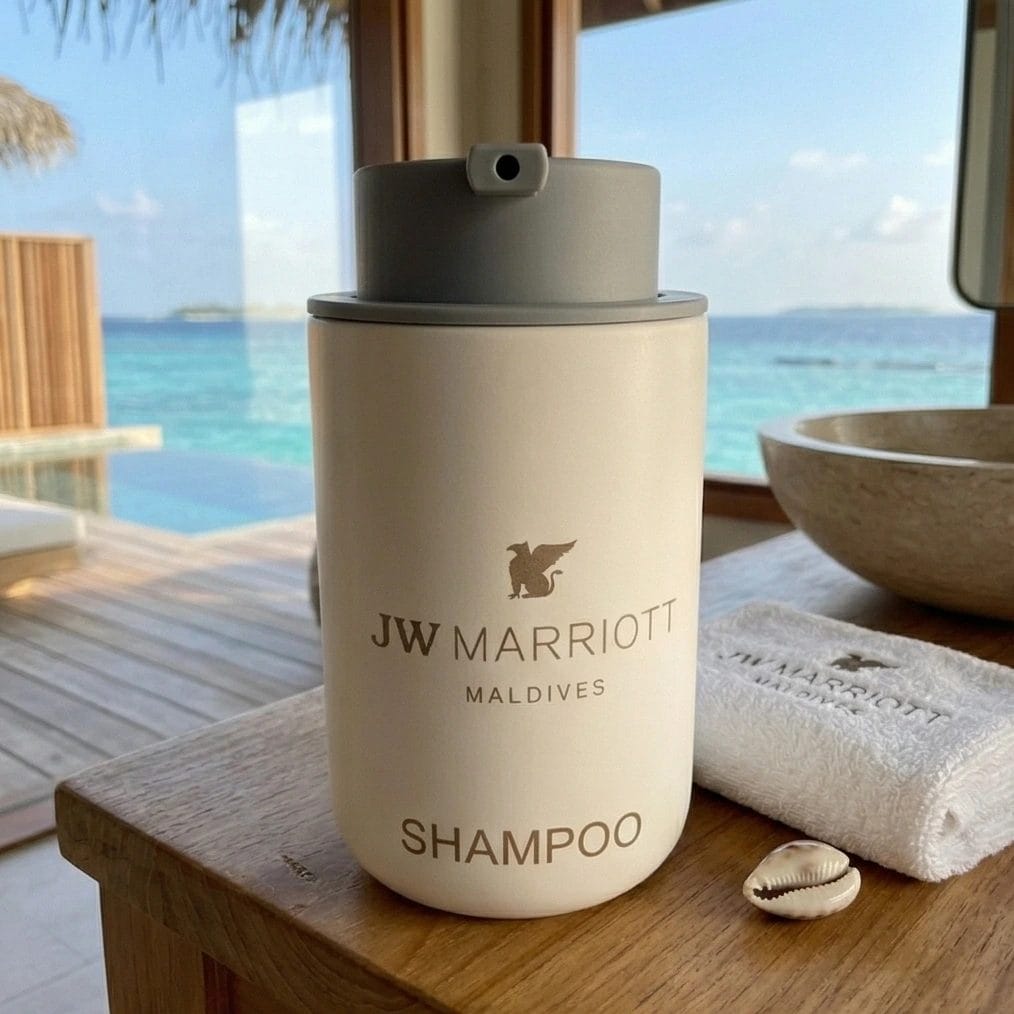
Case studies matter, but only when you can name the property and describe implementation realities—this article includes approved partner hotel names: JW Marriott Maldives Resort & Spa, JOALI, and JOALI BEING.
Why the switch is happening now (and why procurement is driving it)
Hotels don’t change room standards for fun. The reason refillable dispensers are finally sticking is that three forces hit at once:
Regulatory pressure is no longer theoretical.
Guest expectations have matured from “eco-friendly is nice” to “single-use plastic feels careless.”
Operating cost is under a microscope, and amenities are an easy place to reclaim margin.
Regulation is forcing the conversation
In the US, the most procurement-relevant part of these rules is simple: it’s not about a marketing claim—it’s about what you’re allowed to put in a room.
New York State’s Department of Environmental Conservation lays out the effective dates and scope clearly in its page on small plastic hospitality bottles:
Properties with 50+ rooms: restrictions effective January 1, 2025
Properties with fewer than 50 rooms: restrictions effective January 1, 2026
Scope: plastic bottles under 12 oz for personal care products
This kind of policy shifts procurement from “nice-to-have sustainability” into “standard compliance.”
And it’s not just the US. The European Commission’s overview of packaging policy notes that the EU Packaging and Packaging Waste Regulation (PPWR) entered into force in February 2025 and generally applies from August 2026 (). Even if you don’t operate in the EU, global brand standards tend to harmonize over time.
Guest expectations are now tied to brand perception
In premium hotels and destination spas, bathrooms are part of the brand story. Guests remember “cheap” in a way they don’t always remember “adequate.”
A scuffed plastic dispenser, a faded label, or a sticky pump isn’t just an amenity issue—it reads like neglect.
Ceramic changes the perception immediately because it has weight, texture, and finish consistency. It feels intentional.
Cost control is real—and refillables reduce waste when they’re managed well
Refillables aren’t automatically cheaper. They become cheaper when the refill workflow is clean.
Bulk refills typically reduce packaging cost and reduce the labor associated with constantly unboxing, stocking, and disposing of minis. One example often cited in the hospitality bulk-amenities space is the claim that a hotel consuming 10,000 oz of shampoo annually can see “at least 40% cost savings per ounce” after switching to bulk ().
Treat that as directional, not universal—your savings depends on your existing amenity program, theft rate, service level, and housekeeping routine.
But the procurement logic is sound: when you stop buying packaging over and over, you eventually stop paying for it.
What “Ceramic Dispenser Bottles” actually means in hotel procurement
In buyer searches, Ceramic Dispenser Bottles can mean three slightly different categories:
Countertop ceramic dispensers (often in public washrooms, suites, or spa treatment areas)
Refillable ceramic amenity bottles (used on trays or vanity tops—especially in villas and suites)
Wall-mounted ceramic dispenser bottles that work with a bracket or locking holder
The tricky part: the word “ceramic” is aesthetic, but procurement needs it to be operational.
So before we get into product options, here’s the operator definition I recommend using internally:
Ceramic dispenser bottles for hotels = refillable vessels made from glazed ceramic/porcelain that can handle repeated cleaning, maintain a consistent finish over time, and use pumps rated for high-viscosity liquids—without leaking, clogging, or becoming a housekeeping headache.
Why ceramic wins (and where it doesn’t)
Ceramic is not “better” in every setting. It’s better in the settings where guest perception and finish durability matter, and where you can control the refill SOP.
Where ceramic clearly wins
1) Premium look without “disposable” vibes
Plastic looks like plastic. Even high-grade plastic reads like a cost decision.
Ceramic reads like design.
That matters more than people think because it affects:
Brand consistency across room categories
Guest trust (especially in wellness-focused properties)
How your bathroom photos look in reviews
2) Non-porous surface and easier wipe-down
High-fire porcelain and glazed ceramic are designed to be non-porous. For housekeeping, that means less staining and fewer “forever marks” from product residue.
3) Finish consistency across a project rollout
When you roll out 200 rooms, the weak link isn’t the first batch—it’s the second and third batch.
Ceramic suppliers who offer controlled glaze and color matching make it easier to keep suites, villas, and standard rooms aligned.
Where ceramic is not the best choice
1) Extreme vandalism risk
In certain public spaces (nightclubs, unmanaged public toilets), the priority is impact resistance and low replacement cost. Ceramic can still work, but you’ll want a mounting strategy that reduces handling.
2) Properties without a stable refill SOP
If refilling is ad hoc (different brands, different dilutions, inconsistent cleaning), any refillable system becomes a hygiene and guest-trust problem.
If you can’t commit to a simple SOP, go with sealed cartridge systems until you can.
Product keywords and specific ceramic dispenser bottle types buyers are searching for
Below are Ceramic Dispenser Bottles product keywords that show up frequently in buyer searches, plus what they mean operationally.
To cover the way buyers actually write RFQs, I’ll also use the exact phrases you’ll see in searches and tender docs—hotel ceramic amenity dispenser bottle, lockable hotel shampoo dispenser, and custom ceramic hotel dispenser 360ml—even though teams often mean slightly different things by them.
I’m listing more than six because procurement teams often use these terms interchangeably in RFQs.
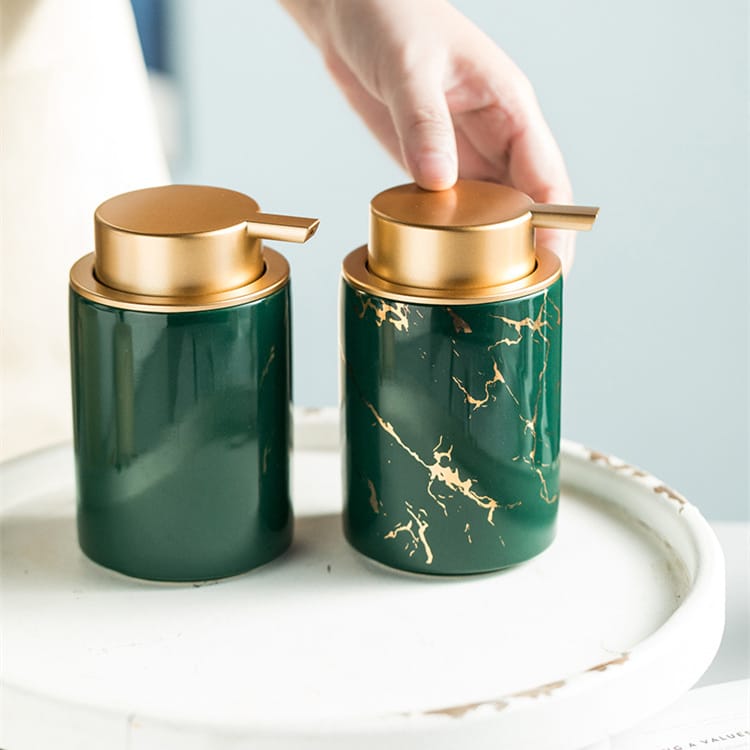
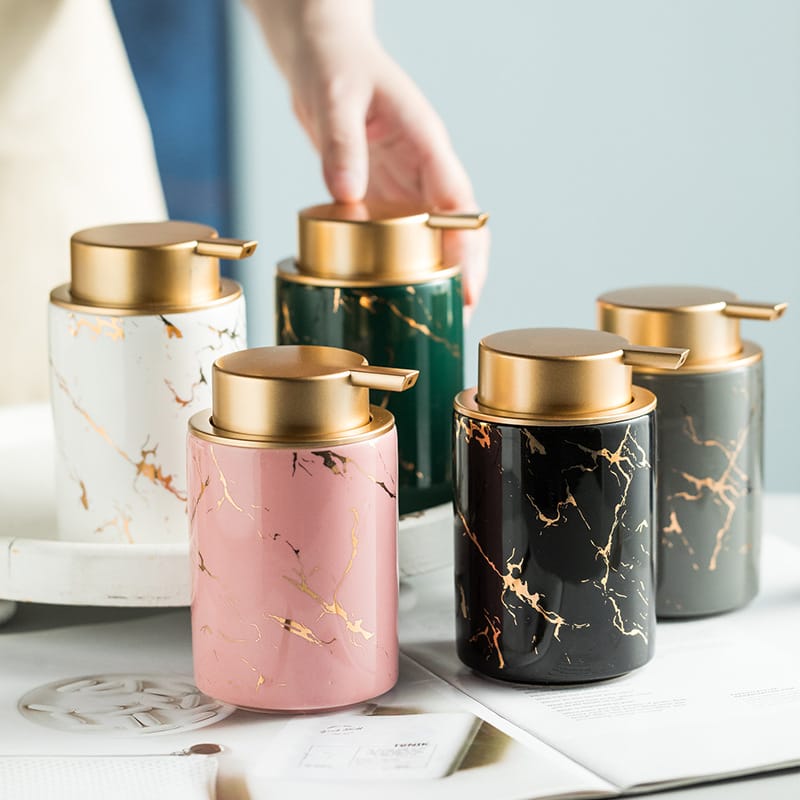
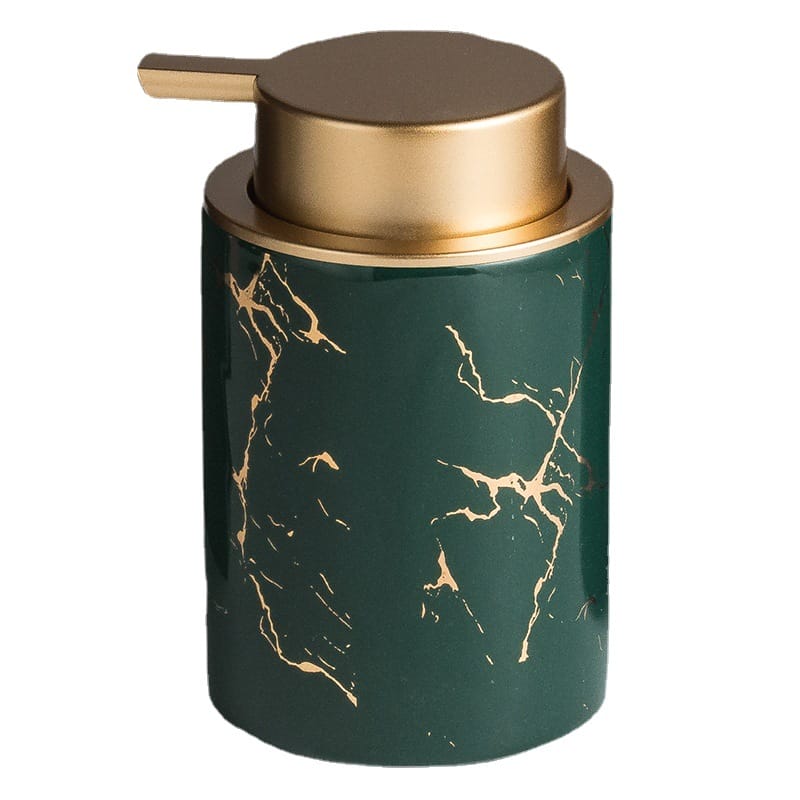
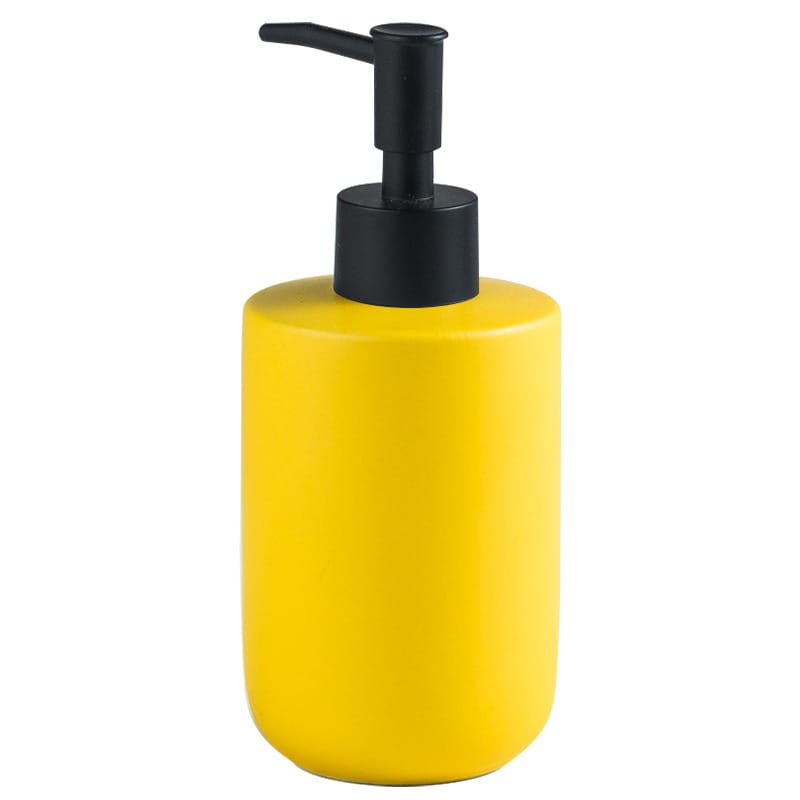
1) Custom Ceramic Hotel Dispenser – 360ml Luxury Amenity Bottle
This is the sweet spot for guestroom use: large enough to reduce refilling frequency, small enough to look intentional on a vanity.
A concrete example is DERBAL’s , which is positioned around a 360ml high-fire porcelain bottle with multiple glaze finishes and a pump designed for hotel liquids.
Operationally, the details that matter here include:
Capacity: around 360ml is common for room amenities
Wide neck: reduces spillage and speeds up refilling
Pump dosage: consistent output prevents waste and “guest over-pumping”
Branding method: screen print vs embossed vs laser (choose what survives chemical cleaning)
2) Refillable Ceramic Shampoo Dispenser Bottle
This term usually means a single-bottle solution placed on a tray or in a bracket.
The practical spec question: are you dispensing a thicker shampoo? If yes, ask about pump compatibility with viscosity and spring corrosion resistance.
If you’ve ever seen housekeeping “fix” a conditioner bottle by adding water, you understand why procurement needs to specify pump quality, not just bottle shape.
4) Refillable Ceramic Body Wash Dispenser Bottle
Body wash tends to be easier than conditioner, but it still creates residue. The non-porous glaze matters, especially in humid climates.
Many procurement teams want ceramic aesthetics but still want wall-mounted control.
In that case, the key question isn’t “is it ceramic?” It’s:
Is it compatible with a security bracket?
Is the bracket standardized across room types?
Can housekeeping remove the bottle safely for cleaning and refilling?
DERBAL explicitly calls out bracket compatibility in its 360ml ceramic dispenser bottle description, which is exactly the kind of detail you want in a spec.
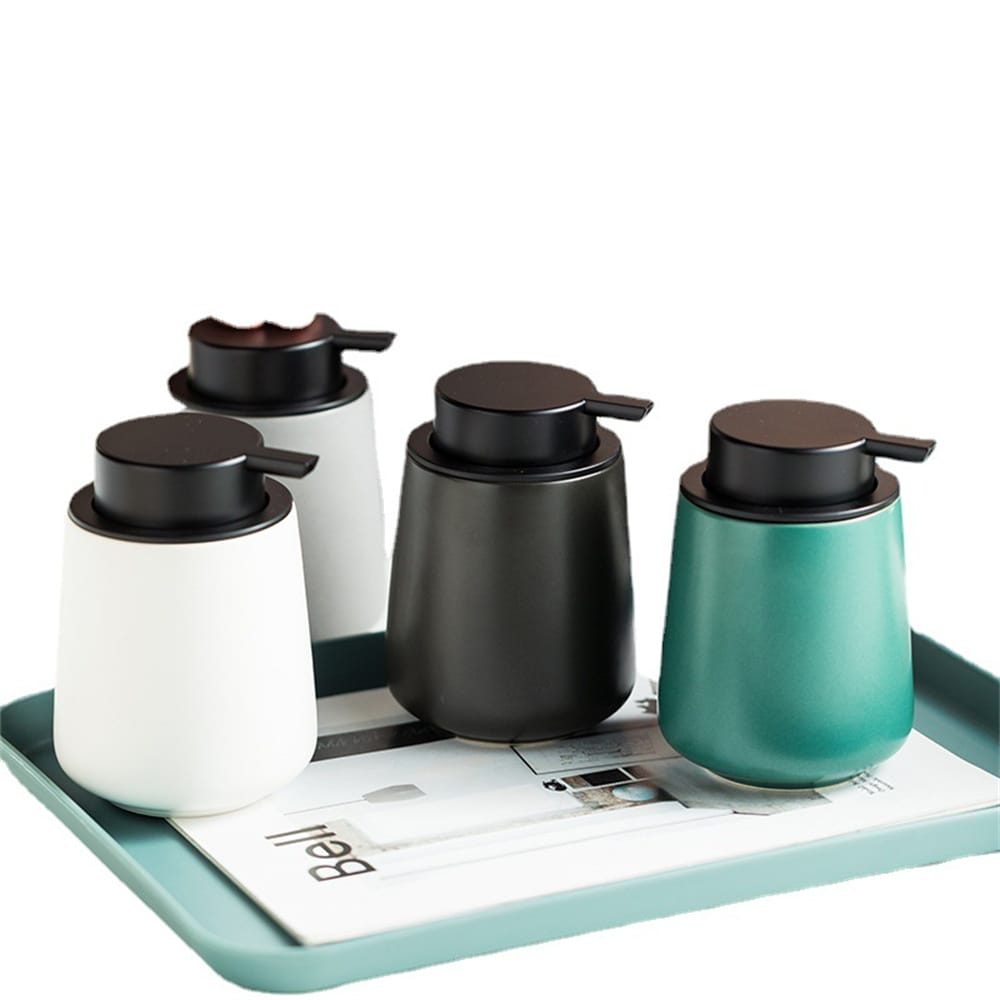
6) Hotel Bathroom Ceramic Dispenser Set (3-piece coordinated set)
Procurement often buys “sets” even when they ship as individual units, because you’re buying a look.
A good hotel bathroom dispenser set standardizes:
Bottle shape
Label system
Pump finish (chrome vs brushed brass vs matte black)
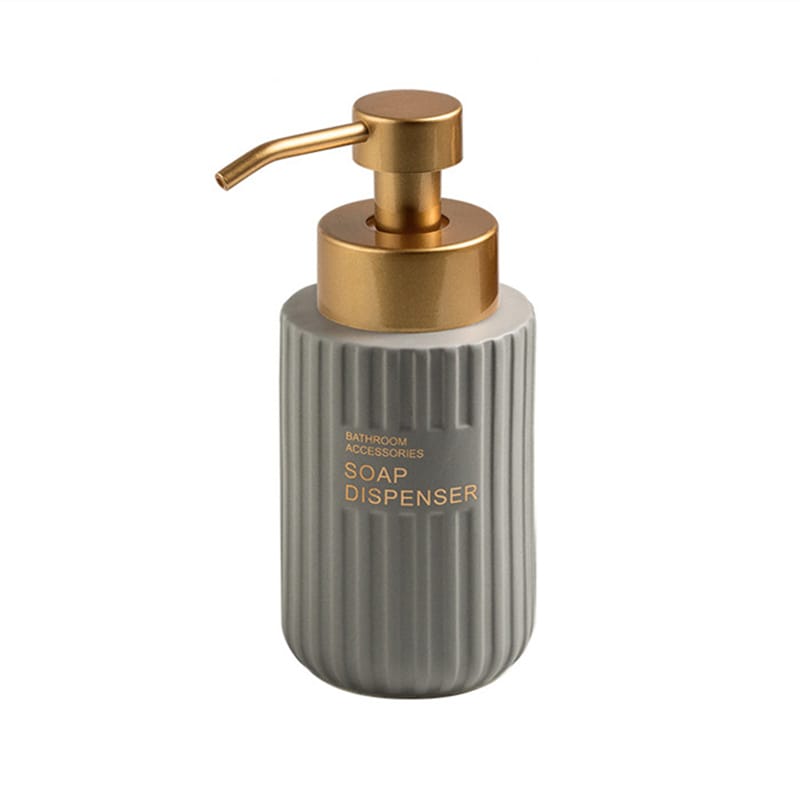
Foaming soap is a different conversation. It reduces soap consumption and gives guests a “clean” feel, but it requires the right pump and dilution guidance.
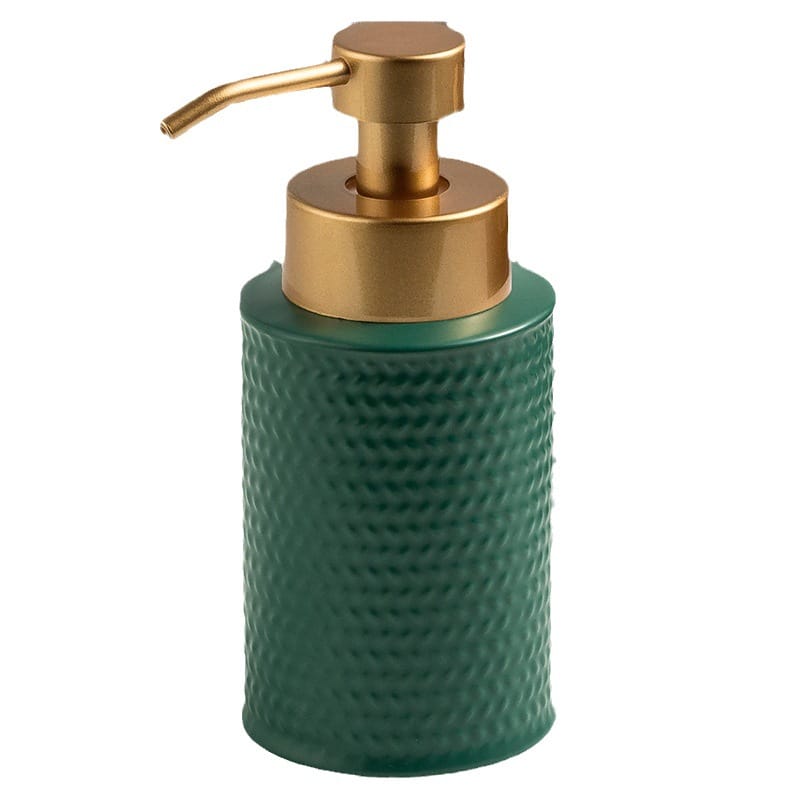
DERBAL’s is an example of a ceramic foaming soap dispenser 300ml (300ml glazed ceramic) with multiple pump finishes.
Where procurement should pay attention:
Foaming pumps are more sensitive to viscosity
The refill SOP must be clear (e.g., appropriate dilution ratio if required)
Public washrooms need faster turnarounds; weighted, stable bases help
This keyword shows up when brands want the amenity container to match stone, tile, or a spa palette.
If color match matters, you want to lock the spec early and request pre-production samples to avoid “close enough” outcomes.
The procurement checklist: how to specify ceramic dispenser bottles so they don’t fail on-site
Most dispenser rollouts don’t fail because the bottles look bad. They fail because the spec left room for chaos.
Here’s a procurement checklist that works in real projects.
Step 1: Decide what you’re standardizing (bottle only, or the full system)
Standardizing the bottle without standardizing the pump and mounting is how you get mixed finishes and inconsistent guest experience.
Define which of these is in scope:
Bottle + pump only
Bottle + pump + bracket
Bottle + pump + bracket + labels
Full project kit (including spares and installation guidance)
Step 2: Lock the capacity range by room type
Typical operational logic:
Standard rooms: 300–360ml bottles reduce refill frequency without looking bulky
Suites/villas: may use larger sizes or higher-end trays
Public washrooms: higher refill frequency, but also higher visibility
Step 3: Specify pump type and durability in writing
If you want fewer complaints, write the pump requirements like an engineer:
Output dosage target (e.g., around 2.0ml per stroke for lotion-style)
Material expectations (corrosion-resistant springs, hospitality-grade components)
Compatibility with thicker liquids (conditioner, lotions)
Anti-clogging design
Step 4: Specify the glaze and finish like you would specify tile
This sounds overly detailed—until you’ve had a batch arrive with a slightly different sheen.
At minimum, specify:
Finish family: glossy, matte, textured
Color tolerance: “must match approved sample”
Cleaning compatibility: non-porous glaze for standard non-abrasive cleaners
Step 5: Decide the labeling method (and keep it consistent)
Your labeling choice affects:
Guest trust
Housekeeping accuracy
Brand standards audits
Options include:
Embossed label (permanent, but less flexible)
Fired-on logo + separate product identification
Replaceable label bands (flexible, but must look premium)
Pro Tip: If you operate multiple properties or change amenity formulations seasonally, avoid “hard-coded” product names burned into ceramic. Keep the brand mark permanent and the product name adaptable.
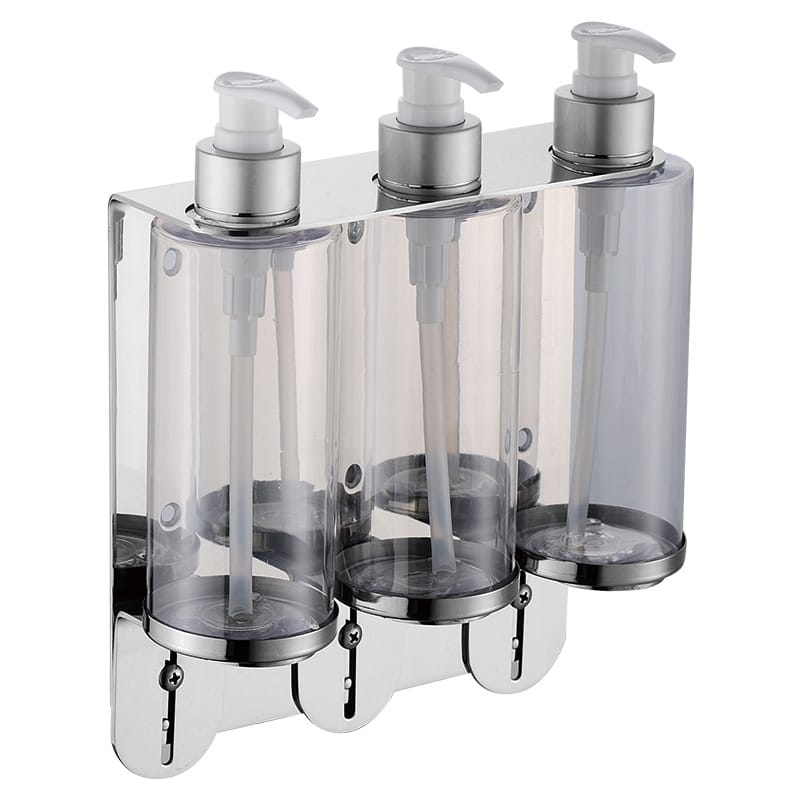
Step 6: Mounting and anti-theft strategy (wall vs tray vs bracket)
For wall-mounted scenarios, bracket compatibility matters more than bottle shape.
Look for:
Standard bracket interface
Locking mechanism (especially in public spaces)
Safe removal process for housekeeping
If you need a pure wall-mounted system (not ceramic), you can also evaluate options like DERBAL’s for back-of-house or high-traffic environments.
Step 7: Write your spare-parts plan into the purchase
The hidden cost of dispensers is downtime.
Ask the supplier:
Do you stock replacement pumps?
Can you provide spare pumps per 100 rooms?
What’s the lead time for replacement parts?
This is where one-stop suppliers earn their keep: you’re not chasing five vendors for one missing spring.
Refill workflow design: the part nobody wants to talk about (but everyone lives with)
If you want refillables to succeed, treat refilling as a process—not a task.
Longer replacement cycle when pumps and bottles are durable
The way to quantify it is simple:
Estimate consumption per occupied room
Estimate labor minutes per room for amenity handling
Estimate shrink/breakage rate
Even if you don’t have perfect numbers, you can build a conservative scenario.
Key Takeaway: A dispenser program wins when it’s standardized. A “mixed system” (different bottles, different pumps, inconsistent labeling) usually costs more than it saves.
Case studies: where ceramic dispensers make sense in premium hospitality
You asked for case studies with real partner hotel names. I’ll keep these grounded and operational—no invented metrics, no fantasy outcomes.
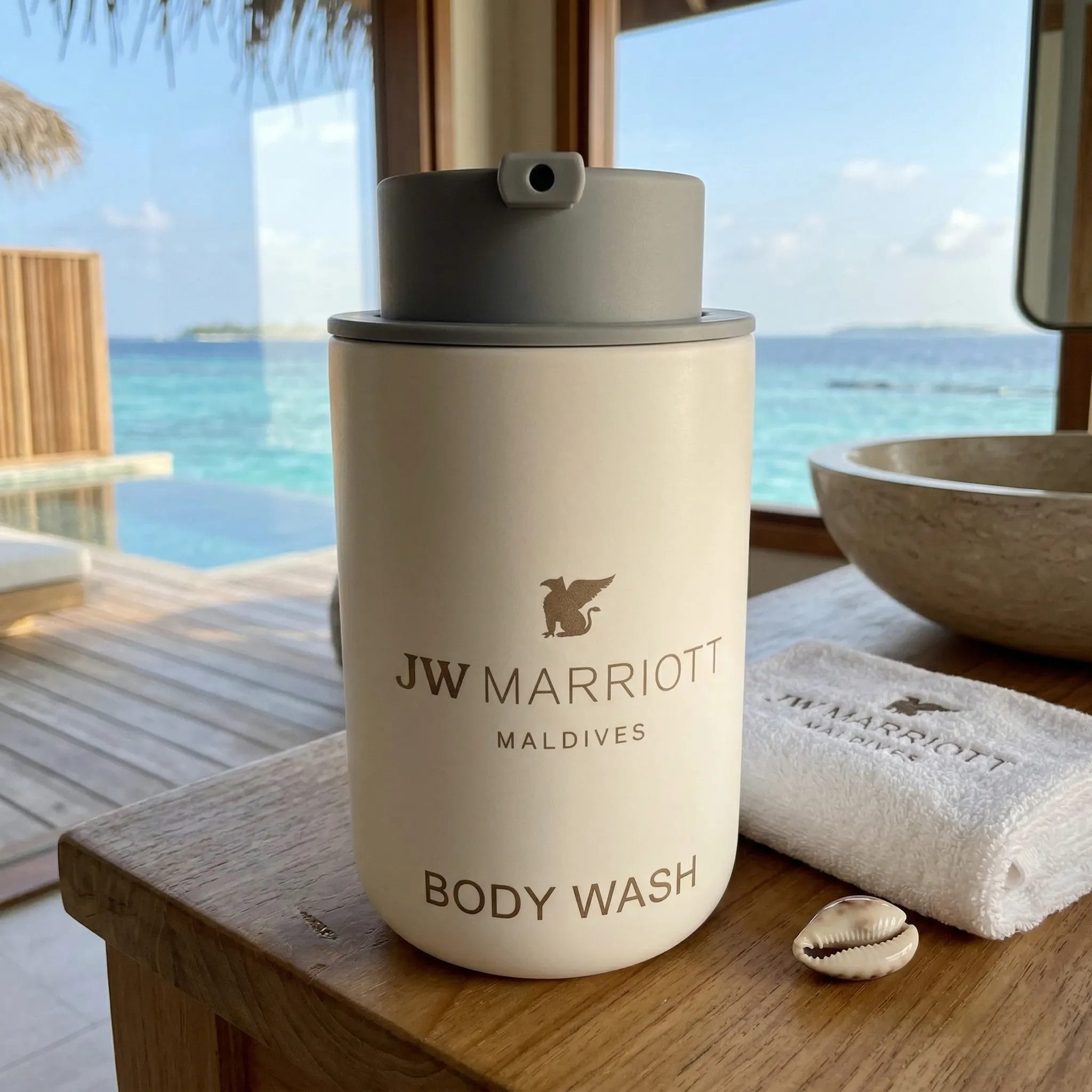
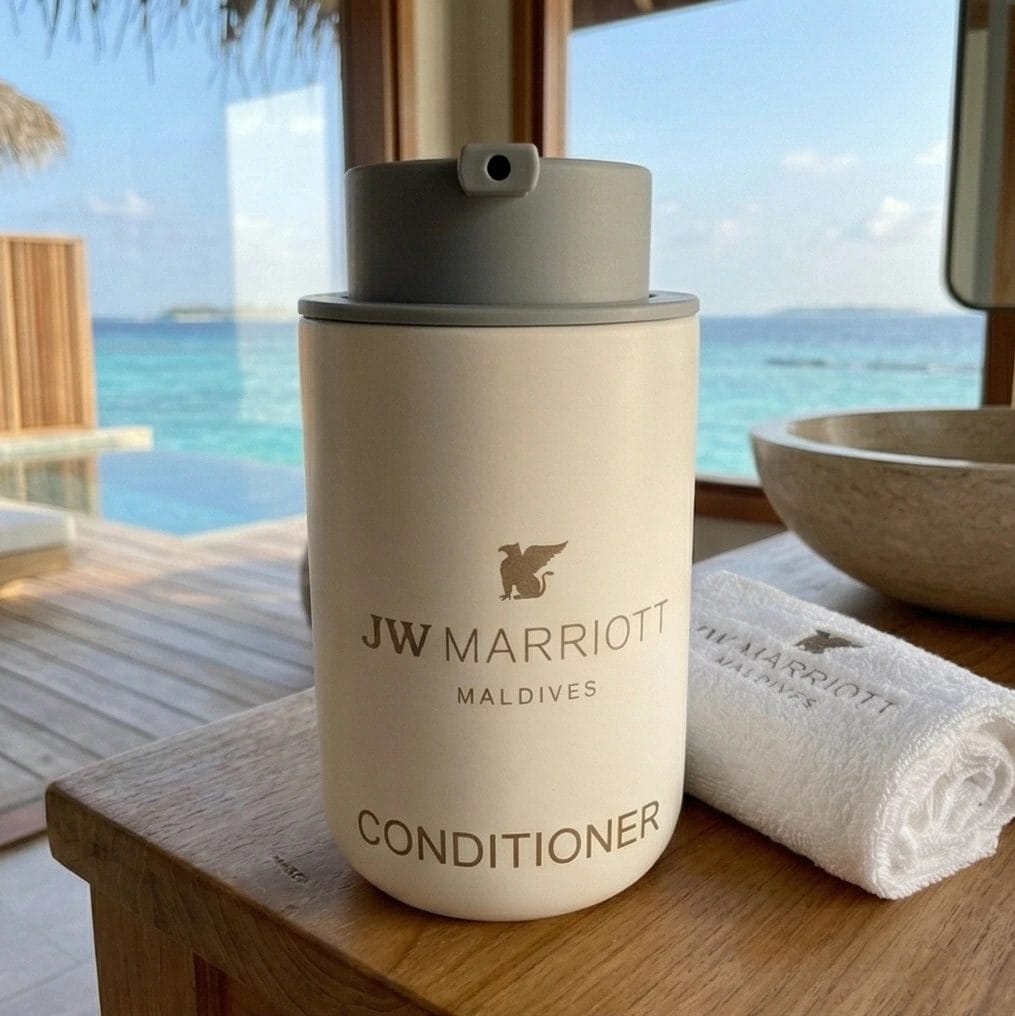
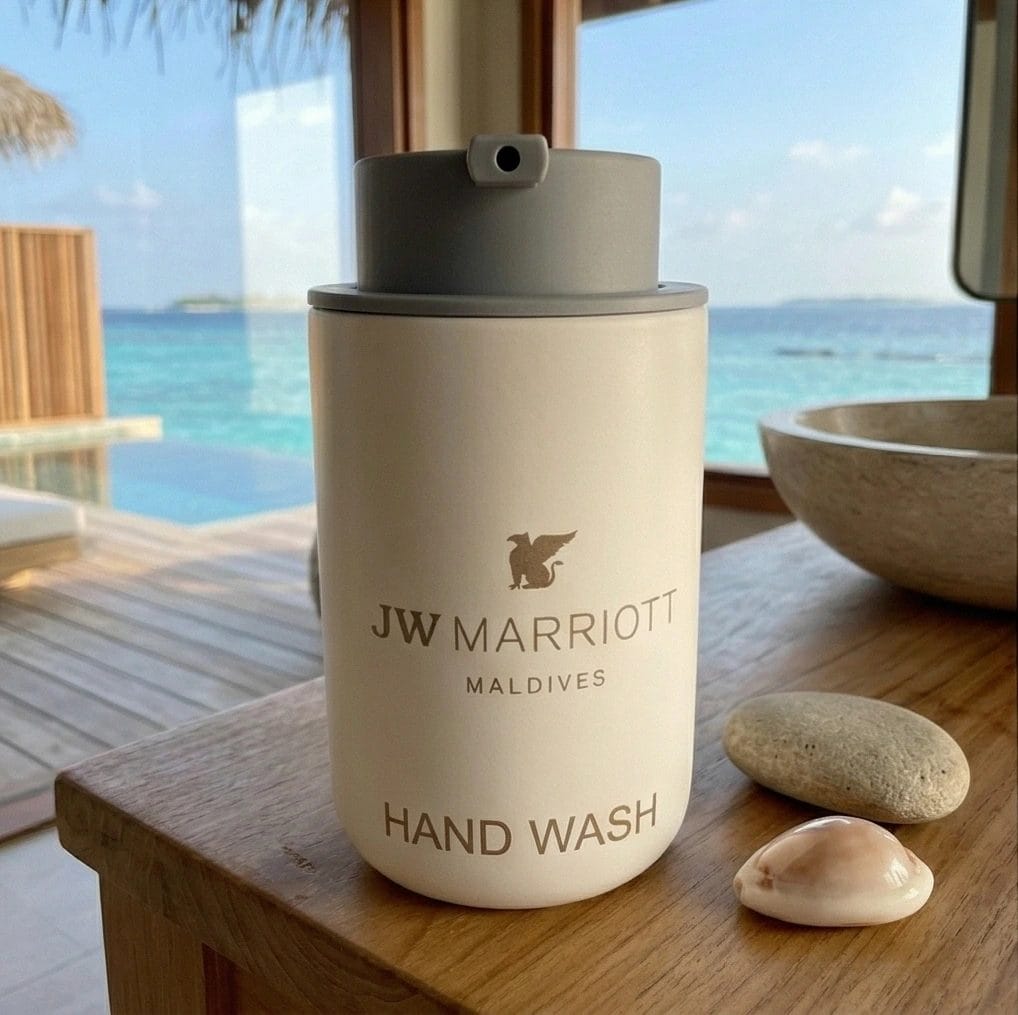
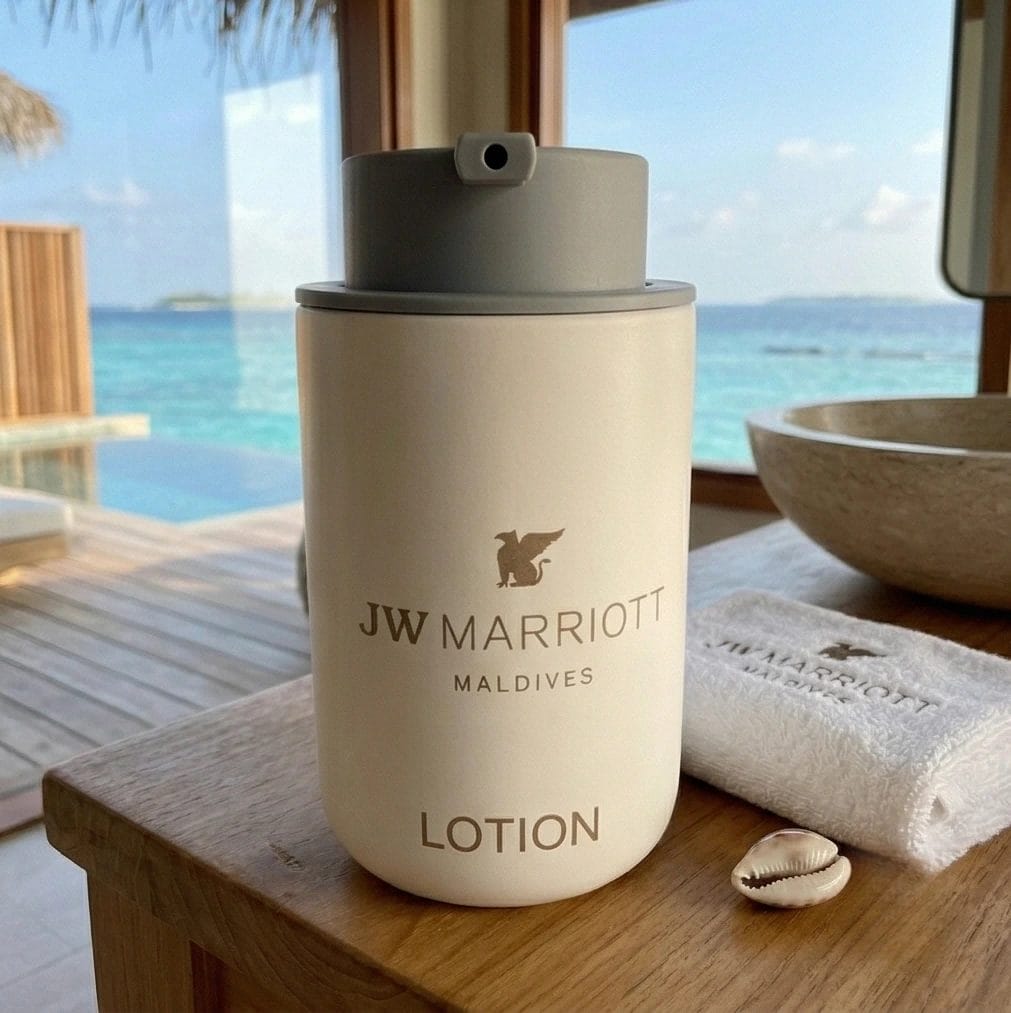
JW Marriott Maldives Resort & Spa: “Salt air + luxury finish” is a real constraint
In island resorts, you’re always fighting two things at once:
humidity and salt air affecting metal components
guest expectations that every surface feels premium
A ceramic dispenser bottle program fits this environment because:
glazed ceramic stays visually stable under heavy cleaning
finish consistency supports brand standards across villas
you can pair ceramic with corrosion-aware pump components and keep spares on hand
Procurement lesson: in coastal environments, specify pump durability and replacement availability as clearly as you specify glaze color.
JOALI: design coherence is the point—not an extra
In design-forward properties, “amenity containers” are part of the interior language.
Ceramic dispenser bottles allow you to align:
pump finishes (e.g., brushed brass) with bathroom fixtures
bottle form with tray and stone choices
brand marks with a subtle, permanent method (embossing or fired application)
Procurement lesson: treat ceramic dispensers like FF&E. Sample approval matters.
If you already run FF&E checklists for bathrooms, link the dispenser program into that workflow (DERBAL’s is a useful planning reference).
JOALI BEING: wellness guests are sensitive to “what’s in the bottle”
Wellness guests care about ingredients, but they also care about trust.
Refillables can create skepticism if:
labels are unclear
pumps look dirty
the product feels inconsistent from day to day
Ceramic helps because it presents as intentional and clean, but the real win is operational:
clear labeling
consistent product selection
refill station discipline
Procurement lesson: your SOP is the product. The bottle is the packaging.
Common objections (and how to address them without hand-waving)
Ceramic can break, but that’s a spec and placement question.
Mitigation options:
bracket or wall mounting in standard rooms
stable weighted bases in countertop scenarios
define where ceramic is used (suites/spa) and where a lockable wall system is better
Objection 3: “Our staff won’t follow a complicated refill process.”
Don’t build a complicated process.
Build a repeatable one:
one fill station
one set of tools
one labeling standard
one threshold rule
Objection 4: “Supply chain risk: we can’t have mismatched finishes mid-project.”
This is where supplier selection matters.
Ask about:
sample approval flow
batch control for glaze and finish
spare-part stocking
If you’re managing bathroom design choices more broadly, it helps to think about surfaces and cleaning interactions as one system (DERBAL’s is a good example of that mindset).
How DERBAL supports ceramic dispenser bottle projects
DERBAL’s value in this category is not “we sell bottles.” Plenty of people sell bottles.
The value is in reducing rollout friction for procurement teams:
Project-friendly customization: finish options (glossy/matte/textured), branding methods, and color matching where required.
Operational fit: options designed around refilling speed and standardized mounting.
One-stop sourcing: pairing ceramic amenity bottles with complementary hotel product categories so you’re not managing separate supply chains.
If you want to see concrete product specs, start with DERBAL’s Custom Ceramic Hotel Dispenser – 360ml and the Ceramic Embossed Foaming Soap Dispenser product pages on our website.
FAQ: Ceramic dispenser bottles for hotels
Are ceramic dispenser bottles safe for hotel bathrooms?
Yes—when the ceramic is properly glazed (non-porous) and the placement reduces drop risk. For standard rooms, bracketed or wall-mounted placement reduces handling.
What capacity is best for hotel refillable dispensers?
In guestrooms, 300–360ml is a common procurement range because it balances refill frequency with a clean visual footprint. Public washrooms may vary based on traffic.
Do ceramic dispensers work with thick conditioner and lotions?
They can, but the pump must be designed for high-viscosity liquids. Procurement should request pump material and durability details and test with real formulations.
What’s the difference between ceramic bottles and wall-mounted cartridge dispensers?
Ceramic bottlesemphasize premium aesthetics and brand consistency. Cartridge systems emphasize controlled hygiene and standardized refills. Some properties use both: ceramic in suites/spa zones and cartridge systems in high-traffic standard areas.
Are refillable dispensers required by law?
It depends on where you operate. New York State’s environmental agency publishes a clear overview of the change and compliance options in its small plastic hospitality bottle restrictions guidance.
Next step: request a quote for ceramic dispenser bottles
If you’re planning a new build, renovation, or amenity upgrade, the fastest way to avoid rework is to start with a clear spec.
Share your room count, desired capacity, pump finish, and mounting preference (tray vs bracket vs wall). DERBAL will come back with:
The Ultimate Gesture of Care: How the Hotel Golf Umbrella Becomes Your Most Powerful Brand Ambassador Imagine the scene. A valued guest arrives at your
Recommended Full-Category Hotel Suppliers in China In today’s competitive hospitality industry, selecting a reliable and comprehensive supplier is crucial. An excellent “one-stop” supplier not only
The $85K/Year Crisis Destroying Hotel Profit Margins Picture this: A viral TikTok video pans across your lobby’s cracked marble tiles, zooms in on stained corridor
45 Hotel Amenities That Will Redefine Guest Expectations in 2025 (A Strategic Guide to Outperform Short-Term Rentals & Build Loyalty) Are Hotel Amenities Free? Hotel
When it comes to beach island hotel watersports, the choice between canoes and kayaks isn’t just about equipment—it’s about crafting unforgettable moments for guests. At
Embracing Sustainability: How Hotel Products Innovation Fuels Green Globe Certification Success Introduction: The Imperative of Sustainable Transformation in Hospitality In the wake of global climate
The Silent Ambassador: How Derbal’s Hotel Glass Water Bottles Are Redefining Luxury Hospitality By Alain Trefois, Sustainability Director at Six Senses Laamu February 26, 2025
Hi, Welcome to Visit DERBAL.As an Professional Vertical Setup Hotel Supplier,we can meet all the requirements you need!Click and Type us,Only takes a few seconds to reach you.