What makes a resort truly welcoming? Increasingly, it comes down to one question: can every guest reach the water? A beach wheelchair for resort properties turns that question from a liability into a competitive advantage. The World Health Organization estimates 1.3 billion people — roughly 16% of the global population — live with a significant disability today. For coastal resorts, the gap between a guest lounge and the shoreline is often where accessibility falls apart.
This article covers what resort general managers and procurement teams need to know before purchasing a commercial beach wheelchair: which construction features survive salt, sand, and sun; how safety certifications reduce liability; and what questions to ask a supplier before writing a purchase order. The UN World Tourism Organization has made accessible tourism a formal priority, and with the global accessible travel market projected to reach $126 billion by 2031, the business case is as strong as the moral one.
🌊 Is your resort’s beach accessible to every guest?
Explore the DERBAL Island Beach Sand Wheelchair →
Why Beach Accessibility Is No Longer Optional for Resorts
Hotels in the United States already operate under ADA Title III obligations that require places of public accommodation — including beaches, pools, and recreational areas — to be accessible. Even outside the U.S., major booking platforms and corporate travel policies increasingly filter properties by accessibility ratings. Guest reviews that mention the availability — or absence — of a beach wheelchair can directly influence booking decisions.
Beyond compliance, inclusion drives measurable returns. Properties that proactively market accessible amenities attract a loyal, often underserved segment of travelers who travel with family or caregivers — multiplying spend per room. A commercial-grade beach wheelchair signals that your resort does not treat accessibility as an afterthought.
Key Construction Features That Actually Matter
Wide, Low-Pressure Beach Tires
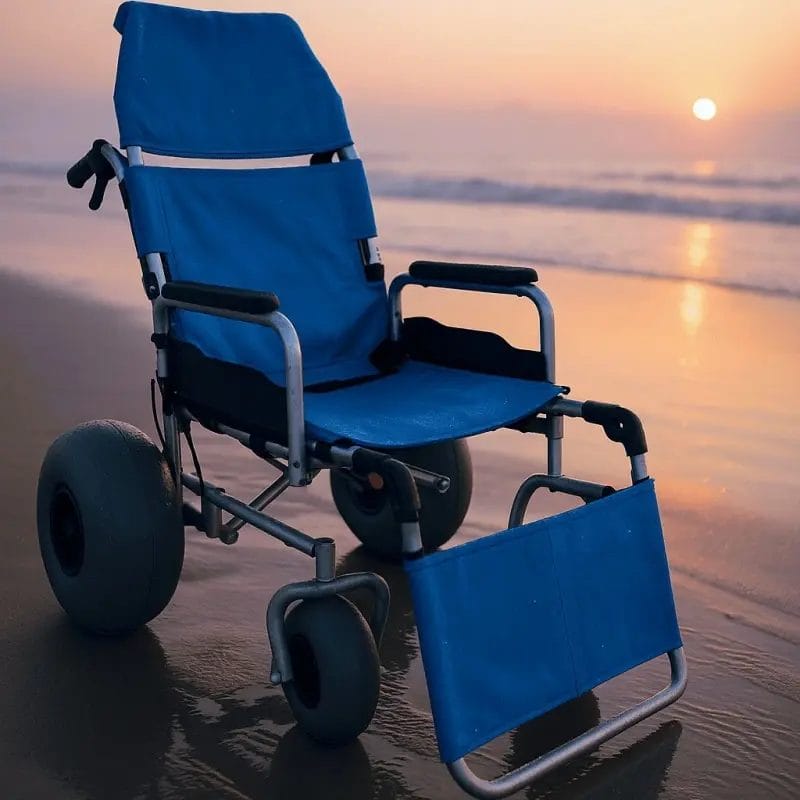
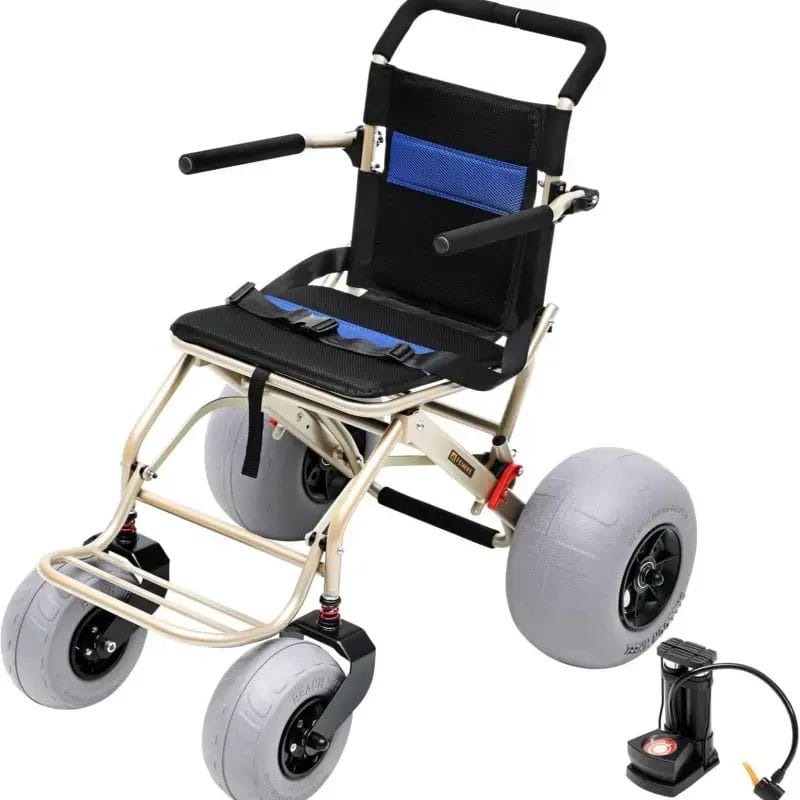
Standard wheelchair wheels sink into dry sand within inches. A proper beach wheelchair uses oversized balloon tires — typically 12 to 16 inches wide — that distribute weight across soft sand without bogging down. The DERBAL Island model uses four wide-profile pneumatic tires that float on sand rather than fight it.
Corrosion-Resistant Frame and Fasteners
Saltwater is unforgiving on metal. Look for marine-grade stainless steel hardware and an epoxy-coated carbon steel frame. Chromed or untreated components will rust within weeks in a beachfront environment. Every bolt, axle, and hinge point should be rated for outdoor marine exposure.
Reclining Capability and Comfort Padding
A fixed upright position limits who can use the chair comfortably. The better commercial models offer a 180° reclining backrest, allowing users to lie flat and face the sun or water. Removable, washable padding made from closed-cell foam resists saltwater absorption and dries quickly.
Load Capacity and Stability
Most resort-grade beach wheelchairs support between 100KG and 150KG — sufficient for the vast majority of adult guests. The chair should feel planted, not tippy, even on an incline. A wider wheelbase and low centre of gravity are essential for safe assisted transfers from a standard wheelchair onto the sand.
“A beach wheelchair is not an amenity — it is an invitation. It tells a guest with a disability that your resort saw them coming and planned for their arrival.”

Materials That Survive Saltwater and Sand
A standard indoor wheelchair will fail catastrophically on a beach. The materials you choose now determine whether the equipment lasts one season or five. Here is what holds up — and what does not:
| Component | Best Practice | Avoid |
|---|---|---|
| Frame | Epoxy-coated carbon steel | Bare or painted mild steel |
| Fasteners | 316 marine-grade stainless | Zinc-plated steel |
| Wheels | Pneumatic balloon tires, 12–16″ wide | Standard solid rubber casters |
| Upholstery | Closed-cell foam, removable | Open-cell foam, non-removable |
| Armrests / footrests | Quick-release, wash-down safe | Fixed, riveted parts |
The DERBAL Island Beach Sand Wheelchair combines epoxy-coated carbon steel with 316 marine-grade stainless hardware and four wide pneumatic tires — a build spec designed specifically for daily resort use in saltwater environments.

What to Ask Before You Order
Not all beach wheelchairs marketed as “commercial grade” are built for daily hotel use. A chair that works for a family trip to the beach once a year will not survive a resort putting 10 guests through it every day. Ask your supplier these five questions before committing:
- What is the verified load capacity? Demand a tested, not estimated, maximum weight rating. 120KG minimum for adult resort use.
- Are spare parts available off-the-shelf? Tires, bearings, and armrest pads wear. Confirm that replacement parts ship within a standard lead time — not custom-fabricated on demand.
- Does the chair disassemble for storage? A folding or quick-release design saves precious beach hut or pool deck space.
- What is the warranty on corrosion? Rust-through on the frame should be covered for a minimum of one year in marine environments.
- Can I order one unit to test? Reputable B2B suppliers should offer a sample order with full documentation before you commit to a bulk purchase.

Frequently Asked Questions
1. What exactly is a beach wheelchair?
A beach wheelchair is a specialised mobility device with oversized, wide-profile pneumatic tires that allow it to roll across soft sand, gravel, and uneven beach terrain without sinking. Unlike standard wheelchairs, beach models use corrosion-resistant materials designed for saltwater exposure.
2. Does my resort legally need a beach wheelchair?
In the United States, the Americans with Disabilities Act (ADA) requires hotels and resorts to provide accessible facilities, which can extend to beach access routes. Even where not explicitly mandated, proactive compliance reduces legal risk and strengthens your property’s reputation with OTAs and corporate travel buyers who filter by accessibility.
3. How much weight can a commercial beach wheelchair hold?
Most commercial models support between 100KG and 150KG. The DERBAL Island Beach Sand Wheelchair is rated for 120KG, which covers the vast majority of adult guests. Always verify a tested weight rating — not an estimated one — before purchasing.
4. How do I maintain a beach wheelchair against saltwater?
Rinse the entire chair with fresh water after every use, paying special attention to wheel bearings, hinge points, and bolts. Dry thoroughly before storage. Inspect fasteners monthly for early signs of rust. Removable seat padding should be washed separately and air-dried.
5. Can a beach wheelchair be used in a pool area?
Yes — provided the model uses marine-grade stainless steel hardware throughout. A pool deck is a wet, chlorinated environment similar to a saltwater beach. Avoid chairs with uncoated steel components, which will corrode in both settings. The same wide tires that work on sand also provide excellent grip on wet pool decking.
6. What is the typical lead time for ordering?
Lead times vary by supplier and order volume. For a single sample unit, expect 7–14 days. Bulk orders — common when outfitting a multi-property resort group — typically ship within 30–45 days. Always request a confirmed production timeline before issuing a purchase order.
🏖️ Ready to make your beach accessible?
View the full specifications and request a quote for the DERBAL Island Beach Sand Wheelchair. Single-unit samples available for resort teams that want to test before committing to a bulk order.
Related products: Browse our hotel furniture collection for more accessibility and outdoor equipment designed for resorts. Contact our team for volume pricing and custom specifications.