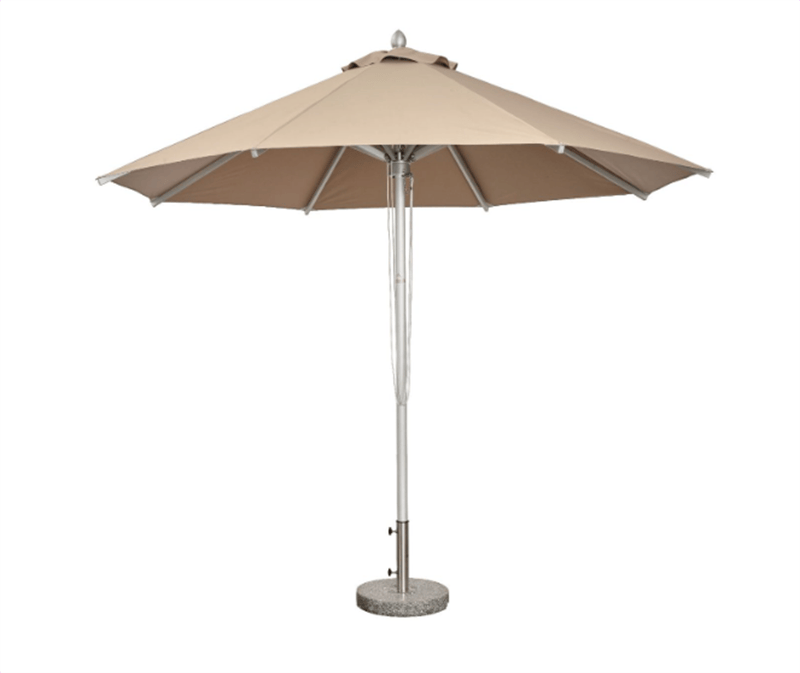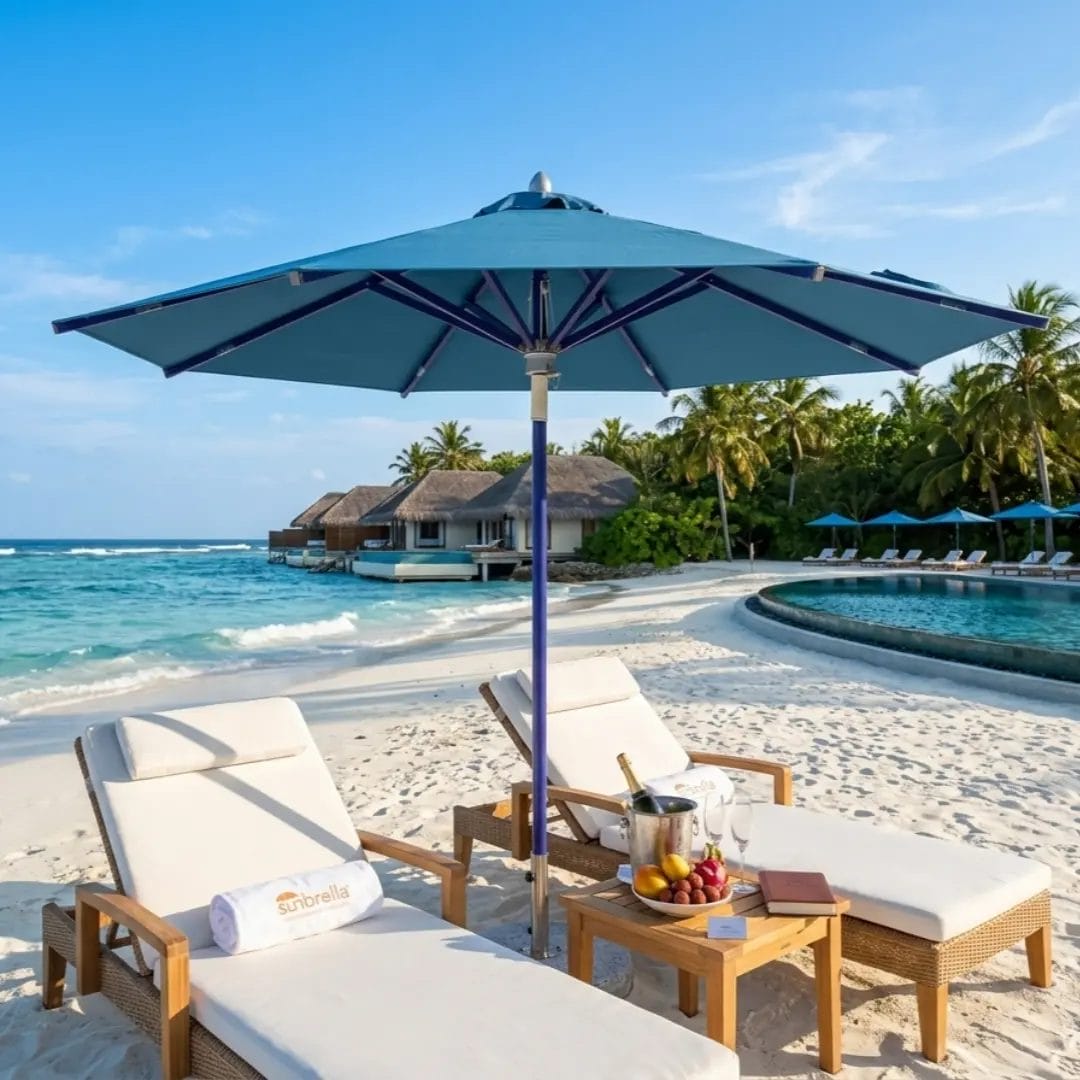
A beach umbrella is easy to buy. A commercial beach sun shade that stays safe, looks premium after years of salt + UV, and doesn’t become a wind incident is harder.
If you’re sourcing shade for a coastal property (or any rooftop/pool deck that sees gusts), this guide gives you a clean evaluation framework: what to specify, what to verify, and where expensive umbrellas typically fail.
Key takeaways
- Start with wind and anchoring. The umbrella is only as safe as the base + protocol.
- Fabric choice is lifecycle cost. Sunbrella solution-dyed acrylic is built to resist fading and outdoor wear.
- Coastal corrosion kills hardware first. Specify marine-grade aluminum and stainless hardware, and avoid plastic load-bearing parts.
- Procurement needs serviceability. Ropes, pulleys, and fasteners should be maintainable—without special tools.

Step 1: Define your shade “job” before comparing products
Most mistakes happen because the spec is vague. Before you ask vendors for quotes, lock these basics:
- Coverage need: How many loungers per shade point? (A 3m round canopy typically covers ~2–4 loungers depending on spacing.)
- Site conditions: beachfront vs pool deck vs rooftop (salt exposure and gust patterns differ).
- Mobility: do you need movable bases for daily re-layout, or a fixed deck mount?
- Operating model: who opens/closes daily, and what happens when wind picks up?
If the job is “shade + brand image + safety,” you’re buying more than fabric.
Step 2: Wind and guest safety: treat this like a policy, not a feature
Umbrellas fail in predictable ways: canopy becomes a sail, base slides, pole bends, hardware loosens—and the whole unit turns into a liability.
Two procurement moves reduce risk immediately:
-
Ask for wind/anchoring documentation, not just “windproof” language. Hospitality risk guidance increasingly references new standards such as ASTM F3681-24 (2024) when discussing how umbrellas should be secured at hotels and resorts (and why anchoring matters). See Distinguished’s practical overview on .
-
Write an operational wind protocol into your opening/closing SOP. Even a high-grade unit should be closed and secured during gust events.
⚠️ Warning: If your team can’t consistently follow a wind protocol, prioritize fixed mounting (deck flange) or heavier base systems over “lightweight convenience.”
Step 3: Fabric: why Sunbrella solution-dyed acrylic performs differently
For luxury properties, fade is not cosmetic—it’s brand damage. And mildew is not just an appearance issue; it creates cleaning labor and guest complaints.
Sunbrella’s own explanation of its performance textiles emphasizes that its outdoor fabrics are made from solution-dyed acrylic (often described as “color to the core”), engineered for UV exposure and outdoor durability. If you need the technical framing, start with .
Procurement checks that matter:
- Is the fabric authentic and traceable (brand, reference, swatch control)?
- Is it breathable enough for guest comfort at pool/beach?
- Can your team clean it repeatedly without destroying the finish?
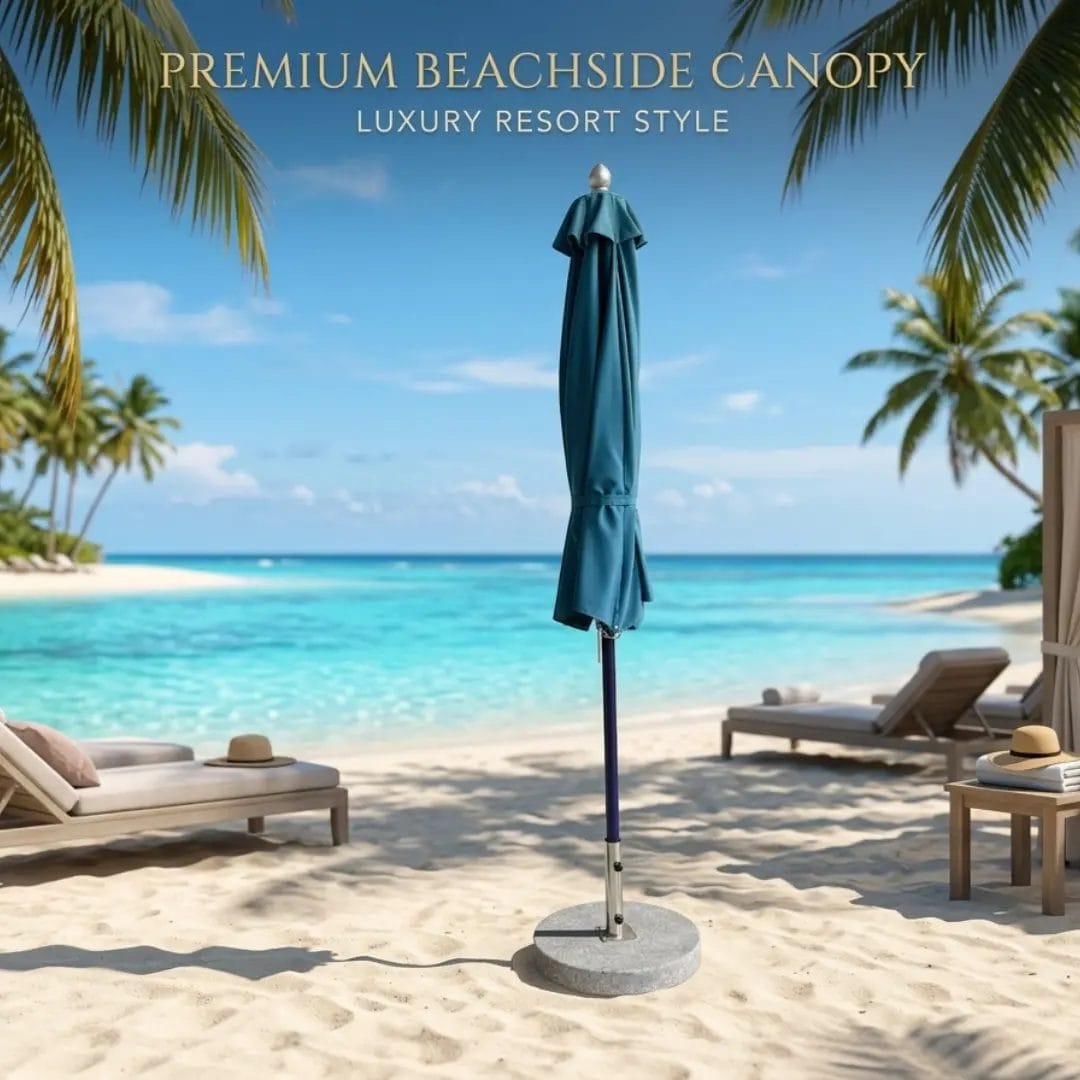
Step 4: Frame and hardware: where “commercial-grade” gets real
In coastal environments, the weak points are usually boring:
- fasteners that rust
- joints that loosen
- ribs that bend
- plastic hubs that crack
So your spec should name materials, not vibes:
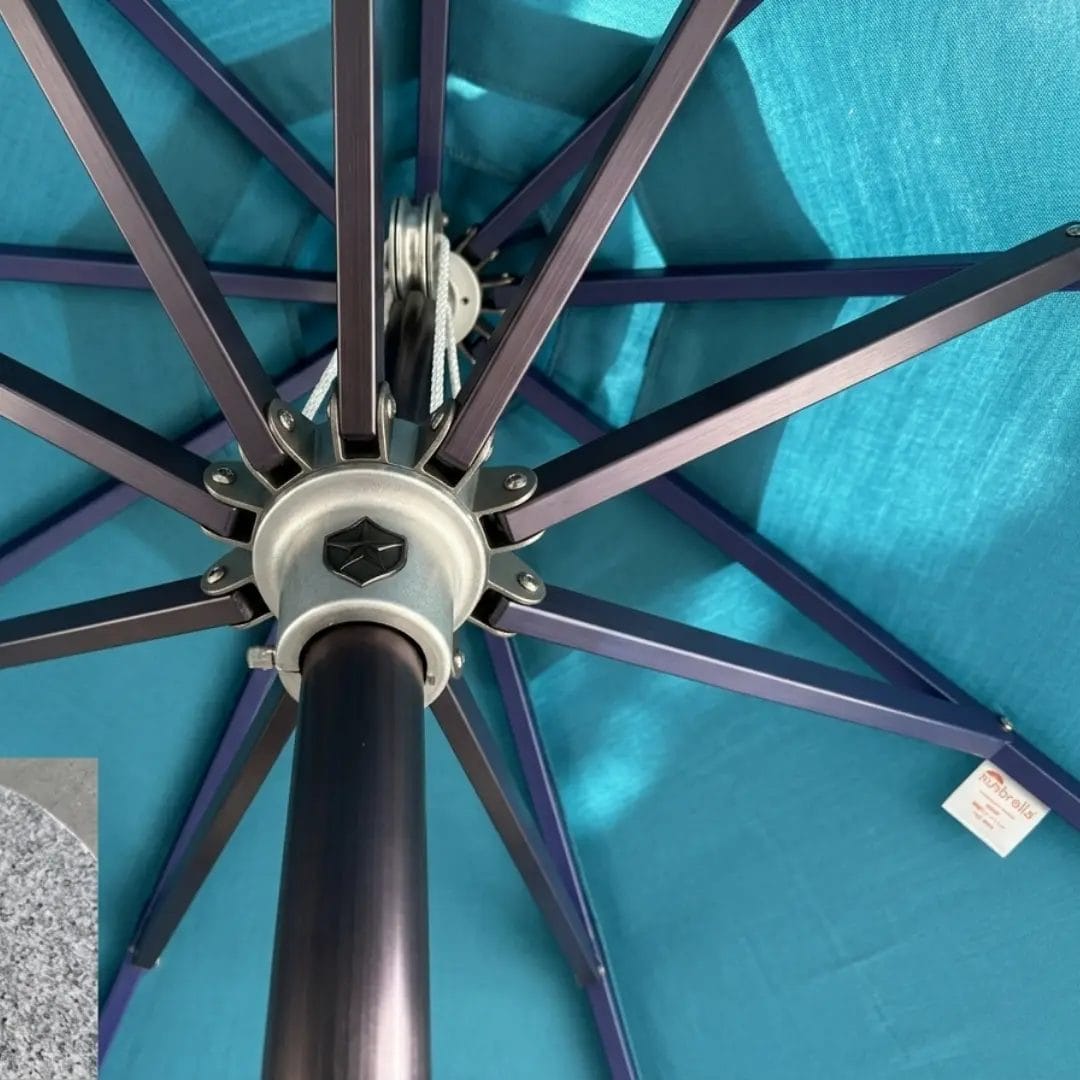
- Marine-grade aluminum for pole and ribs
- Stainless steel hardware for fasteners and load points
- No plastic load-bearing connectors in high-stress joints
This is also where vendor quality control matters. You’re not just buying a design; you’re buying repeatability across dozens (or hundreds) of units.
Step 5: Base vs deck-mount: choose for your site, not your catalog
There’s no universal “best base.” There’s only what matches your operation.
When a heavy mobile base makes sense
Choose a heavy base when:
- you need layout flexibility for events
- you expect daily relocation by staff
- you want shade points that can be moved seasonally
When deck-mount is the safer choice
Choose a deck flange when:
- you have consistent wind exposure
- your property has a history of umbrellas tipping or “walking”
- you need a more enforceable safety baseline
If you’re exploring broader shade categories, DERBAL’s overview page on is a solid internal starting point.
Example spec (not a pitch): DERBAL’s 3m Sunbrella beach sun shade
To show what a “procurement-grade” spec looks like in practice, here’s one concrete configuration: .
What’s notable is not the marketing language—it’s the specificity:
- Canopy: 3m round, designed to shade 2–4 loungers
- Fabric: authentic Sunbrella (example reference shown as 5424-0000 on the page)
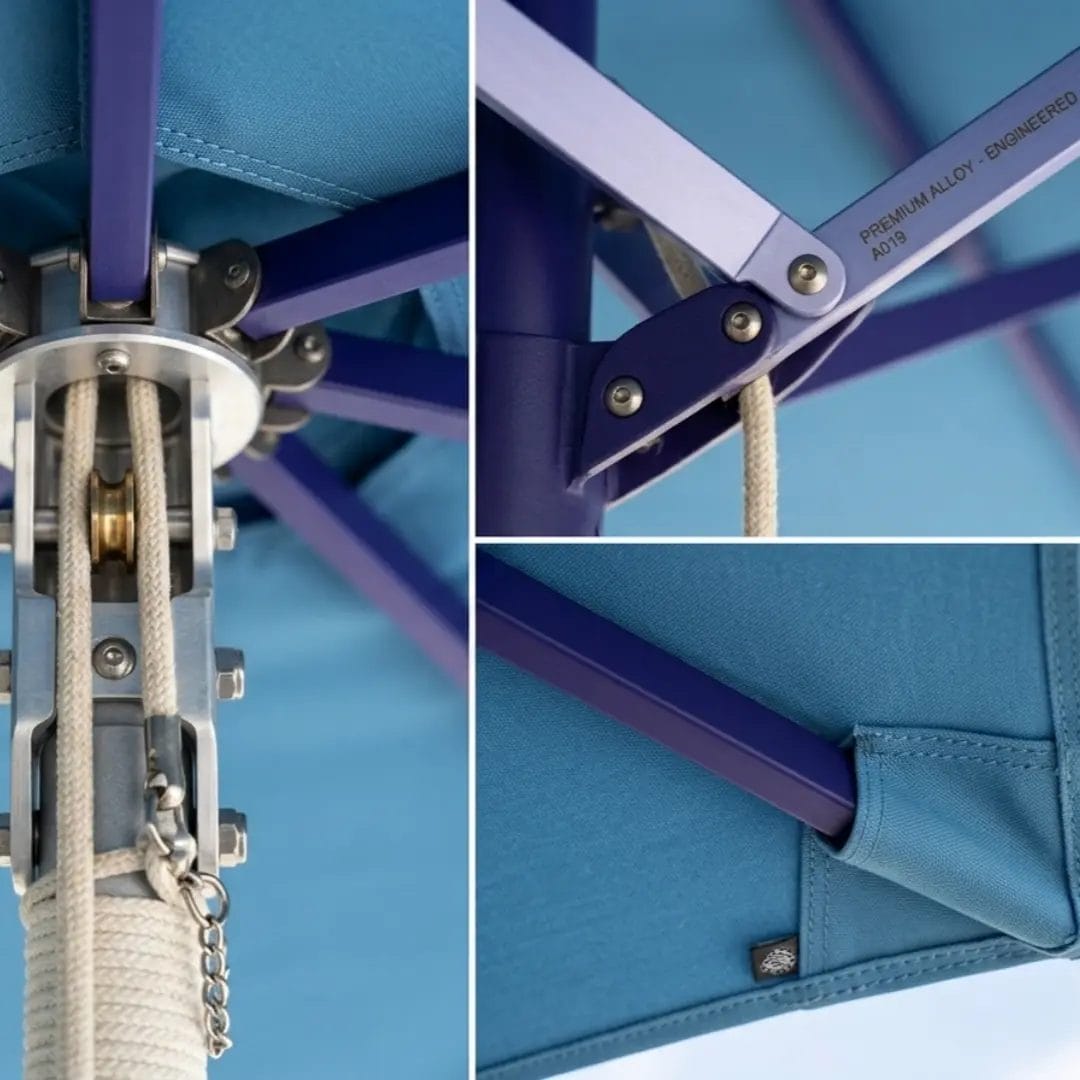
- Main column: aluminum alloy tube listed as ∅48mm with 2.0mm wall thickness
- Ribs: aluminum alloy ribs listed as 20 × 30 × 1.5mm
- Hardware: stainless (listed as SUS304)
- Base: 60kg marble base option; also mentions a deck-mount floor flange option
- Operation: multi-pulley, double pull-rope mechanism designed for smooth open/close
- Maintenance note: recommends weekly fresh-water rinse in salt environments
If you’re comparing multiple products, use these fields as your template. The vendor who can’t answer them cleanly is the vendor who will cost you time later.
Operations and maintenance: write this into the PO package
A good umbrella becomes a bad umbrella when:
- staff force the mechanism
- salt residue builds up on moving parts
- small corrosion starts and gets ignored
At minimum, include:
- weekly rinse/cleaning expectations for coastal sites
- monthly visual inspection points (fasteners, ribs, rope wear)
- storm procedures (close, secure, store if required)
For maintenance framing, ResortContract’s guidance on is a practical reference.
html

Common red flags when sourcing a high-wind beach umbrella in bulk
- No material callouts (just “strong aluminum” with no dimensions)
- Unknown hardware grade (especially in salt air)
- Plastic hubs in load joints
- No spare parts plan for ropes, pulleys, finials, or fasteners
- No anchoring guidance beyond “use a base”
FAQ
Is Sunbrella better than “high-quality polyester” for resorts?
Often, yes—because the procurement problem is fade + cleaning + lifecycle. Sunbrella positions its solution-dyed acrylic as engineered for outdoor exposure and long-term color performance (see their explanation earlier in this guide).
What matters more: the canopy fabric or the base?
For safety, the base and anchoring system. Fabric affects comfort and aesthetics; anchoring affects whether the unit becomes an incident. The umbrella securing guidance from Distinguished (linked above) is a useful starting point for policy thinking.
Marble base or deck mount: which is better?
If you need mobility, a heavy base is practical. If your site is high-wind or your staff can’t reliably enforce closing protocols, deck-mounting often creates a more stable baseline. The right answer depends on your operating model and site conditions.
Next steps (procurement-friendly)
If you’re sourcing commercial beach shade in bulk and want to reduce surprises, request:
- a one-page spec sheet (fabric reference, pole/rib dimensions, hardware grade)
- base options (weight, footprint, deck-mount details)
- spare parts list (rope/pulley/hardware)
- finish options and Sunbrella color choices
If you want to compare formats, browse DERBAL’s line and cross-check specs against your site’s wind and maintenance reality.