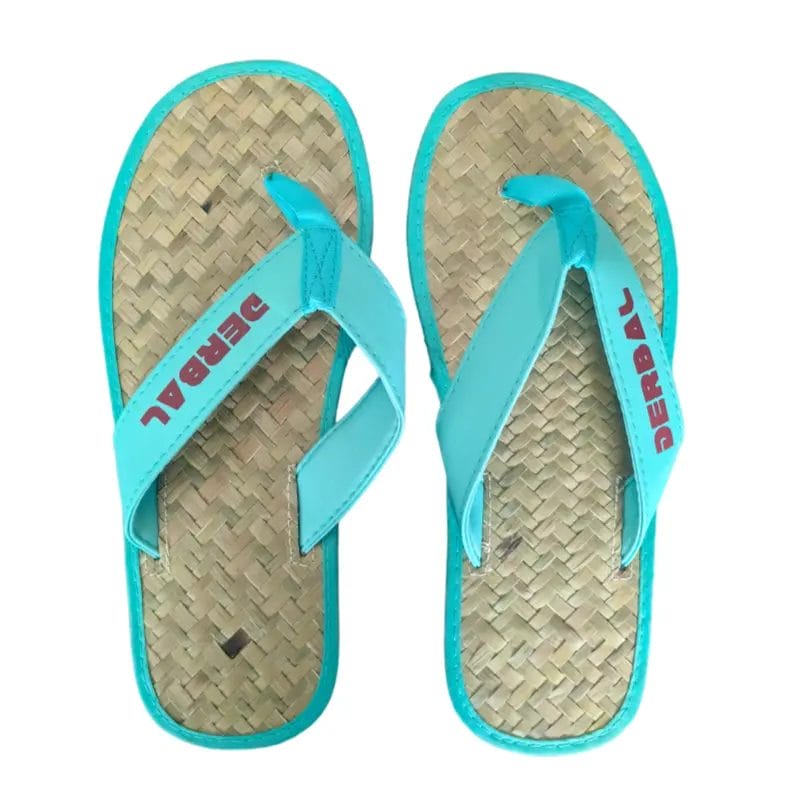
Yes—you can clean straw slippers safely with a soft brush, a barely damp cloth, and cool-air drying, as long as you never soak the woven straw upper. Natural straw, raffia, and jute uppers wick sweat and stay breathable, but they are not meant to sit in water: prolonged soaking softens the fibers, weakens the weave, and can leave permanent water stains. Here is the exact routine DERBAL specifies for resort housekeeping teams that issue straw slippers on dry beach paths, pool terraces, and spa walkways, plus the three mistakes that quietly destroy them in a single season.

Why Straw Slippers Need a Dry-Clean-First Routine
Straw slippers are built for dry comfort, not for the shower. A woven straw upper—typically raffia, jute, or paper-straw—breathes in tropical heat and gives a tactile, eco-friendly look that guests notice the moment they slip them on. Natural-fiber amenities also support the sustainability criteria many resorts now report against, including the Global Sustainable Tourism Council framework. The catch is the fiber. Natural straw absorbs moisture quickly and releases it slowly, which is exactly why the buyer’s guide warns these slippers are “not ideal for prolonged soaking.” Once the weave stays wet, the strands swell and can separate from the EVA sole.
That is why the first rule of straw slipper care is to remove dry dirt before any liquid touches them. Sand is the real enemy: dragged across a damp cloth, it grinds into the fibers and dulls the natural sheen. A weekly dry-brush keeps the weave clean without ever introducing the water that causes damage. For resorts specifying a full beach amenity set, our beach slippers buying guide maps the complete SKU family—straw, EVA, cork, and waffle—against the zones where each belongs.
What You Need (No Special Equipment)
- A soft-bristle brush or a clean dry toothbrush
- Two lint-free microfiber cloths (one barely damp, one dry)
- Mild dish soap diluted in cool water (for spot marks only)
- White vinegar (for mildew spots, mixed 1:1 with water)
- A shaded, well-ventilated spot for air-drying
Step-by-Step: How to Clean Straw Slippers
Step 1 — Dry-Brush Loose Sand and Dust
Before any moisture, brush the entire upper in the direction of the weave to lift sand, dust, and debris out of the strands. Work the brush into the seams where the straw meets the EVA sole—this is where fine grit hides. A dry brush also re-fluffs fibers that foot pressure has flattened.
Step 2 — Spot-Clean With a Barely Damp Cloth
Wet one microfiber cloth, then wring it out until it is almost dry. Gently dab—never rub—any scuff or stain on the straw. For a stubborn mark, add a single drop of diluted mild soap to the cloth and dab again. Keep the water away from the glue line where the upper meets the sole.
Step 3 — Treat Mildew With Diluted Vinegar
In humid coastal air, straw can develop light mildew at the toe or heel. The U.S. EPA mold guidance makes the same point for any porous material: control the moisture first, then clean the surface. Mix white vinegar and water 1:1, dip a corner of the cloth, and dab the affected area. Vinegar kills surface mildew without bleaching the natural straw color. Let it sit 5 minutes, then wipe with a clean damp cloth.

Step 4 — Dry in Shade, Never in Direct Sun
Set the slippers in a shaded, breezy spot to air-dry completely before they go back into guest storage. Direct sunlight fades natural straw and makes the fibers brittle; heat dries the glue that bonds the upper to the sole. Cool air is the whole point—straw slippers are made to dry fast in shade, which is why they suit dry terraces and boardwalks.

Straw Slipper Care Schedule at a Glance
| Task | Coastal / Outdoor Path | Spa / Dry Terrace |
|---|---|---|
| Dry-brush upper | Weekly | Monthly |
| Damp-cloth spot clean | As needed | As needed |
| Mildew check | After rain / high humidity | Monthly |
| Sole & glue-line check | Quarterly | Quarterly |
| Full air-out | Monthly | Quarterly |
Three Mistakes That Ruin Straw Slippers
- Soaking or machine washing. Water swells the straw strands and can separate the weave from the EVA sole. Never submerge them.
- Drying in direct sun. UV fades the natural color and makes fibers brittle; heat weakens the sole bond.
- Scrubbing stains. Rubbing grinds sand into the fibers and frays the weave. Dab, never rub.

Why the EVA Sole Changes the Care Math
The EVA sole is the reason these slippers survive a resort season at all. It is the same logic behind our hotel indoor slippers range, where sole choice is matched to the floor a guest actually walks on. It is lightweight, slip-resistant on wet tile, and easy to wipe clean with the same damp cloth. After cleaning the straw, run the cloth over the sole and the sidewalls to remove sunscreen and pool-chemical residue. A clean EVA outsole keeps its grip, which matters on the smooth, wet decks where guests actually wear them. The American Hotel & Lodging Association notes that predictable, low-effort amenity care routines are the ones housekeeping teams actually follow across a large property—so keep the slipper routine to two cloths and a brush.

Frequently Asked Questions
Can you wash straw slippers in water? No. Soaking or machine washing swells the natural straw fibers and can detach the weave from the sole. Spot-clean with a barely damp cloth instead.
How do you remove stains from straw slippers? Dab the mark with a damp microfiber cloth and a drop of diluted mild soap. For mildew, dab a 1:1 vinegar-and-water mix, let it sit 5 minutes, then wipe clean.
How do you get mildew out of straw slippers? Dab the affected area with diluted white vinegar, leave it 5 minutes, wipe with a clean damp cloth, and dry in shade. Vinegar kills surface mildew without bleaching the straw.
Can straw slippers get wet at the beach? A light splash is fine, but do not leave them soaked. Prolonged moisture softens the fibers and weakens the glue line, so dry them in shade after exposure.
How long do natural straw slippers last in a resort? With dry-brush care and shade drying, woven straw slippers hold up through a full season of dry-path and terrace use—far longer than slippers that get soaked or sun-dried.
Are straw slippers better than EVA beach slippers? They serve different zones. Straw uppers are breathable and eco-positioned for dry terraces and boardwalks; EVA slides handle wet pool decks. Many resorts stock both for a complete amenity set.
Straw slippers work best as part of a wider amenity program. Most properties pair them with matching guestroom amenity essentials so the beach, spa, and in-room experience stay consistent.
About DERBAL
Experience — DERBAL has supplied guestroom amenities, beach slippers, and resort soft furnishings to hotels and resorts across the Middle East, Southeast Asia, and the Pacific since 2015, including natural straw eco slippers for island and beachfront properties.
Expertise — Our straw slippers pair breathable woven raffia or jute uppers with slip-resistant EVA soles, engineered for exactly the dry-path, spa-terrace, and coastal conditions resort teams manage daily. Each SKU is specified with its care limits clearly documented.
Authoritativeness — DERBAL holds ISO 9001 quality management certification on its commercial lines and works directly with ownership, housekeeping, and FM teams on amenity specifications rather than through generic catalogs.
Trustworthiness — Every order ships with care documentation and a clear warranty. We ship container-direct to island and remote resorts, and our team provides a matched quote from your climate, guest volume, and amenity program—not a one-size guess.
Tell us your climate, guest volume, and slipper program. We return a straw slipper specification rated for your property, with a care routine built in.