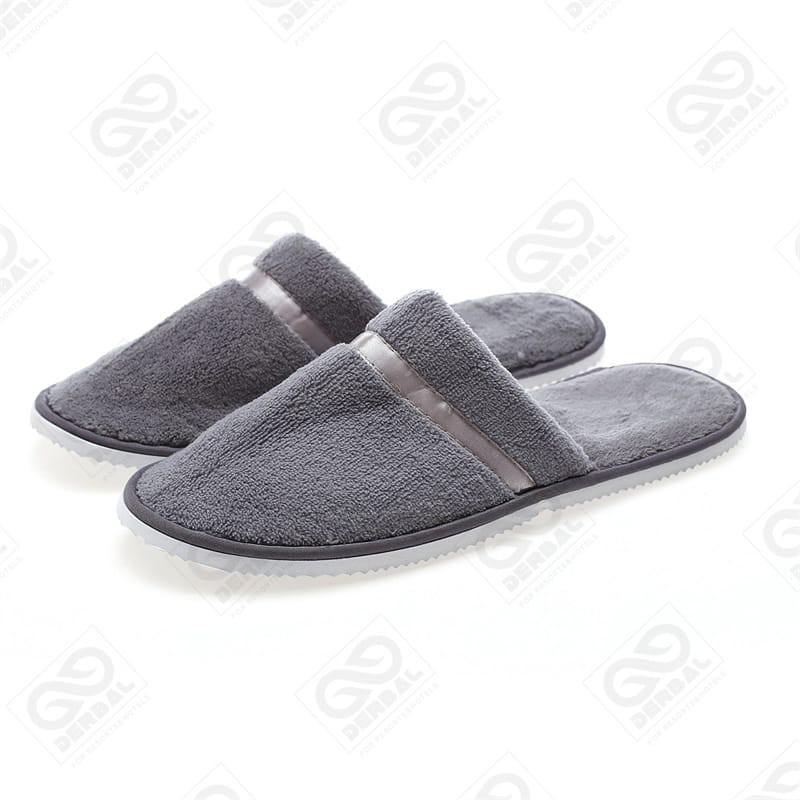
Introduction
Hotel slippers are small items, but guests notice them at exactly the moment when comfort matters most: after check-in, after a long flight, after a shower, or when walking from bed to bathroom on cold tile or polished marble.
A poor slipper feels thin, noisy, slippery, or too narrow. A good slipper disappears into the guest experience in the best way. It feels clean, soft, stable, and matched to the room standard.
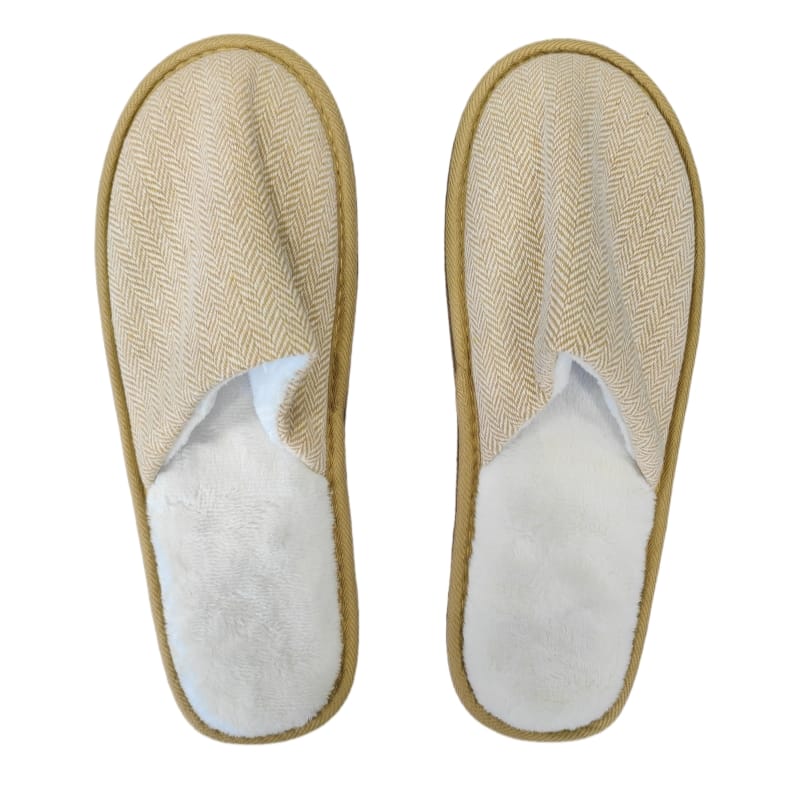
This guide is written for hotel owners, purchasing managers, resort operators, spa directors, airline amenity buyers, and hospitality project contractors who need to choose the right slippers for real guest use, not just compare the lowest unit price.
DERBAL is a China-based one-stop hotel supplies and ancillary facilities engineering service provider. Our supply range covers hotel guest amenities, outdoor furniture, hotel F&B items, housekeeping supplies, room appliances, and customized hospitality products. For hotel buyers who prefer one coordinated procurement partner, DERBAL helps reduce supplier communication, sample comparison, and repeat-order risk.
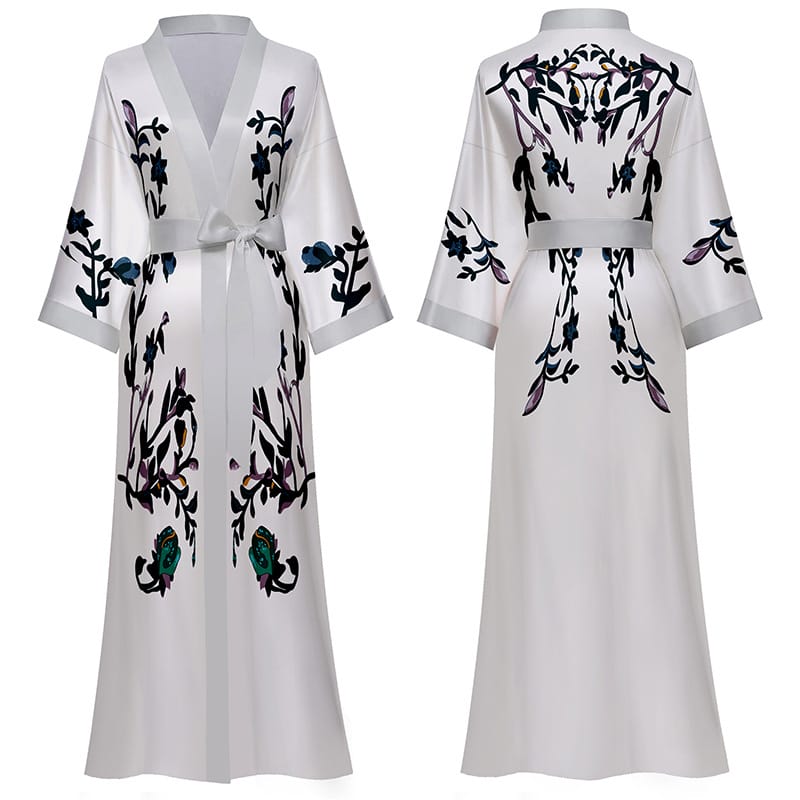
For related hotel sourcing, buyers can also explore DERBAL’s Hotel Indoor Slippers collection, Guestroom Amenity solutions, Hotel Bathrobes, and Hotel OS&E Procurement Checklist.
Why Hotel Indoor Slippers Matter in Hotel Guest Experience
In hospitality, comfort is often built from quiet details. A guest may not mention slippers in a review, but they will remember whether the room felt prepared, clean, and complete.
For resort and hotel operators, slippers affect guest-room comfort, hygiene perception, bathroom and spa safety, brand presentation, sustainability goals, procurement cost per occupied room, and housekeeping replacement efficiency.
Modern hotel buyers are also under more pressure to review single-use amenities. Many hotels are reducing unnecessary plastic packaging and looking for more responsible material choices. This does not mean every hotel must remove slippers. It means hotels should choose them more carefully.
The right Hotel Indoor Slippers should feel comfortable for guests and practical for operations. They should be easy for housekeeping to place, simple to store, stable on the floor, and consistent in quality from one order to the next.
How to Choose the Right Hotel Indoor Slippers
1. Match the Slipper to the Room Category
A standard room, luxury suite, spa villa, and executive lounge do not need the same slipper.
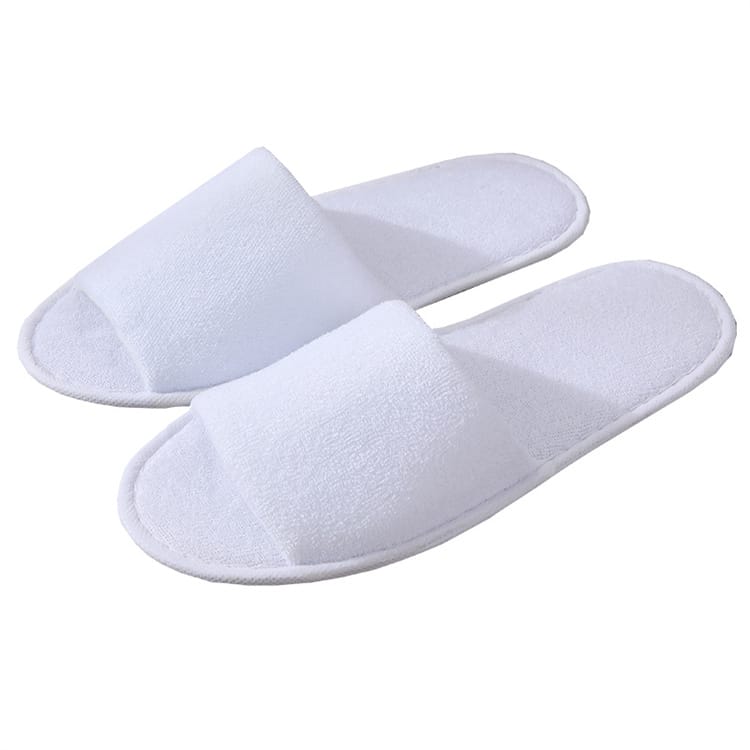
For standard rooms, a lightweight waffle or terry slipper with EVA sole may be enough. For suites and villas, thicker padding, better lining, and more refined packaging are worth the extra cost. For VIP rooms, embroidery and custom paper packaging can help the amenity feel intentional rather than generic.
Many hotels use a two-level system: one practical slipper for regular rooms and one upgraded slipper for suites. This keeps the budget under control while still improving the guest experience in higher room categories.
2. Choose the Right Upper Material
Terry cloth is soft, absorbent, and familiar. It works well for bathrooms, spas, resorts, and premium guest rooms.
Waffle fabric looks clean and professional. It is breathable, quick-drying, and suitable for business hotels, boutique hotels, and serviced apartments.
Velvet or velour feels warmer and more luxurious. It is a good choice for suites, cold-weather hotels, and VIP guest rooms.
Cotton or linen-look fabric gives a natural, relaxed appearance. This is suitable for eco resorts, island properties, wellness retreats, and villas.
Non-woven fabric is economical and lightweight. It is commonly used for short-stay hotels, transit hotels, airline kits, and high-volume disposable use.
3. Pay Attention to the Sole
The sole decides whether the slipper feels stable or risky.
EVA soles are lightweight, flexible, and widely used in hotel slippers. TPR soles provide stronger grip and durability. Cork-style soles offer a more natural and premium look, especially for eco-conscious hotel concepts. Anti-slip dot soles are useful for bathrooms, spas, and smooth flooring.
If your property uses marble, polished tile, wet bathroom floors, or spa corridors, anti-slip performance should not be treated as optional. A beautiful slipper that feels unsafe on the floor is not a good hotel product.
4. Review Packaging Carefully
Packaging is part of the guest’s hygiene perception. However, too much plastic can feel outdated, especially in eco resorts.
Common packaging options include individual OPP bags, paper bands, kraft paper sleeves, recyclable paper bags, custom printed pouches, and room-category packaging sets.
For sustainability-focused resorts, kraft paper or recyclable paper packaging is often better aligned with brand values. For high-end suites, custom printed packaging can help the slipper feel more premium and better connected to the hotel identity.
5. Consider Branding Style
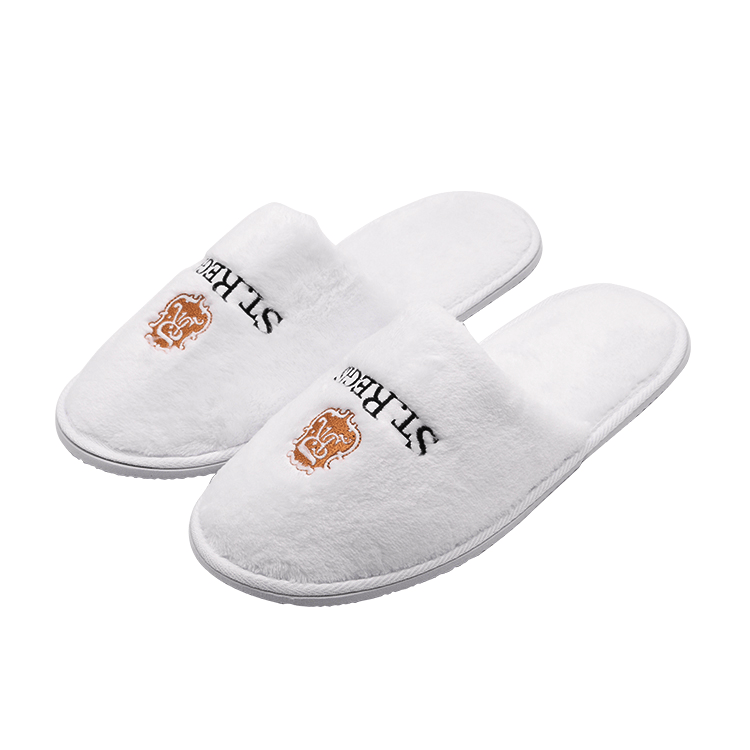
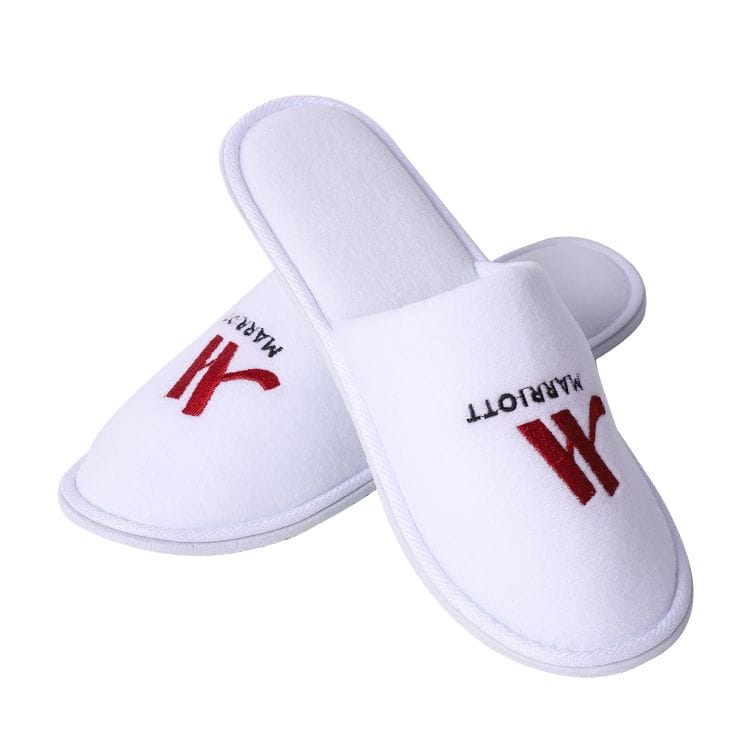
Hotel slippers do not need loud branding. In many cases, a small embroidered logo, woven label, or tone-on-tone mark looks more refined than a large printed logo.
The branding should match the property. A beachfront resort may prefer a natural woven label. A luxury city hotel may prefer embroidery. A spa may prefer a clean, quiet design with soft colors and simple packaging.
Hotel Indoor Slippers Specification Reference
| Parameter | Options |
|---|---|
| Usage | Guest room, bathroom, spa, villa, serviced apartment, airline cabin |
| Upper Material | Terry, waffle, velvet, velour, coral fleece, cotton, linen-look, non-woven |
| Sole Material | EVA, TPR, cork, sponge sole, fabric sole, anti-slip dot sole |
| Toe Style | Open toe, closed toe |
| Thickness | 3mm, 5mm, 7mm, 10mm, or customized |
| Size | Standard adult size, men’s size, women’s size, children’s size, custom size |
| Color | White, beige, grey, black, navy, brown, custom Pantone color |
| Logo Method | Embroidery, printing, woven label, heat transfer, insole printing |
| Packaging | OPP bag, kraft paper sleeve, paper band, recyclable bag, custom box |
| Features | Soft, hygienic, lightweight, quiet, anti-slip, disposable or reusable |
| Customization | Material, size, thickness, color, logo, packaging, room-category set |
| Suitable Buyers | Hotels, resorts, spas, villas, airlines, procurement companies, contractors |
Application Scenarios
Hotel Guest Rooms
For daily guest-room use, slippers should be clean, comfortable, easy to store, and cost-controlled. White waffle or terry slippers remain the safest choice for most hotels because they match many room styles and are easy for guests to understand.
A standard guest-room slipper should not be too thin. It should feel soft enough for indoor walking and stable enough on common hotel floors.
Luxury Suites
Suites need a richer slipper experience. A thicker sole, soft lining, embroidered logo, and better packaging help match the higher room rate.
For suite guests, every detail is compared with the room price. If the bathrobe feels premium but the slipper feels poor, the whole amenity setup becomes uneven.
Resort Villas
Beach villas and island resorts often prefer natural-looking slippers. Beige cotton, linen-look fabric, cork sole, or kraft packaging works well with wood, stone, rattan, and sea-view interiors.
For tropical destinations, breathable materials are usually better than very thick plush materials. Guests want comfort, but they also want slippers that do not feel too hot.
Spa and Wellness Areas
Spa slippers should focus on grip, comfort, and quick drying. Anti-slip EVA or TPR soles are recommended for wet or semi-wet areas.
In spa areas, safety and hygiene are more important than decoration. A simple slipper with the correct sole can be much better than a luxury-looking slipper that becomes slippery after contact with water.
Airlines and Travel Kits
Airline slippers need to be compact, lightweight, hygienic, and easy to pack. Non-woven or thin waffle options are common for cabin amenity kits.
For business class and first class, airlines may choose softer materials and better packaging to improve the passenger experience during long-haul flights.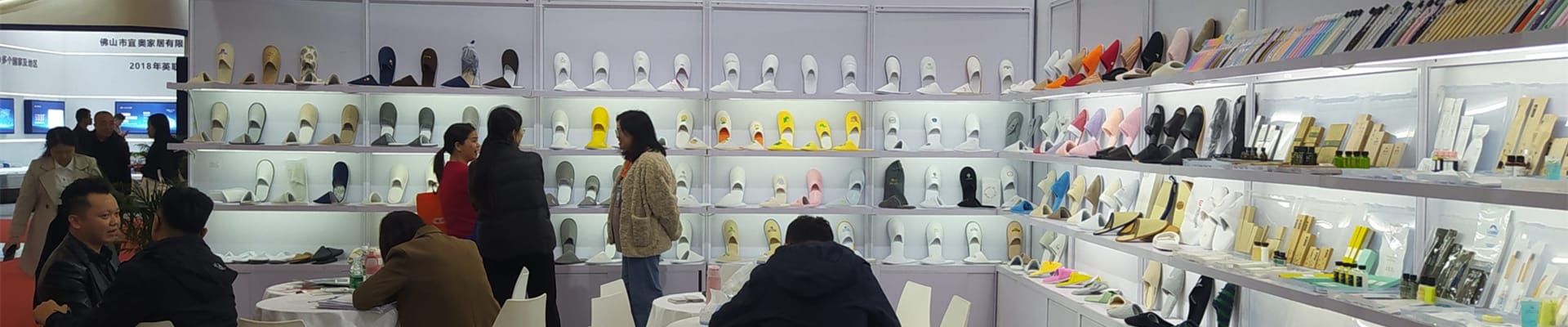
Case Studies: Slipper Selection Ideas for Different Hospitality Projects
1. Soneva Jani, Maldives
A barefoot-luxury resort such as Soneva Jani needs slippers that feel natural, not overly corporate. A linen-look or cotton slipper with kraft paper packaging would match the relaxed villa environment and sustainability-minded guest expectations.
Recommended option: beige cotton-linen upper, 7mm EVA sole, paper band packaging, subtle woven label.
2. Four Seasons Resort Seychelles, Mahé
At Four Seasons Resort Seychelles, guests move between villa bedroom, bathroom, terrace, and spa-style spaces. A soft terry or waffle slipper with anti-slip EVA sole would support comfort while reducing slipping risk on smooth flooring.
Recommended option: white terry upper, anti-slip EVA sole, embroidered logo, recyclable paper bag.
3. Atlantis The Royal, Dubai, UAE
A luxury property such as Atlantis The Royal Dubai requires amenities that feel polished and memorable. Generic thin slippers would not match the suite experience. Velvet, velour, or thick terry slippers with premium embroidery are more suitable.
Recommended option: plush velvet upper, 10mm padded sole, tone-on-tone embroidery, custom paper box.
4. The Ritz-Carlton, Doha, Qatar
For The Ritz-Carlton, Doha, a practical two-tier slipper program would work well: one high-quality waffle slipper for standard rooms and one upgraded terry or velvet slipper for club rooms and suites.
Recommended option: waffle slipper for regular rooms, plush terry slipper for premium rooms, unified brand packaging.
5. Six Senses Southern Dunes, The Red Sea, Saudi Arabia
A sustainability-led resort such as Six Senses Southern Dunes should consider slippers that reduce unnecessary plastic while still protecting guest comfort. Cotton uppers, cork-style soles, and recyclable packaging would fit the property’s environmental positioning.
Recommended option: cotton upper, cork or EVA sole, kraft paper sleeve, low-plastic packaging.
Suggested External Reference Links
Global Sustainable Tourism Council:
Condé Nast Traveler
FAQ
What are Hotel Indoor Slippers used for?
Hotel Indoor Slippers are used in guest rooms, bathrooms, spas, suites, resort villas, serviced apartments, and airline cabins to provide guests with clean and comfortable indoor footwear.
Are hotel slippers disposable or reusable?
Both are available. Disposable slippers are common for hygiene and convenience. Reusable slippers are more suitable for certain luxury resorts, spas, villas, and eco-focused properties with proper cleaning systems.
What is the best material for hotel slippers?
Terry cloth and waffle fabric are the most common choices. Terry feels soft and absorbent, while waffle looks neat and dries faster. Velvet is better for luxury suites, and non-woven fabric is better for budget or short-stay use.
What sole is best for Hotel Indoor Slippers?
EVA is the most widely used sole because it is lightweight and cost-effective. TPR provides better grip and durability. Cork-style soles are suitable for eco or premium resort concepts.
Can DERBAL customize hotel slippers with our logo?
Yes. DERBAL supports embroidery, printing, woven labels, custom colors, custom soles, and branded packaging for hotel and resort projects.
How can hotels reduce slipper procurement cost?
Use different slipper grades for different room categories. Standard rooms can use a practical waffle or terry slipper, while suites receive a thicker premium version. Bulk ordering and repeat specifications also help reduce cost.
Are eco-friendly hotel slippers available?
Yes. Options include cotton uppers, linen-look fabric, cork soles, recyclable paper packaging, reduced-plastic packing, and reusable designs.
How should hotels choose slipper size?
Most hotels use a standard adult size for general guest rooms. Resorts, luxury hotels, and family-friendly properties may also prepare men’s size, women’s size, and children’s size for better comfort.
How long does bulk production usually take?
For custom bulk orders, production time depends on material, logo method, quantity, and packaging. In many hotel supply projects, customized production usually needs around 25 to 35 days after sample confirmation.
Why buy Hotel Indoor Slippers from DERBAL?
DERBAL is not only a single-item supplier. We support hotel projects with guest amenities, outdoor furniture, F&B items, hotel engineering products, and one-stop sourcing service from China. This helps hotels save time, control quality, and keep product style consistent across different departments.
Conclusion
The right hotel slipper is not just a small giveaway. It is part of the guest’s first evening, first shower, first step out of bed, and first impression of how carefully the room was prepared.
For hotel buyers, the best choice balances comfort, hygiene, safety, branding, sustainability, and repeat supply stability. For resort operators, especially in the Maldives, Seychelles, UAE, Qatar, Red Sea region, and Africa, slippers should also match climate, flooring, guest expectations, and room category.
DERBAL helps hospitality clients source practical, comfortable, and brand-matched Hotel Indoor Slippers as part of a wider one-stop hotel supply solution.
Contact DERBAL today to request samples, compare materials, and build a custom Hotel Indoor Slippers solution for your next hotel, resort, spa, villa, or airline project.