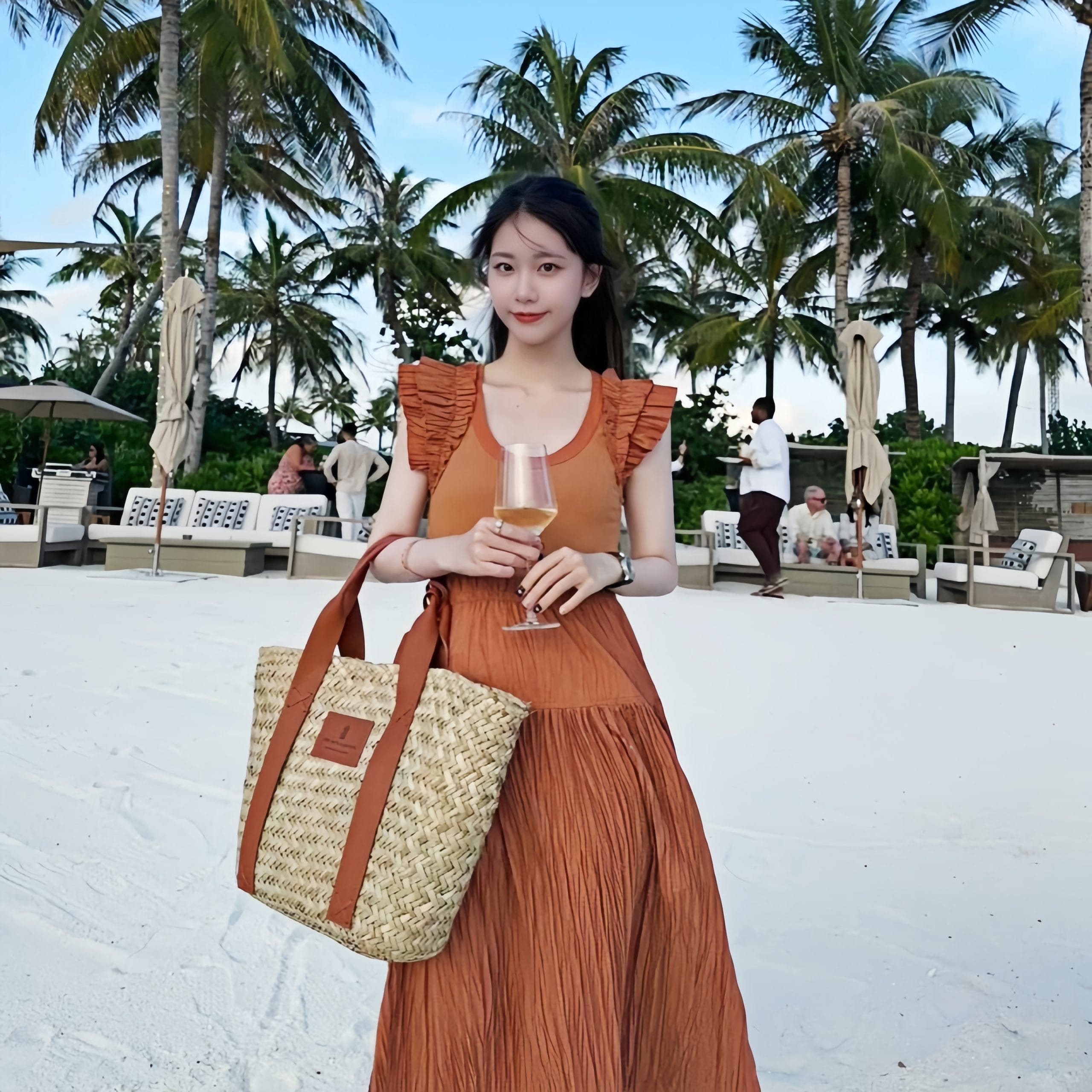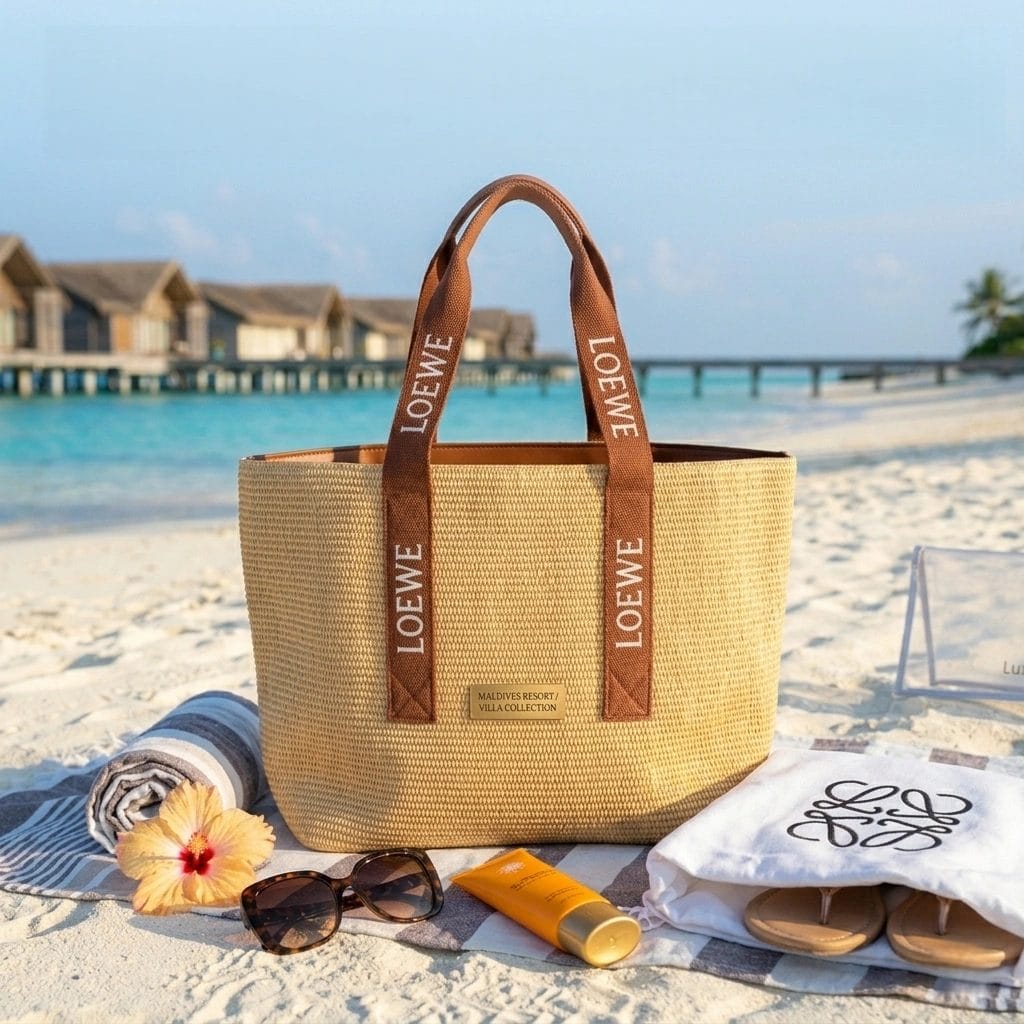
Luxury island hotels don’t run on aesthetics alone. They run on timelines, stock counts, guest expectations, and the quiet pressure of “nothing can go wrong” during high season.
A Beach Straw Tote Bag looks like a small detail, until it becomes the thing a guest carries all day: to breakfast, to the beach, back to the villa, into the seaplane lounge. If the handle snaps, the print cracks, or the lining holds moisture and starts to smell, it doesn’t read as “a bag problem.” It reads as a standards problem.
This guide is written for procurement teams and resort operators who want a beach straw tote bag program that’s easy to specify, easy to reorder, and hard to mess up. I’ll cover how island resorts use these bags, the specs that matter, the failure modes you can prevent upfront, and how to source at MOQ 500 pcs without getting stuck in sampling limbo.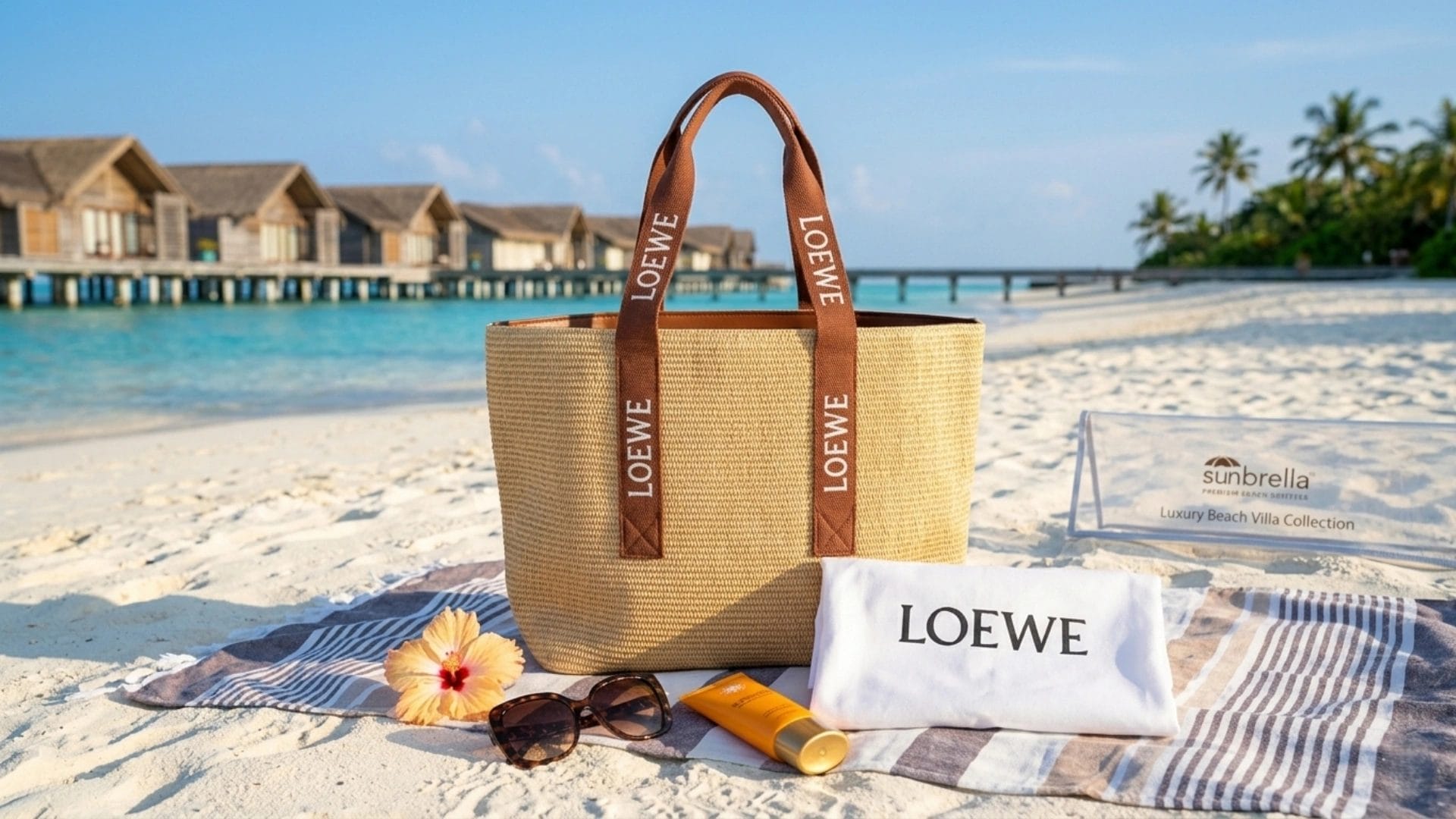
Key takeaways
- A beach straw tote bag is a guest-facing asset; treat it like a uniform item, not a giveaway.
- Handles and handle attachment points are where most “premium-looking” totes fail first. Specify reinforcement, not just material.
- Lining choice changes your housekeeping workload. Polyester lining behaves very differently from leather lining in humid climates.
- Printing is not one decision. You need to think about abrasion, sunscreen, salt air, and cleaning.
- If you’re buying at MOQ 500, your fastest path is a tight spec sheet + a disciplined pre-production sample process.
Why the Beach Straw Tote Bag is now a “quiet luxury” hotel amenity
Island resorts have learned something the hard way: guests remember what touches their hands.
A beach straw tote bag sits in the same mental category as a robe, slippers, or a refillable ceramic dispenser. It’s not the headline feature of the stay, but it quietly signals whether the resort sweats details.
Straw (and straw-look woven) bags also do something canvas doesn’t do as easily: they match the island visual language. They look right next to timber decks, linen upholstery, rattan furniture, and sand.
If you’re building a coherent guest journey, a tote bag should match the rest of your beach kit. DERBAL’s own framework for selecting hotel beach totes is a useful starting point: material authenticity, craftsmanship, practicality, customization flexibility, and sustainability story (see DERBAL’s hotelier’s checklist for beach tote bags).
How luxury island hotels actually use beach straw tote bags
Before you compare suppliers, you need to be clear about the job the bag will do in your operation. Otherwise you’ll overpay for features you don’t need, or under-spec the parts that fail fastest.
Here are the most common resort use-cases, with the procurement implications behind each one.
1) In-villa welcome amenity
What success looks like: the bag feels like a gift, not a promo item. Guests take it home and keep using it.
What to spec for:
- Premium tactile points (handles, trim, inside lining)
- Print quality that doesn’t look “mass-produced” up close
- Dust bag or protective packing (so it arrives clean and uncrushed)
2) Beach-butler service and poolside operations
What success looks like: the tote is the workhorse. It carries towels, sun cream, kid items, and it gets used hard.
What to spec for:
- Reinforced handle attachment (box stitch / bar-tack equivalents)
- Lining that dries fast (polyester lining is often chosen for this reason)
- Easy cleaning guidance (what can housekeeping wipe, what can’t they)
3) Guest loaner program
What success looks like: minimal loss, minimal damage, minimal time spent “managing bags.”
What to spec for:
- Simplified colorways (easier to track and replace)
- Inside ID label area (hotel internal use)
- Packaging and storage plan (flat packing helps)
4) Resort boutique / gift shop retail
What success looks like: the bag sells as a souvenir. It looks premium on the shelf and survives travel.
What to spec for:
- Retail finishing (clean stitching, consistent shape)
- Barcode / SKU labeling and carton marking for inventory
- Brand story insert (sustainability, craft, care instructions)
5) Wedding and event gifting
What success looks like: the bag matches the event design language and becomes a photo prop.
What to spec for:
- Short timeline sampling and approval workflow
- Custom print placement and event date option (if requested)

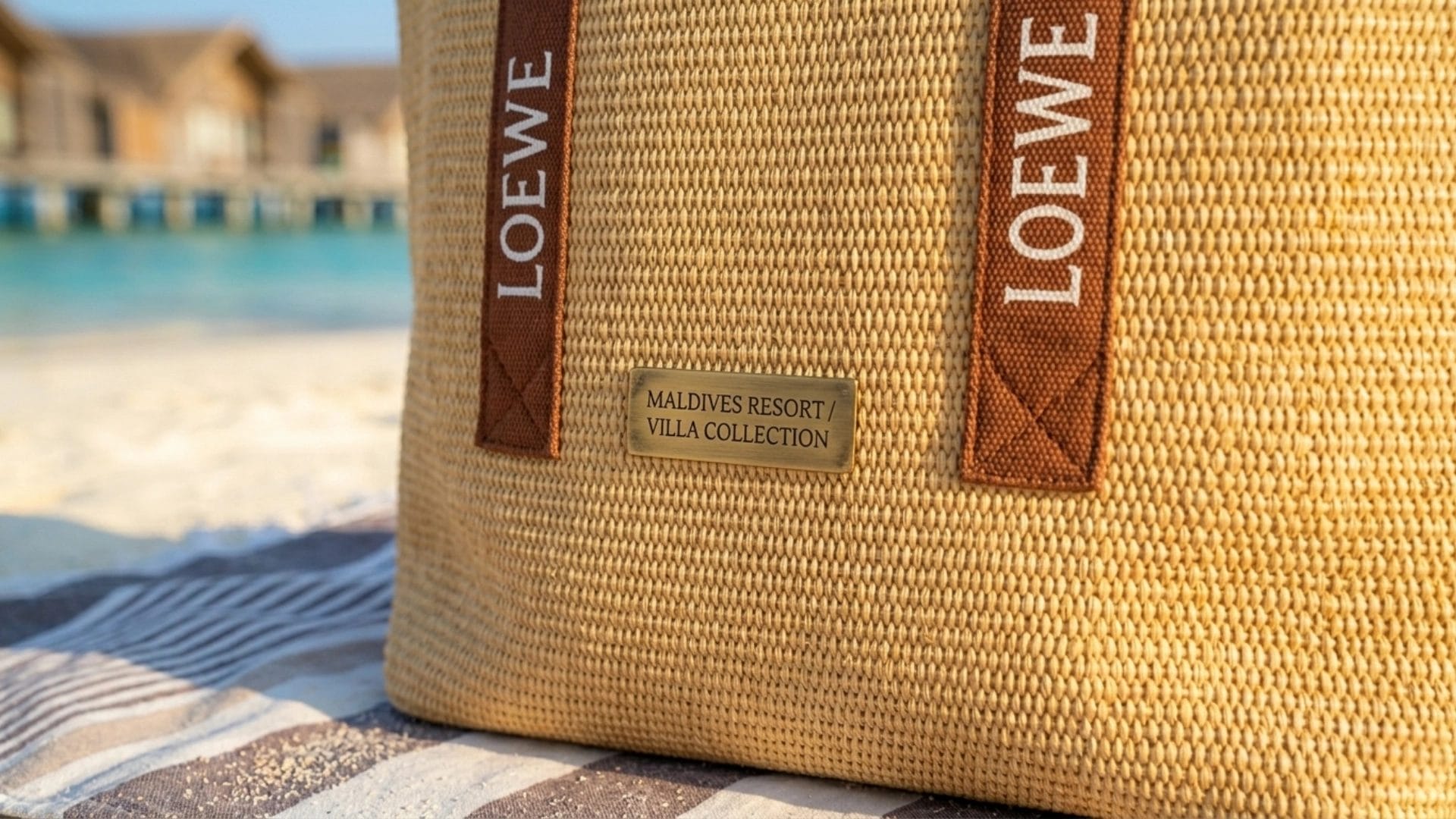
The spec checklist that prevents 80% of sourcing mistakes
Luxury buyers don’t lose money because they picked the wrong “style.” They lose money because the bag shows up with one weak point that wasn’t specified.
This is the checklist I recommend using to align internal stakeholders (procurement, housekeeping, brand) before you request quotes.
Material: what “straw” actually means in procurement
“Straw” is often used as a category label. In production, it usually refers to woven natural fibers or straw-look weaves.
For your DERBAL program, you specified:
- Material: Natural straw
- Size: 504050 cm
That’s the baseline. The next step is to define how tight the weave needs to be, and how it behaves when it meets sun, humidity, and abrasion.
If you want a supplier to quote accurately, you need to answer two questions in the RFQ:
- Is the weave decorative, or load-bearing?
- Is the bag expected to maintain shape, or is a relaxed “market tote” silhouette acceptable?
Handles: where most beach tote bags fail
Most tote bags don’t fail in the body first. They fail where the handle meets the bag.
You can find the same warning in general beach bag guidance: handles take the full load and get tugged constantly (see the note that “handles are the most common failure point in beach bags” in GentlePK’s beach bag guide).
For luxury island hotels, I recommend specifying:
- handle width and feel (comfort matters when the bag is loaded)
- handle attachment method (reinforcement at stress points)
- whether handles need to survive being pulled sideways (common in beach-butler use)
Lining: choose based on housekeeping reality
You specified two lining directions:
- Leather lining
- Polyester lining
In practice, these do different jobs.
- Polyester lining is usually chosen when your team cares about quick drying, easy wipe-down, and fewer moisture issues.
- Leather lining is chosen when the hotel cares more about tactile luxury and perceived value.
If you’re using the bag in a high-humidity environment, lining choice becomes an operational decision. Ask housekeeping what they want to deal with: quick wipe-downs, or careful handling.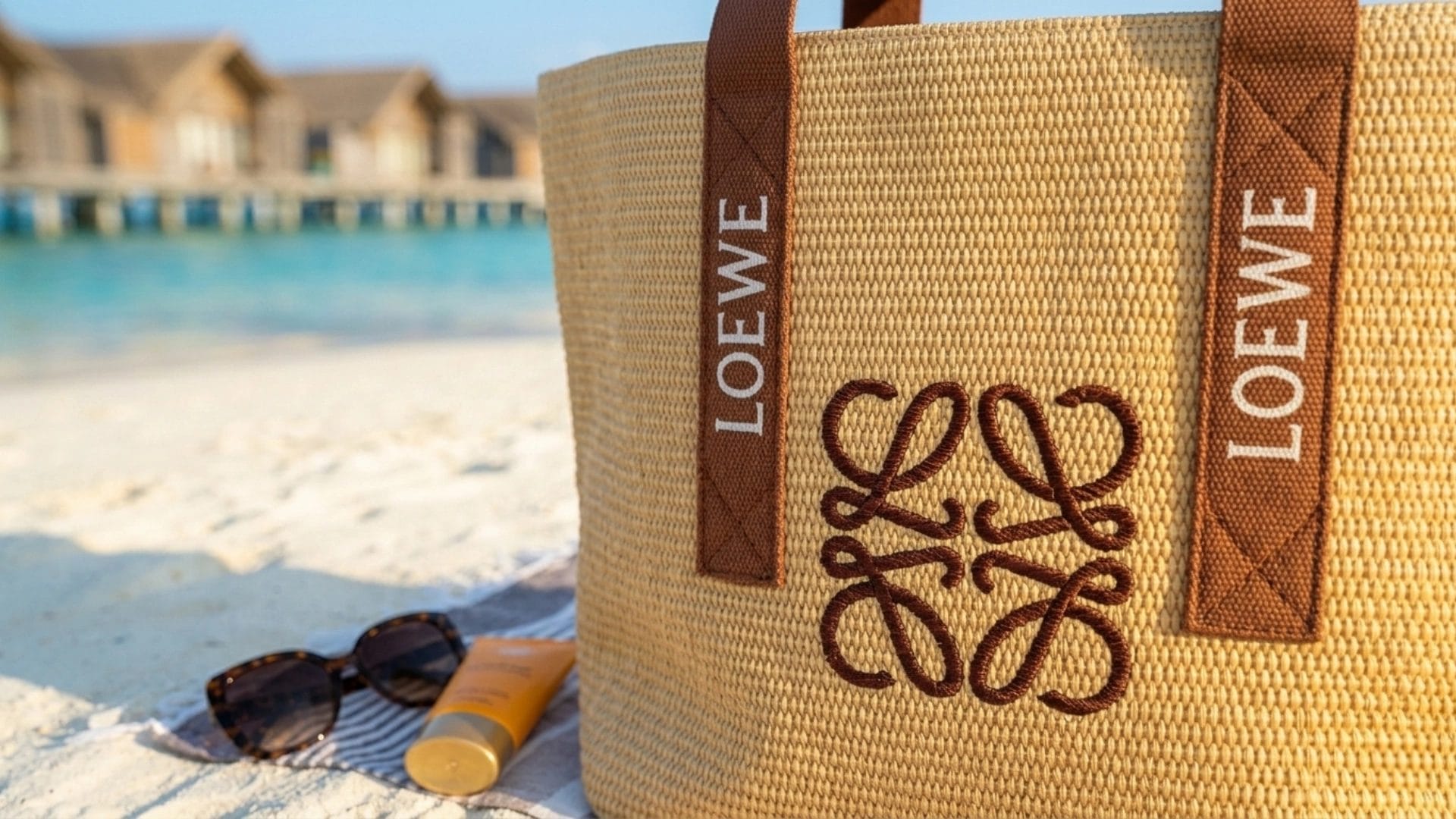
Printing: logo visibility vs durability
You specified:
- Logo method: Printing
Printing can be beautiful, but beach use is harsh on prints. The bag gets rubbed by sand, sunscreen residue, and guest handling.
In the RFQ, request confirmation of:
- print location (front only vs two sides)
- ink durability expectations (what “acceptable fading” means to you)
- care instructions that won’t create guest complaints
If your logo must stay crisp across repeated use, a supplier should advise on print placement and protective finishing.
Pro Tip: Don’t approve a sample only under office lighting. Look at it outside in sun and shade. In beach environments, contrast behaves differently.
Common failure modes (and what to ask your supplier)
If you’re buying a beach straw tote bag for luxury island hotels, you’re buying into a real environment:
- UV
- salt air
- humidity
- sand abrasion
- overloading
Here are common failure modes and the questions that catch them early.
Failure mode 1: handle tear-out at the attachment points
How it shows up: handles look fine on day one, then the attachment stitches start to separate after heavy use.
What to ask:
- What reinforcement is used at handle anchors?
- Are stress points double-stitched?
- Will you provide close-up photos of handle anchors from production, not only samples?
Failure mode 2: weave loosens or unravels at edges
How it shows up: the bag looks good, but after use the weave opens, edges fray, and the tote loses structure.
What to ask:
- How are edges finished to prevent fraying?
- What is your tolerance for weave gaps and loose ends?
- What’s the inspection standard for workmanship consistency?
If you want a general taxonomy of woven bag defects to discuss with your QC team, the defects described in Anita Plastics’ overview of common defects in PP woven bags are a helpful vocabulary set (weak stitching, fabric inconsistency, lamination failure). The material is different, but the logic of “small inconsistency becomes big failure” applies.
Failure mode 3: lining holds moisture or develops odor
How it shows up: guests return bags damp from the beach; in storage, moisture becomes odor.
What to ask:
- Is the lining quick-dry?
- What cleaning method do you recommend for resort operations?
- Can you offer a lining spec optimized for humidity?
Failure mode 4: printing cracks, peels, or fades
How it shows up: print looks premium in the sample, but degrades fast in real use.
What to ask:
- What is the recommended care method to protect the print?
- Can you provide an abrasion-resistance expectation or a test method?
Beach Straw Tote Bag product options that luxury resorts actually buy
You asked for at least six specific product names/keywords in this category. Below are seven options I see used in resort programs, with where each fits.
1) Luxury Woven Straw Beach Tote Bag
This is the “signature” option: natural straw look, handwoven feel, and a silhouette that reads resort-luxury.
Where it fits:
- villa welcome amenities
- boutique retail
- event gifting
What to specify:
- weave density and finishing
- shoulder drop comfort
- packing method so the bag arrives crisp, not crushed
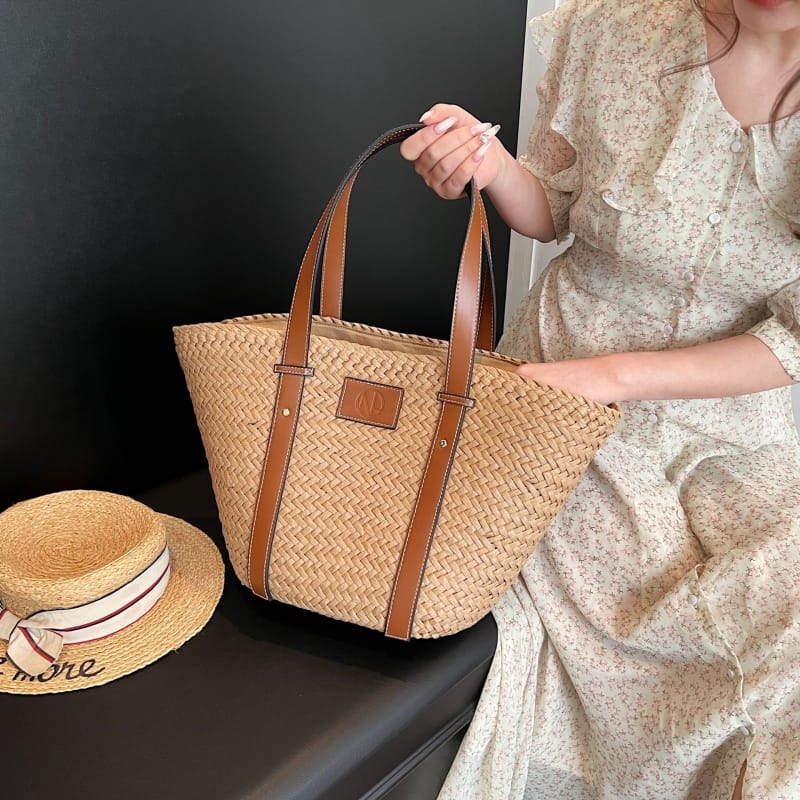
2) Beach Tote Straw Bag with Leather Handles
If you’re targeting a higher perceived value, leather handles are an easy win. They also solve a real issue: thin straw handles can cut into hands when the bag is loaded.
Where it fits:
- premium villa welcome sets
- VIP gifting
What to specify:
- leather thickness and edge finishing
- reinforcement at handle anchors
- color matching (don’t assume “tan” is one color)
3) Printed Logo Straw Tote Bag for Resorts
This is the most direct answer to “we want the brand visible.” It can work well when your resort brand is confident and minimalist.
Where it fits:
- beach and pool operations
- loaner programs
What to specify:
- print size and placement
- ink behavior under UV and abrasion
- whether the logo must remain crisp after cleaning
4) Straw Beach Tote Bag with Polyester Lining
A polyester lining is usually chosen for operations. It’s easier to wipe, less sensitive to moisture, and more forgiving in real resort use.
Where it fits:
- beach-butler programs
- high-rotation loaner inventory
What to specify:
- lining weight and stitching
- pocket layout (one pocket beats three pockets if housekeeping is handling it daily)
5) Straw Tote Bag with Leather Lining and Reinforced Handles
This is for hotels that want the “open the bag and it still feels premium” moment. The inside matters when the bag is part of a paid suite package.
Where it fits:
- premium suites
- special occasion gifting
What to specify:
- lining attachment method
- how the lining behaves in humidity
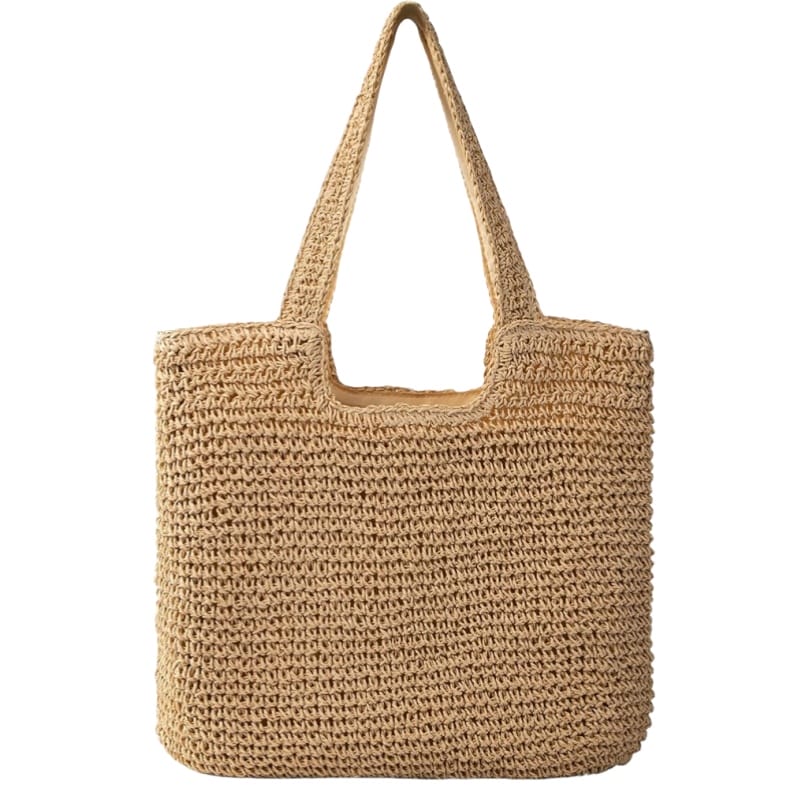
6) Handwoven Straw Market Tote Bag for Hotel Gift Shops
A market tote silhouette is relaxed and often easier for guests to use. It also tends to pack flatter, which matters for travel.
Where it fits:
- gift shop retail
- arrival kits
What to specify:
- shape consistency across production
- retail labeling and barcodes
7) Extra-Large Beach Straw Tote Bag 504050 cm
Your specified size is bold. It’s the right call if your guests carry multiple towels, kids’ items, or if the bag is part of a full-day excursion.
Where it fits:
- family villas
- long-stay guests
- excursion programs
What to specify:
- bottom reinforcement (large bags are stressed at the base)
- handle comfort (a large tote becomes uncomfortable fast)
Sustainability without greenwashing
Many resorts want straw tote bags partly because they look more natural than synthetic promo bags. That’s a good instinct. But procurement teams still need something they can document.
Instead of marketing words, ask suppliers for answers to practical questions:
- What natural fiber is used, and where is it sourced?
- What dyes are used?
- What packaging is used (plastic-free options)?
- What is the recommended end-of-life (reuse, recycle, repurpose)?
For broader context on eco-friendly materials commonly used in beach bags (jute, raffia, hemp, rPET), see BondiJoe’s overview of eco-friendly materials in modern beach bags.
Case studies: island hotel reality (approved hotel names)
You approved two hotel names for this article: JOALI Maldives and Waldorf Astoria Maldives Ithaafushi.
I’m going to keep these case narratives operational and honest. No invented percentages, no made-up lead times. The goal is to show the thinking and the execution steps that made the program work.
Case study 1: JOALI Maldives
JOALI Maldives is not a place where “close enough” works. Guest-facing items need to match the property’s design language and still perform on the beach.
In a straw tote bag program for this type of resort, the operational priorities are usually:
- premium tactile feel (handles + lining)
- branding that looks intentional, not promotional
- durability across repeated beach and pool use
How DERBAL supports this type of program:
- align on size, lining, and print placement early
- build a pre-production sample that matches the real spec (not a “nice sample”)
- confirm packing so the straw weave arrives in good shape
If you’re building your own procurement plan, start with DERBAL’s customization workflow described on DERBAL’s custom hotel tote bags program: requirement submission, prototype validation, production monitoring, and QC checkpoints.
Case study 2: Waldorf Astoria Maldives Ithaafushi
Waldorf Astoria Maldives Ithaafushi has a different pressure profile: brand standards are strict, and the guest experience is designed end-to-end.
For a resort at this tier, a beach straw tote bag typically needs to do two things at once:
- feel like part of the resort identity
- survive real use without creating housekeeping headaches
A practical spec direction many resorts choose is a straw tote with a lining that’s easier to manage (often polyester) plus a printed logo that’s sized for elegance.
If you want a concrete starting point for a straw tote concept, DERBAL’s Beach Tote Straw Bag for hotels page shows the type of product category and use-case framing commonly requested by luxury hospitality buyers.
How to source Beach Straw Tote Bag at MOQ 500 without delays
MOQ 500 is a healthy number for a branded resort program. It’s enough to justify a proper production setup, but small enough that you still need to be disciplined, because every round of sampling can cost weeks.
Here’s the workflow I recommend.
Step 1: Write a spec sheet that your QC team can inspect
If your RFQ says “straw tote bag, luxury quality,” you’ll get ten quotes that can’t be compared.
Your spec sheet should include:
- size (you specified 504050 cm)
- material (natural straw)
- lining option (leather or polyester)
- logo method (printing)
- handle type (and reinforcement requirement)
- packing method (flat pack vs shaped)
If you want a third-party perspective on how B2B buyers define beach bag specifications, see this B2B beach bag specifications guide. Use it as a checklist, not as a template.
Step 2: Approve a pre-production sample, not only a showroom sample
A showroom sample is made to look good.
A pre-production sample is made to match the real production line: same weave, same print process, same lining stitching.
That’s what you should sign off.
Step 3: Plan your island logistics early
Island delivery is rarely “one shipment, one destination.” Even when the goods arrive on time, the last mile can break the schedule.
If your tote bags are part of a broader OS&E program, it’s often easier to centralize planning. DERBAL’s island hotel amenities guide covers the broader reality: salt exposure, UV, and packaging/logistics planning.
Step 4: Build a reorder logic
Decision-stage buyers care about this because it protects you from a year-two sourcing mess.
In your internal documentation, record:
- exact size and artwork placement
- the chosen lining option
- cartons per master carton and carton marking rules
- who signs off reorders
A simple RFQ template you can copy
If you want quotes that are actually comparable, send something like this:
RFQ: Beach Straw Tote Bag for luxury island hotel
- Quantity: 500 pcs (trial order), with reorder potential
- Size: 504050 cm
- Material: natural straw
- Lining: option A polyester lining; option B leather lining
- Logo: printing (send artwork separately)
- Use-case: guest beach tote (pool + beach use), luxury resort standard
- Required: reinforced handle attachment (describe method), clean edge finishing
- Packing: island-friendly packing to protect shape and keep bags clean
- QC: provide inspection photos of handle anchors + lining stitching before shipment
- Quote: FOB + CIF options, lead time range, sample cost/time
Supplier red flags (and what they usually turn into)
- They can’t explain how handles are reinforced → you’ll see tear-outs.
- They avoid discussing packing → your bags arrive crushed or dirty.
- They push a “similar material” substitution mid-way → your approved sample becomes irrelevant.
- They won’t share production photos → you don’t see problems until arrival.
Next steps: make this easy for your procurement team
If your resort is ready to source a Beach Straw Tote Bag program, the easiest starting point is to align on a spec sheet and a sample plan.
You can also review DERBAL’s broader tote bag options (straw + canvas) in the DERBAL tote bags collection, then decide whether you want one signature straw tote or a mixed program (for example: straw for VIP welcome, canvas for staff and day-use operations).
Procurement-ready next step: request a spec sheet + sample for your 504050 cm beach straw tote bag (MOQ 500 pcs), and include your logo artwork and preferred lining option.