Why Luxury Resorts are Switching to Ceramic & Glass Amenities?
Introduction: The Global Shift Towards Sustainable Luxury in Hospitality
The global hospitality industry is undergoing a profound transformation, driven by an increasing awareness of environmental impact and a growing demand from guests for sustainable practices. As luxury resorts, particularly those in pristine natural environments like the Maldives, strive to offer unparalleled experiences, the shift towards zero-waste hospitality is becoming not just a trend, but a necessity. The European Union’s ambitious targets to reduce packaging waste by 15% by 2030 and the increasing scrutiny on single-use plastics are pushing hotels worldwide to rethink their amenity offerings 1. This article explores why high-end resorts are increasingly adopting ceramic and glass amenities, and how this transition aligns with both ecological responsibility and elevated guest experiences.
The Unmatched Elegance and Durability of Ceramic Dispensers
For years, plastic bottles dominated hotel bathrooms due to their low cost and convenience. However, their environmental footprint is undeniable. Luxury resorts are now making a conscious pivot towards ceramic amenity dispensers, and for good reason:
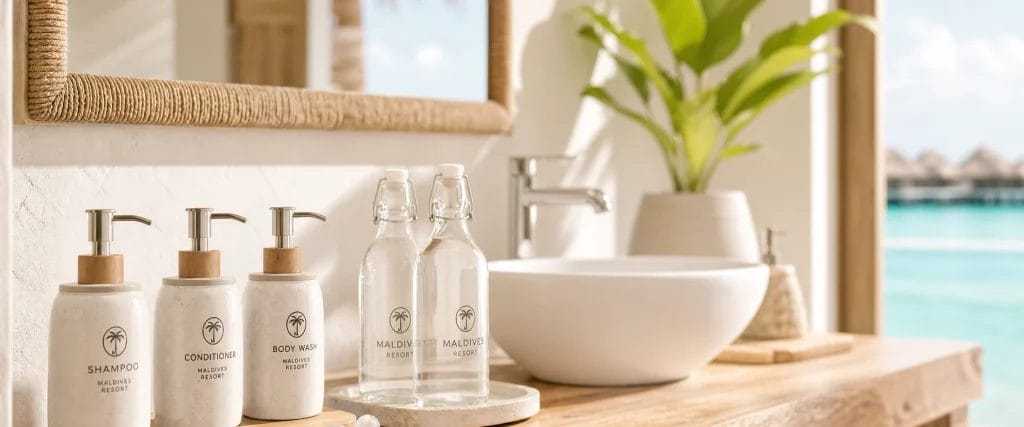
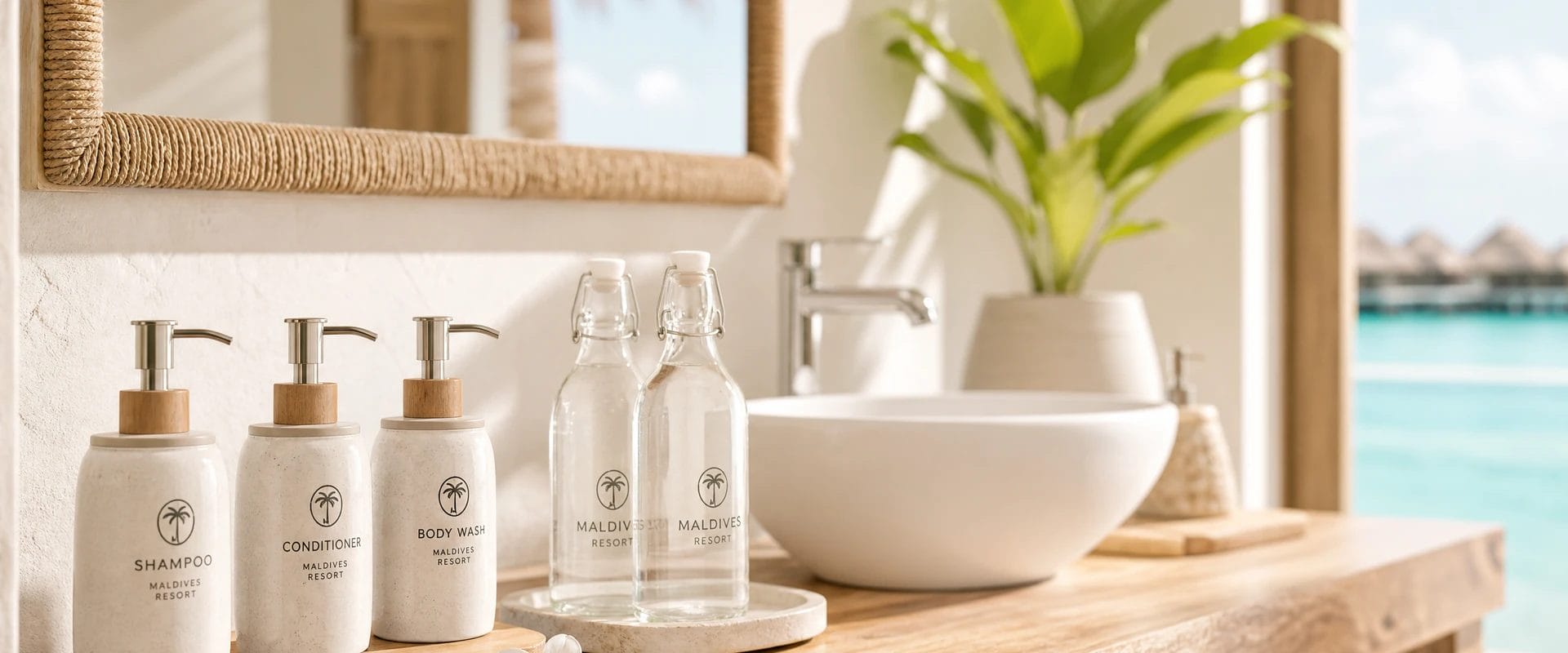
- Enhanced Guest Experience: Ceramic dispensers exude a sense of permanence and luxury that plastic simply cannot match. Their tactile quality and sophisticated appearance elevate the bathroom aesthetic, aligning with the high standards of a five-star resort.
- Durability and Longevity: High-quality ceramic is incredibly durable and resistant to wear and tear, making it ideal for repeated use in a busy hotel environment. This significantly reduces the need for frequent replacements, contributing to cost savings and waste reduction.
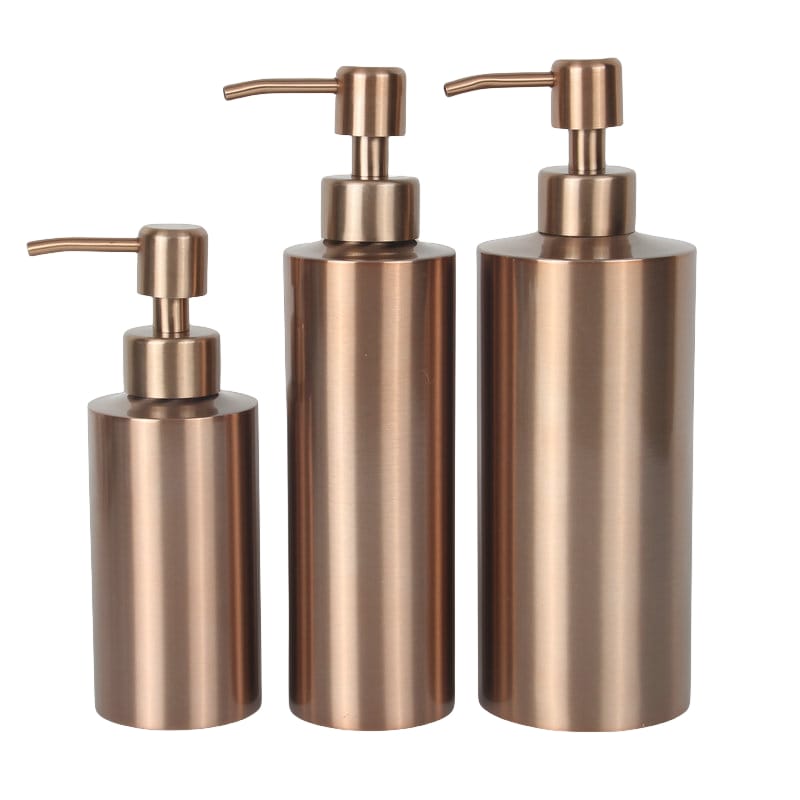
- Brand Customization: Ceramic surfaces offer excellent opportunities for subtle yet elegant branding. Resorts can engrave or print their logos directly onto the dispensers, reinforcing their brand identity in a sophisticated manner. You can explore DERBAL’s range of Hotel Soap Dispensers for more details.
- Waste Reduction: By switching to refillable ceramic dispensers, hotels drastically cut down on single-use plastic waste from miniature shampoo, conditioner, and body wash bottles. This move resonates deeply with environmentally conscious travelers.
The Rise of Borosilicate Glass: Purity Meets Sustainability
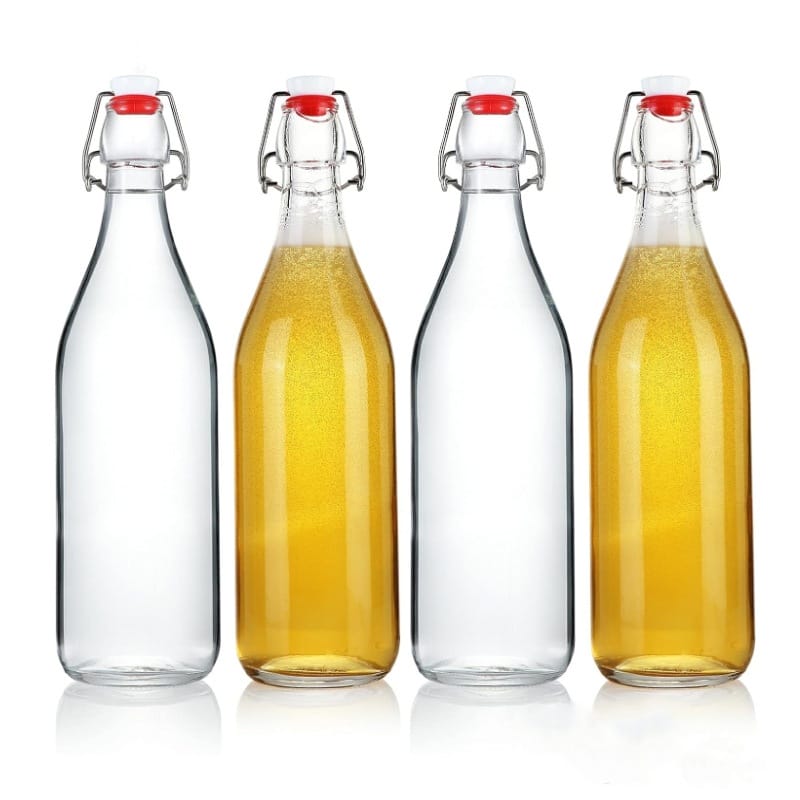
Beyond the bathroom, the focus on sustainable hydration is leading to the widespread adoption of borosilicate glass water bottles. While traditional glass is recyclable, borosilicate glass offers distinct advantages that make it superior for luxury hospitality:
- Exceptional Purity: Borosilicate glass is non-porous and does not leach chemicals, ensuring that water tastes as pure as it should. This is crucial for guests who prioritize health and wellness.
- Thermal Shock Resistance: Unlike regular glass, borosilicate glass can withstand extreme temperature changes without cracking. This means it can safely hold both hot and cold beverages, offering versatility for in-room dining or poolside service.
- Lightweight and Durable: Despite its strength, borosilicate glass is lighter than conventional glass, making it easier for guests and staff to handle. Its increased durability also reduces breakage rates, further contributing to sustainability and cost-effectiveness. Discover DERBAL’s Hotel Glass Water Bottle options.
- Eco-Friendly Choice: By providing branded, reusable borosilicate glass bottles, resorts eliminate the need for single-use plastic water bottles, a major source of pollution in island ecosystems.
Operational Efficiency: Streamlining Sustainable Practices
Adopting sustainable amenities requires a holistic approach that extends to operational logistics. Efficient housekeeping and supply management are key to the success of zero-waste initiatives. This is where specialized equipment like aluminum alloy rust-proof housekeeping tricycles become invaluable for island resorts.
- Efficient Distribution: These tricycles allow housekeeping staff to efficiently transport bulk refills for ceramic dispensers and clean glass bottles across sprawling resort properties, minimizing manual labor and speeding up service. Learn more about Hotel Housekeeping Tricycles from DERBAL.
- Durability in Harsh Environments: Designed for coastal and island environments, their rust-proof aluminum alloy construction ensures longevity, even with constant exposure to salt air and humidity, reducing maintenance costs and equipment turnover.
- Seamless Integration: By streamlining the refilling and distribution process, these tools enable resorts to seamlessly integrate sustainable practices into their daily operations without compromising service quality.
DERBAL’s Role: Your Partner in Sustainable Luxury Sourcing
As a leading supplier of hotel amenities, DERBAL is at the forefront of this sustainable revolution. We understand the unique challenges faced by luxury resorts, especially those in delicate ecosystems like the Maldives. Our commitment is to provide high-quality, eco-friendly solutions that meet both your operational needs and your sustainability goals.
From custom-branded ceramic dispensers and durable borosilicate glass bottles to robust housekeeping tricycles, DERBAL offers a comprehensive range of products designed to elevate your guest experience while minimizing your environmental footprint. We help you navigate the complexities of sustainable sourcing, ensuring compliance, quality, and cost-effectiveness. Visit our
Products Catalogue to explore our full range.
A Greener, More Luxurious Future
The move towards ceramic and glass amenities, supported by efficient operational tools, represents a significant step forward for the luxury hospitality industry. It’s a commitment to a greener future, where opulence and ecological responsibility coexist harmoniously. By embracing these sustainable practices, resorts not only protect our planet but also enhance their brand reputation and attract a new generation of discerning, environmentally conscious travelers.
FAQ: Sustainable Hotel Amenities
Q1: Why are luxury hotels switching from plastic to ceramic and glass amenities?
A1: Luxury hotels are transitioning to ceramic and glass amenities primarily for environmental reasons, to reduce single-use plastic waste. Additionally, these materials offer a more premium aesthetic, enhance the guest experience, and are more durable and cost-effective in the long run due to their refillable and reusable nature.
Q2: What are the benefits of borosilicate glass water bottles for resorts?
A2: Borosilicate glass water bottles are highly valued in resorts for their exceptional purity (no chemical leaching), thermal shock resistance (can hold hot or cold liquids), and increased durability compared to regular glass. They are also lighter and contribute significantly to reducing plastic waste from bottled water.
Q3: How do housekeeping tricycles support sustainable amenity programs?
A3: Housekeeping tricycles, especially those made from rust-proof aluminum alloy, enhance operational efficiency by facilitating the transport of bulk refills for dispensers and clean reusable bottles across large resort properties. This streamlines the logistics of sustainable amenity programs, making them more manageable and cost-effective.
Q4: How can DERBAL help my resort implement sustainable amenity solutions?
A4: DERBAL offers a comprehensive range of high-quality, eco-friendly hotel amenities, including custom-branded ceramic dispensers, borosilicate glass bottles, and durable housekeeping equipment. We provide end-to-end sourcing solutions, ensuring products meet your specific needs, sustainability goals, and operational requirements.
Q5: Is there a significant cost difference when switching to sustainable amenities?
A5: While the initial investment for ceramic and glass amenities might be higher than for single-use plastics, the long-term cost savings from reduced purchasing frequency, waste management, and enhanced brand reputation often outweigh the upfront expenses. Many resorts also find that guests are willing to pay a premium for sustainable experiences.
References
[1] European Commission. (n.d.). Packaging and packaging waste. Retrieved from