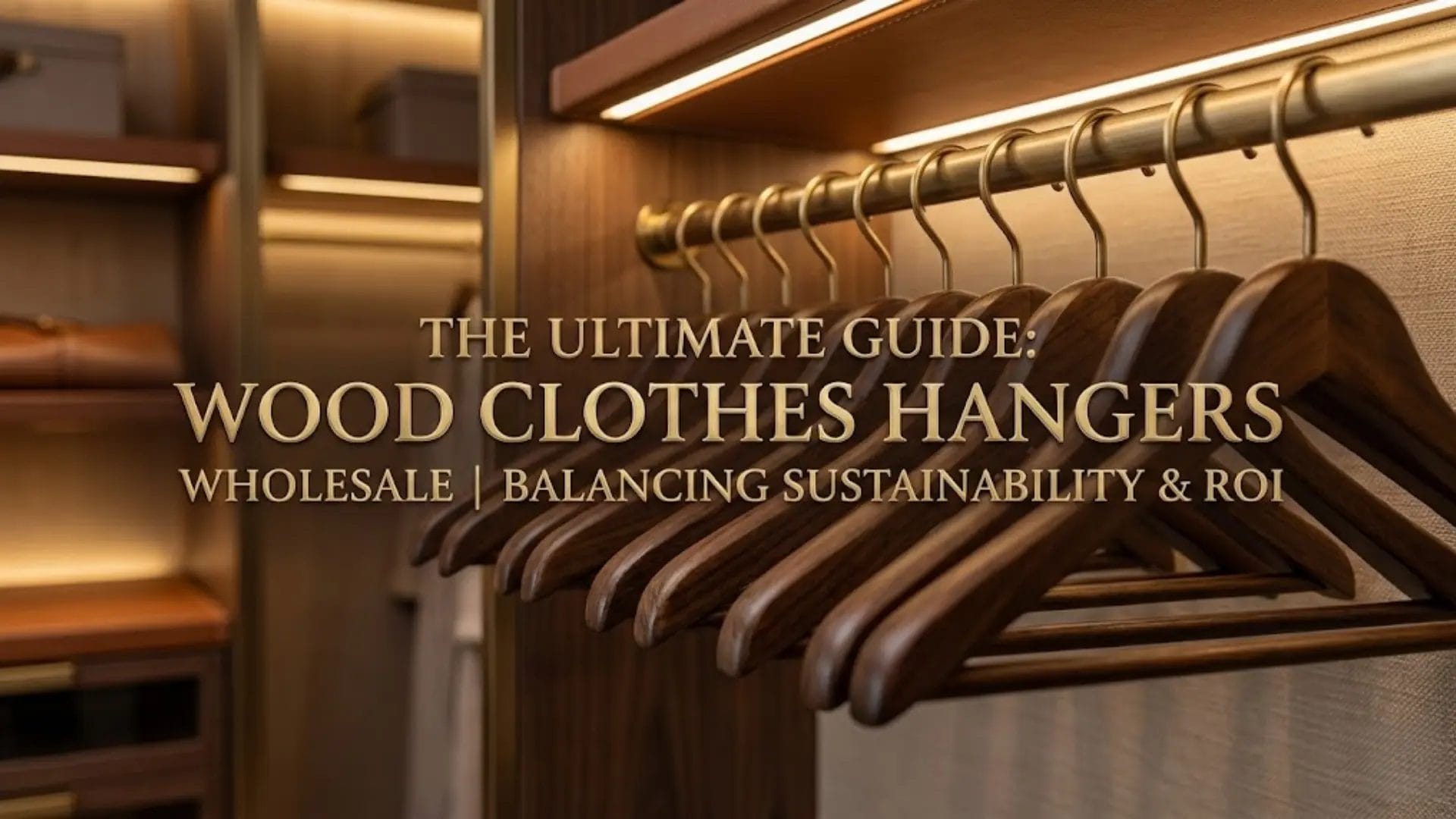

Sourcing wood clothes hangers wholesale is a strategic decision that impacts both brand perception and long-term ROI. Guests clock the details: in a premium room, a flimsy hanger undercuts the brand identity; in a coastal resort, a corroded hook telegraphs deferred maintenance. Today’s hotel procurement teams are tasked to elevate the guest experience and meet ESG commitments while staying strictly within budget. This guide shows how to make that trade-off explicit—ensuring your specification wins on both sustainability and five-year total cost of ownership (TCO).
Key takeaways
-
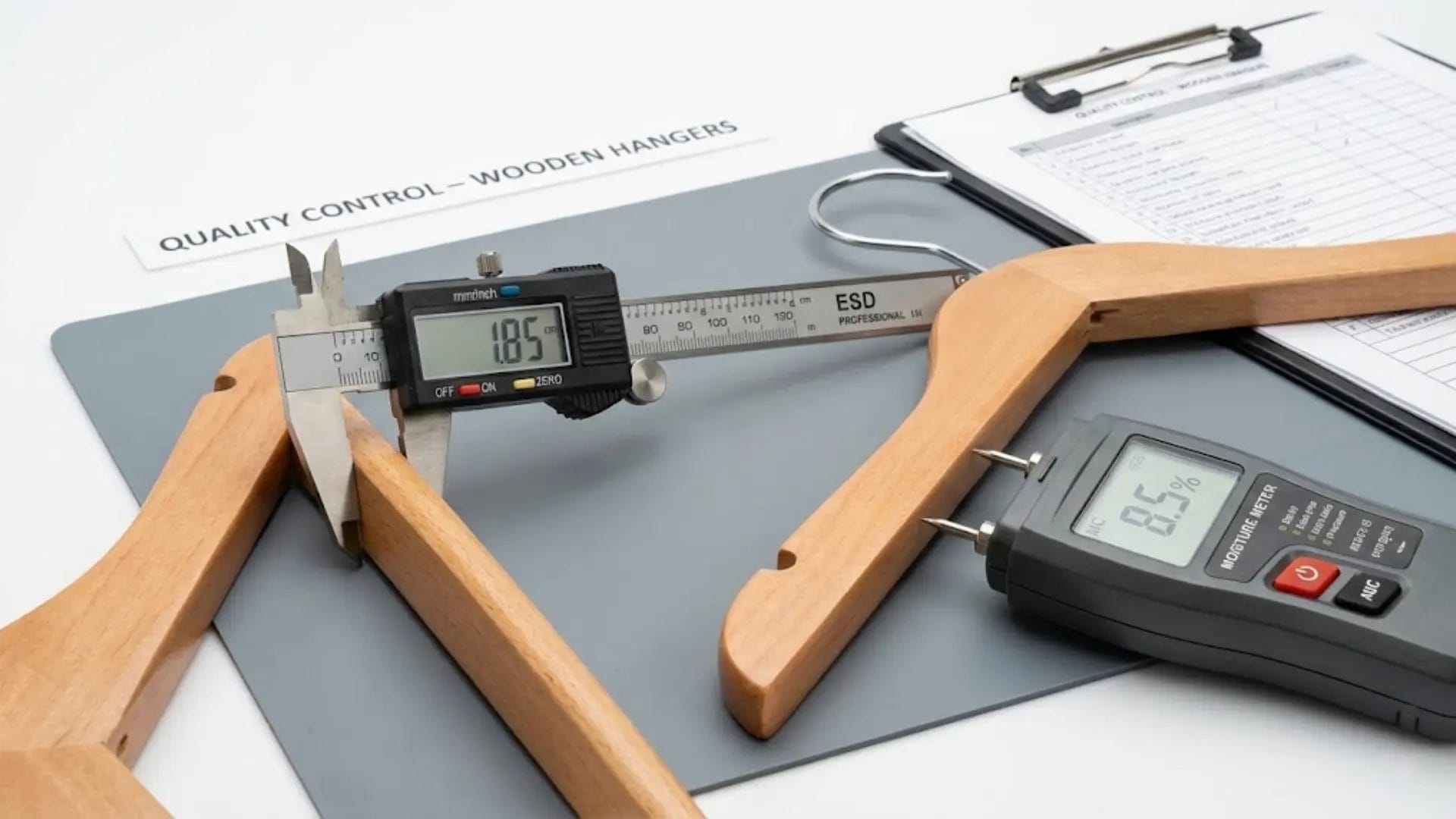
A hotel-grade hanger spec starts with materials (wood moisture 6–8% for indoor stability), hardware (316 stainless for coastal; tested plating alternatives inland), and performance tests (static load, swivel cycles, salt-spray exposure).
-
A transparent 5-year TCO model accounts for purchase price, replacements from breakage/corrosion/loss, finish-safe cleaning, logistics, and any residual value.
-
For coastal properties, prioritize 316 stainless hardware due to superior chloride resistance versus 304; plated hooks should document neutral salt spray (ASTM B117/ISO 9227) performance in hours to red rust.
-
ESG goals align with TCO when you require FSC Chain of Custody for wood, REACH SVHC disclosures for finishes/hardware, and end-of-life options.
-
Use RFQs with standardized specs, test reports, and acceptance criteria to normalize supplier quotes and de-risk procurement.
Hotels don’t buy hangers for closets—they buy consistency, uptime, and brand confidence. Let’s turn that into a spec you can defend to finance and sustainability alike.
Why hangers matter more than you think
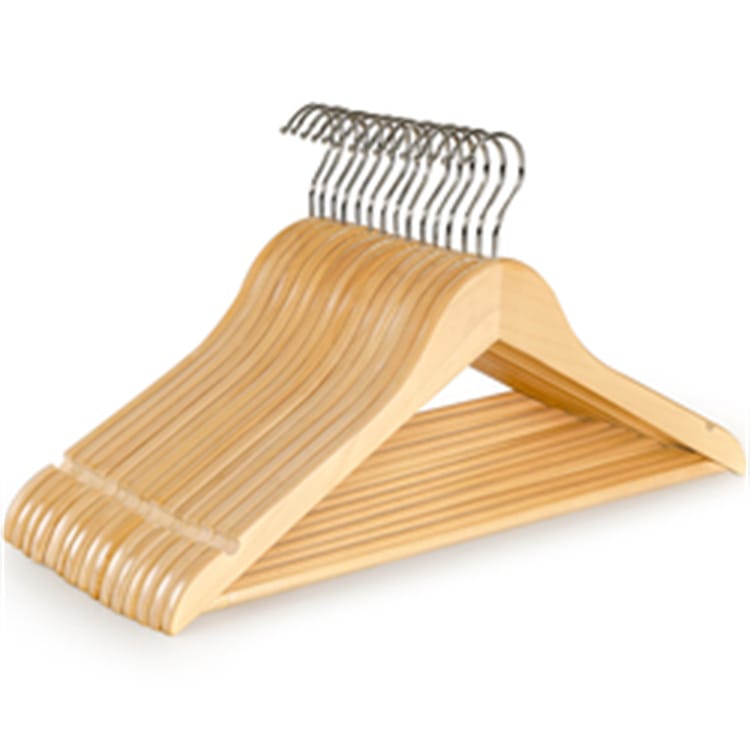
Hangers touch brand image every day. Solid, well-finished wooden hangers signal quality, protect garments from shoulder bumps, and reduce breakage churn compared with brittle or deformed alternatives. They also sit at the intersection of ESG and operations: responsibly sourced wood and finish-safe cleaning extend service life while supporting corporate sustainability standards. For related FF&E thinking, see the approach outlined in the Hotel Bedroom Facilities category, which situates hangers among other guest-room essentials in a procurement context: hotel bedroom facilities overview.
wooden hangers in bulk: how to match spec to room types and environments
Volume decisions hinge on environment and use case. For guest rooms and suites, choose robust wooden silhouettes sized for suits and dresses, plus a few clamp hangers for skirts/trousers. Back-of-house may accept simpler profiles. In coastal climates, corrosion resistance drives hardware choice and replacement rates—affecting TCO more than unit price deltas.
natural wood hangers: species, moisture, and finish choices
-
Wood species: Beech and oak are common hotel-grade options due to consistent grain and strength. Specify clear, uniform color for brand standards.
-
Moisture content: Target 6–8% MC at delivery for indoor stability in North American interior conditions; this aligns with furniture-grade guidance and reduces warp risk (Wagner Meters guidance on acceptable moisture levels).
-
Finish: Water-based PU or UV-cured lacquer with low-VOC profiles and documented compatibility with neutral detergents. Avoid finishes that haze with alcohol/chlorine wipes; request coating technical datasheets.
-
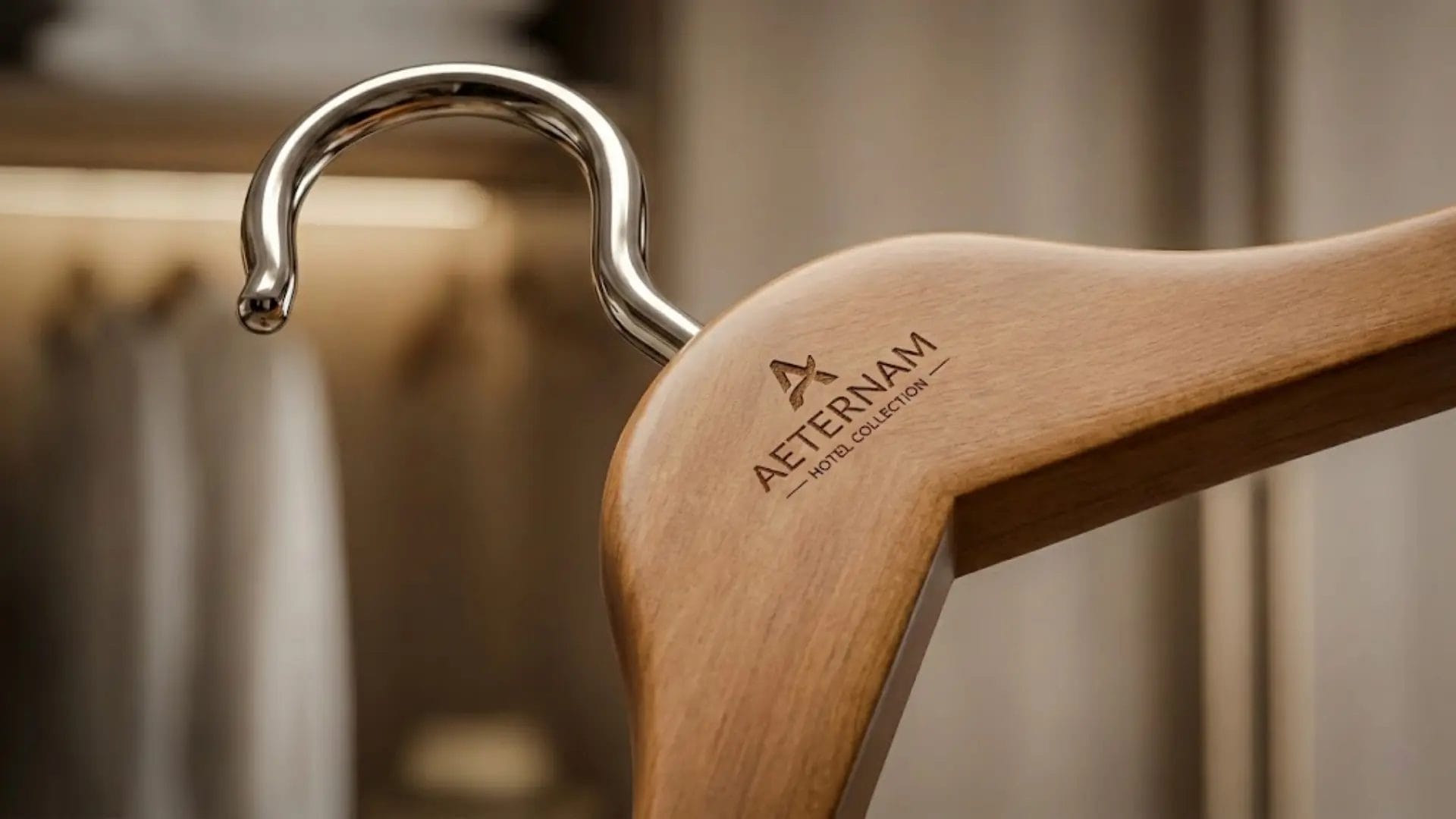
Branding: Laser engraving or pad-printing should not breach the finish. Validate with a wipe test using your housekeeping chemistry.
wholesale clothes hangers: anti-theft, housekeeping, and throughput
-
Anti-theft: If needed, choose captive hooks with compatible rails. Ensure the swivel still permits easy garment loading.
-
Housekeeping: Favor a smooth, sealed finish and tapered shoulders for quick rehanging and garment protection. Swivel hooks speed uniform presentation.
-
Throughput: Standardize widths (e.g., 44–46 cm) and counts per closet to reduce inventory variance and loss.
wooden hangers wholesale: supplier evaluation and RFQ checklist
To normalize quotes, provide a one-page RFQ with: species and grade, moisture content range, dimensions, finish type, hardware alloy, corrosion test results, anti-theft requirements, and required test reports. Ask for tiered pricing at MOQs (500/1,000/5,000/10,000), lead times, carton packing, and warranty. If you’re sourcing wood clothes hangers wholesale across multiple properties, add environment categorization (coastal, humid inland, arid) to anticipate replacement rates and cleaning protocols. For a procurement methodology example transferable across FF&E, note the spec-first approach in the Hotel Luggage Rack Buyer’s Guide 2026.
Bulk Wooden vs Plastic Hangers: durability, brand image, and 5-year TCO
Below is a neutral comparison. Replace the assumptions with your RFQ-backed numbers for publication; use it as a template to frame stakeholder discussions.
|
Attribute |
Bulk Wooden Hangers |
Plastic Hangers |
|---|---|---|
|
Durability (structural) |
Strong shoulders and neck; lower deformation under heavy coats/robes when specified at adequate thickness |
Prone to bending or cracking under heavier garments; UV aging may embrittle over time |
|
Hardware longevity |
With 316 stainless hardware, strong resistance to coastal corrosion; plated hooks require documented salt-spray hours |
Typically integrated plastic or low-cost metal; corrosion less relevant if fully plastic, but hooks/clips may corrode |
|
Brand image (guest-facing) |
Premium, consistent with upscale positioning; supports laser-engraved branding |
Functional but often perceived as budget; mismatched styles common |
|
Maintenance/cleaning |
Sealed finishes compatible with neutral detergents; avoid harsh solvents; easy to wipe |
Easy to wipe; some finishes stain or craze with chemicals |
|
5-year TCO (framework) |
Higher unit price, lower replacement rate if spec’d correctly; lower brand-risk cost |
Lower unit price, potentially higher replacement due to breakage or deformation |
|
ESG considerations |
FSC wood available; recyclable metal hardware; repairable components |
Recycled plastic content options exist; end-of-life recycling varies by resin and local streams |
Evidence notes: For corrosion testing, reference neutral salt spray parameters in standards such as ASTM B117 and ISO 9227; these define test conditions but not pass/fail criteria. Vendors must specify hours to white/red rust for their coatings and substrates. See Q-Lab’s overview of ASTM B117 standard practice and Erichsen’s summary of ISO 9227 salt-spray testing.
Product specification table: professional-grade hotel hangers
Use this as your RFQ/spec template. Values in “Recommended minimum/notes” are buyer-side targets; suppliers should attach test reports and exact measurements.
|
Spec field |
Recommended minimum / notes |
|---|---|
|
Wood species |
Beech or oak (hotel-grade), uniform color tolerance |
|
Moisture content at delivery |
6–8% MC for indoor environments (furniture-grade stability) — see acceptable moisture levels |
|
Shoulder width |
44–46 cm guest-room standard; 38–40 cm for children |
|
Wood thickness (at neck) |
≥12–14 mm for suit hangers; ≥15–18 mm for coat/robe hangers |
|
Finish |
Water-based PU or UV-cured lacquer; REACH-compliant; low VOC; finish-safe with neutral detergents |
|
Hardware alloy (hook) |
Coastal: 316 stainless. Inland: 304 stainless or plated steel with documented NSS hours |
|
Plating (if used) |
Multi-layer Cu/Ni/Cr with ≥240 h NSS to red rust; zinc-flake systems can achieve 360–720+ h (verify with lab/vendor report) |
|
Swivel capability |
360° swivel; ≥5,000 cycle wear test with no binding |
|
Load-bearing (static) |
≥5–7 kg for 24 h; ≤1 mm permanent deformation (buyer acceptance test) |
|
Hook pull/torque test |
Define internal method; no loosening/rotation beyond tolerance |
|
Anti-theft options |
Captive hook system or security ring; include compatible rail spec |
|
Branding |
Laser engraving/pad printing; no finish breach or discoloration after cleaning test |
|
Compliance |
FSC Chain of Custody for wood; REACH SVHC disclosures; CARB/EPA TSCA if composite components present |
|
Warranty |
12 months against manufacturing defects (define scope: cracks, hook pull-out, finish delamination) |
Building a 5-year TCO model you can defend
Use a simple structure you can share with finance:
TCO(5y) = Initial purchase cost + Replacements (breakage, corrosion, warp, loss) + Maintenance/cleaning + Logistics − Residual value (if any)
Where to get inputs:
-
Purchase price: RFQs across volume tiers with like-for-like specs.
-
Failure/replacement rates: Separate coastal vs inland; inspect current property data; where unavailable, pilot-test 100 units for 90–120 days.
-
Cleaning costs: Confirm finish-compatible detergents. Neutral detergents are generally safe for sealed wood; avoid harsh solvents that may haze finishes, as noted by manufacturer guidance on sealed surfaces (example: PDI’s sealed-wood compatible detergent).
-
Logistics: Factor carton density, storage, and replenishment cadence.
-
Residual value: Salvage or reuse programs, metal hardware recycling.
Tip: Normalize “hours to red rust” and “static load” across vendors to compare durability apples-to-apples. Neutral salt spray conditions are defined (5% NaCl, ~35 °C), but pass criteria are product-specific; ensure vendors declare both test hours and failure definition. See Sheffield Hallam University’s neutral salt spray testing overview.
Coastal and corrosion guidance that cuts replacements
-
Hardware alloy: 316 stainless contains molybdenum (~2–3%) and outperforms 304 in chloride-rich air typical of coastal sites; this reduces pitting and crevice corrosion risk. See a concise explanation of marine-grade rationale in Masteel’s summary of 304 vs 316 stainless.
-
Plated alternatives: If cost necessitates plated hooks, request documented NSS performance (e.g., ≥240–480 hours to red rust) and confirm coating type and thickness. Zinc-flake systems used in fasteners often reach 360–720+ hours; verify with supplier test reports and understand aesthetic implications.
-
Finishes and cleaning: Coordinate with housekeeping to avoid alcohol/chlorine wipes on wood finishes. A neutral detergent and prompt drying protect the coating and wood substrate.
-
Test methods: Reference ASTM B117 or ISO 9227 NSS for corrosion; define buyer acceptance for hook pull/torque and swivel cycles.
For an example of durability thinking in humid environments across other FF&E, see a coastal-tested amenity box product context: durability in humid/coastal deployments.
ESG and compliance checklist
-
Responsible wood: Require FSC Chain of Custody documentation and trademark permissions for any on-product claims; audit trails improve verifiability (see Marriott’s 2021 Responsible Sourcing Guide).
-
Chemical safety: Obtain REACH SVHC disclosures for finishes and hardware; if corporate standards align with RoHS thresholds, request Declarations of Conformity.
-
Formaldehyde rules: Solid wood hangers are unaffected, but any composite components (e.g., laminated parts) should comply with CARB/EPA TSCA Title VI; see the EPA overview of formaldehyde standards.
-
End-of-life: Prefer designs with separable metal hardware for recycling and consider refurbishment protocols.
Coastal deployment example (Maldives), informed by DERBAL engineering practices
Disclosure: DERBAL is our product. For neutral context on hospitality sourcing and engineering practices, see DERBAL – Resort Supplies.
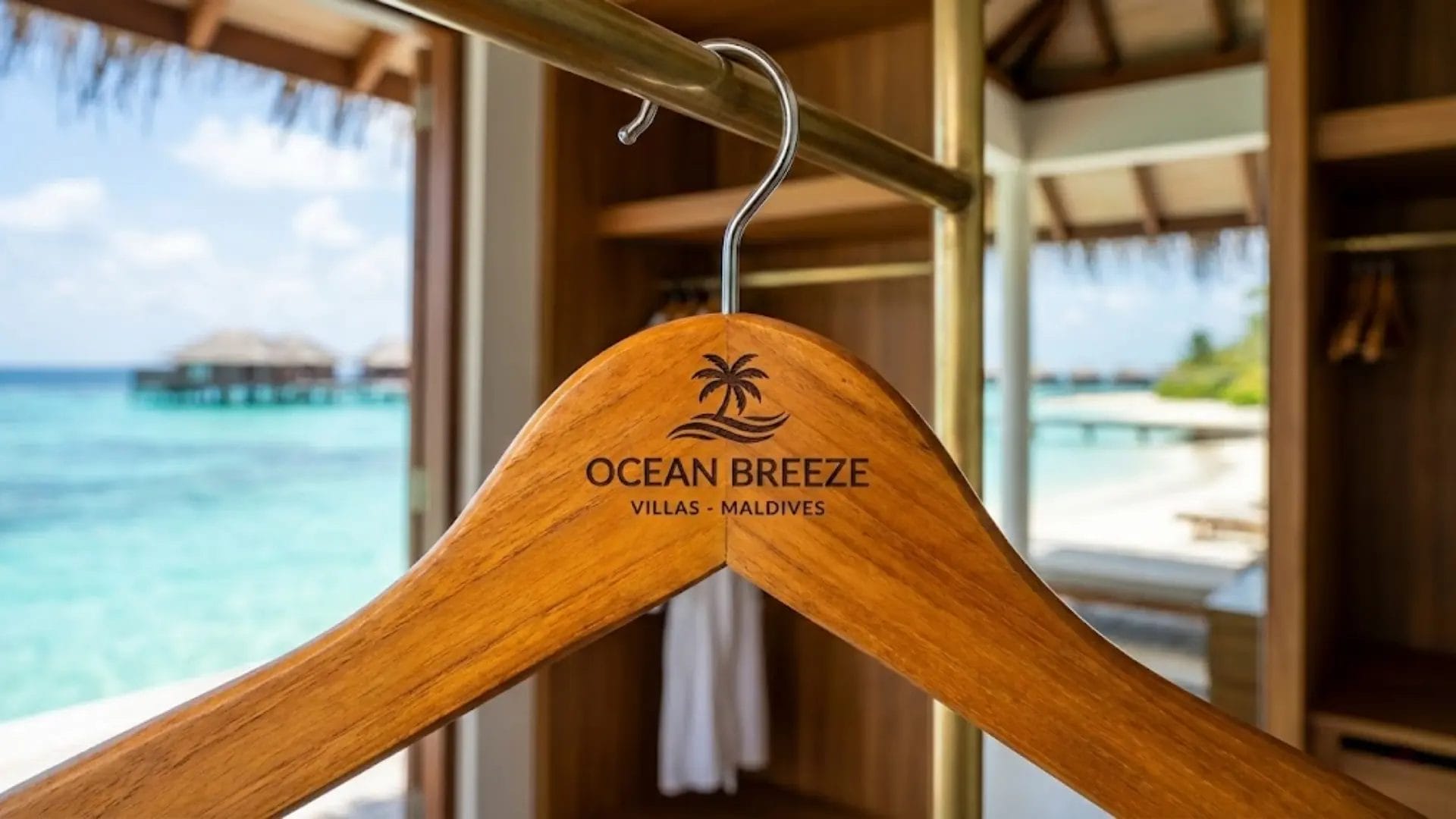
Project context (anonymized): A luxury island resort required 5,000+ guest-room hangers exposed to salt-laden air. The engineering brief specified: 316 stainless swivel hooks; beech wood at 6–8% MC; UV-cured lacquer; captive anti-theft rails in suites; and acceptance testing including ≥5 kg static load for 24 hours, 5,000 swivel cycles without binding, and vendor-documented NSS performance for any plated ancillary parts. Outcomes after pilot: zero red rust in 120-day monitoring; no finish hazing under neutral-detergent cleaning; replacement rate projected below prior plastic inventory.
Note on verifiability: The above is presented as a representative coastal deployment example. If and when auditable documents (e.g., test reports, dated photos, invoices with confidential details redacted) are available, we will publish a named case study to replace this anonymized summary.
Maintenance and housekeeping SOPs that preserve finish
-
Cleaning chemistry: Use neutral detergents on sealed wood; avoid alcohol, chlorine, or peroxide on finishes that can haze or discolor. Always dry immediately after wiping.
-
Inspection cadence: During room checks, spot-test for hook loosening, swivel binding, finish chips, or warping.
-
Acceptance sampling: On each batch, perform static load and swivel cycle checks on a small sample before property-wide deployment.
Recommendations and procurement playbook
-
Luxury coastal resort: Specify 316 stainless hardware with UV-cured lacquer on beech or oak; document ≥240–480 h NSS for any plated parts; define acceptance tests; budget for lower replacement rates.
-
Urban business hotel: 304 stainless or robust plated hooks may suffice; focus on finish durability and standardized widths to streamline housekeeping.
-
Budget/economy chain: Consider a mixed inventory—wooden hangers in suites and premium rooms, plastic in back-of-house—while keeping anti-theft rails consistent.
Download our Hotel Hanger Sourcing Catalog & Sustainability Report
Ready to streamline your procurement process? Access our full range of premium solutions by downloading the DERBAL Hotel Hanger & Amenity Catalog (PDF). Make your next RFQ faster and safer with our ready-to-use templates for technical specs, acceptance tests, and 5-year TCO calculators.