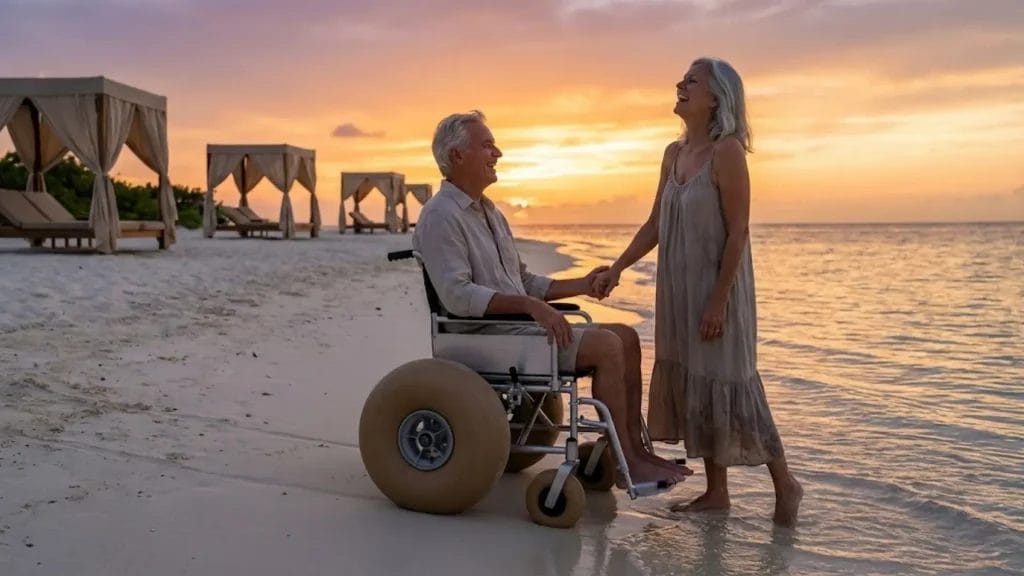
The ocean steadies our breathing. Waves arrive, then pause, like a kindly metronome for tired minds and busy hearts. Salt air softens edges. Sunlight drifts across the water and, for a few bright minutes, time feels elastic. True luxury is not a private cabana or a rare vintage. It’s a grandfather in a wheelchair rolling down to touch the foam beside his granddaughter, both laughing as a small wave reaches their toes. When a beach resort makes that moment possible, it isn’t selling a room—it’s honoring a life.Sunlight drifts across the water and, for a few bright minutes, time feels elastic. Creating wheelchair accessible beach resorts is about more than infrastructure; it’s about making these moments possible for every guest.
Key takeaways
-
Dignity first: In 2026, inclusive guest care is core hospitality—not a checkbox.
-
The last 10 meters matter most: Firm, stable routes on sand plus the right chairs and quiet, well‑trained assistance turn barriers into belonging.
-
Seniors want participation, not spectatorship: Shade, ergonomics, and gentle water experiences invite joy without strain.
-
Start practical: Configure accessible mats, set up a discreet transfer zone, train staff for consent‑first assistance, and publish clear pre‑arrival info.
-
Stewardship mindset: Resort GMs are guardians of joy—your leadership shapes memories that families will tell for years.
The Meaning of Inclusive Guest Care in Modern Hospitality
Inclusive guest care is the promise that every person can feel freedom and dignity at the shoreline. Compliance is a floor; hospitality aims higher. In the U.S., accessible routes and “firm, stable” surfaces are framed in outdoor standards for federally managed sites, and their principles guide beach access planning at private resorts as well. The U.S. Access Board’s materials on outdoor developed areas outline minimum widths, gentle slopes, and the need to connect accessible elements along a route, translating into beach approaches that feel smooth and predictable under wheels—no jolts, no detours through crowds. See the Access Board’s official overview of outdoor standards for context.
Beyond the U.S., the spirit is similar. EN 17210 emphasizes routes that are usable, legible, and safe; UNWTO and ISO 21902 define accessibility in tourism as equal enjoyment and participation, which fits seaside experiences perfectly. For orientation, explore the UNWTO accessibility hub on tourism for all.
What does this mean in practice? It means wheelchair accessible beach resorts design routes that are predictable, seats and shade where they’re needed, and staff who assist lightly and respectfully. It means publishing measurements and procedures so guests can plan, and it means admitting when terrain prevents a permanent fix—then offering a humane alternative.
From Barriers to Belonging: Enhancing Wheelchair Accessible Beaches
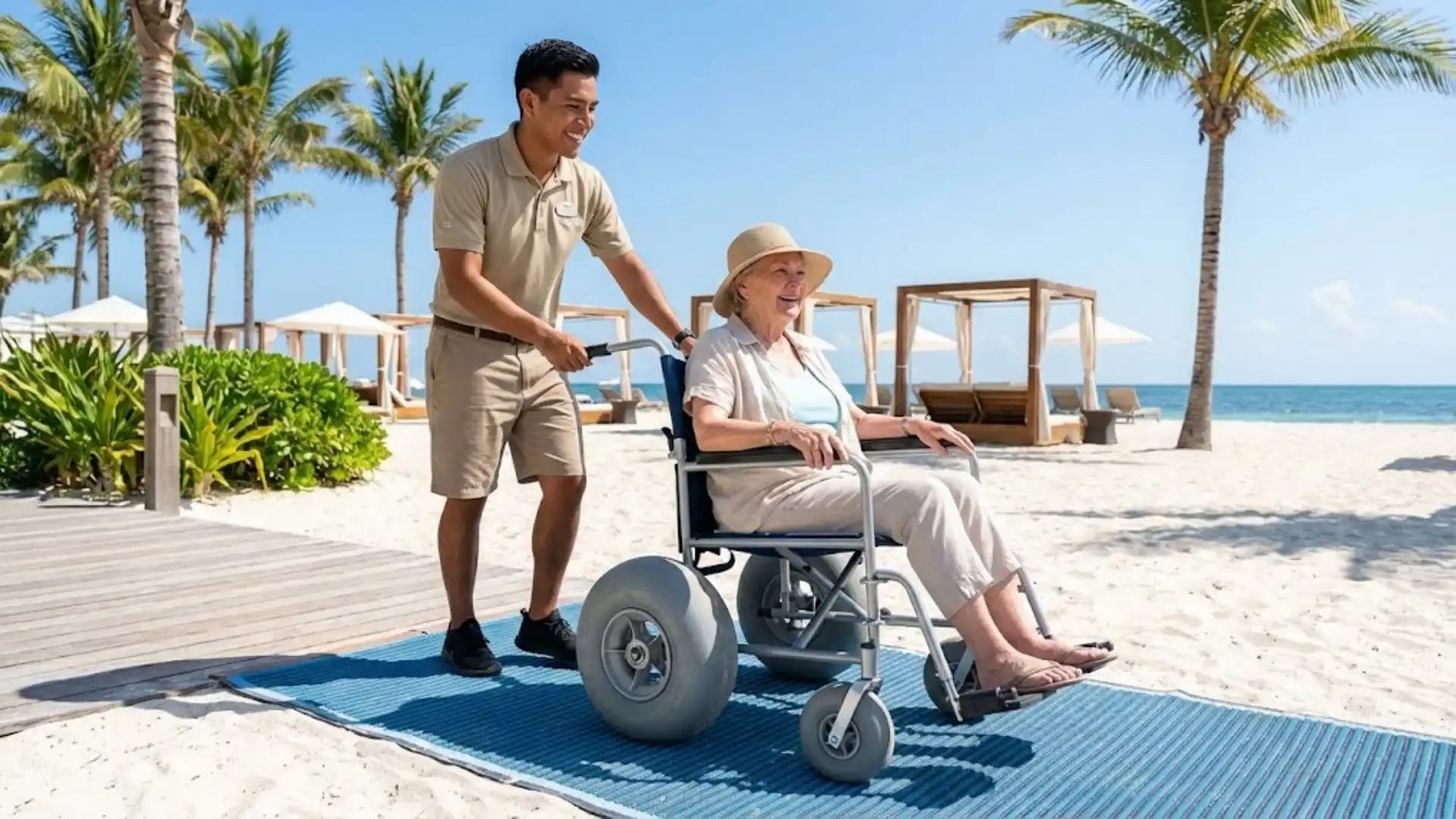
Sand should not be a wall that keeps families apart. When the approach from boardwalk to water is predictable and firm, a guest’s world expands. Municipal programs show what’s possible: San Diego’s long‑running initiative pairs access mats with loaner chairs and clear reservations information—useful inspiration for resorts that want to streamline operations; see the city’s Beach Wheelchair Program. Smaller coastal towns participate too: Pismo Beach lists free beach wheelchair loans and simple pickup procedures—evidence that even modest programs can make a big difference; see Pismo Beach’s wheelchairs page.
For resorts, “belonging” looks like this: A guest wheels along a mat that visually guides the route, pauses at a shaded transfer area where staff greet them quietly, then continues—either in their own chair if the surface allows or in a beach wheelchair designed for sand. No spectacle. No crowd. Just a smooth path and light, confident help.
Solving the Last Ten Meters: Innovations in Wheelchair Beach Access
The last stretch of sand often decides whether a day becomes a memory or a compromise. The goal is effort‑light elegance—technology that serves human dignity, with staff who move like a thoughtful breeze rather than a spotlight.
-
Access mats: Portable, roll‑out systems create firm, stable lanes over sand. Configurations can include straight runs, T‑junctions, and small platforms for turning. Representative products with specs and maintenance guidance include the Mobi‑Mat family. Choose widths that allow comfortable passing where possible, plan anchoring, and set a cleaning routine after storms.
-
Beach wheelchairs: Chairs with wide, low‑pressure balloon tires glide over sand and keep transfers safe and predictable. Options range from manual all‑terrain models, to amphibious designs with floating armrests and wheels. Stocking at least one of each type covers most guest preferences and abilities.
-
Transfer zones and privacy: Create a shaded, level area on a firm surface—either on a mat spur or deck. Provide seating with arms for stability, space for a portable lift or sling, and a discreet orientation so the guest isn’t on display during transfers.
-
Consent‑first assistance: Train staff to ask, not assume. Speak at the guest’s eye level when practical, explain each movement before it happens, and use synchronized cues (“Ready together on three” for a two‑person assist). Professional checklists for water‑side operations and transfers are summarized by the Reeve Foundation; see their outdoor water accessibility checklist.
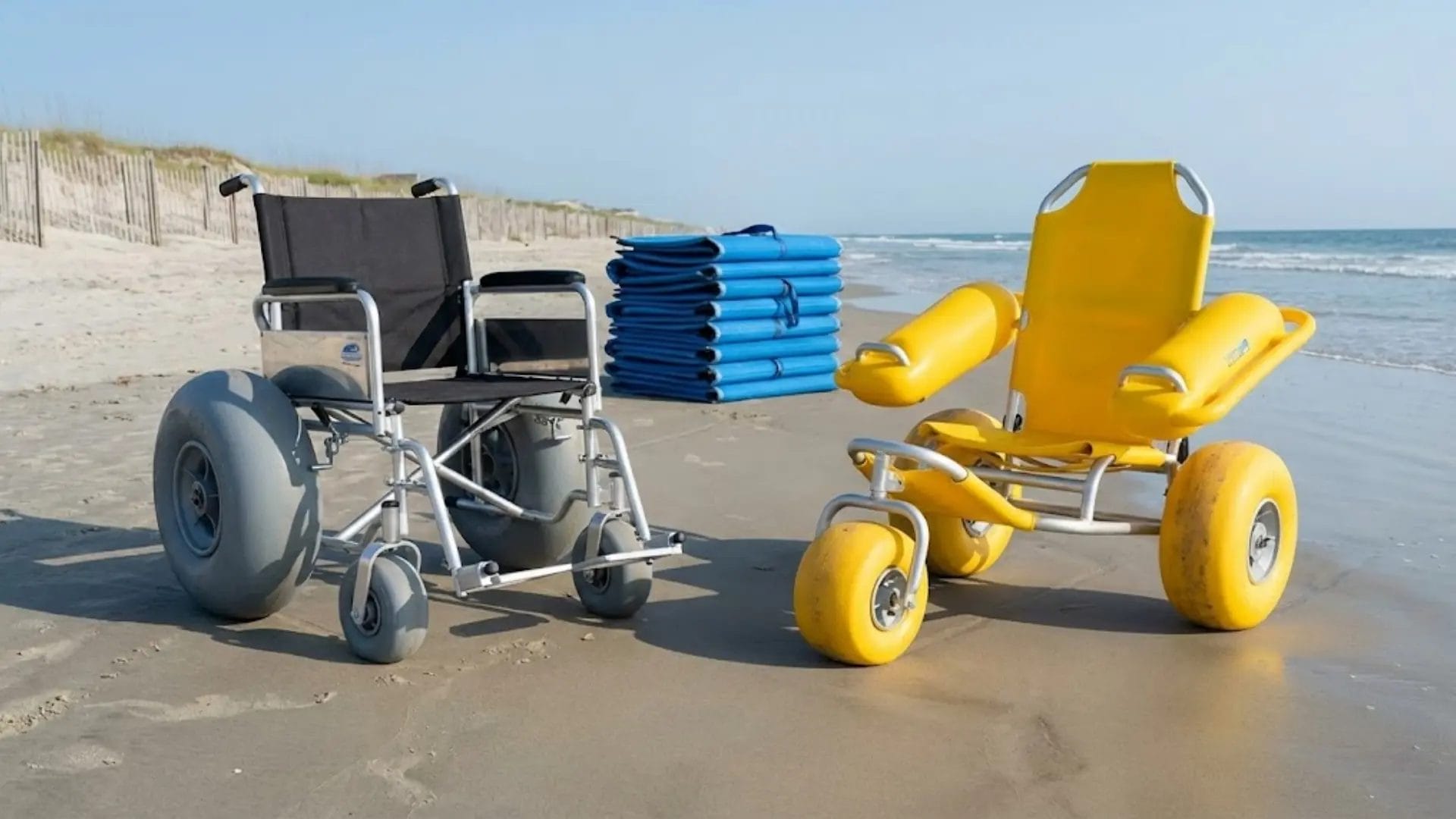
Quiet excellence shows in the details: a mat that doesn’t wobble, a chair that rolls without drama, a team whose voices are soft and respectful.
Tailoring Joy: Why a Beach Wheelchair for Seniors is a Vital Amenity
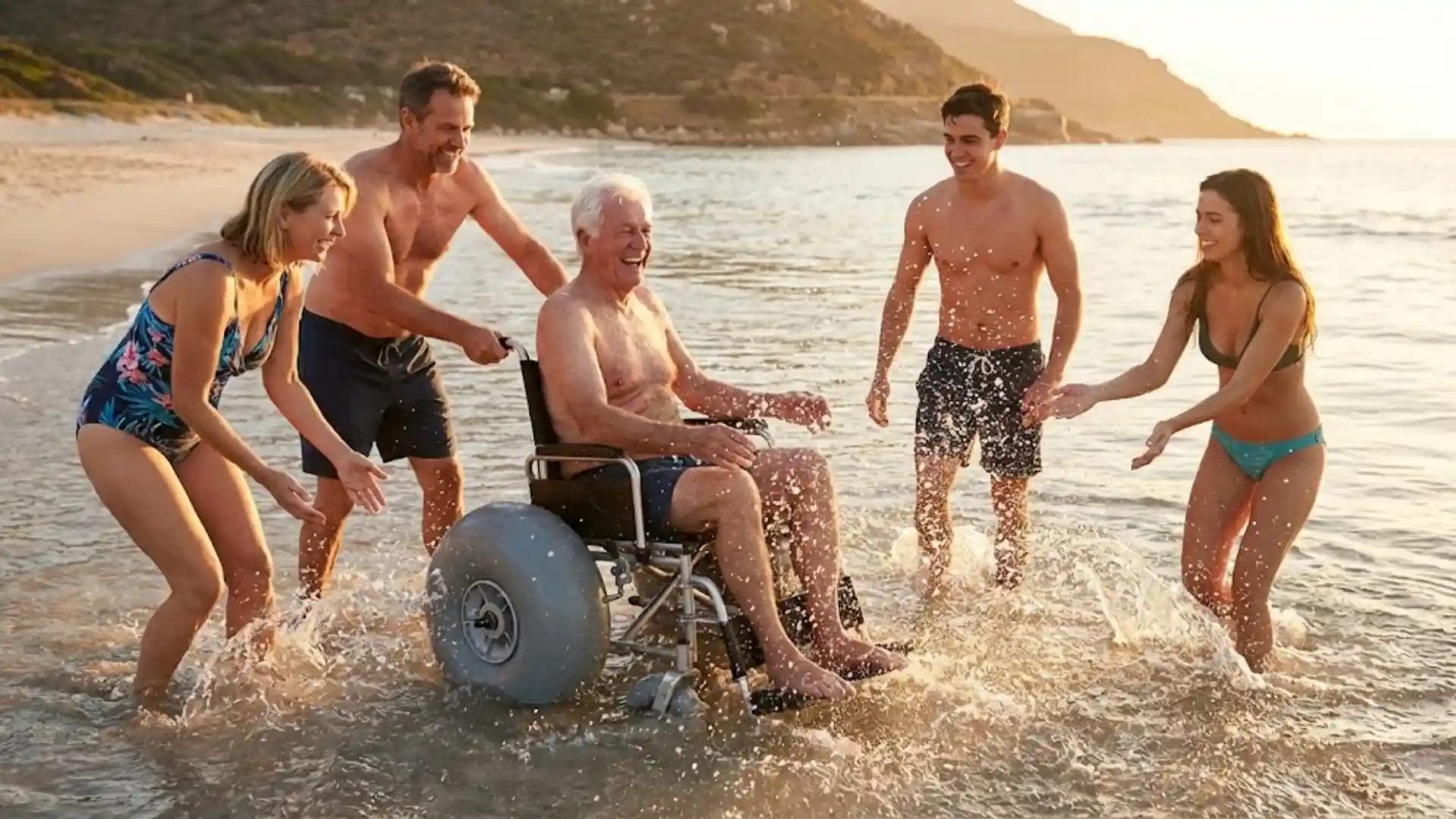
Aging travelers don’t want to watch the ocean from the balcony—they want to feel the water on their skin. A beach wheelchair for seniors, paired with shade and thoughtful pacing, turns wishful thinking into participation.
-
Comfort and ergonomics: Seats with supportive backs and armrests reduce fatigue and make transfers safer. Low step‑in heights and stable frames matter for older bodies.
-
Thermal comfort and hydration: Schedule the most popular sessions for cooler hours; provide umbrellas or canopies, and keep water within reach. Public health resources underscore seniors’ higher risk in heat; guidance from the National Institute on Aging offers practical cues for hot‑weather days, summarized here and available via the NIA’s hot‑weather safety guidance for older adults.
-
Gentle participation: Shallow‑water floating with appropriate flotation devices, brief assisted shoreline immersions, and supported walks along the firm mat edge can be profoundly uplifting. Proximity to trained staff and lifeguards adds reassurance without pressure.
A quick checklist for truly wheelchair accessible beach resorts
-
Route and mats: Connect accessible parking → boardwalk → mat → shaded transfer area → shoreline. Inspect anchors weekly; adjust after storms.
-
Chairs and transfers: Stock one amphibious and one manual sand chair; keep slings/portable lifts ready; set a clean, discreet transfer zone with seating.
-
Staff and dignity: Train for consent‑first assistance; practice two‑person cues; keep the guest’s personal chair within reach post‑transfer.
-
Seniors and comfort: Provide shade, hydration, non‑slip guidance, and nearby seating with arms.
-
Communication: Publish measurements, reservation steps, and availability on your site/app with clear photos.
A World Without Borders: Let Every Guest Experience the Ocean’s Magic
Here’s the deal: when a guest who uses a wheelchair reaches the water with ease and privacy, the whole beach feels different. Families relax. Staff exhale. The atmosphere shifts from careful to carefree. That’s the mark of a great resort.
The path forward is simple and meaningful. Start with a mat that reaches the comfortable shoreline, set up a quiet transfer space, stock two complementary beach chairs, and train your team to assist with lightness and respect. Use international guidance as your compass and local conditions as your map. If you need inspiration or operational proof points, municipal programs from San Diego to Pismo Beach show that steady, modest investments can open the shore to everyone.
Leaders in hospitality don’t just procure equipment; they curate moments. As a GM, you are a guardian of joy. Build the route. Offer the chair. Teach the script. Then watch the ocean do what it does best—heal, connect, and bring people together.
Frequently Asked Questions about Inclusive Seaside Hospitality
Q: What defines the best wheelchair accessible beach resorts in 2026?
A: Leading wheelchair accessible beach resorts go beyond simple ramps. They prioritize a seamless experience from the parking lot to the shoreline. This includes providing stable access mats, specialized equipment like balloon-tire chairs, and staff trained in the nuances of inclusive guest care.
Q: Why is specialized equipment necessary for wheelchair accessible beach resorts?
A: Standard wheelchairs are not designed for soft sand. For wheelchair accessible beach resorts to truly live up to their name, they must provide all-terrain solutions that allow guests to reach the water’s edge with dignity, ensuring that the “last ten meters” of the beach are no longer a barrier.
Q: How do wheelchair accessible beach resorts balance safety with guest independence?
A: Safety is the foundation of freedom. Top-tier wheelchair accessible beach resorts invest in high-quality, stable frames and secure braking systems. By offering well-maintained equipment and a predictable path to the ocean, resorts empower guests of all ages to enjoy the water with confidence and minimal strain.
Q: Can wheelchair accessible beach resorts accommodate multi-generational families?
A: Absolutely. In fact, wheelchair accessible beach resorts are becoming the preferred choice for multi-generational travel. When a resort is accessible, it means grandparents, parents, and children can all enjoy the shoreline together, creating a shared experience that is the hallmark of true hospitality.
Ready to turn your shoreline into a haven of joy for all? View the full specifications of our Safe Beach Wheelchair or Connect with DERBAL to discuss how we can help you standardize your resort’s accessibility.