
Hospitality wellness programs carry a simple promise: every guest steps onto a clean, grippy, comfortable surface that feels fresh and safe—every time. The challenge is that shared-use environments (hotel gyms, spa studios, beach decks, and in-room amenities) accelerate wear, trap moisture, and expose gear to humidity, sunscreen, salt air, and frequent cleaning chemicals. Put bluntly, the wrong Yoga Mat strategy costs staff hours, shortens lifespan, and raises hygiene risk.

This Ultimate Guide shows hospitality procurement, spa/wellness directors, and operations teams exactly how to choose, certify, clean, store, and replace hotel yoga mats with hygiene and durability in mind—without guesswork. We anchor cleaning guidance to U.S. EPA disinfectant principles, organize specs around compliance documentation (REACH/SVHC, OEKO-TEX Standard 100, slip-resistance testing options, facility safety notes), and give you a toolkit to pass procurement and brand-standard reviews. For island and beachfront properties such as Ritz Carlton Maldives or JW Marriott Maldives–style environments, we also account for UV, heat, and salt exposure in outdoor and semi-outdoor programming.
Key takeaways
- Prioritize closed‑cell, nonporous top surfaces for shared-use studios; they’re easier to disinfect to label contact time using EPA‑registered products, then dry fast for the next guest.
- Match material to venue: PU‑coated rubber for studios (wet grip + sanitizable), PVC folding/travel mats for outdoor decks (UV/heat/sand resilience), and NBR for quiet in‑room cushioning with gentle-clean SOPs.
- Build your RFP around documentation: REACH/SVHC statements, OEKO‑TEX Standard 100 (if textiles are present), slip‑testing (dry/wet) from an accredited lab, and cleaning compatibility by material.
- Standardize SOPs: label contact/dwell time, airflow drying on racks, weekly inspections, and clear retirement triggers (tears, compression set, loss of wet grip).
- Plan lifecycle by environment: island humidity and salt air shorten cycles; establish batch tracking and cost‑per‑use targets to avoid surprise replacements.
Who this guide is for—and how to use it
If you oversee OS&E procurement, wellness operations, housekeeping, or construction/engineering for hospitality, this guide is built for you. Use it in three ways:
- As a specs compass: pick the right materials for each venue type and set minimum hygiene requirements.
- As a compliance checklist: request the correct certificates, declarations, and test reports in your RFP.
- As an operations playbook: adopt cleaning SOPs, airflow storage, inspection cadences, and replacement thresholds that stand up to audits.
You’ll also find a compact SKU comparison table and realistic playbooks mapped to studio, spa, and beach/outdoor contexts. When citing standards and cleaning principles, we reference the original sources in-line so procurement reviewers can verify details quickly.
The hygiene‑first Yoga Mat procurement framework
Shared-use mats must be cleanable to the level your brand standard and local policy require. The single biggest decision is whether the mat’s contact surface is nonporous (closed‑cell) or absorbent (open‑cell or fibrous). Nonporous surfaces allow you to use EPA‑registered disinfectants as directed by the label, keeping the surface wet for the full contact time before drying for the next guest—this is foundational to U.S. practice, per the Environmental Protection Agency’s guidance on disinfectant selection and contact time principles outlined on its public pages in 2024–2026 (see the agency’s overview of Selected EPA‑Registered Disinfectants and the description of DfE‑certified disinfectants).
For absorbent/open‑cell constructions (e.g., some hot‑yoga designs and cork hybrids), harsh disinfectants can soak in and leave residues. Leading brand care resources advise gentle cleaners and caution against soaking; for example, Manduka’s care pages explain cleaning frequency and compatibility nuances (see the company’s 2024–2026 guidance in the Manduka yoga mat care guide and material‑specific FAQs). Cork‑forward brands similarly recommend mild solutions rather than harsh chemicals; Yoloha’s cleaner page gives a representative direction of use for natural surfaces (see Yoloha’s cork mat cleaner guidance).
Practically, for hotels and resorts with high turnover, nonporous PU‑coated rubber tops are often the workhorse for studios; cork/rubber hybrids can be positioned for spa atmospheres with a mild‑cleaner SOP; and PVC folding mats shine outdoors where UV, heat, and sand are factors. We’ll unpack each in the next section and then tie the choices to cleaning and documentation.
Materials and durability: matching mats to hotel venues
Choosing the right material is about balancing grip (dry/wet), cleanability, cushion/noise, weight, and environmental durability. Think of it like choosing the right tires for the weather: summer slicks are great on dry roads, but you’d want all‑weather treads in a storm.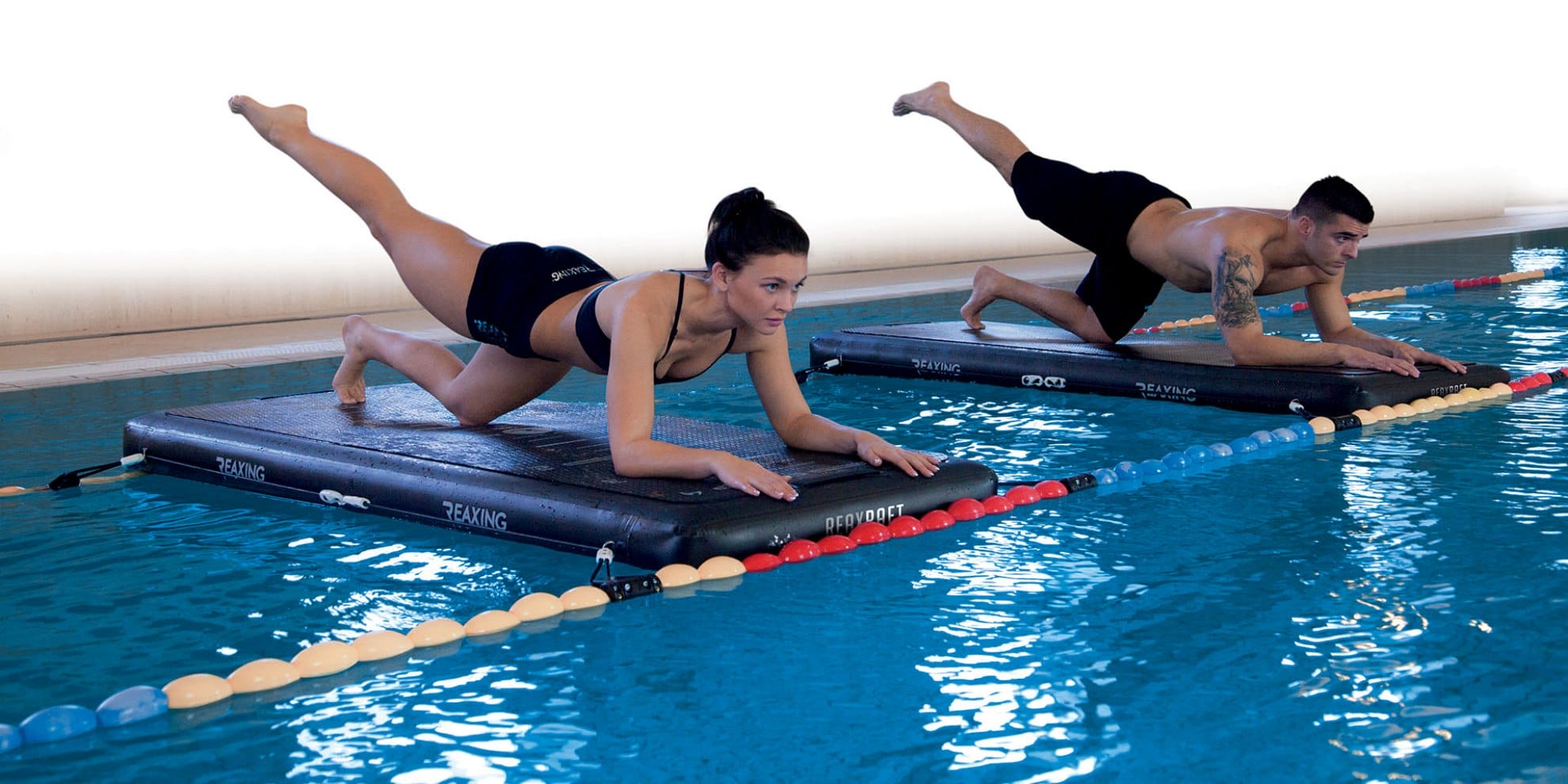
Below are six product‑type categories you can include in your OS&E plan. Each includes the operational trade‑offs hotels care about.
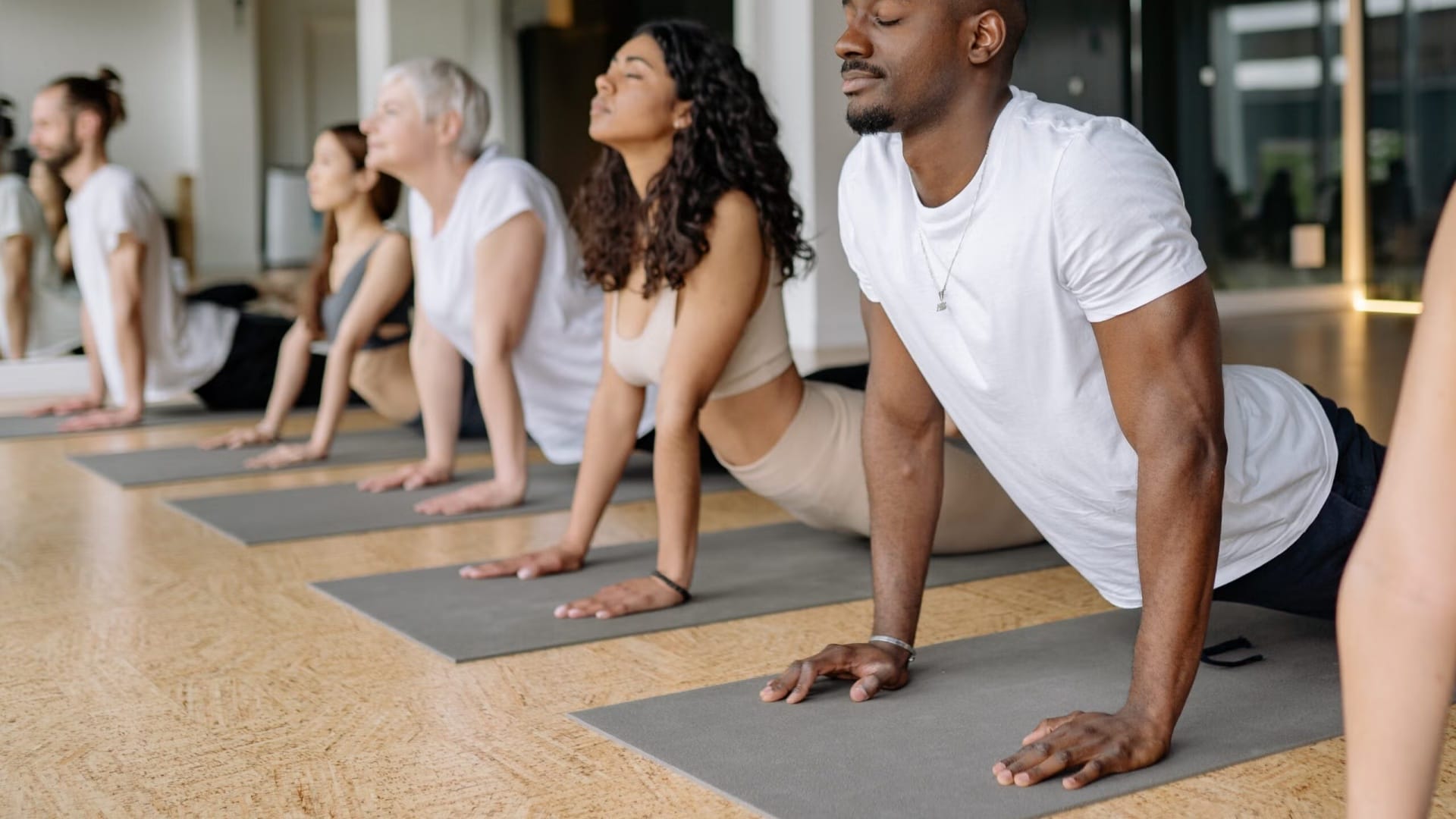
1) Non‑slip PU‑coated rubber Yoga Mat (closed‑cell top)
- Where it fits: Hotel fitness studios with back‑to‑back classes and frequent wipe‑downs; also viable for in‑room kits where wet‑grip matters.
- Hygiene & durability profile: The PU top is nonporous and typically compatible with EPA‑registered disinfectants when used per label (maintain contact/dwell time). Rubber base provides traction on flooring. Avoid harsh solvents; follow brand guidance to preserve the topcoat. Manduka’s material‑specific care notes are a widely cited example of this discipline; see the Manduka yoga mat care guide and GRP‑series FAQs for context.
- Why hotels pick it: Reliable dry and sweat‑wet grip, sanitizable surface, quick turnover between users.
2) Cork–rubber hybrid Yoga Mat (moisture‑activated grip)
- Where it fits: Spa studios seeking a natural, warm touch and moisture‑activated grip in humid environments.
- Hygiene & durability profile: Cork surfaces can absorb liquids, so avoid harsh disinfectants; rely on mild, natural cleaners and a rinse/wipe step to remove residues. Plan for stronger airflow drying and a dedicated inventory to prevent cross‑contamination.
- Why hotels pick it: Aesthetic and sensory experience; quieter landings; strong grip as humidity rises (with the cleaning caveat above).
3) TPE eco/lightweight Yoga Mat (entry‑level bulk)
- Where it fits: In‑room amenity kits and light‑use studios; properties that need low weight and quick handling.
- Hygiene & durability profile: TPE blends vary. Confirm disinfectant compatibility with your supplier and conduct a small‑batch wipe‑test before rollout. Good elasticity and lower shipping cost per unit.
- Why hotels pick it: Budget‑friendly, light to move, acceptable grip for general fitness.
4) PVC travel/folding Yoga Mat (outdoor/UV/heat/sand resilient)
- Where it fits: Beach decks, pool‑side pavilions, and outdoor terraces typical of Maldives‑style resorts.
- Hygiene & durability profile: Multiple practitioner/manufacturer sources indicate PVC folding mats resist UV, heat, and sand better than many rubber/PU blends, and can be rinsed and dried rapidly—ideal for salt‑air environments. For directional background, see Kurma’s 2025 articles on travel/outdoor mats, such as how travel destinations influence your yoga mat and their notes on outdoor use.
- Why hotels pick it: Dedicated outdoor inventory that shrugs off sand and sun, folds for transport, and dries fast.

5) NBR cushioned Yoga Mat (quiet comfort for guest rooms)
- Where it fits: In‑room practice where downstairs noise transfer is a concern; PT/rehab corners in spa suites.
- Hygiene & durability profile: Softer feel and sound dampening but more porous than closed‑cell PU tops. Use gentle‑clean SOPs, avoid harsh chemicals, and allow extra airflow dry time. Expect shorter replacement intervals in humid climates.
- Why hotels pick it: Guest‑friendly cushioning and quieter landings at modest cost.
6) Storage racks and wall mounts (supporting asset)
- Where it fits: Studios, spa corridors, and service rooms; essential for airflow and orderly inventories.
- Hygiene & durability profile: Vertical or spaced horizontal racks accelerate drying and reduce odor/mildew risk. Avoid stacking wet mats. Consider lockable options where theft is a concern.
- Why hotels pick it: Faster turnover, tidier spaces, and fewer slip hazards from mats left on floors.
Compact SKU comparison: what to spec and where to deploy
| Category | Typical thickness | Surface/top | Cleanability | Primary venue | Notes |
|---|---|---|---|---|---|
| PU‑coated rubber (closed‑cell) | 4–6 mm | Nonporous PU on rubber | Disinfectant‑compatible when used per label; avoid harsh solvents | Studios; in‑room kits | Reliable wet grip; quick turnover |
| Cork–rubber hybrid | 4–6 mm | Cork on rubber | Mild cleaners; avoid harsh disinfectants; longer dry time | Spa studios | Natural feel; moisture‑activated grip |
| TPE lightweight | 4–6 mm | Textured TPE | Verify disinfectant compatibility; wipe‑test first | In‑room; light studio | Low weight; budget‑friendly |
| PVC travel/folding | 1.5–3 mm | PVC textured | Rinse/wipe; fast outdoor dry | Beach/outdoor decks | UV/heat/sand resilience |
| NBR cushioned | 8–10 mm | Soft foam | Gentle‑clean only; longer dry time | Guest rooms; rehab | Quiet landings; softer support |
| Storage racks | — | Steel/aluminum | N/A | Studios/spa corridors | Airflow spacing; wall or freestanding |
Hygiene SOPs that actually work in hotels
The core principles are simple: use the right disinfectant, keep the surface visibly wet for the full labeled contact time, and promote airflow drying before the next guest uses the mat. According to the U.S. Environmental Protection Agency’s public resources (2024–2026), List N and related pages explain how to select appropriate products and why maintaining full contact time is non‑negotiable. For reference, see the agency’s overview of Selected EPA‑Registered Disinfectants and the profile of DfE‑certified disinfectants used by facilities seeking products with a preferable environmental/health profile.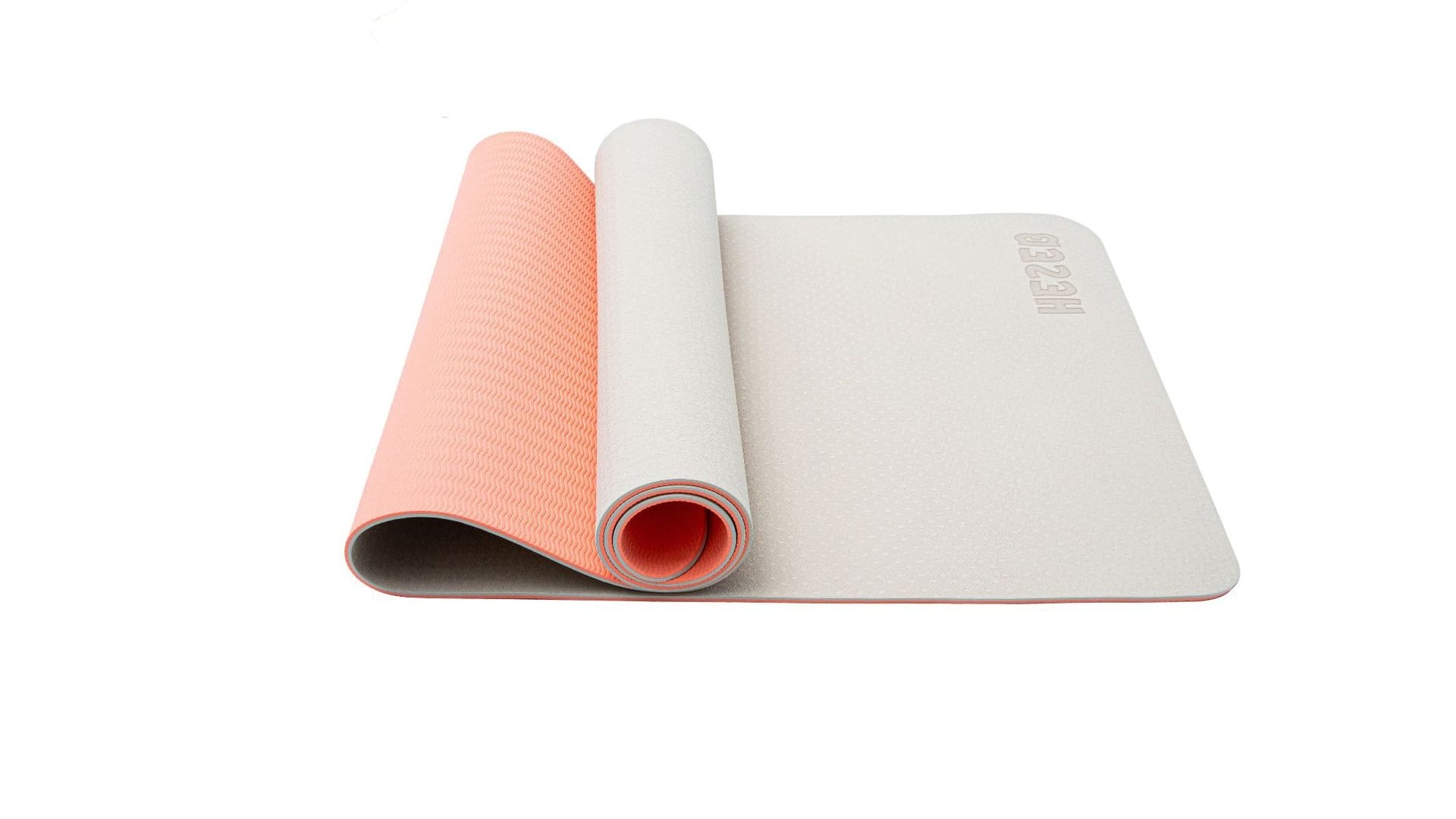
Operationalizing those principles in hospitality looks like this:
- Nonporous/closed‑cell tops (e.g., PU‑coated rubber)
- After each class or guest use, wipe with the facility’s approved EPA‑registered disinfectant, ensuring the surface stays visibly wet for the full label contact time.
- After contact time, use a clean cloth to remove excess residue if required by the product label; hang on racks for airflow dry.
- If sweat pooling occurs, pre‑wipe with a mild mat cleaner, then disinfect; always check label compatibility to protect the topcoat.
- Absorbent/open‑cell or cork surfaces
- Avoid harsh disinfectants. Use the brand‑recommended mild/natural cleaner, wipe thoroughly, and add a rinse‑wipe step to remove residues.
- Airflow dry on racks; allow longer intervals before re‑use.
- Reserve absorbent mats for spa programming with lower turnover or provide personal microfiber towels on top of mats to reduce direct sweat contact.
- Outdoor beach/pool decks (PVC folding mats)
- Rinse with fresh water to remove sand/salt; wipe with compatible cleaner; air‑dry in shade to limit UV stress.
- Store folded only once bone‑dry; avoid sealed bins that trap humidity.
Why this approach? Leading brand care resources reinforce the nonporous vs. absorbent distinction. Manduka’s guides advise against aggressive chemicals on absorbent constructions and specify frequency and technique for different series (see the Manduka yoga mat care guide and material FAQs). For cork surfaces, natural‑cleaner guidance such as Yoloha’s cork cleaner page reflects the broader best practice to avoid embedding harsh agents.
Finally, publish SOPs where staff can see them. A laminated, single‑page “Mat Turnover SOP” in the studio and housekeeping closet reduces inconsistency and helps you pass hygiene audits.
Compliance and documentation: what procurement should request
In procurement, documentation wins reviews. Here’s the evidence stack most hospitality brands and third‑party auditors expect. Use it as a template in your RFPs and purchase orders.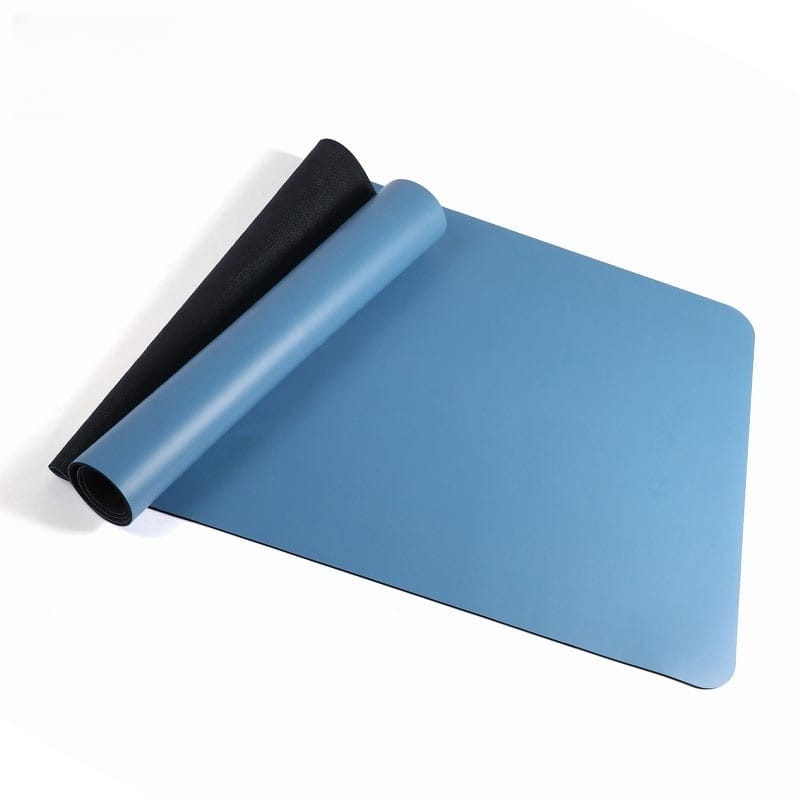
- Chemical safety and textiles
- REACH/SVHC statements: Request a declaration confirming substances of very high concern (SVHC) are <0.1% w/w per article at shipment and that Article 33 communication duties are met if thresholds are exceeded. For the EU’s official guidance, review ECHA’s explanation of REACH Article 33 communication duties and the Waste Framework Directive’s SCIP database obligations for articles with SVHC ≥0.1% w/w.
- OEKO‑TEX Standard 100 (for textile components): This globally recognized label verifies products have been tested for a broad set of harmful substances; it’s updated periodically and provides certificate numbers you can verify. For overview and current scope, see OEKO‑TEX’s description of STANDARD 100 and the current STANDARD 100 specification.
- RoHS scope note: RoHS typically applies to electrical/electronic equipment; mats without electronics are usually out of scope. Record this explicitly in your compliance note.
- Slip resistance and safety testing
- Request third‑party slip testing with clear methods and conditions under dry and wet (sweat/water) states. In the EU/UK, many labs use pendulum tests (e.g., EN 13036‑4/BS 7976) for dynamic slip assessment on a range of surfaces with adapted sliders; U.S. labs can reference appropriate ASTM methods for dynamic/static COF on horizontal surfaces with adaptations for flexible coverings. Ask accredited labs (UL Solutions, Intertek, SGS, SATRA) to document the method and conditioning.
- Facility safety note: Building/fire codes largely focus on structural elements; portable furnishings like yoga mats are usually outside rated assemblies. Always follow local AHJ guidance. For context on code focus areas, NFPA’s explainers on openings and atriums provide useful background (see NFPA’s 2021–2022 blog explainers such as how to determine the required fire‑protection rating of opening protectives). Do not claim a “Class 1” flame classification unless you hold a current, relevant test report.
- Cleaning compatibility statements
- Require written compatibility by material type (PU‑coated rubber; TPE; PVC; cork/rubber; NBR) against your specific disinfectant families; include label contact times and any rinse requirements.
Keep a digital compliance pack: certificates, declarations, test reports, SDS for cleaners, and SOPs. Store it with batch/serial records so audits are quick.
Procurement toolkit: RFP language, ordering parameters, and storage
Here’s sample language you can adapt inside your RFP or purchase order. Replace bracketed items with your details.
- RFP clause—Material and hygiene requirements “Mats supplied must have a nonporous, closed‑cell contact surface suitable for disinfection using [EPA‑registered disinfectant family] with full label contact time. Supplier must provide written compatibility and care instructions. For spa‑use variants (e.g., cork surface), supplier must provide a mild‑clean SOP and confirm any disinfectant restrictions.”
- RFP clause—Compliance documentation “Prior to shipment, supplier will provide: (1) REACH/SVHC declaration (<0.1% w/w per article) with date and substance list reference; (2) OEKO‑TEX Standard 100 certificate(s) for any textile components, with scope and validity; (3) third‑party slip‑resistance test results under dry and wet conditions, with method and parameters named; (4) cleaning compatibility statement by material.”
- RFP clause—Operations support and lifecycle “Supplier will provide installation/storage guidance, including airflow rack spacing and drying recommendations, and suggested inspection and replacement intervals by venue type (studio, spa, outdoor deck, in‑room).”
Ordering parameters to align early:
- SKUs by venue: studios (PU‑coated rubber), spa (cork/rubber with mild‑clean SOP), outdoor decks (PVC folding), in‑room (TPE or NBR). For procurement browsing of fitness and gym categories, see the hotel’s internal package references or public overviews such as the contextual page on Hotel Gym and Sports.
- Quantities and spares: plan 15–20% spares for studios; 25–30% for outdoor decks in high‑UV/salt settings.
- Lead times/MOQs: confirm colorways and custom marks; consult shipping consolidation early if mats, racks, and cleaning stations ship together. For a broader catalogue snapshot, operations managers sometimes reference a products index; see Products for a representative overview of hotel supply categories.
- Storage and airflow: space racks with at least a finger‑width gap per mat; avoid sealed bins; label positions for quick counts.
If you need a single point of coordination for OS&E consolidation alongside wellness/fitness categories, suppliers such as DERBAL can support bulk SKUs, custom marks, storage racks, and shipping coordination as part of a wider hotel package—use that as a model when drafting your vendor scorecard.
Use‑case playbooks: studio, spa, and outdoor deployments
Every venue has different physics: humidity, turnover, sound, and sun. Use these playbooks to set the right SKUs, SOPs, and replacement targets.
A) High‑turnover studio (hotel fitness center)
- Objective: Fast, hygienic turnover with dependable grip in dry and sweat‑wet conditions.
- Recommended SKU: PU‑coated rubber mats (4–6 mm) + wall or freestanding airflow racks.
- Cleaning cadence: After each class, disinfect to label contact time; mid‑day spot clean; end‑of‑day wipe with mild cleaner if residue accumulates.
- Drying: Hang immediately; ensure cross‑ventilation.
- Guest aids: Microfiber mat towels for guests who prefer a personal layer.
- Inspections: Weekly grip check (wet‑hand test), edge curl, surface nicks. Retire mats with tears, flaking topcoats, or noticeable loss of wet grip.
- Replacement planning: 9–18 months depending on volume and climate; shorten intervals in humid seasons.
B) Spa studio (humid, sensory‑driven)
- Objective: Quiet cushioning and a natural feel with lower turnover than the main gym.
- Recommended SKU: Cork–rubber hybrids (4–6 mm) with mild‑clean SOP; optional NBR for restorative classes.
- Cleaning cadence: Mild cleaners only; add rinse‑wipe step; no harsh disinfectants. Consider personal towels as a barrier.
- Drying: Extra airflow time; store fully dry.
- Inspections: Surface darkening, odor, and grip consistency in humid sessions.
- Replacement planning: 9–15 months; prioritize guest‑experience consistency over end‑of‑life economics.
C) Beach/outdoor deck (Maldives‑style heat, sun, and salt)
- Objective: Resist UV/heat/sand, turn over fast between sunrise/sunset sessions.
- Recommended SKU: PVC travel/folding mats (1.5–3 mm) dedicated to outdoor use; keep indoor inventory separate.
- Cleaning cadence: Rinse to remove salt/sand, wipe with compatible cleaner, shade‑dry to limit UV stress.
- Drying and storage: Only fold when bone‑dry; avoid trapping humidity in bins; schedule periodic fresh‑water rinses even on non‑class days.
- Inspections: Abrasion from deck boards, UV chalking, corner tears.
- Replacement planning: 6–12 months in high‑UV seasons; track cost‑per‑use for better forecasting.
For properties in climates like those of iconic island resorts—think the environmental conditions around Ritz Carlton Maldives or JW Marriott Maldives—the outdoor playbook is especially relevant. Salt air, sunscreen, and high UV load accelerate wear; separating indoor/outdoor inventories, tightening rinse/dry routines, and accepting faster replacement cycles will sustain guest‑ready standards.
Operations and lifecycle management
A mat program that looks spotless on opening day can drift without documentation. Lock in quality with simple controls that also help your audits.
- Serialization and batch tracking: Tag lots by purchase date, vendor, and colorway. Record which venues received which batches.
- Inspection cadence: Weekly spot checks; quarterly deep review for compression set, topcoat wear, and persistent odor.
- Retirement criteria: Any tear, delamination, or sustained loss of wet grip; surfaces that retain odor after proper cleaning; edges that won’t lay flat and pose a trip hazard.
- Cost‑per‑use model: Track class counts or estimated in‑room sessions to compare materials across venues; this reveals when a pricier PU‑coated mat actually beats lower‑cost TPE over its life.
- Staff training: Rotate a 10‑minute refresher at the start of each season; place laminated SOPs near racks and in housekeeping areas.
These steps pay back in fewer guest complaints, tighter hygiene compliance, and smoother brand‑standard reviews.
Verification and testing appendix (what to ask labs and suppliers)
When you need formal validation for brand standards or third‑party audits, ask for:
- Slip‑resistance data under dry and wet conditions with a named method and parameters (e.g., pendulum test per EN 13036‑4/BS 7976 with adapted sliders for barefoot conditions, or a suitable ASTM method for dynamic/static COF on horizontal surfaces adapted for flexible coverings). Request accreditation details and conditioning protocols from the lab (UL Solutions, Intertek, SGS, SATRA).
- Abrasion/durability cycles, compression set, and chemical‑resistance notes for your approved disinfectants and cleaners.
- REACH/SVHC declarations (current to shipment date) and OEKO‑TEX Standard 100 certificates for any textile components; verify certificate numbers and validity via OEKO‑TEX public tools. For an overview of what STANDARD 100 covers and why it matters in 2025–2026, see OEKO‑TEX’s explainer on its labels and the official STANDARD 100 specification.
- Cleaning compatibility statements per material (PU‑coated rubber, TPE, PVC, cork/rubber, NBR) aligned to your disinfectant product families and label contact times. For care context, brand resources such as Manduka’s care guide and cork‑focused care notes like Yoloha’s cleaner page illustrate the industry’s material‑specific approach.
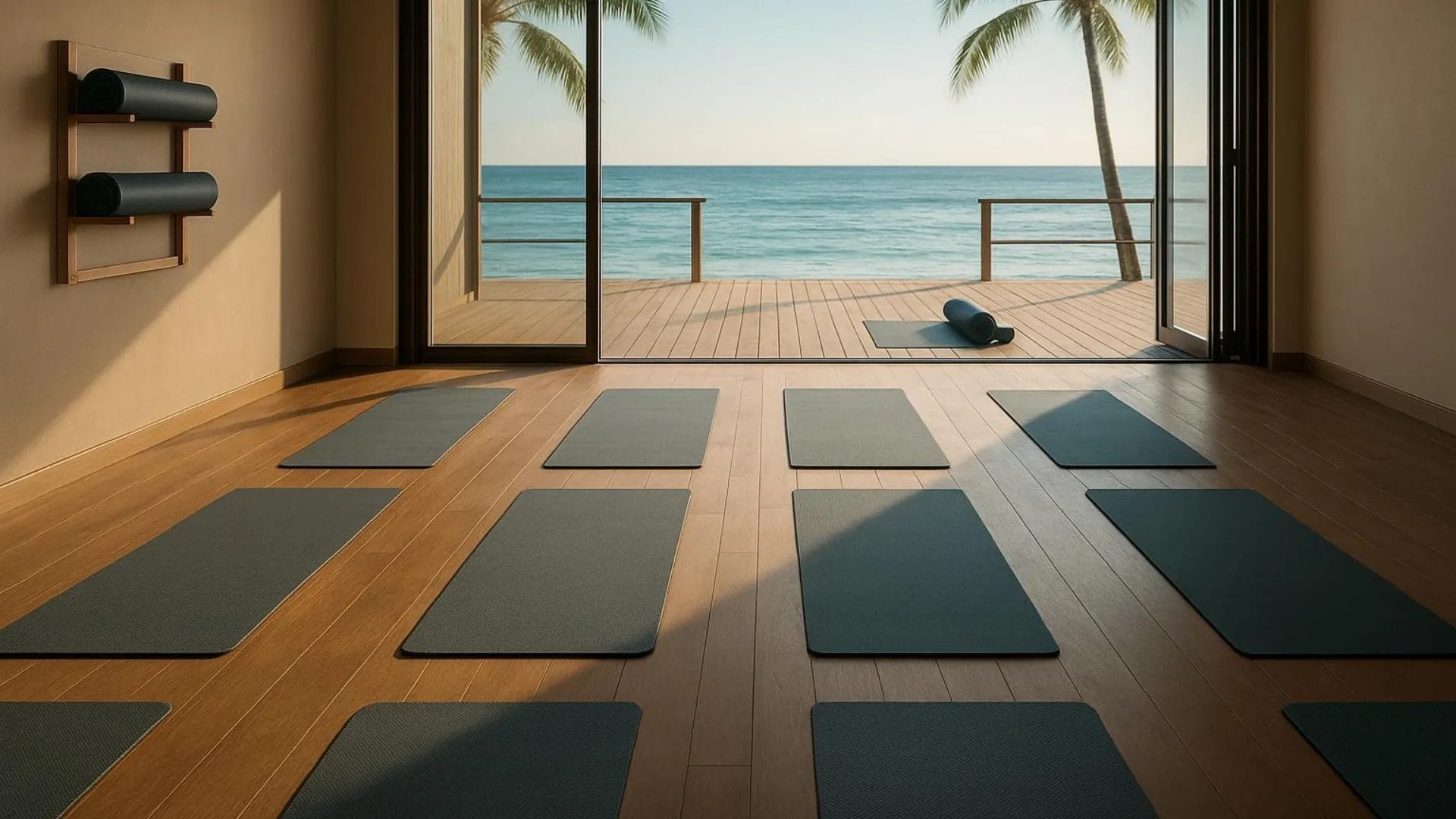
Background for outdoor selection: practitioner/manufacturer articles suggest PVC travel/folding mats are more forgiving outdoors around UV/heat/sand; see Kurma’s 2025 travel/outdoor notes such as how travel destinations influence your yoga mat. For broad consumer editorial context on grip/cushion trade‑offs across categories, 2026 roundups like LiveScience’s best yoga mats can help procurement teams understand market positioning (use as qualitative background, not a compliance citation).
Facility safety context: As a general life‑safety orientation, NFPA’s explainers show code emphasis on building systems rather than portable goods; for example, see NFPA’s blog on opening protective ratings (2021). Always confirm local AHJ interpretations before adding flame‑spread requirements to your mat specs.