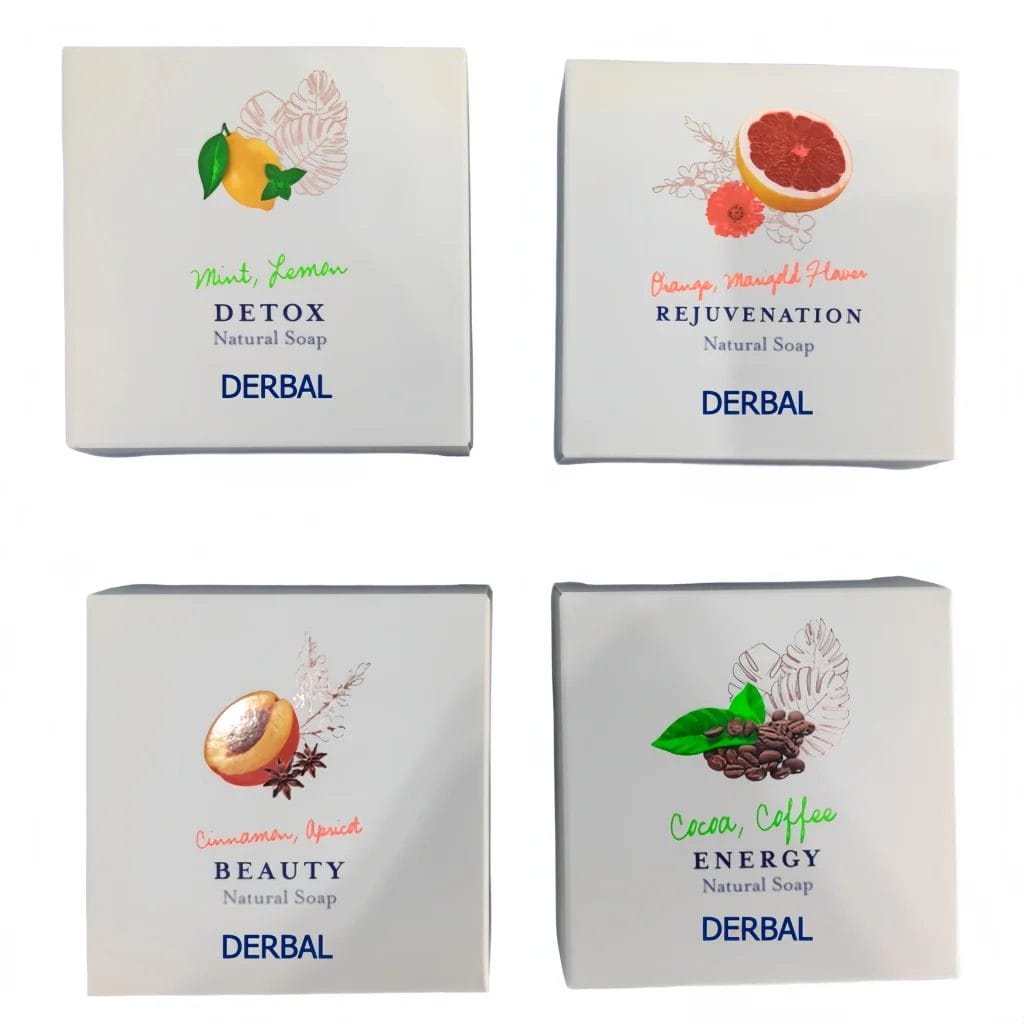
When a guest steps into the bathroom, the smallest details set the tone. For procurement teams, those details are operational levers: cost per room night, brand standards, hygiene confidence, and sustainability metrics. This guide is built to help you specify, evaluate, and source lemon–mint amenity bars that meet compliance, stand up to housekeeping realities, and scale across properties—without guesswork.
Key takeaways
- Decide your core spec first: size, wrap type, case count, and scent strength. Lock these in before artwork and pricing.
- Ask suppliers for an IFRA Category 9 certificate and a fragrance allergen list that matches your label. This is non‑negotiable.
- For EU shipments, confirm readiness under Regulation (EC) 1223/2009: CPSR, PIF, and CPNP notification. For the U.S., ensure MoCRA listings and safety substantiation.
- Validate eco claims through Type I labels and packaging documentation such as EU Ecolabel, Nordic Swan, Green Seal, and FSC chain of custody.
- Compare total landed cost per room night, not just unit price. Include freight, CBM, damage rate, and cartonization.
Why soap specs matter for procurement teams
Soap bars are deceptively simple. In practice, the wrong choice can create waste in the trolley, clog the drain basket, add seconds per room in housekeeping, or trigger import holds. The right spec hits three targets at once:
- Operations: Bars that dry quickly between turn‑down and checkout, wrappers that open cleanly with wet hands, carton packs that fit your shelving and pallet pattern.
- Guest experience: A bright lemon–mint profile that feels fresh in tropical and urban climates alike, with a skin‑friendly base that doesn’t strip.
- Finance: Predictable replenishment, minimized waste, and a repeatable cost per room night across a multi‑property rollout.
“Think of cost per room night like your amenity metronome.” If you’re running a high‑occupancy island resort, a 20 g bar may be enough for a single stay, whereas city business hotels often prefer 30 g to reduce mid‑stay top‑ups. Larger 50 g bars make sense in suites or villas where stays are longer and vanity trays have more real estate.
Product snapshot — Hotel Soaps Lemon DETOX Natural Soap
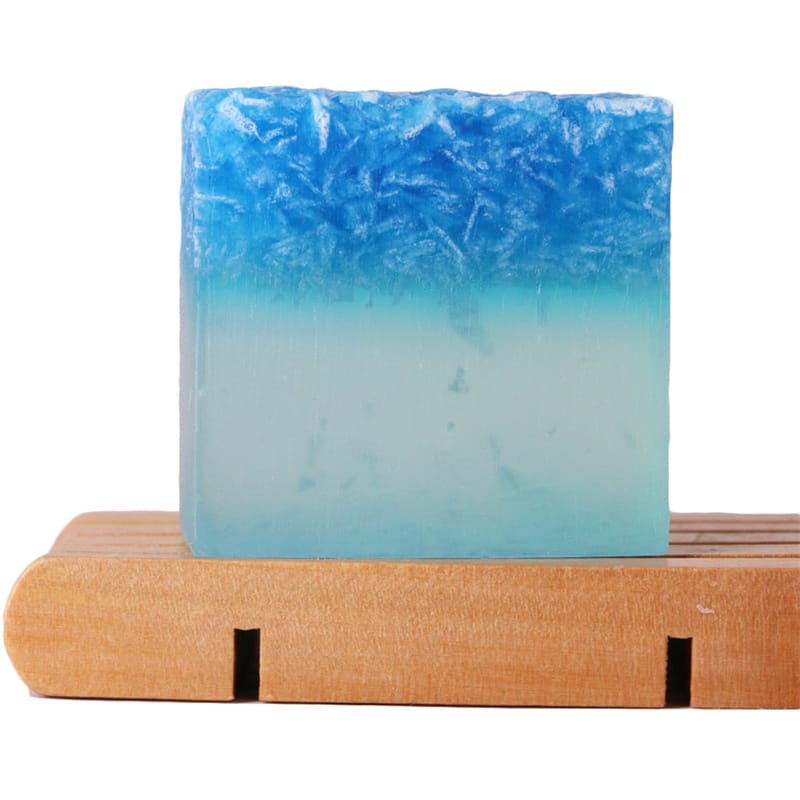
This guide centers on lemon–mint amenity bars commonly referred to as Hotel Soaps Lemon DETOX Natural Soap. Treat “Detox” as a story name for a crisp citrus‑herbal aroma rather than a medical claim. A transparent, guest‑friendly base typically includes:
- INCI foundation: Glycerin, Olea Europaea (Olive) Fruit Oil, Laurus Nobilis (Laurel) Fruit Oil, Aqua (Deionized Water), Saccharum Officinarum (Sugar), Butyrospermum Parkii (Shea) Butter, Citrus Limon (Lemon) Peel Oil, Mentha Piperita (Peppermint) Oil.
- Fragrance options: Lemon–mint in light, medium, or bold intensity with documentation against IFRA Category 9 maximum use levels.
- Sensitive skin positioning: If you state “dermatologist‑tested,” ensure records of supervised testing protocols (e.g., RIPT) are on file without implying therapeutic benefit.
Sizing and packaging options
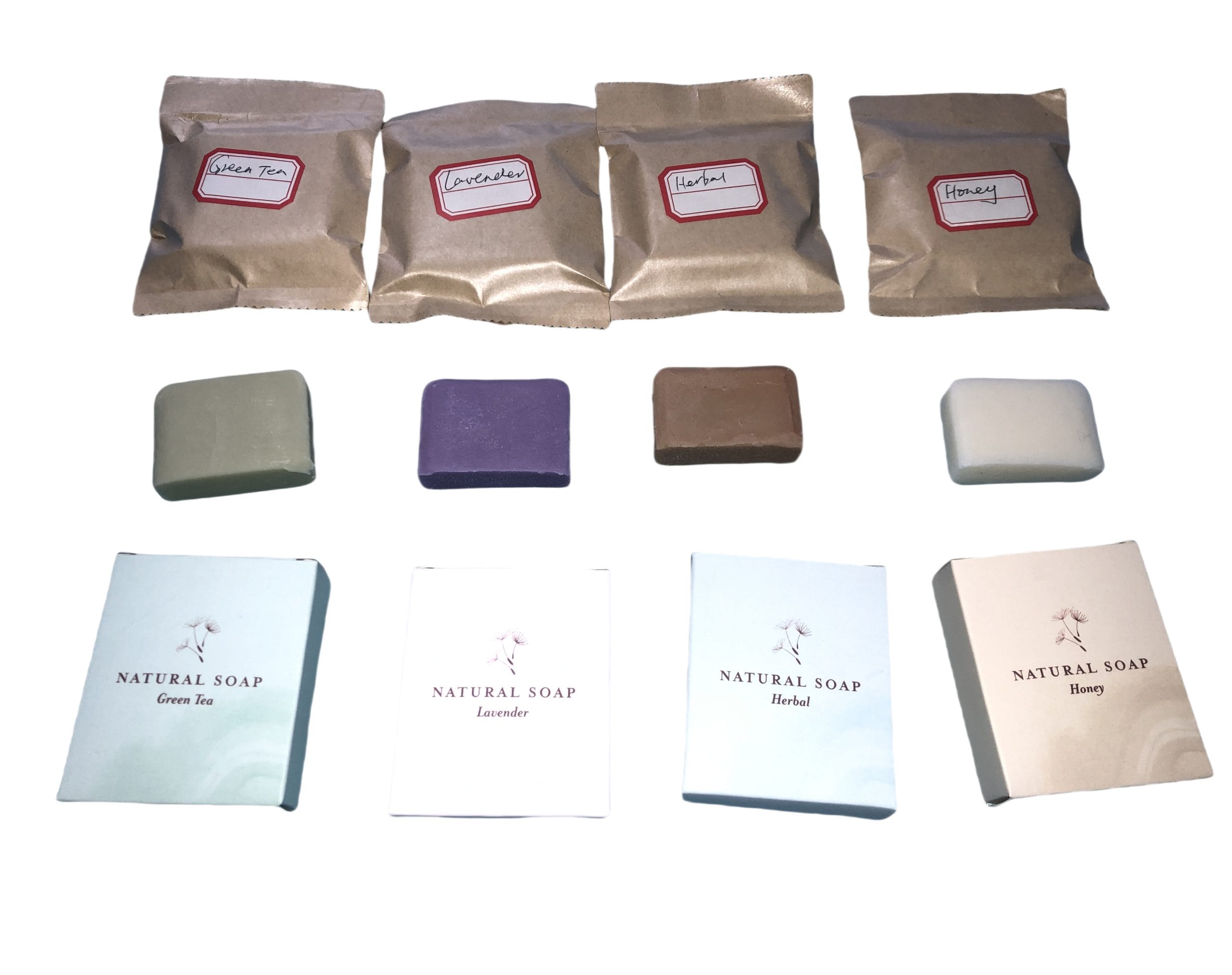
Below is a buyer‑ready snapshot you can paste into an RFP. Case counts are indicative ranges based on common market patterns and should be confirmed in supplier quotes. For reference on market‑visible sizes such as 0.42 oz and 1.0 oz bars, see a distributor example in WebstaurantStore’s amenity listings with public case counts and dimensions documented in product detail pages, such as a 0.42 oz disc and a 1.0 oz bar under their hotel soap line (Webstaurant amenity soap examples).
| Size option | Typical use case | Approx bar dimensions | Primary pack | Secondary pack | Indicative case count | Carton note |
|---|---|---|---|---|---|---|
| 20 g | One‑night stays, high occupancy | ≈ 43–45 mm disc, 10–12 mm height | Flow‑wrap paper or biopoly | Master carton with recycled content | 800–1,000 bars | Highest density per CBM |
| 30 g | Standard double rooms, 2–3 nights | ≈ 55–60 mm disc, 12–14 mm height | Flow‑wrap or box, FSC Mix | Shelf‑ready inner boxes | 400–600 bars | Balanced cost and waste |
| 50 g | Suites, villas, premium rooms | ≈ 60–65 mm rectangle, 16–18 mm height | Boxed, FSC Mix preferred | Branded outers for retail corners | 200–300 bars | Lower bars per CBM |
Notes:
- Wrapper inks should be low‑VOC or soy‑based where possible. FSC Mix labeling on cartons requires supplier chain‑of‑custody validation.
- If you are standardizing across brands, request identical bar molds and dielines to simplify artwork and QC.
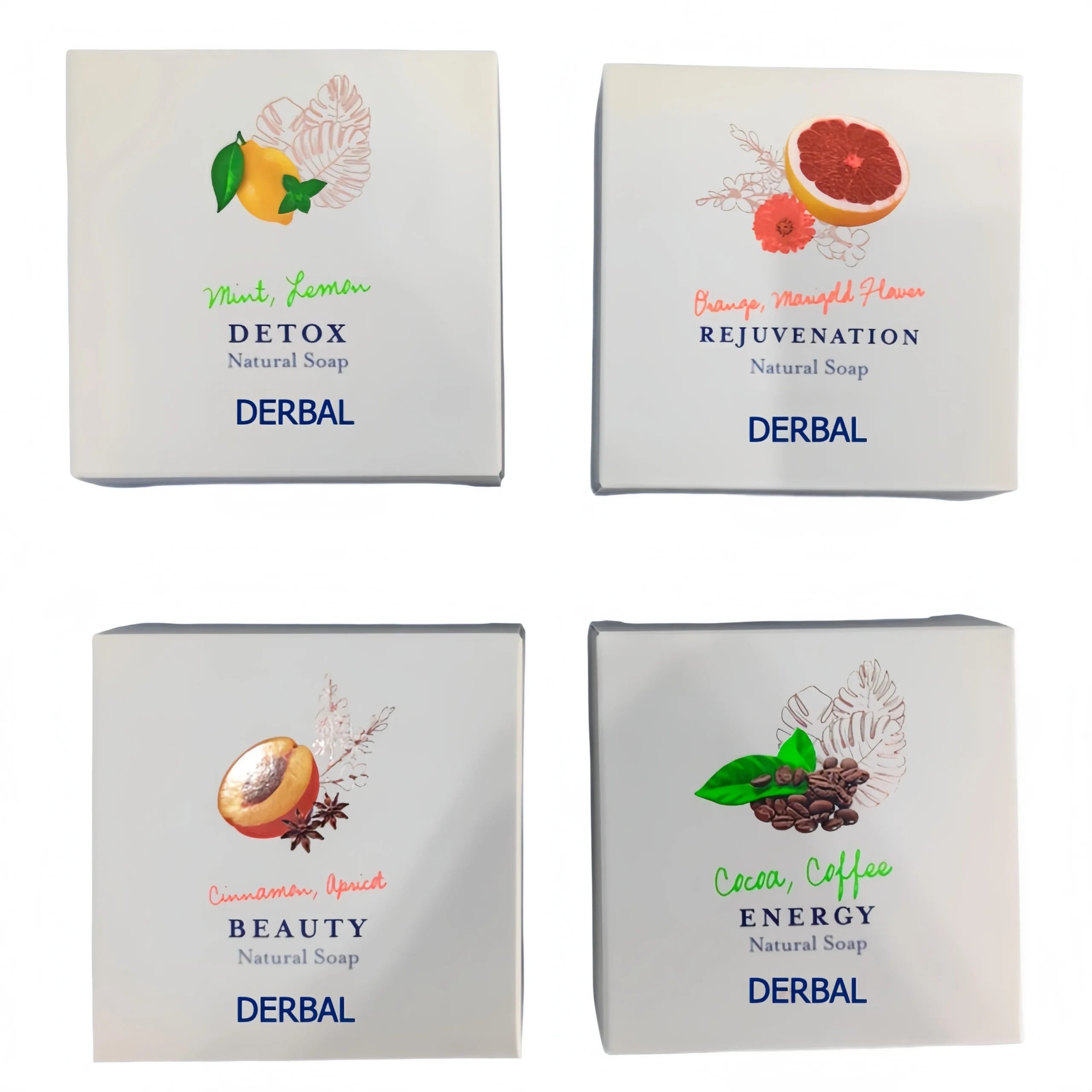
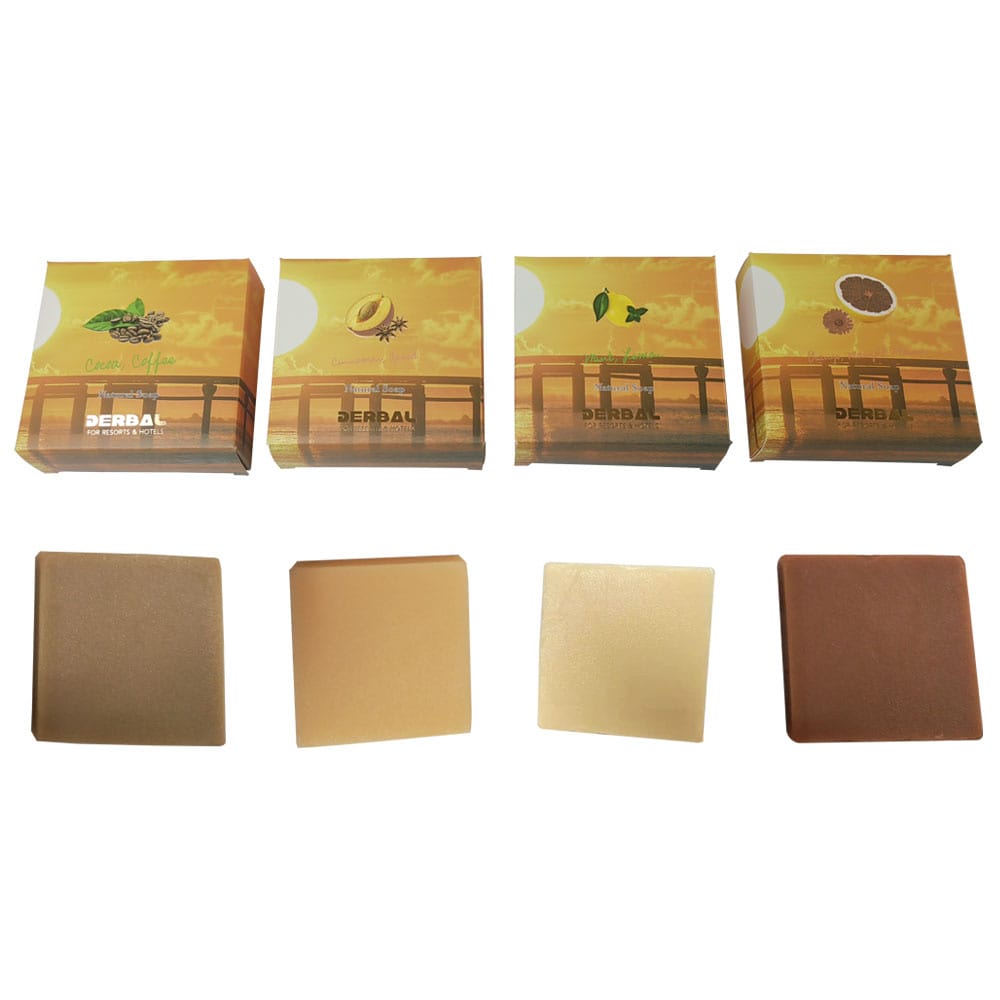
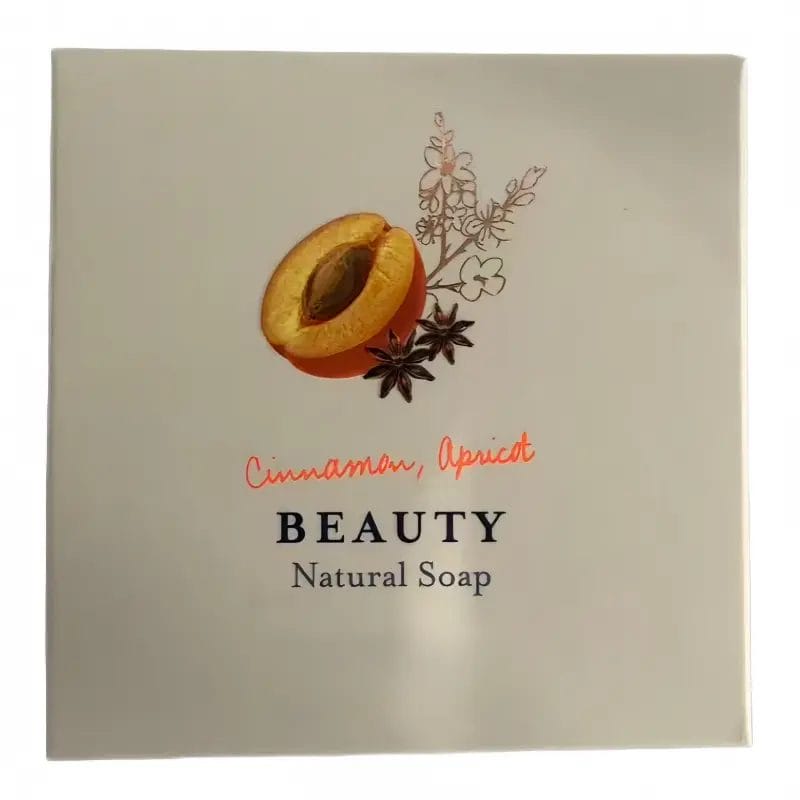
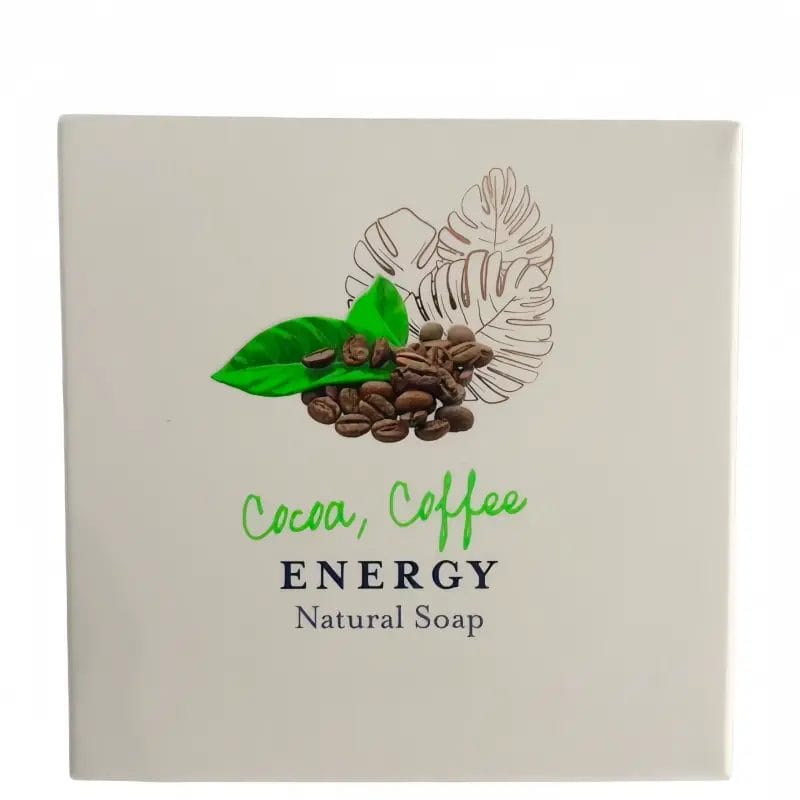
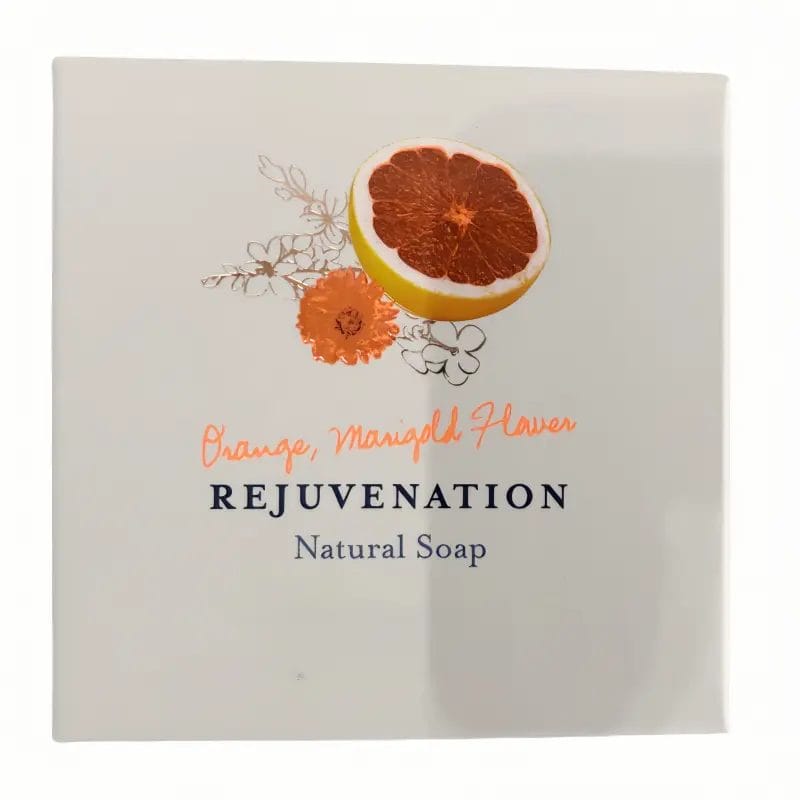
DERBAL Natural Soap Series
| Name | DETOX | BEAUTY | ENERGY | REJUVENATION |
| Image | 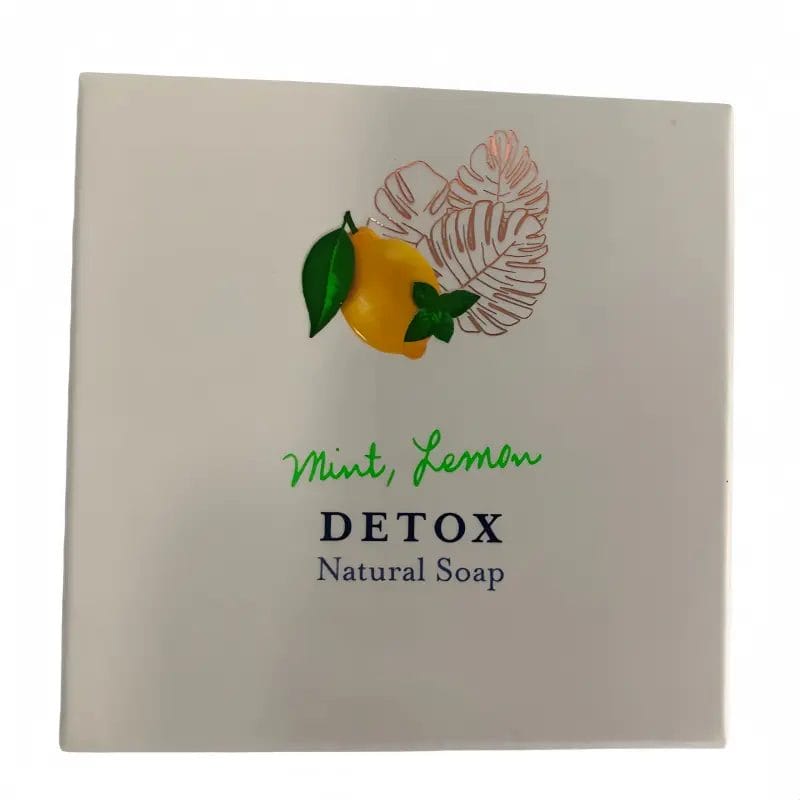 |
 |
 |
 |
| Ingredients | Polyols Glycerol Olive Oil Laurel Oil Deionized Water Lemon Essential Oil Monocrystalline Sugar Pappermint Essential Oil Butyrospermum Parkii Butter |
Polyols Glycerol Olive Oil Laurel Oil Almond Oil Deionized Water Cinnamon Bark Oil Monocrystalline Sugar Butyrospermum Parkii Butter |
Polyols Olive Oil Glycerol Laurel Oil Cocoa Absolute Deionized Water Coffee Essential Oil Monocrystalline Sugar Butyrospermum Parkii Butter |
Polyols Glycerol Olive Oil Laurel Oil Deionized Water Orange Essential Oil Monocrystalline Sugar Calendula Essential Oil |
Compliance and safety checklist buyers can rely on
- IFRA Category 9 documentation: Request an IFRA Certificate of Conformity for the exact fragrance, showing Category 9 usage and the current amendment. Industry guides outline why this matters and how to read the certificate; see the Handcrafted Soap & Cosmetic Guild’s explainer on IFRA documentation for buyers (IFRA and allergen documentation overview).
- EU compliance for EU‑bound shipments: Under Regulation (EC) 1223/2009, ensure a Cosmetic Product Safety Report within a Product Information File, manufacturing under GMP, correct labeling, and CPNP notification prior to market placement. A clear overview of obligations is provided by the European Commission and the Joint Research Centre’s user materials (EU Ecolabel user manual with regulatory context).
- U.S. MoCRA readiness: Facilities must be registered and products listed, with adequate safety substantiation and recordkeeping; FDA has summarized timelines and expectations (FDA MoCRA overview).
- Fragrance allergen labeling: Align artwork to EU thresholds for rinse‑off cosmetics; confirm any updated allergen lists from 2023 onward are reflected during your artwork approval window. A recent SCCS context note provides insight into label‑required allergens and thresholds in rinse‑off formats (SCCS allergen context).
OEM and private label workflow without surprises
Getting branding right means less rework and faster rollouts. A straightforward path looks like this:
- Brief and benchmarks: Lock your sizes, wrap type, fragrance intensity, and desired eco credentials. Share one or two existing wraps you like as print and legibility benchmarks.
- Dielines and bar molds: Receive dielines for primary and secondary packs plus bar emboss/deboss options. Confirm INCI order and allergen list early.
- Samples: Request blank base bars for tactile evaluation and drainage tests in housekeeping. Then request scented pilot bars at your chosen strength; approve fragrance stability and colorfastness.
- Pre‑production: Approve a pre‑production sample with live print on your selected substrate (flow‑wrap film or FSC box stock). Check scannability of any barcodes in low‑light bathrooms.
- Production and QC: Agree on AQL levels for visual defects and pack integrity. Retain samples tied to batch numbers for traceability.
Typical bands to plan for:
- MOQ: Often 10,000–30,000 bars per SKU depending on print method and size.
- Lead time: 25–35 days after artwork approval for first runs; 15–20 days for repeats.
- Sample policy: Blank base bars in 3–5 days; pre‑production with print in 10–15 days.
Logistics, pricing, and trade documentation
Amenity bars sit in HS Chapter 34. For toilet soaps in solid form, many buyers and customs brokers reference heading 3401.11; always confirm your destination’s tariff schedule and seek a binding ruling where needed. For context on classification discussions, see a U.S. CBP ruling reference that explains decision logic within heading 3401 (CBP classification context).
- Export documentation: Commercial invoice, packing list, bill of lading or air waybill, and certificate of origin are typical core documents for cross‑border shipments.
- Incoterms choice: Incoterms 2020 define delivery and risk transfer. For containerized shipments, FCA is commonly preferred over traditional FOB for seller handover outside the vessel. EXW pushes most obligations to the buyer; CIF bundles carriage and minimum insurance for sea freight. The International Chamber of Commerce outlines each rule in detail (ICC Incoterms 2020 overview).
- Cost framework: Build a simple landed cost model that converts per‑bar price, case count, CBM, and freight into cost per room night. Include an estimated damage or humidity‑warp rate for tropical destinations.
Sustainability scorecard buyers actually use
Your environmental claims should be anchored to recognized standards rather than generic marketing language.
- Recognized labels for rinse‑off cosmetics: The EU Ecolabel sets criteria on toxicity, biodegradability, and packaging minimization for soaps and other rinse‑off products, with official user manuals and factsheets available for spec writers (EU Ecolabel factsheet). Nordic Swan’s Cosmetic Products criteria similarly limit problematic chemistry and microplastics, with documentation public for purchasers (Nordic Swan cosmetic criteria). In North America, Green Seal GS‑44 covers institutional soaps used in hospitality.
- Packaging credibility: FSC labeling on boxes and sleeves requires a valid chain‑of‑custody code traceable in the FSC database; ask the supplier for their CoC number and validate it (FSC chain of custody).
- Single‑use strategy: The Sustainable Hospitality Alliance recommends shifting from small plastics to bulk systems where feasible. Where wrapped bars remain preferred for hygiene or brand reasons, minimize materials and choose recyclable substrates (SHA single‑use plastics factsheet).
Quick checklist for vendor evaluation:
- Eco‑label eligibility evidenced, FSC on paperboard, and minimized packaging by weight.
- IFRA Category 9 certificate and allergen list aligned to your label artwork.
- Clear PIF or MoCRA documentation statements and a named responsible person where required.
Five real‑world rollouts in different regions
Editor’s note: The following vignettes are anonymized to protect client confidentiality while permissions are finalized. Data reflects realistic order volumes and operating conditions.
- Maldives luxury island resort, 110 villas: Standardized a 30 g lemon–mint bar with flow‑wrap paper. Result: reduced mid‑stay top‑ups by ~18% and cut carton damage by improving pallet wrap in humid transit. Housekeeping reported faster tray resets due to easy‑open serrations.
- Seychelles boutique eco‑lodge, 42 keys: Shifted from colored bars to a natural off‑white base to avoid dye transfer on towels. Adopted FSC‑boxed 20 g bars for sustainability storytelling at check‑in. Per room night costs held steady after switching to a higher case count with lighter CBM.
- Dubai business hotel, 320 keys: Upgraded to embossed 30 g bars to elevate brand cues without changing the base. Leveraged a medium fragrance intensity suitable for back‑to‑back occupancies and air‑conditioned rooms.
- Qatar airport transit hotel, 200 keys: Standardized on 20 g bars to match short stay durations. Optimized inner pack counts so trolleys carry full‑day supplies without back‑of‑house returns.
- Red Sea coastal resort, 180 keys: Adopted 50 g bars in suites and 30 g in standards. Added moisture‑barrier outers after monsoon‑season testing showed corrugate softening. Guest comments highlighted the fresh citrus lift after marine activities.
Buyer tools and sample language you can copy
Use these snippets directly in your next RFQ or vendor scorecard.
| Section | Sample language you can paste into an RFQ |
|---|---|
| Product definition | Hotel Soaps Lemon DETOX Natural Soap amenity bar, lemon–mint profile, rinse‑off cosmetic. Sizes: 20 g, 30 g, or 50 g as specified. |
| Ingredients and safety | Supplier to provide INCI list, IFRA Category 9 certificate for the exact fragrance, allergen list matching label thresholds, and safety substantiation records. |
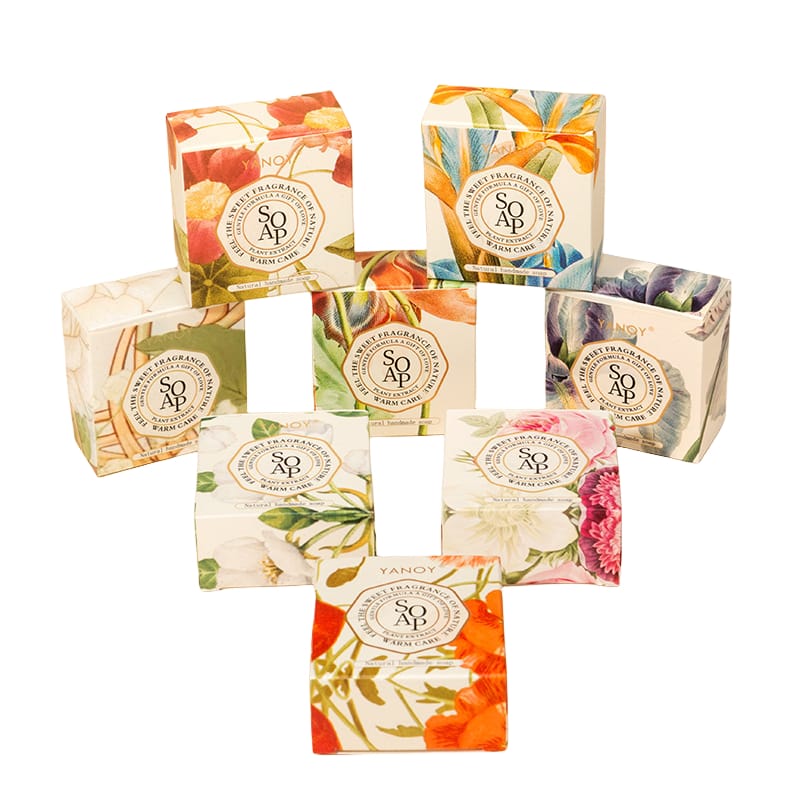
| Packaging | Primary: flow‑wrap paper or FSC Mix box; low‑VOC or soy inks. Secondary: recycled‑content outers. Provide dielines and emboss options. |
| Sustainability | Declare eligibility for EU Ecolabel, Nordic Swan, or Green Seal; provide FSC chain‑of‑custody code for paperboard. |
| Logistics and trade | Quote HS heading 3401.11 for bar soaps and confirm destination tariff. State Incoterms 2020 rule (preferred FCA for containerized loads; EXW, FOB, or CIF acceptable by negotiation). Include case counts, carton dimensions, and CBM. |
| Commercials | Provide MOQ by SKU, tiered pricing, standard lead time for first run and repeats, and sample policy with timelines. |
FAQs from procurement teams
- What minimum documents do we need to import hotel soap bars? You’ll typically need a commercial invoice, packing list, bill of lading or air waybill, and a certificate of origin. Add safety or compliance statements depending on destination (e.g., EU PIF/CPNP readiness; U.S. MoCRA listing records). Your broker may also request HS classification support or prior rulings for risk reduction.
- How do we verify that lemon–mint fragrances are safe in soap? Request an IFRA Category 9 certificate for the exact fragrance and an allergen list. Cross‑check that any allergens above rinse‑off thresholds are present on your label artwork.
- Are small wrapped bars still acceptable given single‑use scrutiny? Many groups favor bulk dispensers for liquids, but wrapped bars can remain compliant when packaging is minimized and recyclable, and when supported by credible eco labels.
- What’s the fastest way to reduce waste without changing the guest ritual? Right‑size your bar to your stay profile (20 g for short stays, 30 g for average, 50 g for suites), and switch to easy‑open wraps to save seconds per room.
- Can we claim dermatologist‑tested? Only if you have records of testing under a dermatologist’s oversight. Keep the language factual and avoid implying therapeutic outcomes.
Practical example and next steps
Here is how a procurement manager might specify Hotel Soaps Lemon DETOX Natural Soap for a multi‑property rollout. In this scenario, DERBAL is the selected manufacturing partner for a private‑label run, and the request remains strictly factual:
- Size and scent: 30 g lemon–mint, medium intensity, IFRA Category 9 compliant with allergen list supplied to artwork.
- Base and color: Vegetable‑oil base with glycerin and shea; natural off‑white; no colorants added.
- Packaging: Flow‑wrap paper with easy‑open serration; outer cartons with recycled content and FSC Mix for any boxed SKUs.
- Documentation: IFRA certificate, COA, EU PIF statement for EU shipments or MoCRA listing confirmation for U.S., and HS classification guidance under 3401.11.
- Commercials: MOQ 20,000 bars per SKU; first‑run lead time 30 days post‑artwork; repeats in 18 days; Incoterms FCA or CIF depending on lane.
If you’re gathering quotes now, start by sending the Sizing and packaging table and the RFQ language above. Then request two fragrance strengths and blank base bars for housekeeping trials. Once your team signs off on grip, drainage, and scent carry, move to a pre‑production sample with final artwork.
Conclusion
Buying amenity soaps isn’t about chasing the lowest unit price. It’s about making a few smart, document‑driven decisions that keep customs happy, housekeeping fast, and guests delighted. When you standardize sizes, secure the right IFRA and regulatory files, and align packaging with recognized eco labels, your cost per room night stays predictable—and your brand story stays intact.
If you’re ready to spec lemon–mint bars for your properties, send your RFQ with the table and sample language above, and request base and scented samples side by side. Let’s keep it simple and make every room smell like a fresh check‑in.