A guest steps into a calm, steam-softened bathroom and finds a natural, plant-fiber loofah beside elegant refillable dispensers. The tactile feel signals “spa-grade” care, while the paper band and compostable wrap speak to a plastic-light philosophy. If you’re leading OS&E or spa procurement, you’re likely asking: can a Hotel Loofah Sponge elevate the stay experience and align with sustainability goals—without complicating hygiene or housekeeping? Here’s the practical playbook.

Key takeaways
- Natural loofah is a plant-based, biodegradable fiber; pair it with FSC paper or certified compostable wraps to support plastic reduction and credible sustainability storytelling.
- In-room loofah should be treated as single-guest-per-stay for hygiene; use sealed, individually wrapped minis and replace at checkout. Spa tools need strict sanitation protocols or single-use variants.
- Select from six hotel-ready variants—compressed pads, oval sponges, mitts, rope formats, blend pads, and mini amenity rounds—based on guest profile, room type, and housekeeping cadence.
- Verify packaging claims via recognizable programs (BPI, TÜV Austria) and keep documentation (FSC chain of custody, batch/lot codes) audit-ready.
- Build a clear procurement path: specs, EO-sterilization (if validated), MOQ tiers, lead time, and branding on paper bands—then pilot in 1–2 room types before scaling.
What loofah is and why hotels are reconsidering it
Loofah (Luffa aegyptiaca/cylindrica) is a dried, three-dimensional plant fiber network that forms a springy, porous texture ideal for gentle physical exfoliation. Its lignocellulosic structure, detailed in materials literature, underpins its eco-friendly profile and compatibility with biodegradation pathways. Researchers describe luffa as a low-density, non-toxic, plant-derived material with a distinctive reticular architecture that wicks water and dries readily, though composting timelines aren’t typically quantified in public studies. For background on structure and composition, see a 2017 materials analysis and a 2021 composition review hosted on the U.S. National Library of Medicine’s platform, which frame loofah’s natural-fiber credentials without asserting certification-level composting rates.
Hygiene deserves equal attention. Dermatology authorities frequently caution that any porous bath accessory—natural or synthetic—can host microbial growth if left wet. Consumer guidance from major clinics advises limited durations of use, thorough drying, and regular replacement. Adapting that guidance to hotels means designing conservative, clear SOPs: offer sealed, single-guest-per-stay loofah in rooms, replace at checkout, and avoid shared reuse. For spa areas, implement professional sanitation protocols compatible with natural fibers or specify single-use for treatments depending on brand standards. This approach is risk-aware and guest-centric.
How Hotel Loofah Sponge programs elevate wellness
A well-chosen Hotel Loofah Sponge adds a small but noticeable ritual: a gentle scrub that leaves skin feeling fresh and invigorated—no medical claims, just a sensory lift. In wellness-forward properties, the tactile contrast of a natural loofah against warm water complements aromatherapy body washes and encourages guests to slow down. Think of it as a micro-ritual that quietly supports your spa narrative.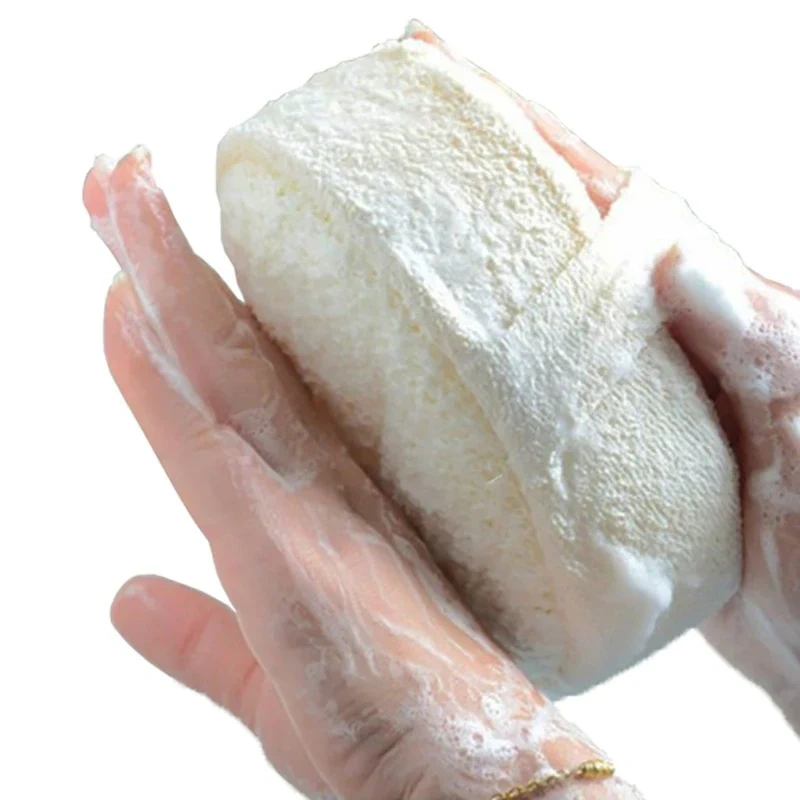
Hotels can weave this experience across touchpoints:
- In-room showers: Mini loofah rounds or slim pads—cleanly wrapped, placed beside refillable amenities.
- Villas and pool suites: A loofah-on-a-rope that hang-dries visibly between uses in a private setting, with per-stay replacement.
- Spa programs: Exfoliating mitts or dual-texture pads that create consistency between treatment rooms and retail kits.
To align expectations with spa standards, anchor your team on what “spa-grade feel” means: medium, even texture for body use; no harsh bleaching; snug edging or backing that feels stable in wet hands. For broader spa-wellness context and standards language, review the Luxury Hotel Spa Supplies overview, which many operators use to calibrate guest-touch surfaces and textures: https://www.resortssupplies.com/spa-wellness/
Sustainability and certification checklist for packaging
Sustainability claims resonate when they’re verifiable. For loofah itself, it’s accurate to state it’s plant-based and biodegradable; however, avoid promising specific composting timelines without data. For packaging, lean on recognized standards and keep documentation on file.
Certification baselines and what to verify in supplier documents:
| Claim on packaging | What to verify | Notes for hotels |
|---|---|---|
| Industrially compostable film | Certification under ASTM D6400 (U.S.) or EN 13432 (EU) | Confirm valid certificate number and scope; ensure on-pack labeling to reduce contamination in compost streams. |
| BPI certified | Active listing in BPI database and labeling usage rights | BPI adds ingredient-level checks and PFAS restrictions; ensure supplier’s artwork follows BPI labeling guidance. |
| TÜV Austria OK Compost | Certificate (Industrial or Home) with product family listed | Clarify whether certification covers the exact film/laminate and thickness used for your wraps. |
| FSC paper band/box | Chain-of-custody ID and invoice references | Keep COC trail through your distributor; align in-room messaging with FSC for credibility. |
- Standards overview: Learn the core requirements behind U.S. industrial compostability in the ASTM D6400 specification. For a practical certification route and labeling rules, consult the Biodegradable Products Institute’s program pages. Properties operating in the EU should also review EN 13432-aligned programs such as TÜV Austria’s OK Compost.
Linking packaging options with broader eco-programs often includes paper-based amenity kits or FSC-certified holders. See a working example of an eco-packaging approach in the Hotel Bamboo Amenity Kit—useful for understanding materials, labeling, and scope of claims: https://www.resortssupplies.com/product/hotel-bamboo-amenity-kit-fsc-box-biodegradable/
Product variants and specs guide
No single format fits every property. The right mix depends on guest profile, room type, and housekeeping cadence. Below are six core variants that cover most hotel needs, each described with procurement-relevant specifications. Use the selection table to map use-cases.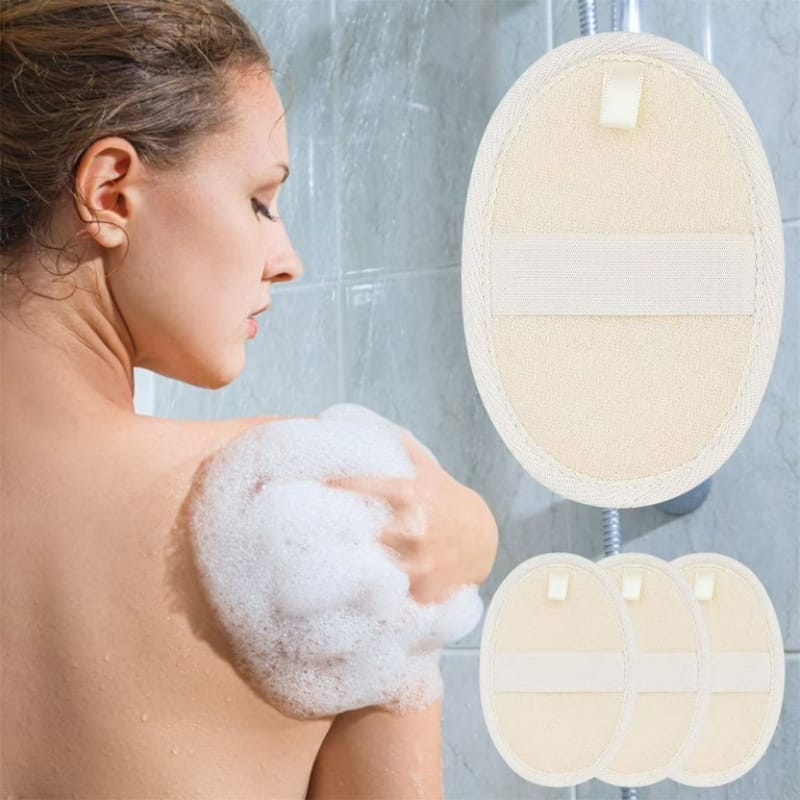
Natural loofah bath sponge
A classic oval or cut-cylinder of natural loofah fiber, unbleached or gently whitened for cosmetic uniformity. Typical dimensions range from 7–10 cm diameter and 2–4 cm height when wetted and compressed. Many hotels add a rope or eyelet for optional hanging in villas. Prioritize an even, medium grain for a spa-grade feel, and request batch consistency photos during sampling. Packaging usually involves a paper band or tuck-in box; in-room programs favor sealed wraps to signal hygiene.
Key specs hotels review: fiber density/grade (fine/medium/coarse), finish (unbleached vs cosmetic whitening), presence of rope/eyelet, edge smoothing or trimming quality, and moisture-dry cycle behavior in housekeeping tests.
Compressed loofah pad
A flat, round (6–9 cm) or rectangular (approx. 8×12 cm) pad that hydrates to a cushioned texture in use. Edges are often finished with cotton binding; the back can be plain loofah or laminated to cotton or bamboo viscose. This format ships and stores efficiently—pads lie flat in cartons—making it ideal for high-occupancy hotels that track per-stay amenity counts closely. Brands often prefer this for its minimalist look next to refillable dispensers.
Operational advantages: clean inventory counts; faster staging by housekeeping; consistent visual presentation. For sensitive-skin positioning, request fine-grade loofah with a softer backing.
Exfoliating loofah mitt
A glove-style format (single or double-sided) with an inner lining (terry/cotton) and an elastic cuff that stays secure with wet hands. The mitt enables controlled pressure and safer grip in showers or treatment rooms. Hotels with active spa menus use mitts to standardize exfoliation steps and sometimes retail a matching take-home version.
What to specify: size range (S/M/L), loofah grain (medium for body), lining material, stitching density, and labeling area on a paper band. Test how quickly the mitt dries when hung in a ventilated area to inform treatment turnover.
Loofah on a rope
Designed for villas and suites, this oblong or oval loofah includes a natural cord and reinforced knot so it can hang-dry between uses in a private environment. It’s typically replaced per stay but gives a lived-in, beach-villa accent that guests notice. Many operators add a minimalist swing tag with care guidance and disposal icons.
Procurement note: request pull testing on the rope/eyelet junction and confirm knot reinforcement to avoid breakage in humid, high-usage environments.
Loofah and cotton blend pad
A dual-texture pad: natural loofah on one side for gentle exfoliation and a soft cotton (or bamboo viscose) on the other for a buffing finish. Edge binding with cotton tape keeps the disc comfortable to hold. This is the go-to for properties catering to sensitive skin—you can position one side as “invigorating,” the other as “comforting,” without medical claims.
Buyer tip: sample multiple binding styles and stitch densities to find a grip that feels stable when hands are soapy.
Individually wrapped mini amenity loofah
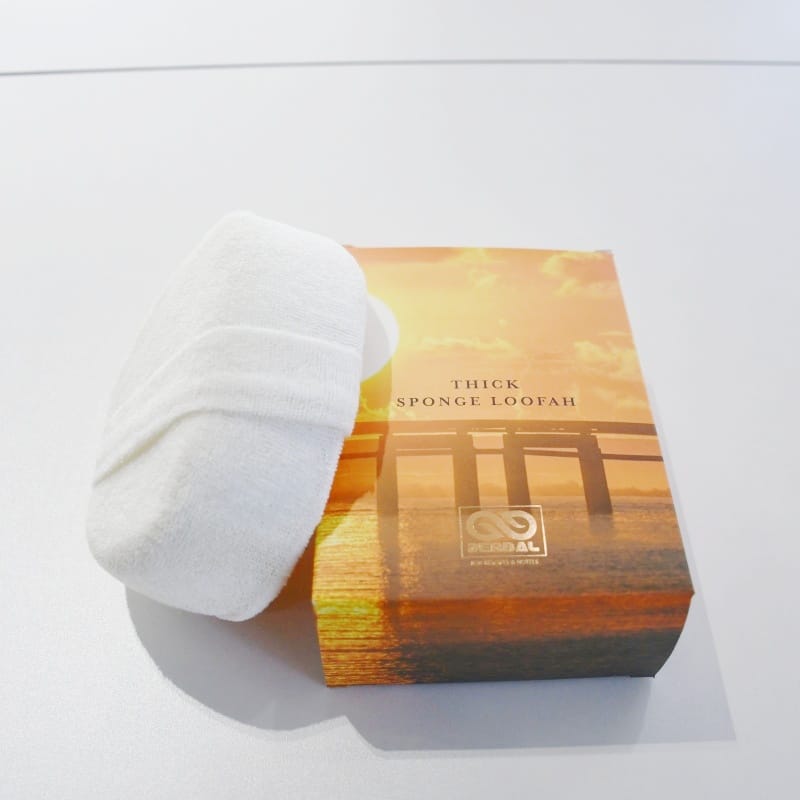
A 5–6 cm round mini, flow-wrapped in FSC paper or a certified compostable film. Ideal for sealed, single-guest-per-stay use in rooms, with a batch/lot code printed for traceability. Some suppliers can offer EO (ethylene oxide) pre-sterilization prior to packaging—use this only when validated with documentation and never imply ongoing sterility after opening.
Hygiene signal: the sealed wrap is a clear visual cue. Many hotels place minis horizontally in amenity trays for easy turndown inclusion.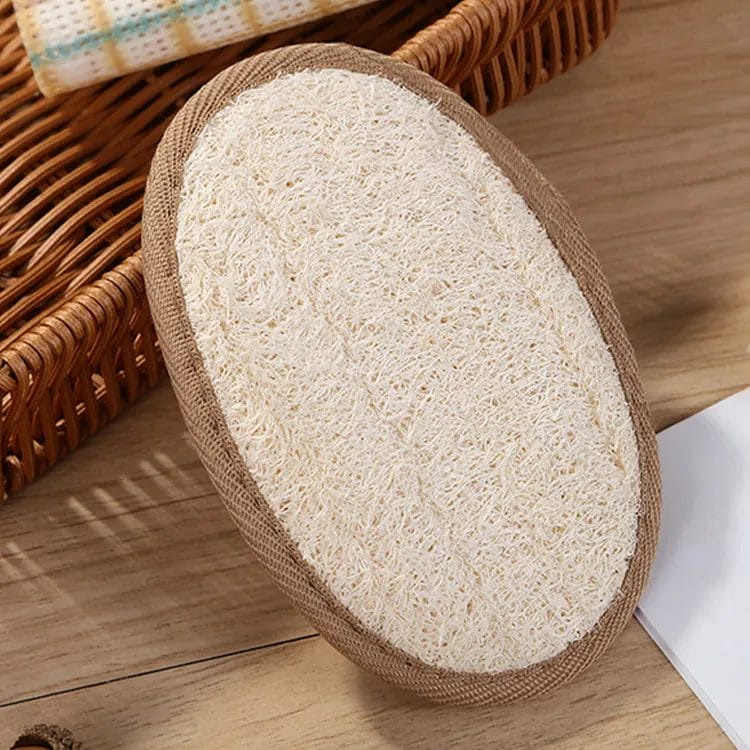
Selection helper: match common scenarios to recommended SKUs.
| Use-case | Recommended format | Notes |
|---|---|---|
| Standard rooms, high turnover | Compressed loofah pad (6–7 cm round) | Flat-pack, quick counts, sealed wrap. |
| Premium suites | Natural loofah bath sponge (oval) | Medium grain, optional rope, paper band + wrap. |
| Villas with outdoor showers | Loofah on a rope | Replace each stay; add swing tag care guidance. |
| Spa body scrub treatment | Exfoliating loofah mitt | Specify lining and size; define sanitation or single-use. |
| Sensitive-skin positioning | Loofah and cotton blend pad | Dual-texture narrative, gentle side emphasized. |
| Turndown or gift amenity | Individually wrapped mini | Sealed hygiene cue; lot-coded for traceability. |
Packaging, presentation and guest communication
Presentation is part of the signal. A crisp paper band or a compact FSC box communicates care before the guest even picks up the product. For in-room displays, properties often use clear or frosted containers that keep items visible but protected from overspray and steam.
If you’re upgrading bathroom organization, browse how luxury acrylic holders are used to segment amenities cleanly and speed cleaning cycles. Many teams standardize on a minimalist acrylic amenity box or tray for quick resets and brand-consistent visuals: https://www.resortssupplies.com/product/luxury-acrylic-hotel-amenity-box-holder/
Guests also need micro-guidance. Short, elegant copy placed beside or on the package helps:
- “This natural loofah is intended for your personal use during this stay. Please leave it for responsible disposal.”
- “Packaging uses certified fibers—help us reduce plastics by keeping dispensers in use.”
For an overview of how amenity programs influence guest perception and SOPs beyond bath accessories, see the Hotel Bathroom Amenities & Guest Experience explainer: https://www.resortssupplies.com/hotel-bathroom-amenities-guest-experience/
Hygiene, testing and replacement SOPs
Best-practice recommendations for hospitality (adapted from dermatology-informed consumer guidance and hotel hygiene norms):
- In-room items are for single-guest-per-stay use. Provide sealed, individually wrapped minis or pads, then remove and replace at checkout.
- Avoid in-room shared reuse. Loofah-on-a-rope in villas can visually hang-dry, but still replace it per stay.
- For spa treatments, either use single-use items or establish validated sanitation: detergent wash, thorough dry in ventilated space, and rotation stock to ensure complete drying between sessions.
- Storage: keep unopened stock dry and ventilated; rotate by lot code; avoid long-term damp exposure in back-of-house.
- EO sterilization may be appropriate for certain individually wrapped SKUs prior to distribution. Only reference EO when supported by supplier documentation aligned with recognized standards for process validation and residuals; sterility does not persist after the guest opens the wrap.

Why so conservative? Major clinical sources highlight that porous bath accessories can harbor microbes if kept damp, and they recommend routine replacement, careful drying, and avoiding use immediately after shaving or on sensitive areas. These cautions translate into single-stay policies in hospitality to reduce risk without burdening housekeeping.
For foundational references on hygiene risks and care recommendations, review clinic guidance that describes loofahs as potential “bacterial breeding grounds” when left wet, and consumer health resources that advise frequent replacement and thorough drying. Hotels adapt these consumer recommendations into professional SOPs to meet brand standards.
Procurement playbook
A clean procurement process protects guest experience, reduces back-of-house friction, and prevents greenwashing. Use this checklist during RFP and sampling.
- Define materials and grades: natural luffa species noted; unbleached or gently whitened; grain for body vs face.
- Finalize dimensions and density: standardize across room types (e.g., 6–7 cm mini rounds; 8×12 cm pads; 7–10 cm ovals). Request batch photos and tolerance ranges.
- Hygiene and safety: in-room sealed wrap; optional EO pre-sterilization only with documentation; single-stay policy defined.
- Packaging and labeling: FSC paper bands/boxes; compostable films with BPI or TÜV Austria OK Compost certificates; on-pack labeling and lot codes.
- Branding: logo on paper band, swing tag, or box; avoid direct printing on loofah.
- Documentation: QA certificates (e.g., ISO 9001), allergen statements (plant-based), MSDS or equivalent if adhesives/backings are used, FSC chain-of-custody IDs, compostability certificates.
- Commercials and logistics: MOQ tiers by variant, lead time (typ. 20–35 days for customization), carton counts and cubic volumes, replenishment cadence.
- Pilot plan: sample in 1–2 room types for 30–60 days; gather housekeeping feedback on drying, turnover speed, and guest comments; confirm waste handling with facilities.
You may find it useful to verify spa-grade expectations and cross-supply feasibility through an established hospitality partner. For example, DERBAL can support eco-forward spa and amenity programs alongside packaging and presentation components without obligating a specific loofah SKU. Explore capabilities at DERBAL: https://www.resortssupplies.com/spa-wellness/
Case studies and outcomes
Named partner permissions vary by property and program maturity. If a named case is pending, present metrics transparently while protecting brand relationships. The following examples illustrate outcomes hospitality teams often track.
Luxury island resort, Indian Ocean-Reethi Faru Resort (anonymized; 78 villas; 6-month pilot)
- Program: Replaced synthetic mesh poufs with individually wrapped mini loofah rounds in all villas; spa switched to loofah mitts for a signature 45-minute scrub.
- Operations: Single-stay policy in rooms; spa used single-use liners over mitts; loofah-on-a-rope offered in select outdoor showers and replaced each stay.
- Outcomes: Housekeeping reported faster inventory checks (flat-packed minis vs assorted retail poufs). Guest comments referencing the “natural loofah” rose from near-zero to a small but consistent trickle in feedback forms. Procurement logged a net reduction in plastic packaging weight, driven by FSC paper wraps replacing poly bags; the exact weight reduction was verified via monthly waste reports.
- Scope under consideration: In-room mini loofah rounds for villas and a spa-standard loofah mitt for body scrub rituals.
- Measurement plan: track per-stay replacement counts, staff handling time, guest sentiment in post-stay surveys, and packaging waste by weight. Publication of results contingent on brand approval.
Cost, waste and ROI primer
Will a Hotel Loofah Sponge cost more than a synthetic pouf? Sometimes the unit price differs, but total value lives at the intersection of guest sentiment, waste reduction, and brand narrative. Here’s a simple way to frame it.
Assume a 200-room resort at 75% annual occupancy, offering individually wrapped mini loofah rounds in all rooms with per-stay replacement. You’ll buy roughly 54,750 units a year (200 × 0.75 × 365). If a mini loofah costs slightly more than a low-end mesh pouf, you might see a modest unit cost increase—but packaging weight typically drops when moving from poly bag to FSC paper wrap or certified compostable film, and your sustainability reporting gains specificity (lot codes, FSC IDs). Meanwhile, guest sentiment data may register distinct mentions of “natural” and “spa-grade,” small signals that support ADR over time.
Example assumption table (replace with your actual bids and reports):
| Variable | Example value | Notes |
|---|---|---|
| Occupied room-nights/year | 54,750 | 200 rooms × 75% × 365 |
| Unit cost (mini loofah) | $0.28 | Varies by MOQ and customization |
| Unit cost (mesh pouf) | $0.22 | Baseline comparator |
| Packaging type | FSC paper wrap | Replace poly bag |
| Packaging waste change | −35% by weight | Based on switch to paper wrap (verify locally) |
| Staff handling time change | −5 seconds/room | Flat pack speeds counts and staging |
| Guest feedback mentions | +0.3% of surveys | Track “loofah” keyword in NPS comments |
A simple ROI view adds qualitative value (brand alignment) and quantitative shifts (waste weight, handling seconds saved). If you maintain ADR elasticity assumptions, you can attribute a small portion of ADR resiliency to wellness signals—but keep it conservative and transparent.
Alternatives and when to choose them
Balanced procurement considers alternatives:
- Konjac sponges: Plant-based and notably gentle; frequently marketed as home-compostable within months, though peer-reviewed composting timelines are sparse. Best for facial use or properties with high sensitive-skin demand. Watch hygiene—same drying and replacement principles apply.
- Natural sea sponges: Durable and luxurious with careful harvesting; retailer claims sometimes suggest antibacterial tendencies, but rigorous evidence is limited. They can be excellent for spa retail and premium suites if sanitation protocols are robust.
- Sisal and ramie fiber pads: Plant-based options with varied coarseness; sisal for feet and tougher exfoliation, ramie gentler for body. Good when you want a firmer scrub choice in spa.
- Synthetic mesh poufs: Inexpensive and familiar, but typically polyethylene and non-biodegradable. If brand standards require them in some segments, set tight replacement cadences and clear disposal paths.
The point isn’t to crown a winner; it’s to match tactile feel, sustainability narrative, hygiene policy, and operations reality to each room type and treatment.
Downloads and buyer tools
Within this guide you’ll find two compact tables (certification checks and selection helper) you can port into your RFP. To go further, your internal toolkit should include: a spec sheet template for each SKU, a one-page sanitation SOP for spa items, and a packaging labeling checklist (BPI/TÜV/FSC fields plus lot coding). Pair those with a pilot plan that spells out data collection and a go/no-go gate at 60 days.
FAQs and troubleshooting
How often should in-room loofah be replaced?
For hotels, treat it as single-guest-per-stay. The item is opened in a humid environment and should not be reused across guests. This aligns with conservative interpretations of dermatology guidance about porous bath accessories.
Can we claim the loofah itself is compostable?
You can accurately describe natural loofah as plant-based and biodegradable. Unless you have third-party testing under standards like ASTM D6400 or EN 13432, avoid asserting certified compostability or a specific timeline. Focus your certification claims on packaging, where programs like BPI or TÜV Austria OK Compost provide clear guardrails.
Is EO sterilization necessary?
Not always. For in-room sealed minis, some hotels request EO pre-sterilization before distribution. Only use the claim when your supplier provides process validation and residuals documentation aligned with recognized standards; also make clear that sterility does not persist after opening.
What about sensitive-skin guests?
Provide a gentler texture option—such as a loofah and cotton blend pad—and place care notes on the package. Encourage guests to avoid using any exfoliator on freshly shaved or irritated skin.
How should we present loofah with refillable amenities?
Keep visual order: a flat-packed mini or pad beside neatly labeled glass dispensers, ideally in a minimalist holder that speeds cleaning and reinforces your brand’s calm aesthetic.
What if local composting isn’t available?
Certified compostable films usually require industrial composting; without access, prioritize FSC paper wraps and clear waste handling. Your sustainability narrative can still credibly emphasize plastic reduction and fiber origins.
Closing steps
Here’s the deal: the smoothest path is a small, well-instrumented pilot. Choose two room types, pick one in-room format (compressed pad or mini round), and—if you have spa ambitions—add a mitt behind the scenes. Lock in sealed packaging, add discreet guest copy, and align housekeeping on single-stay replacement. After 60 days, decide with data.
For properties aligning a Hotel Loofah Sponge program with spa-level standards, explore how a hospitality-specialized partner scopes spa textures, packaging, and in-room presentation together: https://www.resortssupplies.com/spa-wellness/