“Fire regulations are written in blood.”
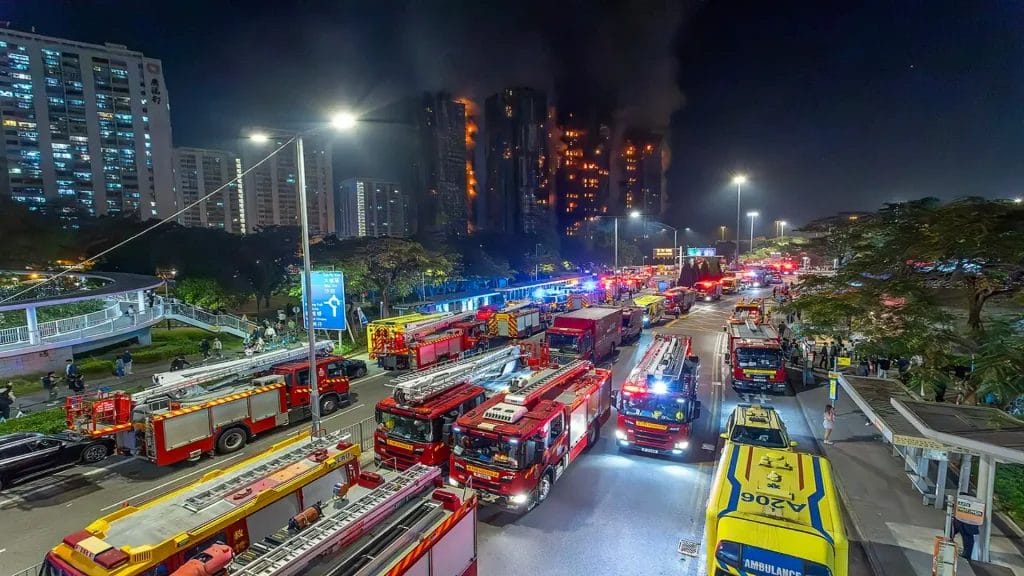
The recent tragic fire in Tai Po, Hong Kong, has sent shockwaves through the hospitality and property management sectors. Reports from major news outlets highlight a terrifying reality: in dense urban structures, smoke spreads faster than fire.
For hoteliers, the Tai Po incident is a critical wake-up call. It forces a tough question: If a similar electrical fire started in your hotel tonight, would your guests survive the toxic fumes?
At DERBAL, we believe that Hotel Fire Safety is about being ready for the worst-case scenario. This guide analyzes the essential equipment—specifically the TZL-30 smoke hoods crucial for surviving the first 30 minutes—that procurement managers must prioritize in the wake of this tragedy.
Part 1: The Lesson from Tai Po – Smoke is the Real Killer
Media analysis of the Tai Po fire reveals that smoke inhalation—not the flames—is the primary cause of casualties. The toxic fumes (Carbon Monoxide and Hydrogen Cyanide) can incapacitate a guest in minutes, blinding them before they find the exit.
This is why modern hotels are rushing to equip rooms with Personal Protective Equipment (PPE).
Standard evacuation plans are not enough when corridors are filled with smoke. You need to buy time.
- Why it helps: The TZL-30 filters 95% of toxic gases.
- The Scenario: In a smoke-filled hallway (like the scenes reported in Hong Kong), this mask provides 30 minutes of breathable air and clear vision, allowing guests to escape safely.
- DERBAL Standard: Our masks are vacuum-sealed and certified, ensuring they are ready to perform instantly.
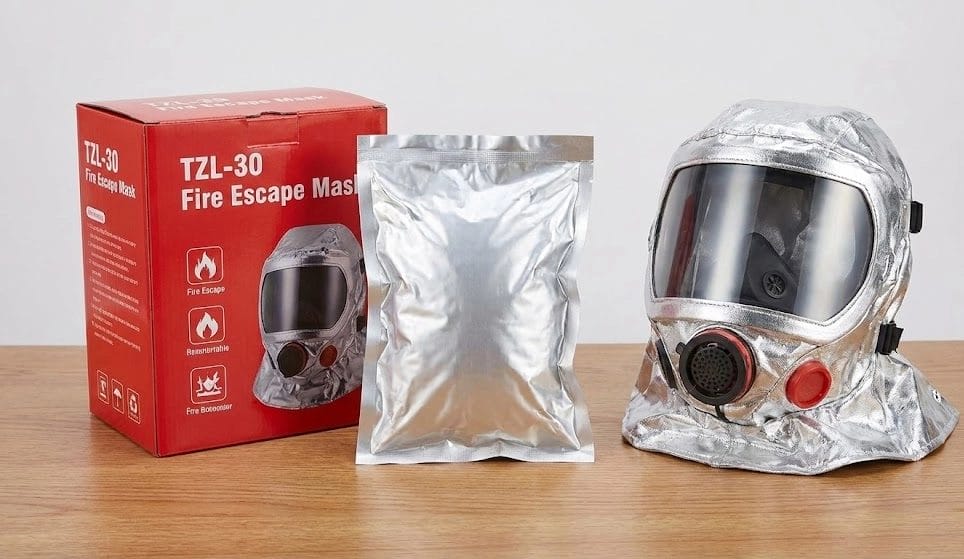
The Solution: TZL-30 Fire Filtering Self-Rescue Respirator
Standard evacuation plans are not enough when corridors are filled with smoke. You need to buy time.
- Why it helps: The TZL-30 filters 95% of toxic gases.
- The Scenario: In a smoke-filled hallway (like the scenes reported in Hong Kong), this mask provides 30 minutes of breathable air and clear vision, allowing guests to escape safely.
- DERBAL Standard: Our masks are vacuum-sealed and certified, ensuring they are ready to perform instantly.
Part 2: The First Line of Defense – Extinguishers Analysis
The investigation into urban fires often points to a common failure: using the wrong extinguisher. Procurement managers must understand the “Chemistry of Safety.”
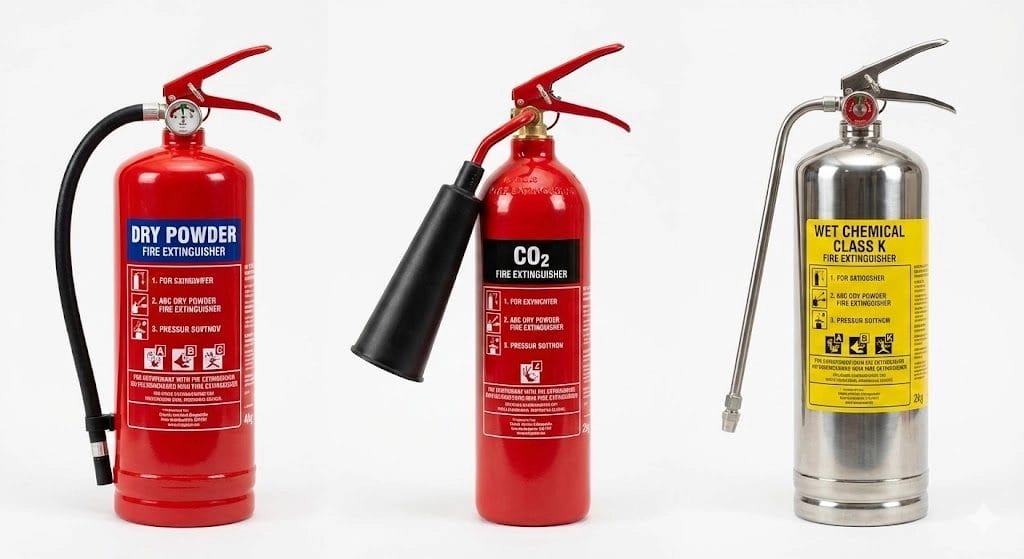
1. Dry Powder Extinguishers (ABC Type)
This is the versatile workhorse of hotel fire safety.
- The Mechanism: Filled with monoammonium phosphate, it smothers the fire.
- Best For: Guest corridors, lobbies, and maintenance rooms. It handles Class A (solids), Class B (liquids), and Class C (gases) fires.
- DERBAL Insight: We recommend 4kg or 5kg units for hallways to ensure staff can easily handle them.
2. CO2 Extinguishers (Electrical Safety)
Electrical faults are a leading cause of fires in older districts.
- The Mechanism: Displaces oxygen to starve the fire without leaving a residue.
- Best For: Server rooms and front desk computers.
- Why it Matters: CO2 won’t destroy sensitive hotel IT equipment, saving you thousands in recovery costs.
3. Wet Chemical Extinguishers (Class K/F)
The nightmare scenario for any hotel is a grease fire in the main kitchen.
- The Mechanism: Creates a soapy layer over burning oil, cooling it down.
- Best For: Commercial kitchens and banquet cooking stations.
Part 3: Strategic Sourcing Matrix – What Goes Where?
To achieve a 90+ safety rating and meet the stricter regulations likely to follow the Tai Po incident, use this DERBAL Sourcing Matrix:
| Hotel Zone | Primary Hazard | Recommended Equipment | Key Specs |
| Guest Room | Smoke/Panic | Smoke Mask (TZL-30) + LED Flashlight | 30-min filtration, Vacuum Sealed |
| Corridors | Rapid Spread | Dry Powder Extinguisher + Fire Hydrant | 4kg Capacity, Photoluminescent Signage |
| Kitchen | Grease/Oil | Wet Chemical Extinguisher + Fire Blanket | Class K Rating, Fiberglass blanket |
| Server Room | Electrical Short | CO2 Extinguisher | No residue, non-conductive |
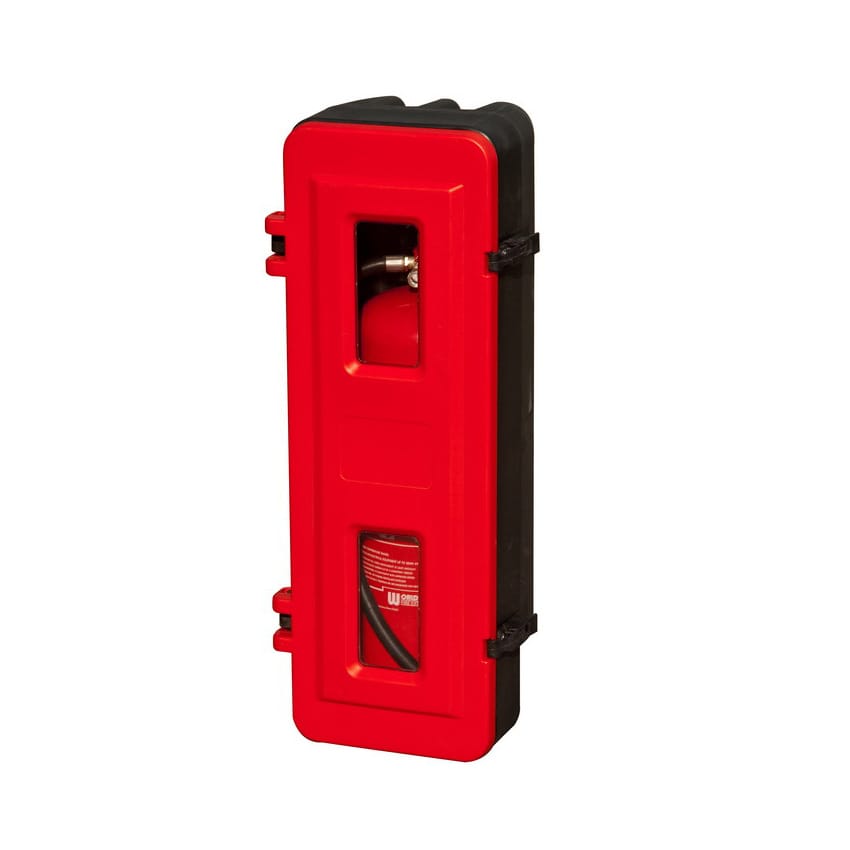
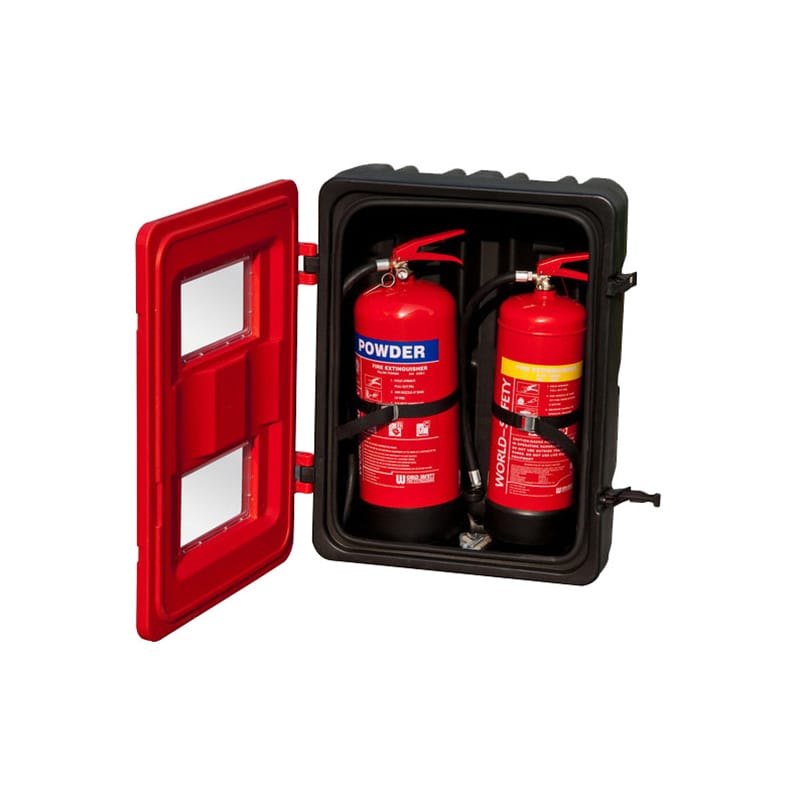
| Lobby/Public | General | Aesthetic Cabinets + ABC Extinguisher | Stainless steel to match decor |
Part 4: Case Study – High-Rise Safety Upgrade
Client: The Metropolitan Sky Hotel (A generic 40-story business hotel).
Context: The hotel management conducted a risk assessment and identified a critical vulnerability: in the event of a fire on lower floors, guests on upper levels would be trapped by rising smoke in the stairwells before firefighters could reach them.
The DERBAL Solution:
-
Guest Protection: We implemented a “Safety in Every Drawer” policy, supplying TZL-30 Smoke Masks for all 350 guest rooms.
-
Visual Guidance: We installed high-visibility, glow-in-the-dark (photoluminescent) signage at floor level, guiding guests to exits even if smoke obscures ceiling lights.
- Result: The hotel passed a stringent international corporate audit, allowing them to secure contracts with major airlines who demand high safety standards for their crew layovers.
Part 5: Why Partner with DERBAL?
When news breaks of a fire, supply chains often get jammed with panic buying. As your long-term partner, DERBAL ensures:
-
Compliance: All products meet international safety standards (CE/ISO).
-
Durability: Our cabinets use corrosion-resistant steel, crucial for humid climates.
-
One-Stop Logistics: We ship the masks, the extinguishers, and the cabinets in one container, streamlining your procurement.
Conclusion
The Tai Po fire is a somber reminder that safety is not a checkbox; it is a responsibility. Don’t wait for the next headline or a failed inspection to upgrade your defenses.
Is your hotel ready for the unexpected? Contact DERBAL today to review your Hotel Fire Safety inventory and secure your guests’ peace of mind.
FAQ
Q1: Does upgrading fire safety equipment impact hotel insurance?
Yes. Many insurance providers consider active risk mitigation—such as installing in-room smoke hoods (TZL-30) and maintaining up-to-date extinguishers—as a positive factor. It demonstrates a high “duty of care,” which can often be leveraged during policy renewals to negotiate better terms or lower liability premiums.
Q2: What is the shelf life of a TZL-30 Fire Mask?
Typically, these vacuum-sealed masks have a shelf life of 3 to 5 years. DERBAL recommends checking the manufacture date during your annual housekeeping audit.
Q3: Are smoke masks mandatory in hotel rooms?
Regulations vary, but high-end hotels and those in high-density areas increasingly adopt them as a standard amenity to lower liability and enhance guest safety perception.