Busy lobby cafés and pool bars live or die by seconds. Yet in 2026, the single priority that separates profitable beverage programs from the rest isn’t raw speed—it’s durability and TCO (Total Cost of Ownership) over a 3–5 year lifecycle. In this ultimate guide, we will demonstrate how hotel procurement teams can specify a commercial blender fleet that hits throughput targets, protects guest comfort with the right acoustic strategy, and lowers maintenance incidents per month—without inflating long-term costs.
This guide provides an evaluation framework tailored to mixed environments, practical examples for power classes, a realistic resort case study with measurable KPIs, and a technical FAQ. If you are selecting the best commercial blender for a multi-property rollout, this guide is designed to help you write and defend your specification.
Key Takeaways
-
Prioritize durability and TCO: Choose serviceable designs (blade assemblies, couplers, centering pads), proven cooling systems, and vibration dampening technology.
-
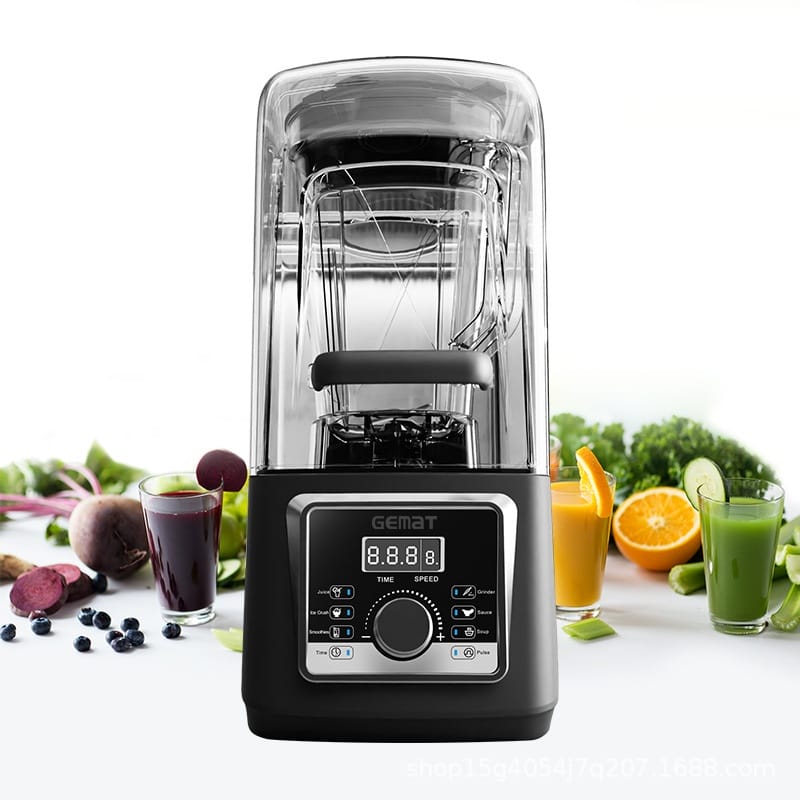
Treat acoustic goals as design constraints: Front-of-House (FOH) stations should target conversation-level operation through the use of enclosures.
-
Convert specs to outcomes: Use a model of cycle time plus handling time to accurately project drinks per hour and labor planning.
-
Standardize by environment: Deploy quiet stations with sound enclosures for FOH and heavy-duty units for Back-of-House (BOH) batch prep.
-
Track ROI metrics: Monitor peak throughput, average cycle times, maintenance incidents, and decibel readings at 1 meter.
Hotel Evaluation Framework for a Commercial Blender Fleet
Selecting the right equipment in hospitality is a fleet decision involving power class, enclosure strategy, duty cycle, and serviceability calibrated to the physical realities of the property.
Performance and Power Classes: The 2200W Tier
Throughput is determined by programmed cycle time under load and the handling overhead between blends. Engineering benchmarks for high-performance models indicate blend times in the 12–18 second range. Adding a pragmatic 20–30 seconds for handling results in roughly 70–100 drinks per hour, per station.
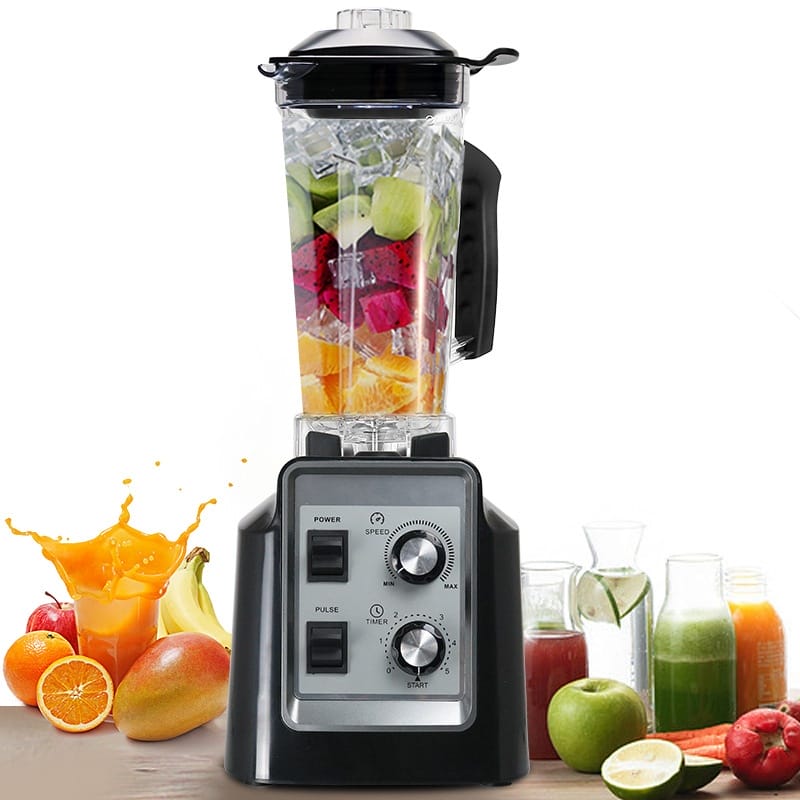
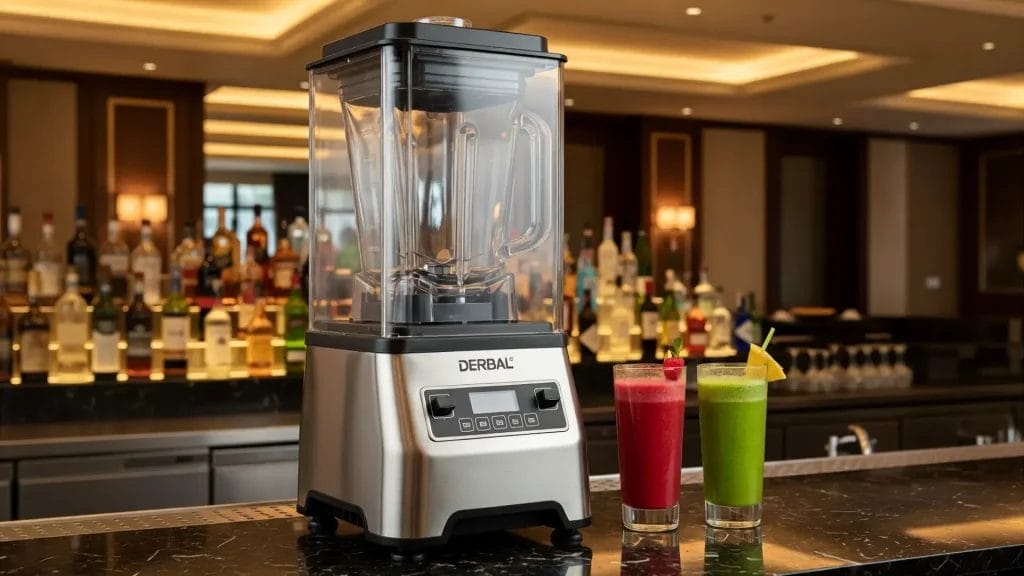
For environments requiring high headroom, a 2200W commercial-grade blender solution serves as the correct anchor for heavy-duty batch prep and sustained duty cycles, providing the necessary torque to prevent motor burnout during peak hours.
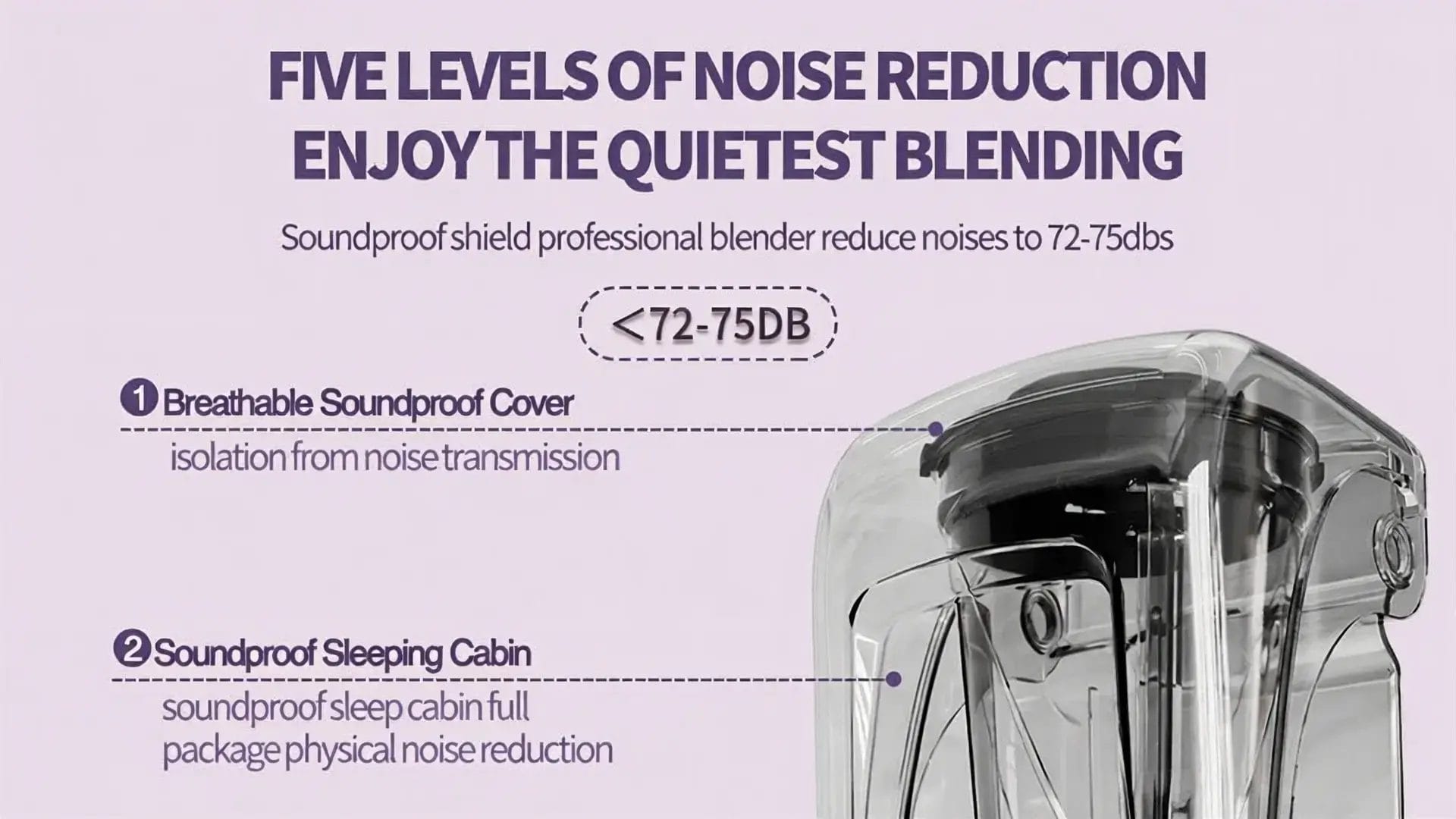
Acoustic Strategy: Quiet Operation with Sound Enclosure
Hotels should set FOH targets and validate them on-site. While many platforms highlight conversation-level claims, published numeric dBA is often absent from brochures. We recommend targeting ≤70 dBA for guest-facing areas based on OSHA noise exposure guidelines to ensure both staff safety and guest comfort.
| Zone | Practical Goal | Notes |
| FOH Bars/Cafés | Conversation-level (≤70 dBA) | Use a quiet commercial blender with sound enclosure and isolation pads. |
| BOH Prep | ≤80 dBA acceptable | Prioritize throughput and durability for short-exposure tasks. |
 Durability, Maintenance, and Vibration Dampening
 Durability, Maintenance, and Vibration Dampening
Because your highest priority is TCO, inspect these critical design factors:
-
Blade assemblies and couplers: Include weekly inspections of gear teeth and seals in your maintenance plan. Replace these wear items on condition to protect the motor base.
-
Cooling and thermal protection: Look for advanced cooling fans and airflow channels that preserve operational reliability under back-to-back cycles.
-
Vibration dampening: FOH noise and mechanical wear both benefit from isolation mounts and improved enclosure seals.
Certifications and Electrical Compatibility
For multi-region portfolios, document both sanitation and safety marks in the spec:
-
Sanitation: Ensure certification to relevant NSF/ANSI standards (typically NSF/ANSI 8) for food-contact safety and cleanability.
-
Electrical safety: Units should be listed to UL 763 or equivalent standards (CE/ETL).
-
Voltage and plugs: Specify native-voltage units (120V or 220-240V) per property. Avoid using transformers for heavy-duty equipment to protect the motor warranty.
Case Study: Solving the Peak-Hour Bottleneck at a 500-Room Resort
Context: A mixed deployment across five venues faced inconsistent blends during peak hours, elevated FOH noise, and rising maintenance incidents on legacy units.
Approach: The resort piloted a two-tier strategy. FOH bars received quiet platforms with sound enclosures; BOH received high-performance commercial blenders for hospitality capable of sustained duty, including a 2200W class for batch smoothies.
Results:
-
Peak drinks/hour: Increased from ~60 to ~90 per station as handling was standardized and program times shortened.
-
Average cycle time: Reduced from ~60 seconds to ~42 seconds under programmed cycles.
-
Maintenance incidents: Dropped from 7 per month to 2 with a formalized PM cadence and on-hand spare parts.
-
Decibel readings: Measured results clustered around conversation-friendly ranges, providing management with defensible data for guest comfort.
Procurement Checklist and FAQ
-
Document targets for both acoustics and station throughput.
-
Require sanitation and safety listings (NSF and UL/CE) with listing numbers.
-
Specify native voltage and regional plug types per property.
-
Standardize programmed cycles and include a spare-parts kit (blade, pad, coupler) per venue.
FAQ
How should we measure noise to compare options fairly?
Use A-weighted, slow response at 1 meter from the enclosure front. Note the ambient baseline and test with a standard recipe (fruit, ice, and liquid). Run three trials and report the range.
What motor protections matter for sustained duty cycles?
Look for high-flow fans, ducted airflow within enclosures, and thermal cutoffs. These features reduce heat soak and protect windings during consecutive cycles.
What is a sensible blade replacement cycle?
Blades are wear items. Inspect them weekly for nicks or seal degradation. High chemical concentrations during cleaning can accelerate wear, so always follow the specific cleaning guidance for your model.
How many stations do we need for a 500-room resort?
Using a throughput model where a station delivers ~85 drinks/hour, compare this to your peak demand profile. Usually, two FOH stations with an overflow BOH station for base mixes provide sufficient headroom.
Next Steps
Ready to translate technical specs into measurable outcomes across your portfolio? Consult with DERBAL’s engineering specialists to validate acoustic targets, pilot throughput, and finalize a 3–5 year TCO plan for your venues.
👉 Consult with DERBAL’s Engineering Team for Your Custom Project Quote