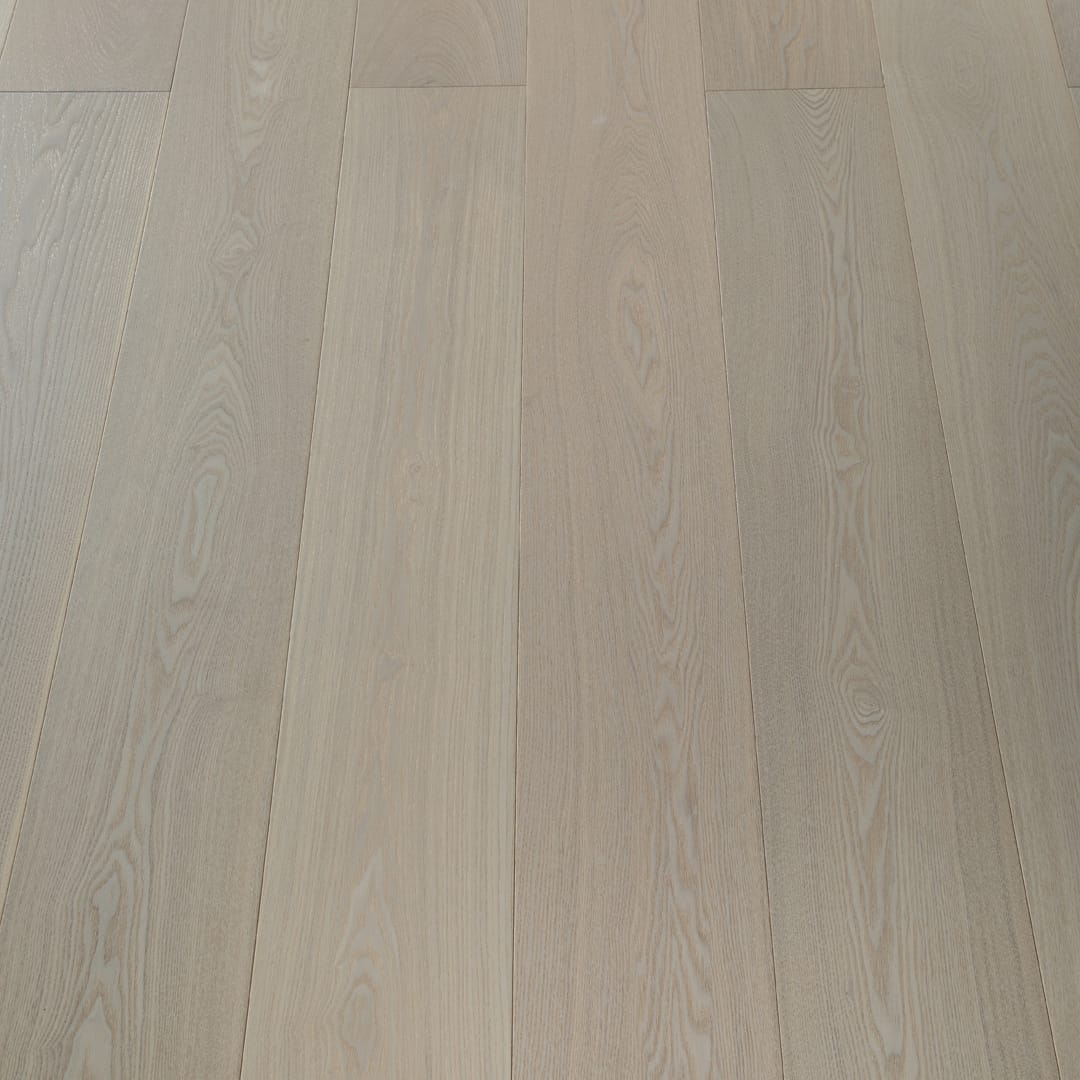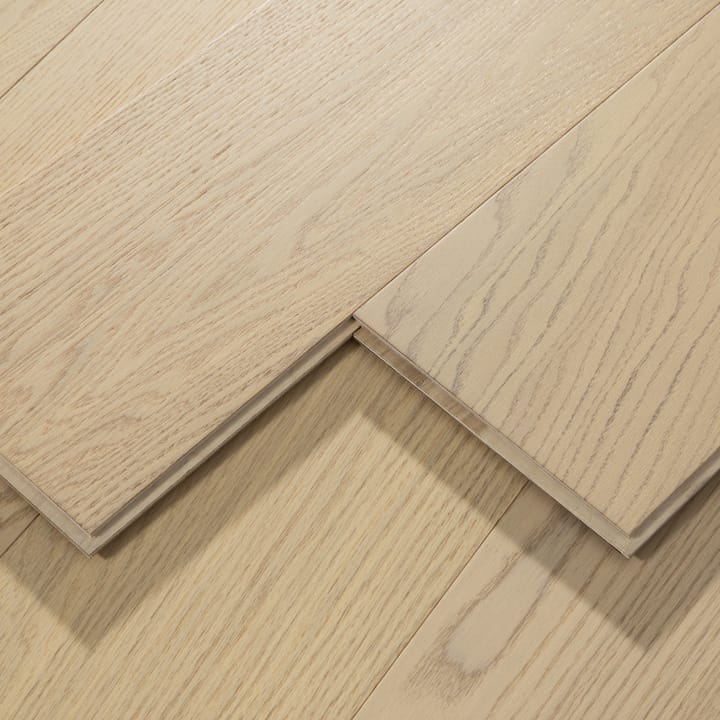
If you approve CAPEX for new builds or renovations, the flooring decision sits at the intersection of guest experience, compliance, and delivery risk. This guide distills what owners and procurement teams need to specify when choosing Engineered Oak Flooring—how it impacts acoustics and sleep quality, how to meet fire and indoor air standards, what finish and wear layer actually buy you in lifecycle terms, and how to compress install windows without gambling on quality. Throughout, we use cited standards, manufacturer documentation, and quantified ranges you can take directly into RFPs.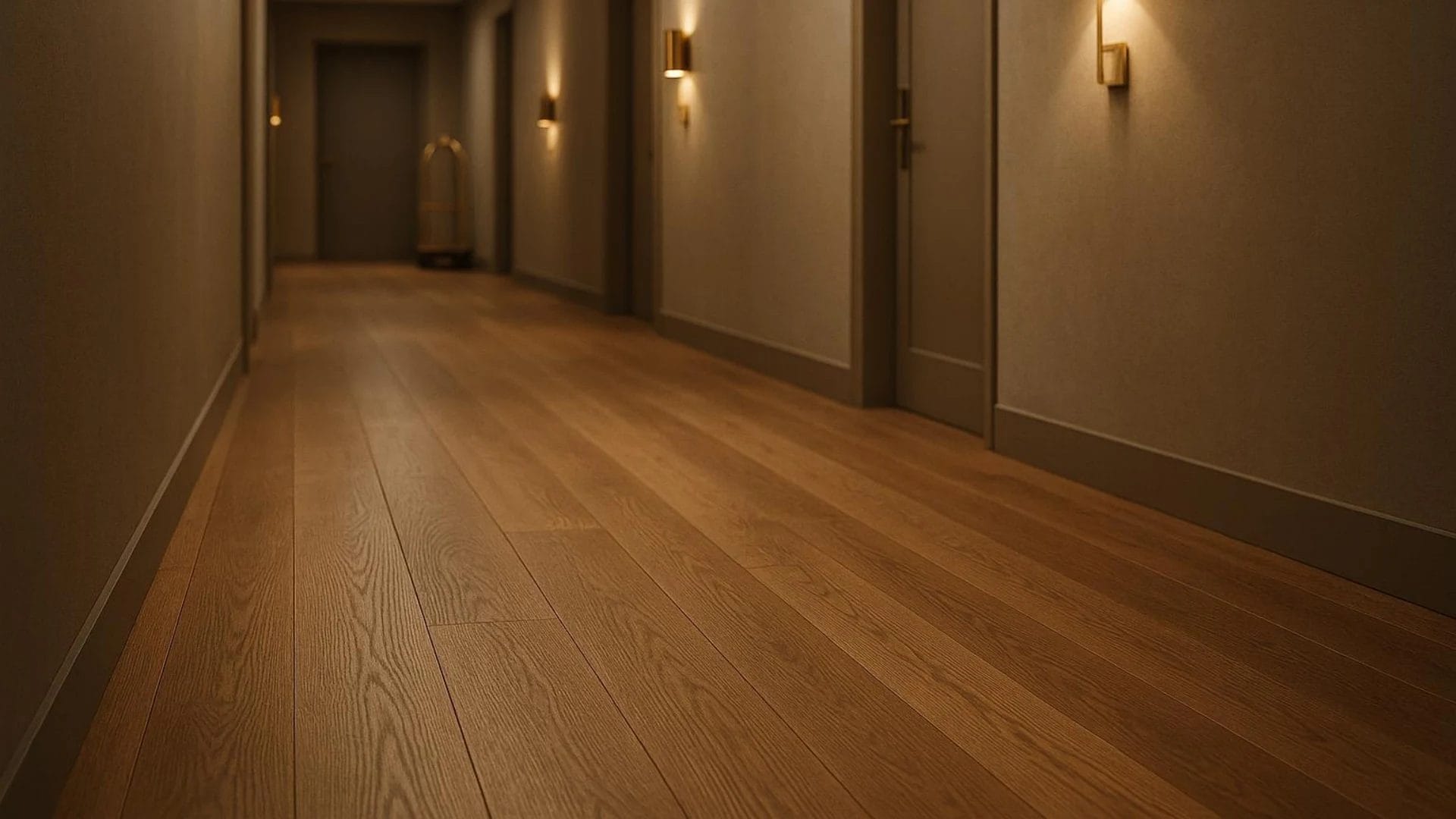
Key Takeaways
- Engineered Oak Flooring combines the luxury look of real oak with cross‑laminated stability, enabling wider planks and better movement control versus solid wood—an advantage in humidity‑variable hospitality environments.
- For guest comfort, target assemblies with documented IIC and ΔLw performance. Corridor stacks with acoustic underlays typically show ΔLw around the high teens and can exceed IIC 60 with a suspended ceiling per manufacturer test reports.
- Fire compliance for flooring relies on ASTM E648 or EN ISO 9239‑1 feeding EN 13501‑1 classes. Set a minimum class in the spec and require the actual report for the supplied assembly. Avoid relying on wall‑and‑ceiling tests like ASTM E84 for flooring selection.
- IAQ compliance is provable. In the U.S., require EPA TSCA Title VI paperwork; in the EU or international, request EN 717‑1 reports and low‑emissions labels such as GREENGUARD Gold or FloorScore, in addition to mandatory regional requirements.
- Lifecycle value hinges on wear layer and finish. In high‑traffic zones, a 3.5–4 mm wear layer supports future refinishing, while UV‑cured lacquers reduce routine maintenance labor; hardwax oils enable in‑place touch‑ups but need scheduled top‑ups in busy areas.
- Radiant‑heat compatibility is system‑specific. Most engineered lines allow it with surface temperature caps around the low‑to‑mid 80s °F, controlled RH, and staged heat‑up—confirm in writing for warranty validity.
- Delivery certainty matters as much as product. Lock down lead times, MOQs, phased drop schedules, and a pilot room protocol to avoid surprises; coordinated, reliable supply chains reduce downtime risk across rooms, corridors, and public areas.
Why Engineered Oak Flooring Performs for Hotels
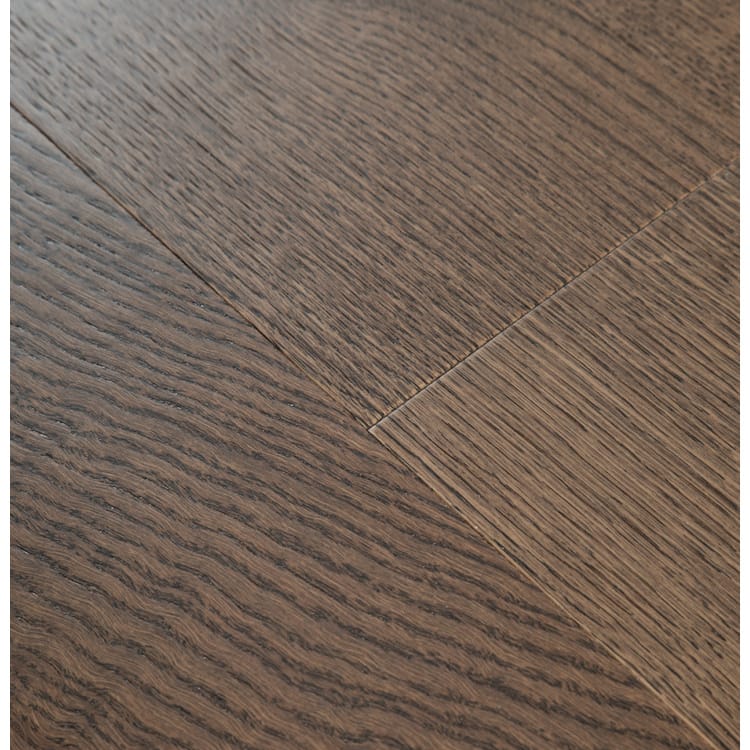
Owners adopt Engineered Oak Flooring because it preserves the tactile warmth and visual depth of real oak while taming wood’s tendency to move. The cross‑laminated core resists cupping and seasonal gaps, which lets you specify wider planks without inviting complaints about ridging or joint telegraphing. That stability translates directly into a cleaner aesthetic and fewer remedial visits in air‑conditioned spaces that swing humidity through the year.
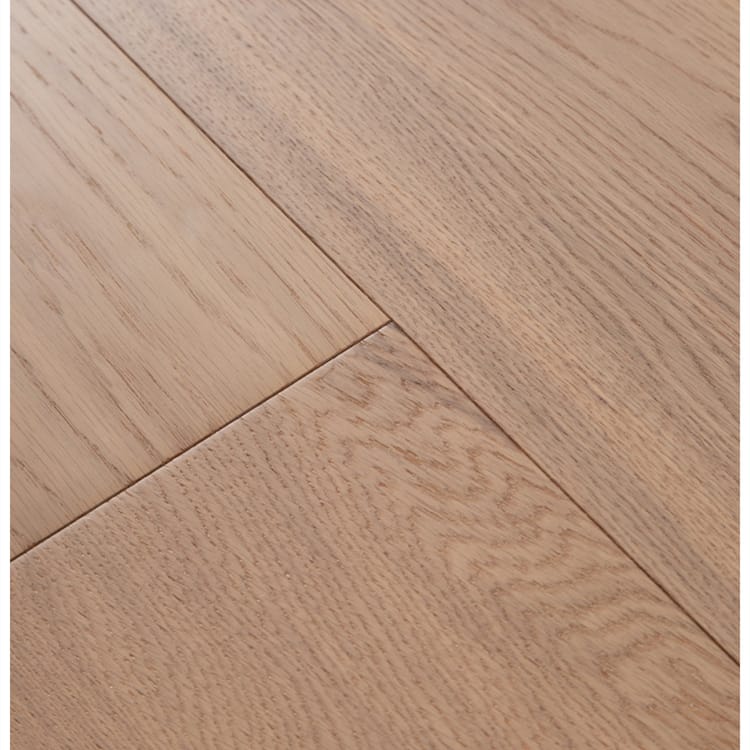
Aesthetic impact is not trivial. Guests read quality in a heartbeat—tone, grain, the way light plays across a matte finish. Oak’s neutral yet characterful grain fits both classic and contemporary brand standards. In lobbies and lounges, the material telegraphs quiet luxury; in guestrooms, it feels warm underfoot and looks at home alongside stone, metal, and upholstered pieces.
From an operations standpoint, Engineered Oak Flooring gives you more options. Click‑lock systems can shorten install windows where substrates are acceptable; glue‑down adds rigidity and is favored for heavy‑traffic corridors or where underlays with documented acoustic performance are part of the stack. Because the oak layer is real wood, you can refinish or recoat within the constraints of the wear layer, extending useful life compared to many lookalike alternatives.
Comparisons help frame expectations. Luxury vinyl tile often wins on first‑cost and minimal maintenance, especially for standard rooms. Carpet feels soft and disguises noise but turns into a maintenance line item and replacement cycle. Engineered Oak Flooring lands as the premium, refinishable option that can outlast others in demanding spaces when maintenance is disciplined, while also delivering a tone and texture many brands want front‑of‑house. Think of it this way: the upcharge buys a look guests notice and a surface you can renew rather than replace.
Engineered Oak Flooring vs. Common Alternatives
Owners commonly benchmark three categories: Engineered Oak Flooring, LVT, and commercial carpet. LVT usually leads on lifecycle cost where design goals permit; plank swaps are fast, and maintenance is light. Carpet delivers immediate softness and acoustic absorption but requires frequent deep cleaning and cycles out sooner in heavy traffic. Engineered Oak Flooring sits at the premium end: higher CAPEX, moderate OPEX if lacquered, and the unique ability to refinish. For brands chasing “quiet luxury,” real wood’s tactile authenticity and thermal feel build perceived value in lobbies and suites in a way synthetics rarely match. The tradeoff is a firmer maintenance discipline and more exacting install prep.
If your project is value‑engineered midstream, consider hybrid strategies: Engineered Oak Flooring in front‑of‑house and suites, LVT with wood visuals in standard rooms, and carpet only where it’s part of the brand signature or where underfoot softness trumps cleanability. Use a zone‑by‑zone spec so substitutions don’t cascade into the wrong areas.
Technical Primer on Engineered Oak Flooring
Engineered oak is a system. The oak wear layer—often European or North American white oak—is bonded to a stable core such as multi‑ply birch or poplar plywood or a dense composite. The cross‑grain lamination counters wood’s movement along the grain, giving you dimensional stability that solid boards can’t match, especially in mechanically conditioned hotel interiors.
Wear layer and total thickness. In hospitality, wear layers of 3–4 mm are common spec thresholds. A 3 mm oak top on a 14 mm board (often written as 14/3) gives you material to sand and refinish at least once if needed; 3.5–4 mm supports heavier corridors and longer life. Thicker isn’t always better if it compromises acoustic build‑ups or door clearances, but below 3 mm, you’re typically in one‑and‑done territory for sanding.
Core options. Multi‑ply plywood cores strike a useful balance of stiffness and movement control. Denser HDF‑type cores appear in some click‑lock systems and can enhance edge engagement. For glue‑down in heavy traffic, a plywood core paired with appropriate adhesives is standard; for floating assemblies over acoustic mats, verify deflection limits and click strength in the manufacturer’s instructions.
Finish chemistry and sheen. UV‑cured lacquers provide high abrasion resistance with a predictable matte or low‑sheen look. Hardwax oil offers a natural, hand‑rubbed appearance and in‑situ maintainability through periodic oiling. In public spaces and corridors, lacquers often reduce routine labor; in boutique rooms, oils can align with brand narratives around natural materials—provided maintenance intervals are honored.
Installation systems. Tongue‑and‑groove is traditional and reliable, often glue‑assisted even when nailed, especially on longer or wider planks. Click‑lock speeds floating installs and allows replacement panels without full tear‑outs, but it relies on substrate flatness and the integrity of the click profile. Glue‑down is slowest and most substrate‑dependent but yields a monolithic feel underfoot and predictable acoustics.
Underfloor heating compatibility. Many engineered lines are approved for radiant heat with surface temperature caps and acclimation protocols. You’ll see instructions about gradually commissioning systems and maintaining relative humidity bands; follow them and require written approval for warranty validity. Guidance from trade and manufacturer documents emphasizes controlled temperature ramps and RH management in service.
Performance Requirements to Put in the Spec
Acoustics for guest comfort
Acoustic targets reduce noise complaints and can justify rate integrity. For inter‑room isolation, U.S. code baselines in multifamily guide many hotel stacks toward IIC and STC ratings in the 50s, with owners often aiming higher for premium flags. Manufacturer test reports show that engineered oak over resilient underlays can raise impact performance:
- Published lab data for purpose‑made underlays indicate engineered wood assemblies in the IIC 50–53 range without a suspended ceiling and up to IIC around the high 60s with one, with ΔLw improvements often in the high‑teens for the right mat. For example, an acoustic underlay in the 3–4 mm class is reported at IIC 53 without a ceiling and ΔLw near 19 dB, and related assemblies at IIC around 51 with ΔLw roughly 17 dB. Supplier documents in 2024–2026 present similar ranges across product families.
When drafting your RFP, request assembly‑specific test reports that match your slab and ceiling plan—ASTM E492 for IIC and ASTM E2179 for ΔIIC in the U.S., or ISO 10140 with ΔLw internationally. Choose underlays documented for wood systems rather than general‑purpose foams, and pay attention to compression, dynamic stiffness, and long‑term creep.
For evidentiary anchors, consult lab and manufacturer summaries such as the Interfloor Sonixx Soundsure 400 and Resilient 250 documentation and REGUPOL sonus core reports, which publish assembly test outcomes and methods. The ranges noted above are consistent with those datasets as of 2024–2026. See: Interfloor’s Soundsure 400 technical page, the Interfloor Resilient 250 page, and REGUPOL’s sonus core test summaries.
Fire performance and correct test methods
For floors, select tests that actually govern floor performance. In Europe, EN ISO 9239‑1 radiant panel results roll up into EN 13501‑1 classes such as Bfl‑s1 or Cfl‑s1. In North America, ASTM E648 Critical Radiant Flux governs floorcoverings under a radiant heat source. By contrast, ASTM E84 is a wall and ceiling tunnel test; it’s sometimes requested for decorative surfacing but is not the primary selection criterion for floor assemblies.
Set the minimum class in the spec—many engineered oak systems document Cfl‑s1 minimum and some achieve Bfl‑s1 depending on finish, adhesive, substrate, and underlay. Then require the current test report for the exact assembly you’ll install. If a jurisdiction or brand standard still cites E84, collect the E84 report as a supplemental document without substituting it for flooring‑appropriate tests. For background, review the EN ISO 9239‑1 radiant panel overview by Efectis and Measurlabs’ explanation of EN ISO 9239‑1 and EN 13501‑1 floor classes.
Indoor air quality and VOC compliance
Composite wood regulations in the U.S. fall under EPA TSCA Title VI, which sets emission limits and mandates third‑party certification for hardwood plywood and related materials used in engineered flooring. The EPA’s official page, updated in 2026, explains limits, labeling, and oversight. For Europe and many international projects, EN 717‑1 chamber testing underpins E1 classifications; stricter marketing terms like E0 or E05 exist but are not formal EN classes, so request the actual report and note the method.
In procurement language, require TSCA Title VI compliance documentation for U.S. projects and an EN 717‑1 report with the adhesive system disclosed for EU/international projects. For IAQ marketing labels, GREENGUARD Gold or FloorScore add comfort that whole‑product emissions are screened—request the certificate numbers and validity dates. See the EPA’s guidance on formaldehyde emission standards for composite wood products under TSCA Title VI and lab explainers distinguishing E1 from non‑standard “E0/E05” claims.
Slip resistance in transition areas
Engineered Oak Flooring’s slip behavior depends on finish chemistry, surface texture, and maintenance films. Transitional spaces and ramps may require documented slip results. Instead of quoting generic values, ask vendors for pendulum test or DCOF documentation applicable to your finish and maintenance plan. If you intend to apply site polishes, re‑test after finishing to verify no loss of traction.
Zone Specification Matrix (Owner Targets and Submittals)
The following table summarizes typical owner targets by zone. Replace with your jurisdictional requirements and product‑specific reports.
| Hotel Zone | Engineered Oak Flooring Targets | Acoustic Documentation | Fire Documentation | IAQ & Sustainability Docs |
|---|---|---|---|---|
| Guestrooms | Wear layer ≥3 mm; multi‑ply plywood core; matte UV‑lacquer or hardwax oil; click or glue‑down per substrate | ASTM E492 IIC ≥50 (field ≥45) target; ASTM E2179 ΔIIC or ISO 10140 ΔLw for selected underlay | EN 13501‑1 Cfl‑s1 minimum (Bfl‑s1 preferred where available) with EN ISO 9239‑1/ASTM E648 report | TSCA Title VI (U.S.) or EN 717‑1 (EU); GREENGUARD Gold or FloorScore; FSC/PEFC CoC; EPD |
| Corridors | Wear layer ≥3.5–4 mm; glue‑down preferred; robust underlay where above rooms | Emphasize ΔIIC/ΔLw improvement; aim for higher IIC where ceiling exists | Same as guest rooms; confirm class with underlay/adhesive assembly | Same as guest rooms |
| Lobbies/Public Areas | Wear layer ≥4 mm; high‑abrasion UV‑lacquer; pattern options (herringbone) | Acoustic targets context‑dependent; focus on substrate solidity and deflection | Follow local code; require assembly‑specific report | Same as guest rooms |
Procurement and Project Delivery With a Reliability Lens
When flooring fails to arrive on schedule, rooms sit dark. Treat supply‑chain reliability as a performance attribute alongside acoustics and fire class. In RFP language, request documented lead times by SKU, manufacturing location, buffer stock policies, MOQ per color, and phasing plans for multi‑floor projects. Require a pilot room and one corridor bay to validate substrate prep, adhesive behavior, moisture mitigation, and install productivity before releasing full quantities.
Moisture and substrate risk are where schedules slip. Specify concrete moisture testing by standard method—ASTM F2170 in‑situ RH for slabs and ASTM F1869 MVER where relevant—plus pH testing, slab flatness tolerances, and mitigation protocols if thresholds are exceeded. Spell out who owns mitigation and how it’s approved.
Coordinated deliveries reduce handoffs. Flooring, thresholds, trims, and even complementary millwork can ship in staged drops aligned to floor stacks, which minimizes storage needs and damage. If you’re bundling multiple fit‑out categories, one‑stop hotel suppliers can align timelines and packaging, reducing call‑offs and site congestion. A neutral example: procurement teams sometimes work with partners like DERBAL to coordinate engineered flooring options and related construction items under a single, reliable supply plan—useful when you want flooring choices synchronized with casegoods and doorsets without marketing hype.
For deeper coordination around built‑ins and public‑area furniture, align the flooring schedule with shop‑drawings and fabrication windows for wall paneling, base details, and reception desks. If you intend to procure integrated millwork or FF&E alongside flooring, a consolidated construction and furniture workflow can help keep specs coherent and deliveries paced to room‑stack handovers; see this overview of custom hotel furniture and construction supply coordination.
Finally, codify the procurement rhythm: submittal timelines, mock‑up acceptance criteria, pack‑plan samples, carton labeling, pallet heights, and on‑site protection materials. Ask for MS Project or Gantt schedules from installers, include adhesive cure windows, and require a weekly look‑ahead during active install.
Installation and Downtime Planning
Substrate preparation drives schedule. Flattening tolerances for Engineered Oak Flooring are tighter than many expect; plan for grinding or feather‑finish compounds and moisture mitigation where readings or RH exposure demand it. Build in time for acclimation with HVAC on—target equilibrium moisture content in the 6–9% range per manufacturer guidance—and log pre‑ and post‑acclimation readings.
Click‑lock vs glue‑down tradeoffs. Floating installs with click‑lock can accelerate room turns if the substrate is flat and the underlay is documented for acoustics. Glue‑down assemblies add time for adhesive troweling, rolling, and cure, but they produce a firmer underfoot feel and stable acoustics—valuable in corridors. Either way, insist on manufacturer‑approved adhesives and follow trowel notch sizes and open times.
Radiant heat adds steps. Commission systems gradually, cap surface temperatures per the flooring manufacturer’s approval letter, and keep RH in the specified band. Trade and manufacturer guidance emphasizes staged warm‑up and continuous environmental control; this isn’t optional if you want the warranty to stand and the floor to behave. For background, review the Johnson Hardwood engineered wood installation and radiant‑heat guidelines PDF.
Pilot before you scale. One guestroom and a representative corridor bay tell you how many square feet per hour your crew achieves with your chosen system and substrate conditions. From there, back‑solve the downtime and sequencing. Capture deviations from the manufacturer’s instructions in a site memo for future reference.
Maintenance and Recoating Programs Owners Can Live With
A beautiful floor stays that way when operations owns the regimen. UV‑cured lacquers favor daily dry cleaning and scheduled damp mopping with a pH‑neutral cleaner, plus periodic deep cleans and polishes aligned to traffic. Because lacquer builds a hard film, major restoration typically means a sand and refinish once wear shows through the topcoats; interval timing depends on wear layer thickness and use intensity.
Hardwax oils need planned touch‑ups. In commercial areas, top‑up oiling can land on a seasonal cadence; that’s the tradeoff for the lush, natural look and the ability to renew areas without closing entire floors. The benefit is minimal dust and the preservation of patina. The caveat is discipline: without a schedule, sheen mismatches and wear paths appear quickly in busy corridors.
Build the maintenance plan into the procurement package: product names for cleaners and polishes, Safety Data Sheets, pad color guidance for auto‑scrubbers, and a calendar of tasks by zone. Entrance matting length and placement matter, too; a few extra feet of scraper and textile mats at doors often save hours of labor downstream. Industry and manufacturer maintenance guides published in recent years outline these regimes and caution against over‑wetting and harsh chemicals; use those references to validate SOPs and set expectations with owners about manpower and downtime.
Lifecycle Costing With a Clear Comparison
Engineered Oak Flooring’s value proposition is refinishability and premium feel against a higher first cost. To make an even‑handed decision, structure a total cost of ownership model that includes CAPEX, annual cleaning labor and chemicals, periodic refinishing or replacement, and downtime costs for room‑outs. Where hard data is scarce, use vendor‑documented ranges and your own labor rates instead of generic averages. Industry articles and supplier materials consistently position luxury vinyl tile as the lifecycle cost leader in many high‑traffic scenarios, with carpet typically cheapest upfront but more expensive to operate and replace.
Below is a simplified comparison to frame conversations. Replace ranges with your vendor quotes and site‑specific labor numbers.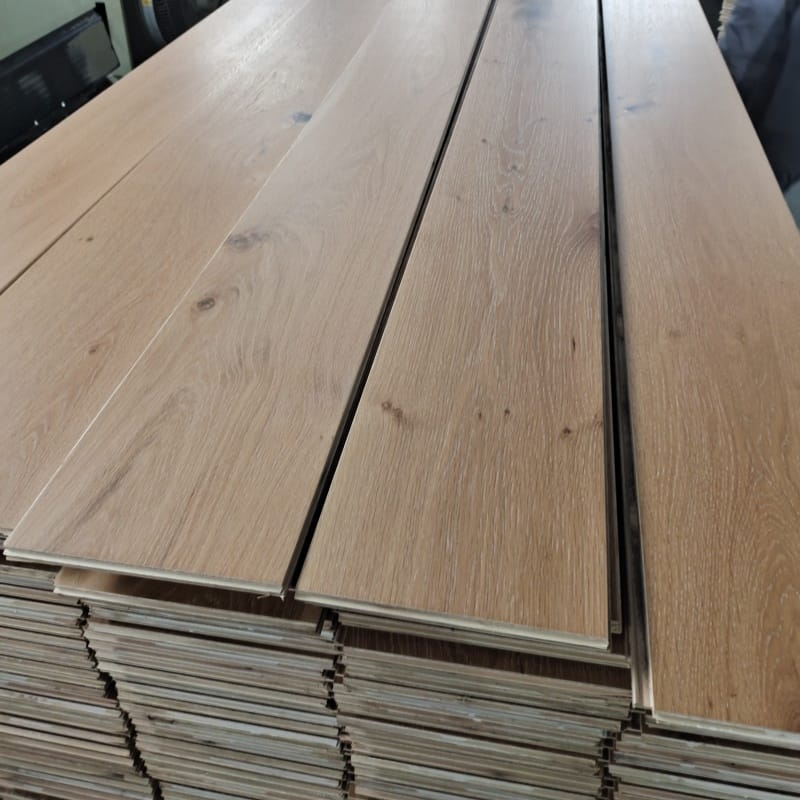
| Category | Guestrooms Engineered Oak | Guestrooms LVT | Guestrooms Commercial Carpet |
|---|---|---|---|
| Typical CAPEX per sq ft installed | Higher | Lower | Lowest |
| Routine maintenance burden | Moderate | Low | High |
| Periodic restoration | Recoat or sand/refinish depending on wear layer | Minimal, plank swaps | Deep cleaning and periodic replacement |
| Expected service life with disciplined maintenance | Long, extended by refinishing potential | Long | Moderate |
| Downtime for major intervention | Moderate to high during sanding | Low to moderate | Moderate |
| Aesthetic and brand alignment potential | Premium, natural wood | Good, broad design library | Variable, soft underfoot |
The same logic scales to corridors and lobbies. Corridors see rolling loads that favor glue‑down assemblies for Engineered Oak Flooring and heavier underlays for acoustics; LVT still minimizes maintenance. Lobbies require higher wear layers and abrasion resistance; stone and porcelain also compete there. Use a project‑by‑project calculator that forces vendors to disclose assumptions and link documents.
Sustainability and Documentation That Stands Up
For wood, responsible sourcing and transparent impacts are non‑negotiable. Forest certification under FSC or PEFC is the backbone—request Chain‑of‑Custody numbers and verify them on packaging and invoices. Environmental Product Declarations offer a third‑party‑verified look at lifecycle impacts like global warming potential; the wood flooring trade has published industry‑average EPDs, and some manufacturers publish product‑specific EPDs you can request in bids.
Low‑emissions labels such as GREENGUARD Gold and FloorScore are additive to mandatory regulations; they don’t replace TSCA Title VI or regional rules, but they increase confidence in IAQ outcomes. Hospitality trade coverage in recent years also affirms engineered hardwood’s place in premium spaces, even as brands weigh maintenance against ambiance. For authoritative reading: the wood industry’s NWFA Environmental Product Declarations portal and EPD library entries provide examples of what credible documentation looks like, while editorial coverage in 2023 positions hardwood strongly in hospitality.
Anonymized Mini‑Cases With Quantified Outcomes
Guestroom stack noise improvement
- Situation: Multi‑story city hotel with complaints about footfall noise from rooms above. Existing assembly lacked a resilient layer under wood.
- Action: Engineered oak over a documented acoustic underlay selected; pilot room tested for impact sound.
- Outcome: Lab‑anchored underlay data indicated ΔLw uplift in the high‑teens; combined with the project’s ceiling, modeled IIC moved from the high 40s toward the mid‑to‑high 50s. Post‑install monitoring showed a notable drop in noise‑related guest comments over the first quarter. Numbers aligned with ranges published by acoustic underlay suppliers in 2024–2026.
Corridor refit with refinishing headroom
- Situation: Upper‑upscale corridor with rolling bellman and housekeeping carts was scheduled for replacement after visible wear and edge chipping on thinner wood.
- Action: Specified a European white oak 4 mm wear layer over plywood core, glue‑down, paired with a resilient acoustic backer with published IIC/ΔLw data.
- Outcome: The thicker wear layer set the property up for a future sand/refinish rather than another replacement, reducing projected lifecycle CAPEX. Noise readings taken in a pilot bay echoed vendor lab ranges, and guest rooms below recorded fewer disturbance notes.
Lobby aesthetic refresh without glare
- Situation: Lobby lighting upgrade revealed harsh reflections on a semi‑gloss floor.
- Action: Switched to wide‑plank brushed oak with UV‑cured matte lacquer to diffuse light and hide micro‑scratches.
- Outcome: Visual comfort improved immediately; cleaning logs showed routine labor remained stable while spot‑repair visibility decreased. The finish’s abrasion resistance met expectations noted in manufacturer maintenance literature.
Each scenario is anonymized but grounded in the performance ranges referenced earlier. Treat them as directional evidence for planning pilots and writing acceptance criteria.
Buyer’s RFP Checklist Owners Can Reuse
Use this as a compact, copy‑paste paragraph in your RFP so vendors know exactly what to submit: species and grade, wear layer thickness, total board thickness, core type, finish chemistry and sheen, plank dimensions, beveled edge details, installation method approvals, and written radiant‑heat approval if applicable. Require compliance documents including EPA TSCA Title VI for U.S. projects or EN 717‑1 reports internationally, plus a low‑emissions label such as GREENGUARD Gold or FloorScore. For fire, specify a target EN 13501‑1 class and request the underlying EN ISO 9239‑1 or ASTM E648 test for the supplied assembly. For acoustics, request assembly‑specific reports using ASTM E492 and ASTM E2179 or ISO 10140 with ΔLw. Add sustainability documents—FSC or PEFC Chain‑of‑Custody and an EPD, industry‑average acceptable if product‑specific is unavailable. Finally, request lead times, MOQs, phased‑delivery plans, pack‑plans, warranty terms for commercial use, a cleaning and maintenance plan with SDS, installer qualifications, moisture tests per ASTM F2170/F1869 with mitigation plans, and a pilot room plus one corridor bay with acceptance criteria.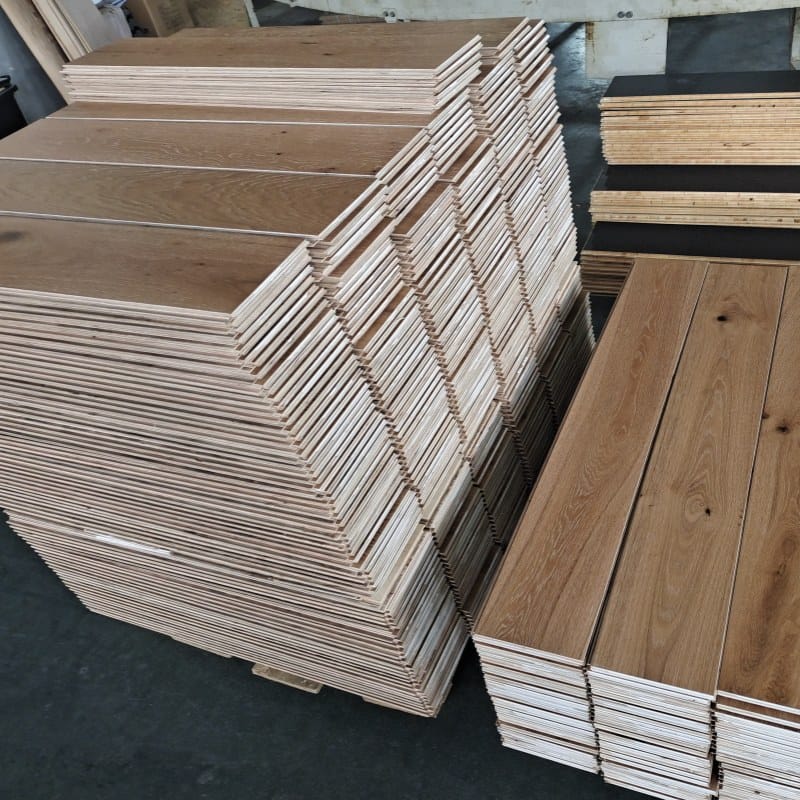
If you want to see how a one‑stop procurement workflow coordinates flooring alongside FF&E and OS&E, skim this overview of a hotel FF&E and OS&E procurement workflow. Coordinated drops and consolidated documentation simplify audits and reduce time‑to‑open.
Standards and Test Methods Cheat Sheet
When you evaluate Engineered Oak Flooring submittals, expect to see these test names and classes:
- Acoustics: ASTM E492 for IIC, ASTM E2179 for ΔIIC in the U.S.; ISO 10140 for ΔLw internationally. Look for assembly‑specific reports matching your slab and ceiling.
- Fire for flooring: ASTM E648 in North America; EN ISO 9239‑1 feeding EN 13501‑1 floor classes such as Bfl‑s1 or Cfl‑s1 in Europe and many international markets. E84 is not a flooring selection test but may be requested for wall/ceiling finishes.
- IAQ and formaldehyde: EPA TSCA Title VI in the U.S.; EN 717‑1 chamber testing for E1 classification in Europe. GREENGUARD Gold and FloorScore are common product‑level emissions labels.
- Radiant heat: Manufacturer approval letter with max surface temperature, RH range, acclimation steps, compatible adhesives, and warranty language.
For background reading on these topics, see the following authoritative resources and explainers:
- The EPA’s page on formaldehyde emission standards for composite wood products under TSCA Title VI (updated 2026) outlines compliance, labeling, and oversight.
- Lab and certification explainers summarize how EN ISO 9239‑1 informs EN 13501‑1 floor classes and how the tests are performed: the EN ISO 9239‑1 radiant panel overview by Efectis and Measurlabs’ EN 9239‑1/EN 13501‑1 explainer.
- Acoustic underlay manufacturers publish test summaries with IIC and ΔLw outcomes for engineered timber assemblies: Interfloor Soundsure 400, Interfloor Resilient 250, and REGUPOL sonus core test summaries.
- The wood flooring trade’s NWFA Environmental Product Declarations portal lists industry‑average engineered wood EPDs to inform sustainability documentation in bids.
Next Steps and How to De‑Risk Your Program
- Run a pilot room and a corridor bay with your preferred Engineered Oak Flooring assembly. Capture productivity, cure windows, and punch‑list patterns before release.
- Lock down supply with documented lead times, buffer stocks, and phased deliveries. If you’re bundling flooring with other construction categories, synchronize packaging and delivery through a consolidated partner to keep crews fed and rooms turning. For background on coordinated construction and furniture deliveries, review the overview linked earlier, and if you need brand context, you can read the company background on the Our Story page.
- Assign ownership of maintenance SOPs before opening. Stock the right cleaners, pads, and oils or polishes in week one; train night staff and engineering together.
If you’re comparing finish chemistries, acoustic stacks, or documentation sets and want a neutral reality check on availability and delivery windows, a hotel‑specialized supplier can help sequence flooring with joinery, casegoods, and doors without inflating claims. The aim is simple: fewer delays, consistent documentation, and predictable handovers.