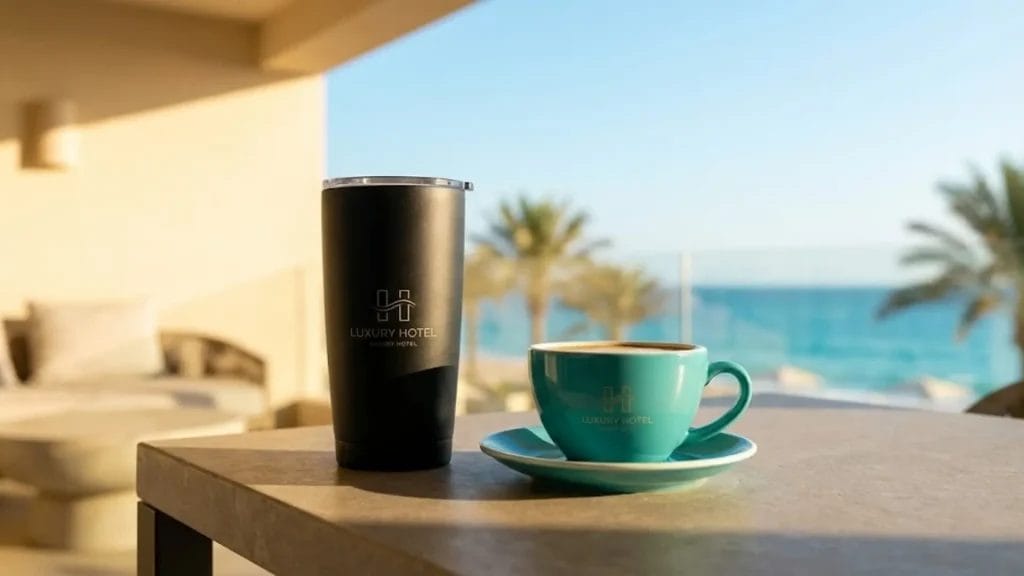
Your guest’s first touchpoint isn’t the lobby chandelier—it’s the cup in their hand at 7:10 a.m. When that cup is thoughtfully specified, the experience scales from the in‑room amenity tray to the lobby café barista bar without a visual or tactile hiccup. That continuity is where brand equity compounds. In this guide, we’ll unpack how to spec, customize, and operationalize Custom Hotel Coffee Mugs to drive OS&E longevity, elevate taste cues, and lift guest satisfaction—without bloating budgets or complicating FF&E procurement.
Key takeaways
- A unified mug program links the private in‑room ritual to your high‑visibility lobby café—preserving brand cues across touchpoints and helping nudge the guest satisfaction score upward.
- Stainless steel (vacuum insulation) reduces OS&E replacement from breakage and expands safe outdoor service; porcelain delivers taste neutrality and classic presentation for rooms and dine‑in.
- Customization method is strategy, not decoration: laser engraving (luxury feel on steel) vs. high‑temperature firing decals (vibrant, durable color on porcelain). Lock Pantone matching before you scale.
- Procurement wins come from one‑stop execution, MOQ flexibility, and batch‑to‑batch glaze consistency control—plus a clear AQL and dishwasher‑safe test plan.
- Over 24 months, reusable branded mugs typically beat disposables on cost‑per‑impression—especially when OS&E breakage is contained and café capture increases.
The guest journey: from in‑room amenity to lobby café brand stage
Think of the in‑room mug as a low‑stakes, high‑frequency brand rehearsal. The guest tests warmth, lip feel, weight, and color—all subtle signals that shape perceived quality. Crossmodal research shows vessel appearance can bias taste and temperature judgments: for example, cup color has been linked to shifts in perceived intensity and warmth. According to sensory research and standards from the Specialty Coffee Association (SCA), the physical attributes of a vessel significantly influence the coffee value assessment.
Lobby cafés then amplify these cues in public view. 2026 hospitality analyses point to lobbies operating as all‑day cafés and co‑working hubs; premium amenity programs are cited as ROI‑positive differentiators. Trends covered by Hospitality Net underline this shift, making the lobby barista bar your brand showcase. Consistency between in‑room and café vessels turns one good impression into a pattern guests notice.
Comparison — 300ml Double‑Wall Stainless Steel vs 280ml Ceramic/Porcelain
| Attribute | 300ml Double‑Wall Stainless Steel | 280ml Porcelain/Ceramic with Saucer |
|---|---|---|
| Best Use Case | Lobby café takeaway; queue lines; poolside/outdoor where breakage risk is high | In‑room amenity; lobby dine‑in; barista service with latte art and saucered presentation |
| Durability | Impact‑resistant; low breakage; may dent; excellent for reducing OS&E losses | Fully vitrified hotel‑grade body; chip‑resistant with proper stacking; handle stress to be tested |
| Customization Method | Laser engraving for premium, permanent marks; optional coating + engraving | High‑temperature on‑glaze decals for vibrant brand color; optional in‑glaze for premium lines |
| Thermal Performance | Vacuum insulation retains heat for extended periods; exterior stays comfortable | Single‑wall; moderate retention; pre‑heat cup, use saucer to manage heat loss |
Wholesale stainless steel coffee mugs — durability, insulation, and branding
Double‑wall vacuum construction minimizes conductive heat loss and provides a cool‑touch exterior—ideal for lobby queues and terrace service. For taste, unlined stainless can read slightly “metallic” to some palates; specifying ceramic‑lined interiors is a practical mitigation. From a compliance standpoint, require LFGB/FDA food‑contact documentation and verify dishwasher‑safe claims with a defined cycle test protocol (see QC section).
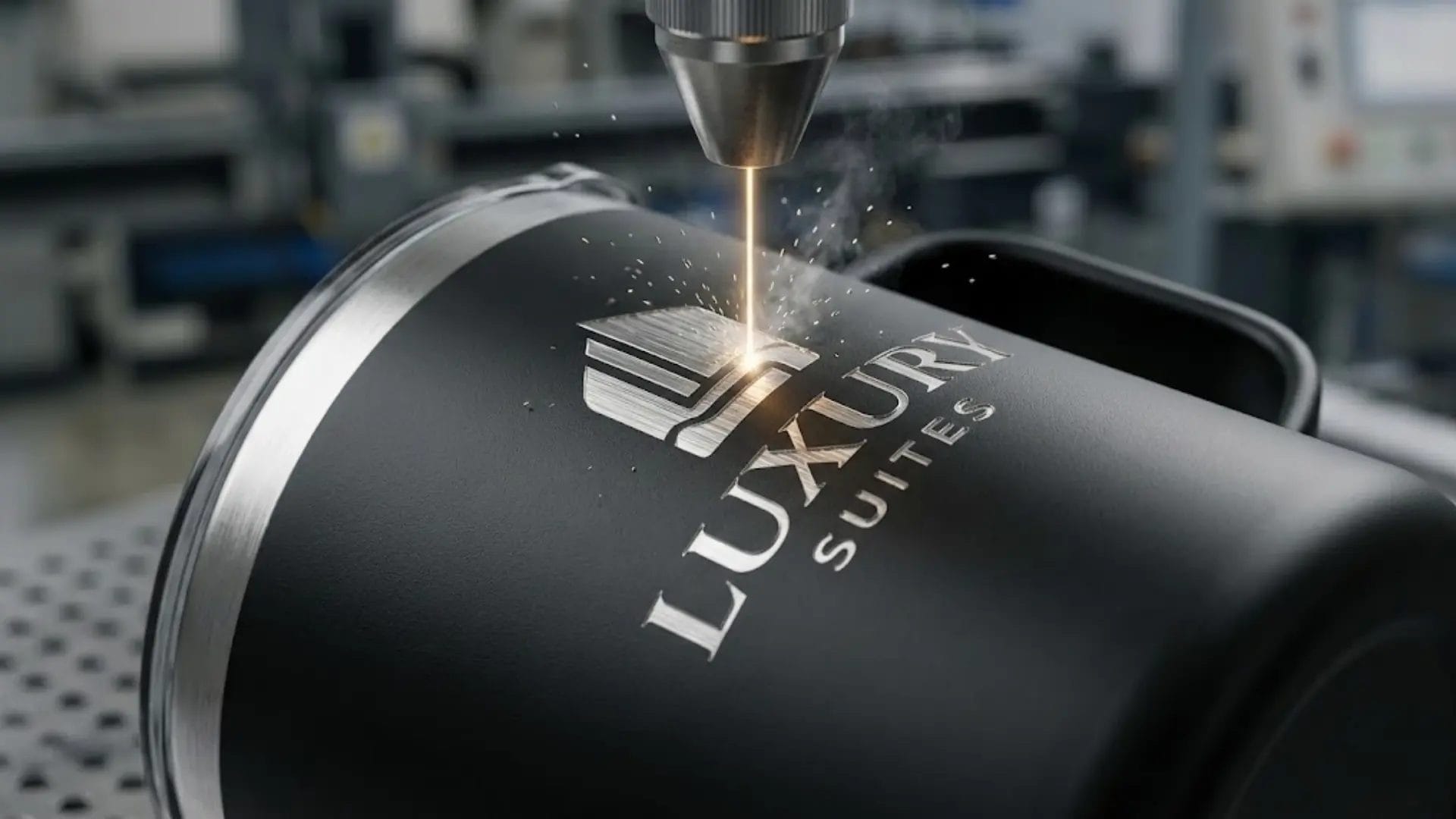
Laser engraving technical notes
For a luxury mark that lasts, treat engraving like an engineering task:
- Target effective engraving depth in the ~50–150 μm range on brushed steel for tactile, legible contrast. Deeper passes add cost and can interact with coatings.
- Fiber laser systems typically yield the cleanest result on bare steel. Always run scrap‑cup test panels across power/speed matrices and perform abrasion/chemical wipe tests before sign‑off.
- For powder‑coated steel, combine surface marking with selective engraving to reveal base metal; confirm edge quality and chipping resistance.
Material grades & LFGB/FDA compliance
- Specify steel grade (e.g., 304 for corrosion resistance) and confirm sealing integrity on the vacuum wall.
- Request declarations of conformity for U.S. FDA food‑contact pathways and, for EU properties, EU 1935/2004 plus Good Manufacturing Practices (2023/2006). For dishwasher claims, ask vendors to cite EN 12875‑style mechanical dishwashing resistance test results and cycle counts.
Custom ceramic mugs and saucers — color, finish, and glaze consistency
Porcelain remains the benchmark for perceived coffee quality thanks to taste neutrality and visual clarity for crema and latte art. High‑temperature decals fuse brand marks into the glaze for washfast color that resists the daily grind of housekeeping and café operations. The procurement wrinkle is color fidelity: the same Pantone code can render differently across glazes and kilns, so batch‑to‑batch control is essential.
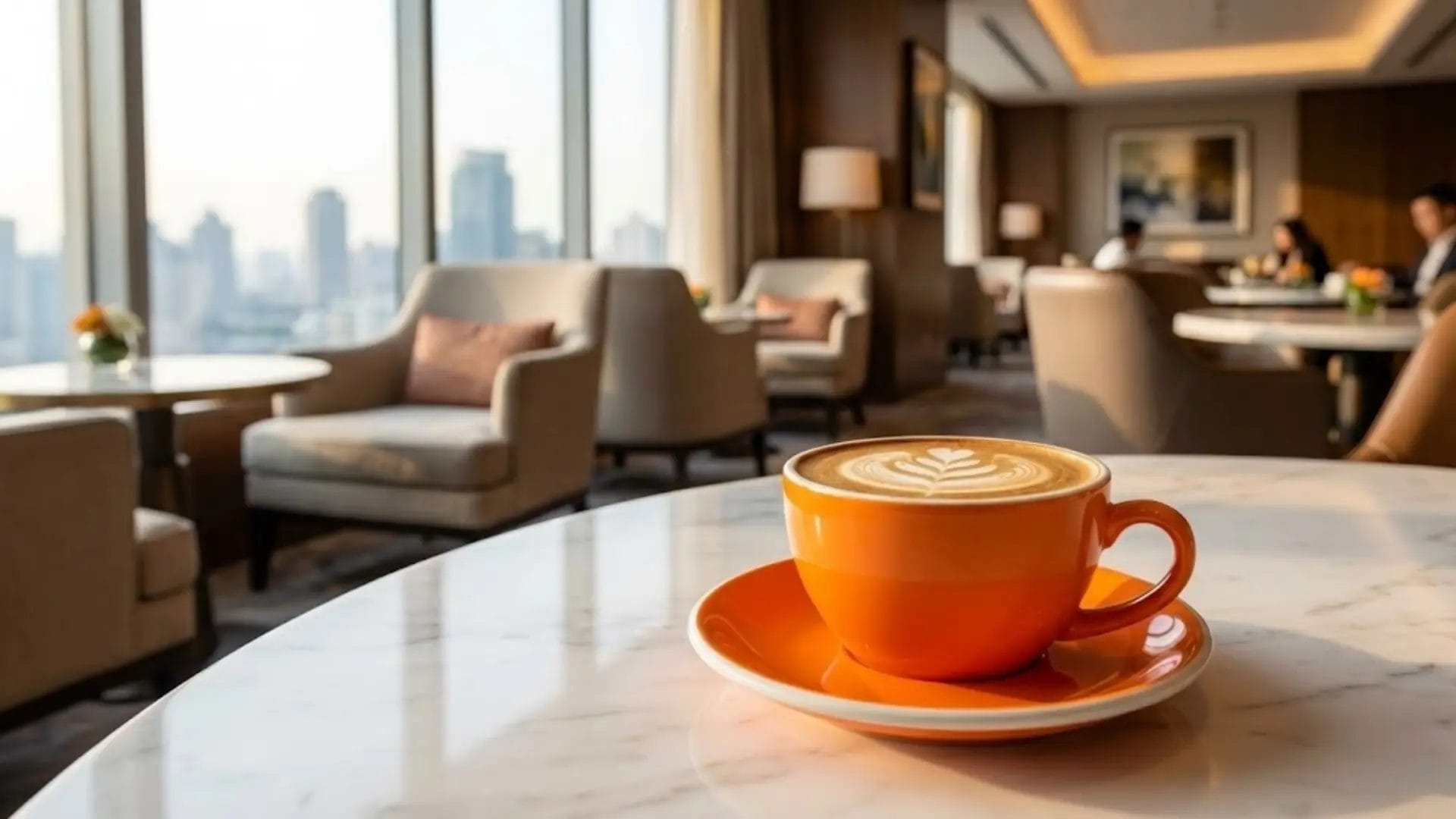
Moon’s Insight — High‑temperature decal process
- Plan for a firing curve that ramps through organics burn‑off, then soaks near 780–850°C depending on system/glaze. Color can shift slightly at peak; approve on the actual substrate, not paper proofs.
- Define washfastness: hotel‑grade decals should withstand at least ~125 EN 12875 cycles without visible degradation; validate with third‑party lab reports or witnessed tests.
- Manage handle‑join stress and stack abrasion by specifying stack pads or separators in back‑of‑house SOPs.
Glaze consistency & Pantone matching
- Lock a spectral color target with ΔE ≤ 2.0 within batch and ≤ 2.5 across replenishment lots, measured against your master glazed standard.
- Document a pre‑production workflow: artwork verification, logo registration check, Pantone proof on actual glaze, first‑article approval, then controlled mass production with retained retains for future matching.
Bulk personalized coffee mugs with logo — procurement, MOQ, and logistics
Here’s the deal: success lives in the handoffs. For stainless, MOQs often start higher due to vacuum flask assembly; ceramics can be more flexible if decals are shared across forms. Build breathing room for pre‑production samples (PPS), artwork approvals, and transit buffers.
- MOQ & lead times: expect stainless engraved MOQs in the low hundreds to 1,000+ depending on finish; ceramics with high‑temp decals commonly start around a few hundred sets. Lead times run 30–60 days post‑PPS approval, excluding ocean freight.
- AQL & QC: adopt ISO 2859‑1/ANSI‑ASQ Z1.4 at General Inspection Level II with Critical 0.0, Major 2.5, Minor 4.0. Define defects up front (print misalignment, glaze pinholes, wobble, handle angle variance, ΔE out of spec). Add carton drop tests and rim chip checks.
- Dishwasher‑safe verification: reference EN 12875 mechanical dishwashing resistance. Document cycle counts (e.g., 125+ cycles) and acceptance criteria for gloss, color, and adhesion.
- Documentation: collect LFGB/FDA declarations, migration tests for ceramics (acidic and hot aqueous simulants), and material breakdowns for coated steels.
If you need category breadth or OEM/ODM support, review the DERBAL catalogue for customization pathways and the procurement‑focused answers in the DERBAL FAQ:
- Explore OEM/ODM customization options in the DERBAL catalogue.
- Clarify MOQs, IP handling, and lead times in the DERBAL FAQ.
ROI modeling: branded mugs vs disposable options (24‑month cost‑per‑impression)
Model it like any OS&E investment. Define assumptions, then let impressions (uses) compound.
Assumptions for a 200‑key resort over 24 months:
- Stainless 300ml engraved mug landed cost: $10; annual replacement rate: 15% in café service.
- Porcelain 280ml cup & saucer landed cost: $3.20; annual replacement rate: 18% across rooms and dine‑in.
- Disposable 12‑oz cups at café for takeaway: $0.08 per use (cup + lid).
- Occupancy 70%; in‑room coffee touches: 1.4 mugs/occ room/day; lobby café capture adds 150 branded‑mug servings/day.
Mock bar chart description:
- X‑axis: Mug Program vs. Disposables.
- Y‑axis: Cost per 10,000 impressions (uses) over 24 months.
- Bars:
- Stainless program: bar at ~$55–$70/10k uses (higher capex, low per‑use after breakeven).
- Porcelain program: bar at ~$40–$55/10k uses (lower capex, moderate replacement).
- Disposables: bar at ~$80–$100/10k uses (pure opex, cost rises linearly with volume).
Interpretation: Reusable branded programs win as volume accrues. The stainless tier pays back faster in high‑throughput cafés; porcelain excels in rooms/dine‑in where presentation lifts perceived value. Beyond cost, lobby visibility supports brand recall and, according to Hospitality Net’s 2026 trend coverage, aligns with the all‑day lobby café model—an environment where elevated vessels reinforce premium positioning.
Hospitality branded drinkware solutions & corporate gift mugs for resorts
Two ancillary wins are worth noting. First, branded mug programs enable light retail: limited‑run colorways or seasonal decals can sell at the café counter, strengthening loyalty while standard SKUs continue service. Second, as corporate gift mugs for resorts, engraved steel or boxed porcelain sets travel well for group sales, wedding packages, and partner thank‑yous—keeping your identity on desks long after checkout.
Practical workflow: From artwork to full production (DERBAL example)
A streamlined, one‑stop path reduces friction and preserves fidelity:
- Artwork & brand guardrails: confirm vector logos and logo registration; define Pantone targets and usage rules.
- Substrate proofing: produce Pantone chips on the actual glaze and steel finish; run taste‑neutrality checks where relevant.
- Pre‑production samples: one stainless (laser engraved) and one porcelain (high‑temp decal) for sign‑off; measure ΔE vs. master.
- Quality gates: set AQL plans, dishwasher‑cycle tests, handle stress checks; retain golden samples.
- Bulk & logistics: scale production and coordinate consolidated shipping with replenishment buffers.
For buyers consolidating multiple OS&E lines, partnering with true one‑stop hospitality solutions can simplify MOQs, QC, and global shipping while keeping Pantone‑accurate branding on track.
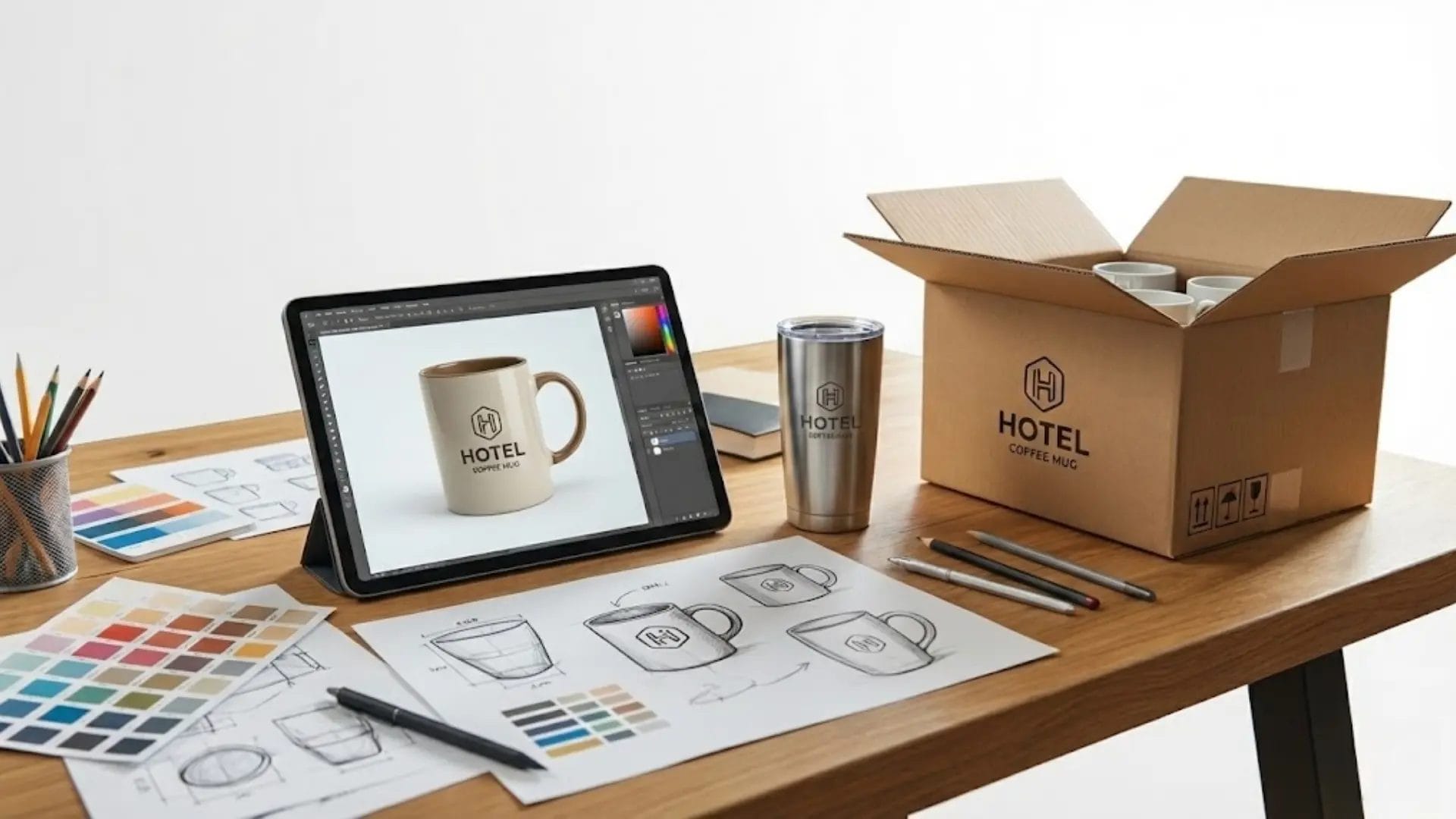
Custom Hotel Coffee Mugs FAQ
Q1. What are typical MOQs and lead times?
- Stainless (engraved): commonly 500–1,000+ units per color/finish; 35–60 days post‑PPS. Porcelain (decal): 300–600 sets; 30–45 days post‑PPS. Complex glazes or multi‑color decals add time.
Q2. How do we guarantee dishwasher‑safe branding?
- Reference EN 12875 mechanical dishwashing resistance. Specify a minimum cycle count (e.g., 125 cycles) and visual criteria for pass/fail. Have the vendor supply third‑party lab reports or allow witnessed testing.
Q3. Will stainless affect taste?
- Some guests report metallic notes from unlined stainless. Ceramic‑lined stainless or high‑grade 304 interiors reduce this risk. Always conduct blind tastings before rollout.
Q4. How do we control glaze consistency and Pantone fidelity across batches?
- Approve a master glazed standard and measure ΔE on each batch. Keep ΔE ≤ 2.0 within batch and ≤ 2.5 across replenishment. Store retains and require spectral reports with shipments.